
Beluga Whale Trip Report 2026
- WEEK 3 -
Churchill, Canada
August 4 -10, 2026
August 5, 2026. Day One
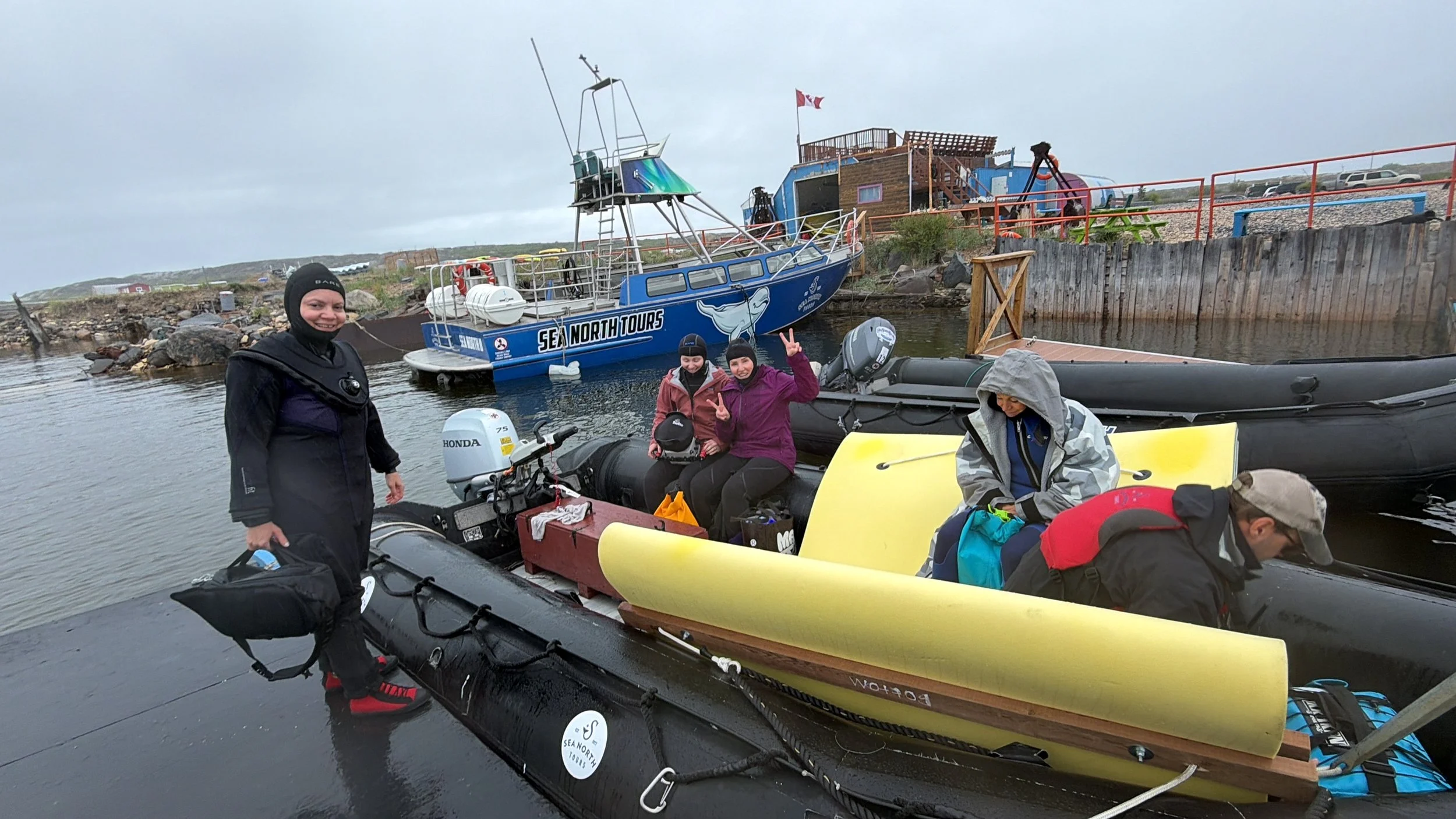
It was a cold, overcast morning in Churchill. The kind of day where the wind cuts through every layer and reminds you just how far north you really are.
But once we reached the river, none of that mattered.
The water was flat calm, the visibility was really good, and beluga whales were everywhere.
From the moment we slipped into the water, they were curious, playful, and incredibly interactive.
It reminded me of our unforgettable second day from last week, with whales constantly surrounding us, swimming beneath us, and circling back again and again.
It was one of those sessions where you completely lose track of time.
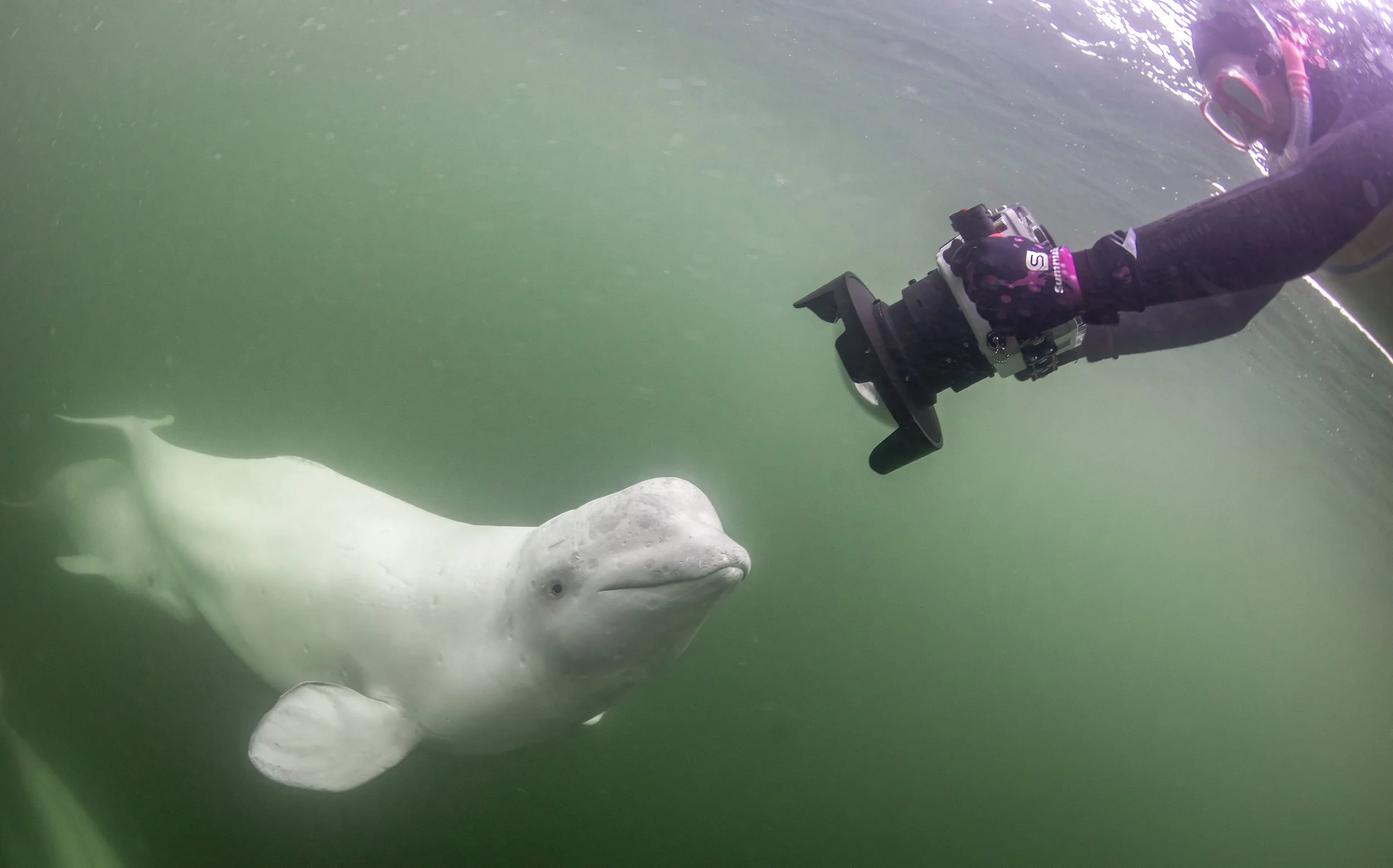
One beluga spent several minutes rolling and playing on the surface, giving me the chance to finally capture a half-decent spy-hop on video, something I've been hoping to film for a long time.
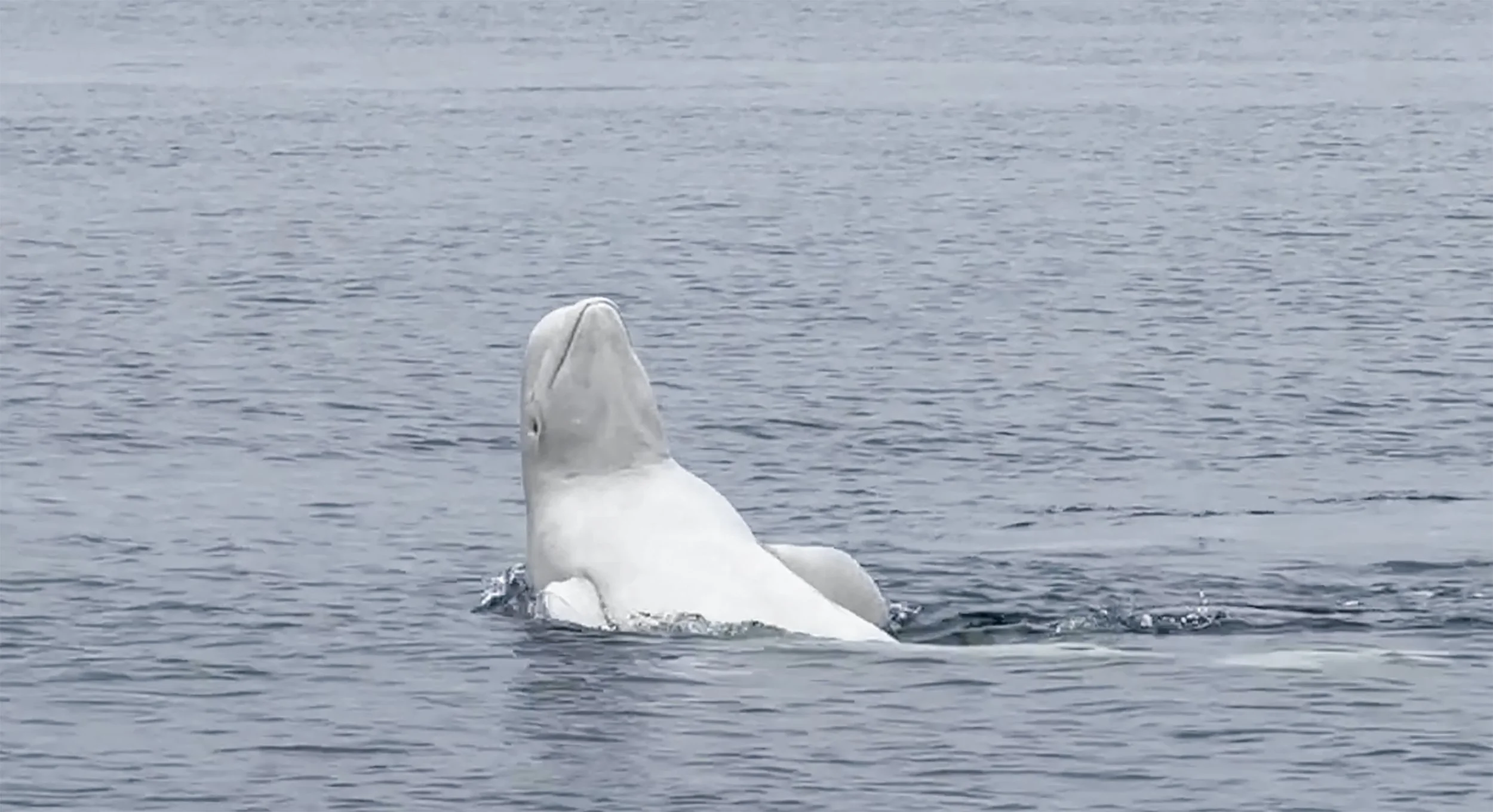
proof of life frame grab from the Iphone video.
Then, while I was recording today's Wild Minute, another beluga farther out in the river suddenly spy-hopped... once... twice... three times... four... five times in a row.
It was one of those moments that simply makes you laugh out loud.
Absolutely insane magic!
Eventually, despite how spectacular the diving had been, the cold finally caught up with us. We were all ready to head back to shore and warm up after an unforgettable morning in the water.
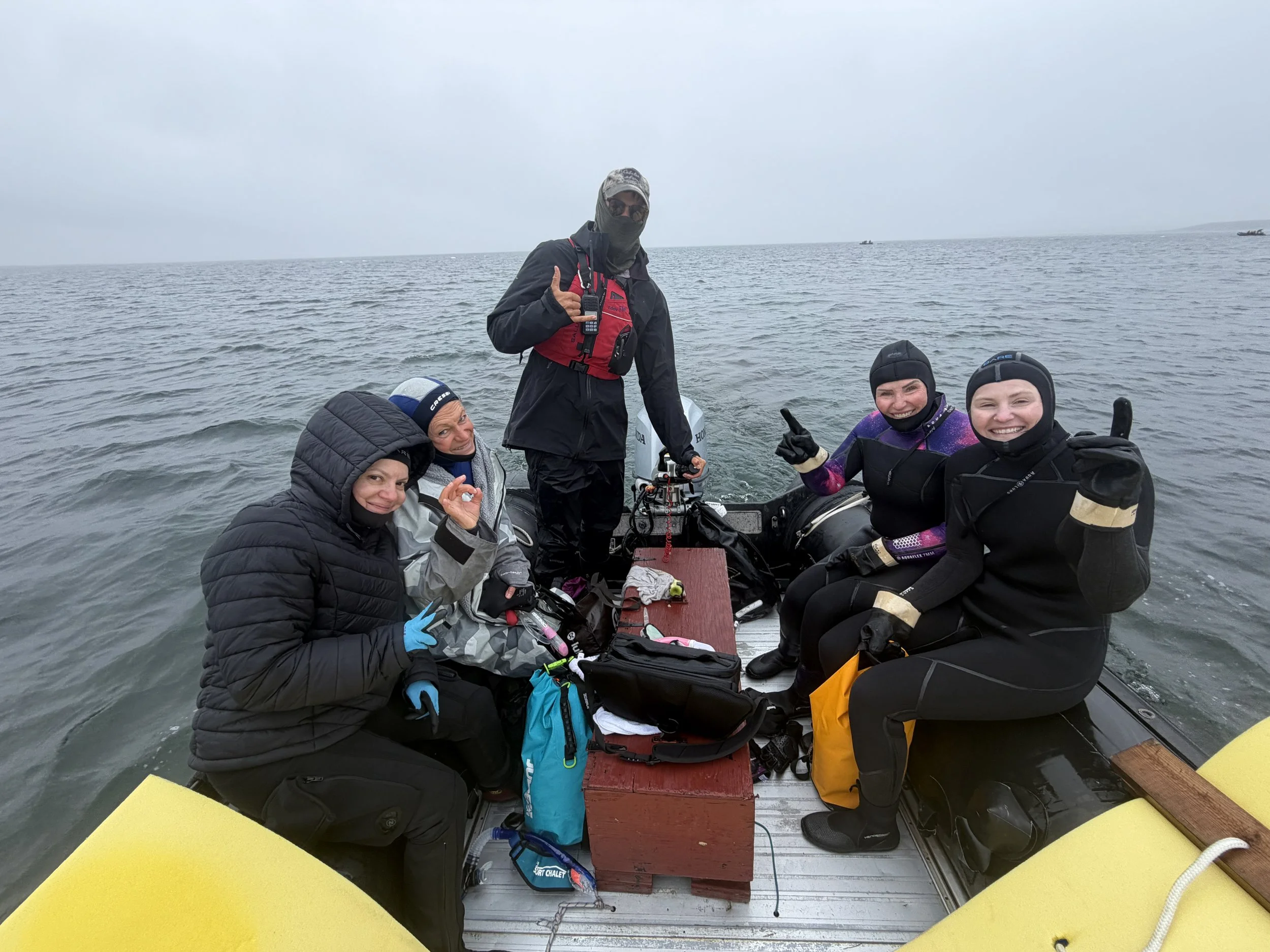
Once everyone had thawed out, we loaded into the van and headed onto the tundra in search of wildlife.
Earlier in the week, my friend Peter had told me about a red fox den with kits somewhere along one of the roads. I'd spent several days trying to locate it without any success. Then another friend, Andy, gave me a few more clues about where he had seen it.
Putting both of their directions together finally paid off.
We found it.
A beautiful red fox family living beside their den.
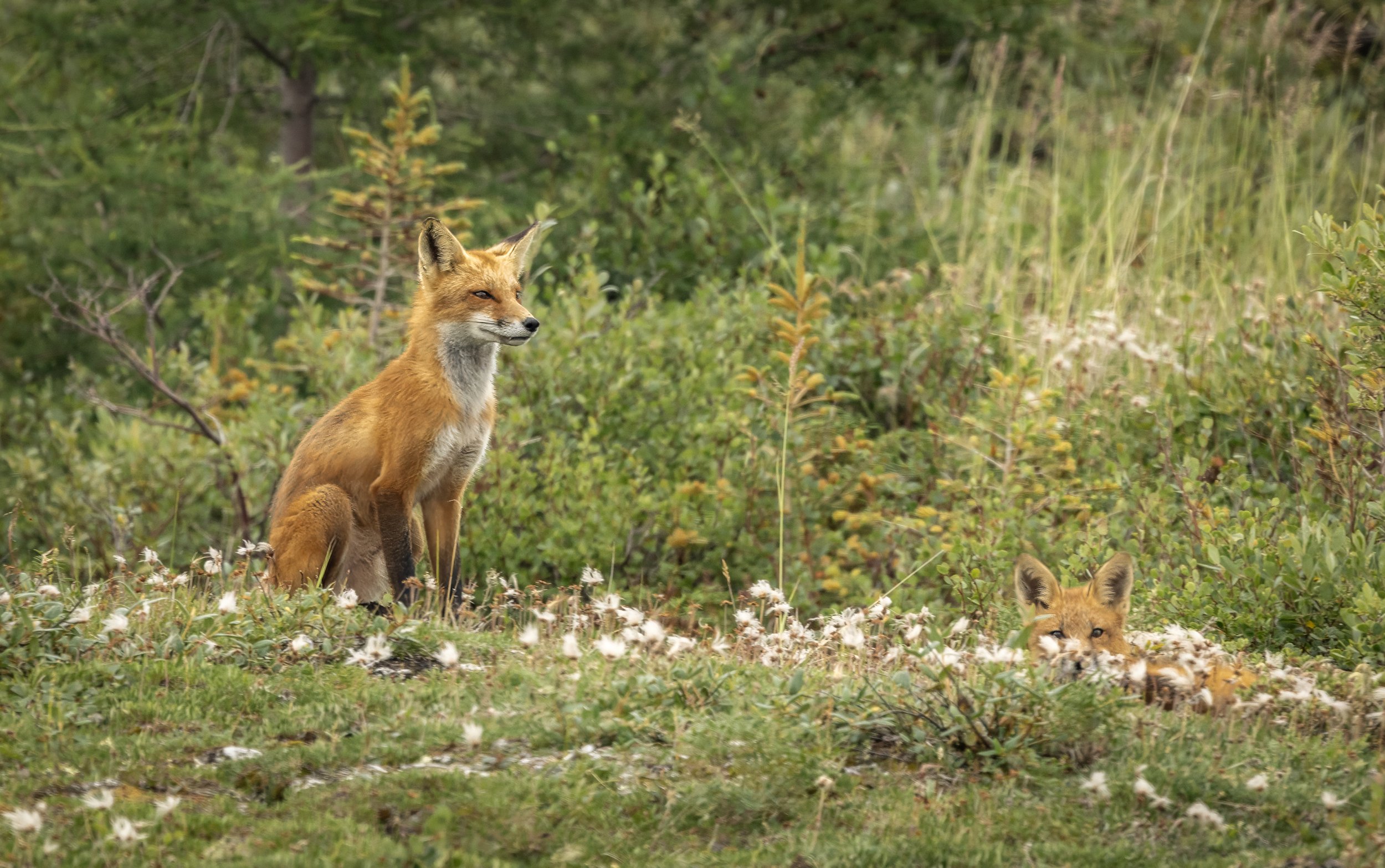
The kits disappeared underground almost the moment our vehicle arrived, but the adults stayed outside, calmly watching us from a distance. It was exciting simply knowing we had finally found the den after searching for so long.
After a while, the adults wandered off to hunt, so we continued exploring the tundra.
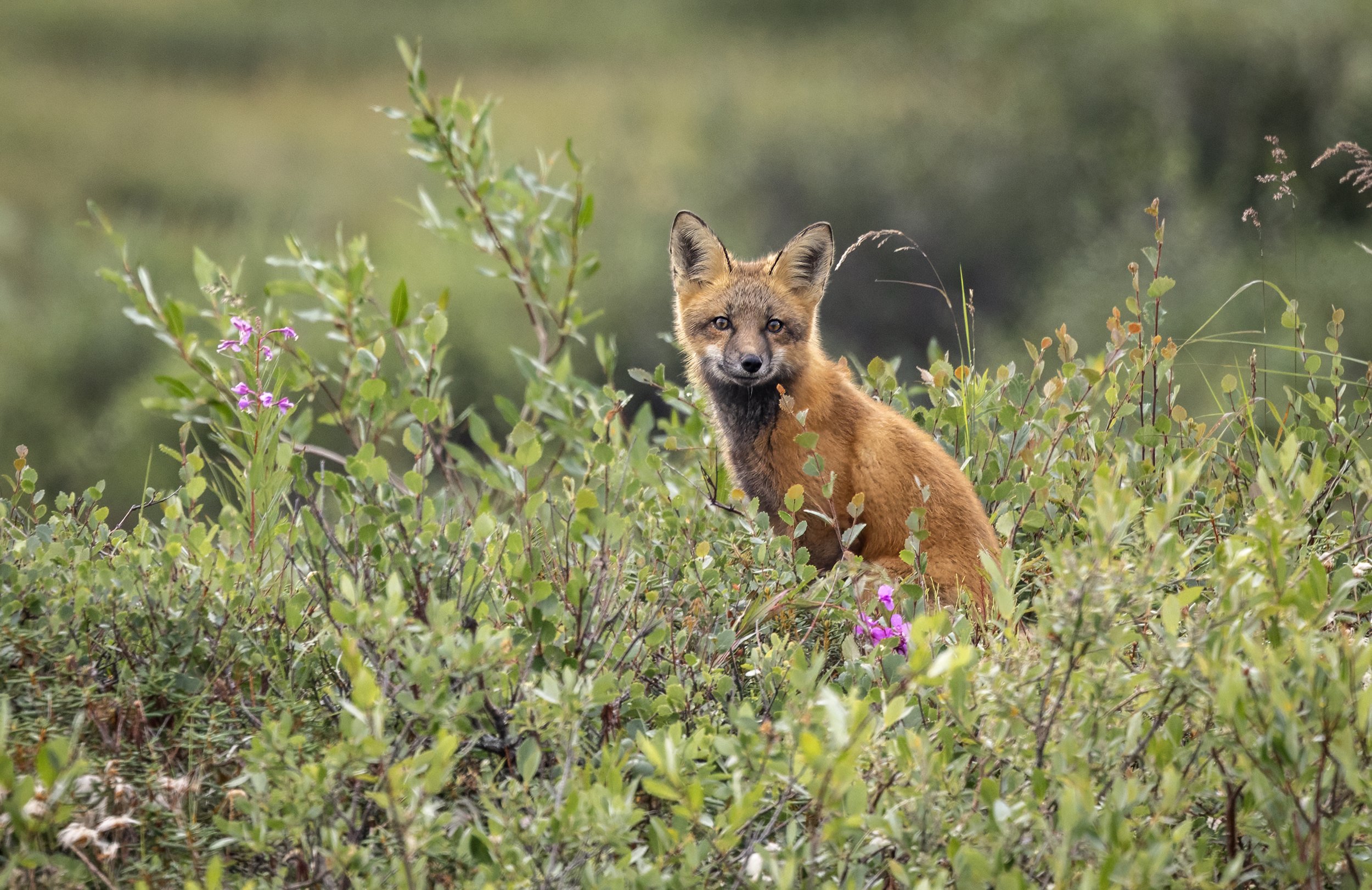
Not long afterward, Katy spotted another fox sitting quietly beside the road.
This one was one of the kits. They are getting older and starting to explore the tundra a bit more.
Its dark face and throat mixed with rusty orange made it one of the most beautiful foxes we've seen here.
After two weeks of searching… finally, we found some foxes.
As if that wasn't enough, the tundra had one more surprise waiting for us.
While driving through the tundra, a polar bear sleeping peacefully among the low willow bushes lifted it’s head up from the bushes, as our van rolled past. We had disturbed its nap.
It sleepily looked at us and then went back to sleep.
He was a big boy!
Remaining safely inside the vehicle, we spent about thirty minutes quietly photographing the bear as it continued sleeping. It was a great encounter, and it allowed everyone to capture some beautiful images without disturbing the animal.
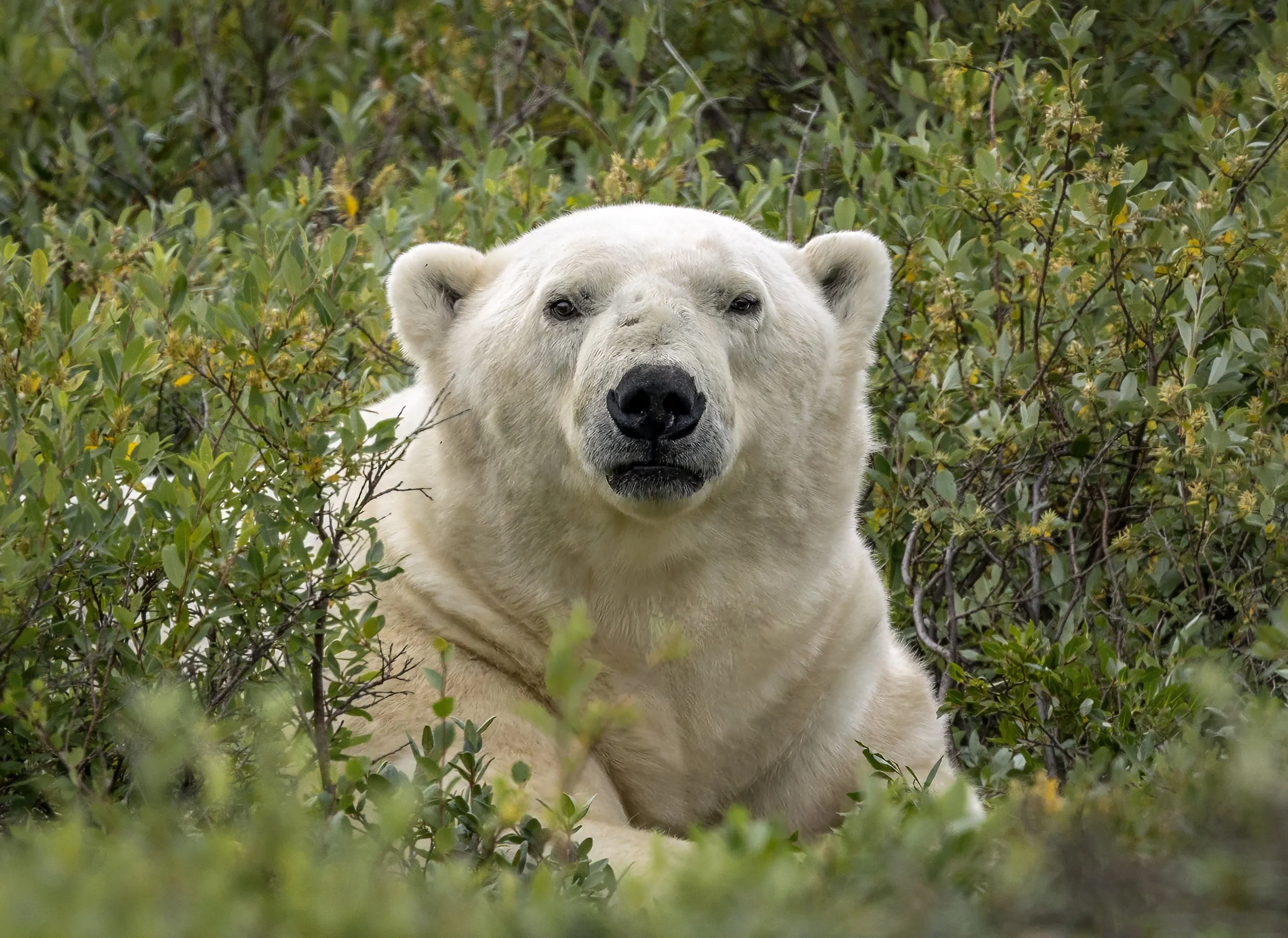
When we left, the bear continued on sleeping.
Before ending the afternoon, we decided to make one last stop back at the fox den.
This time, one of the kits was stretched out in the grass, completely relaxed.
Every so often it would open an eye, glance in our direction, stretch its legs, scratch behind an ear, let out a huge yawn, and then drift right back to sleep.
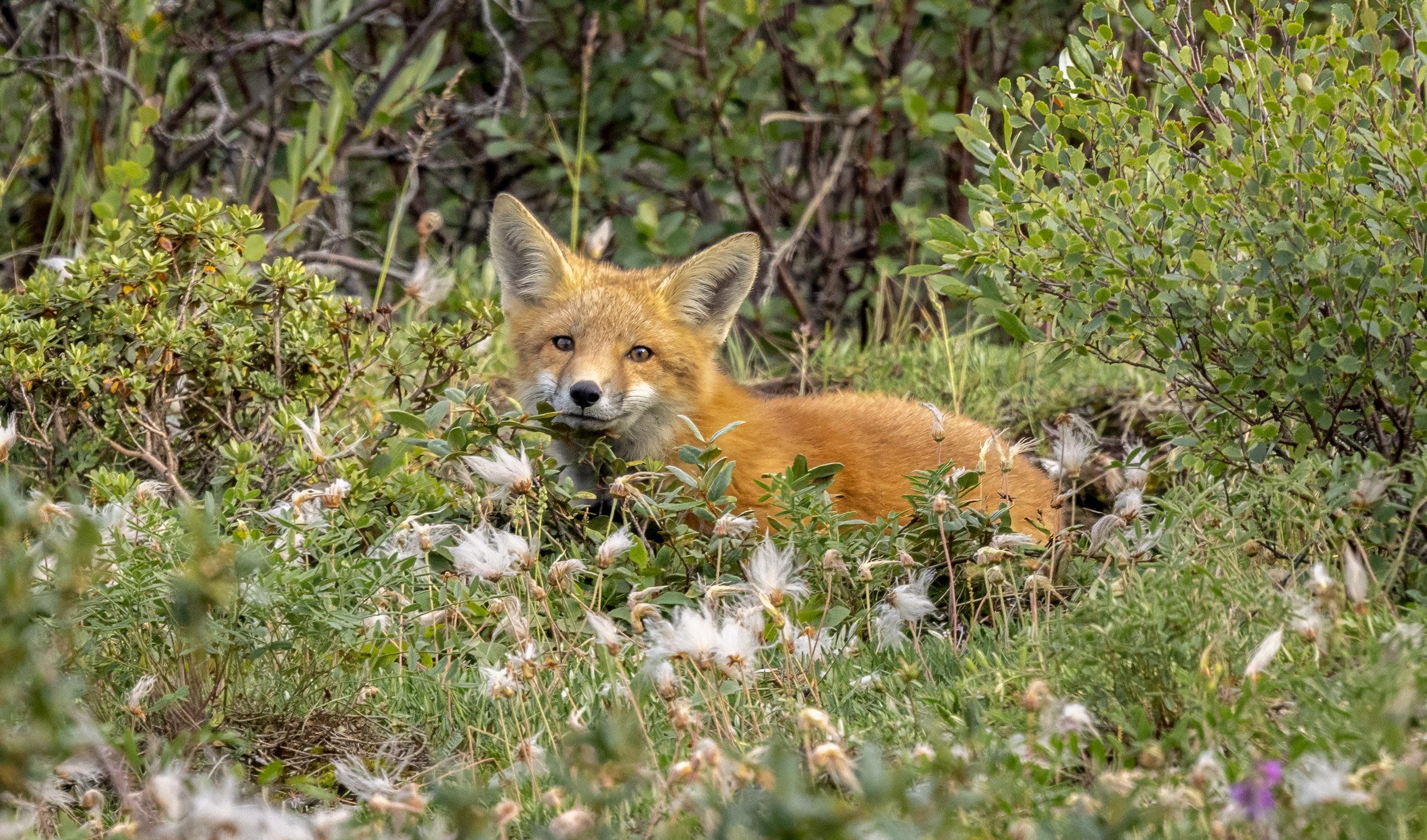
It was one of those simple wildlife moments that reminds you why patience always pays off.
A phenomenal day with playful belugas, a long-awaited fox family, a stunning juvenile cross fox, and a peaceful polar bear.
Not a bad way to begin Week Three.
Now the bar has been set incredibly high...
The pressure is officially on for the rest of the week.
August 6, 2026. Day Two
We started our morning with a visit to the fox den to see if anyone was home.
The two fox kits were there.
One of them is still very shy, while the other has become quite bold and curious. We had some wonderful opportunities to photograph them as they explored the area around the den.
Our little adventurer was busy hunting in the field. She's still too young to be an efficient predator, but it was fun watching her chase and snack on bugs while learning the skills she'll need to survive on the tundra.
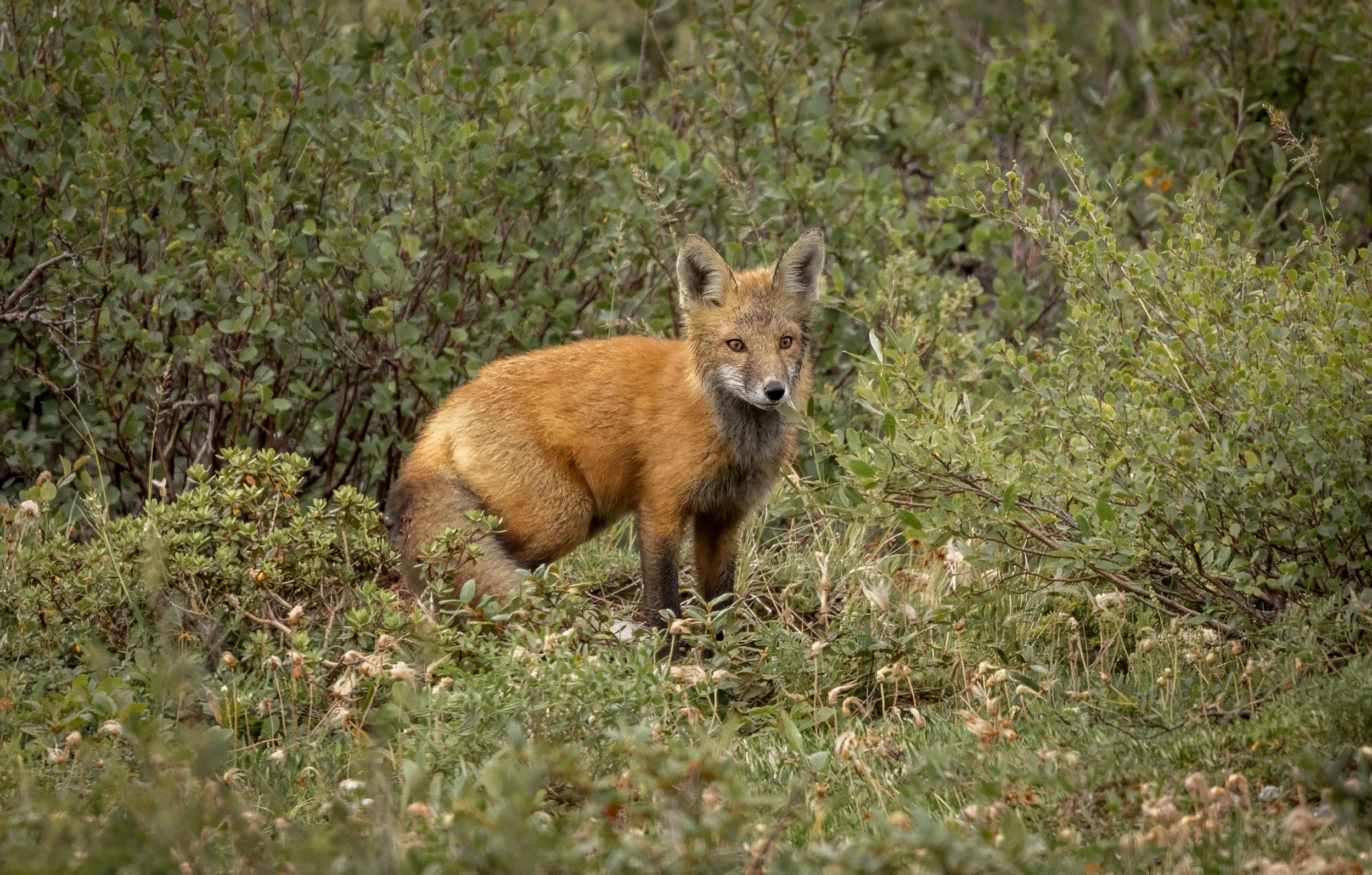
Our little explorer.
The kits are growing quickly now, and it's becoming obvious that the parents are spending more and more time away from the den. Before long, they'll begin weaning the youngsters and preparing them for life on their own in the Arctic wilderness.
We spent about twenty minutes quietly enjoying their company before leaving them in peace.
They're incredibly cute animals.
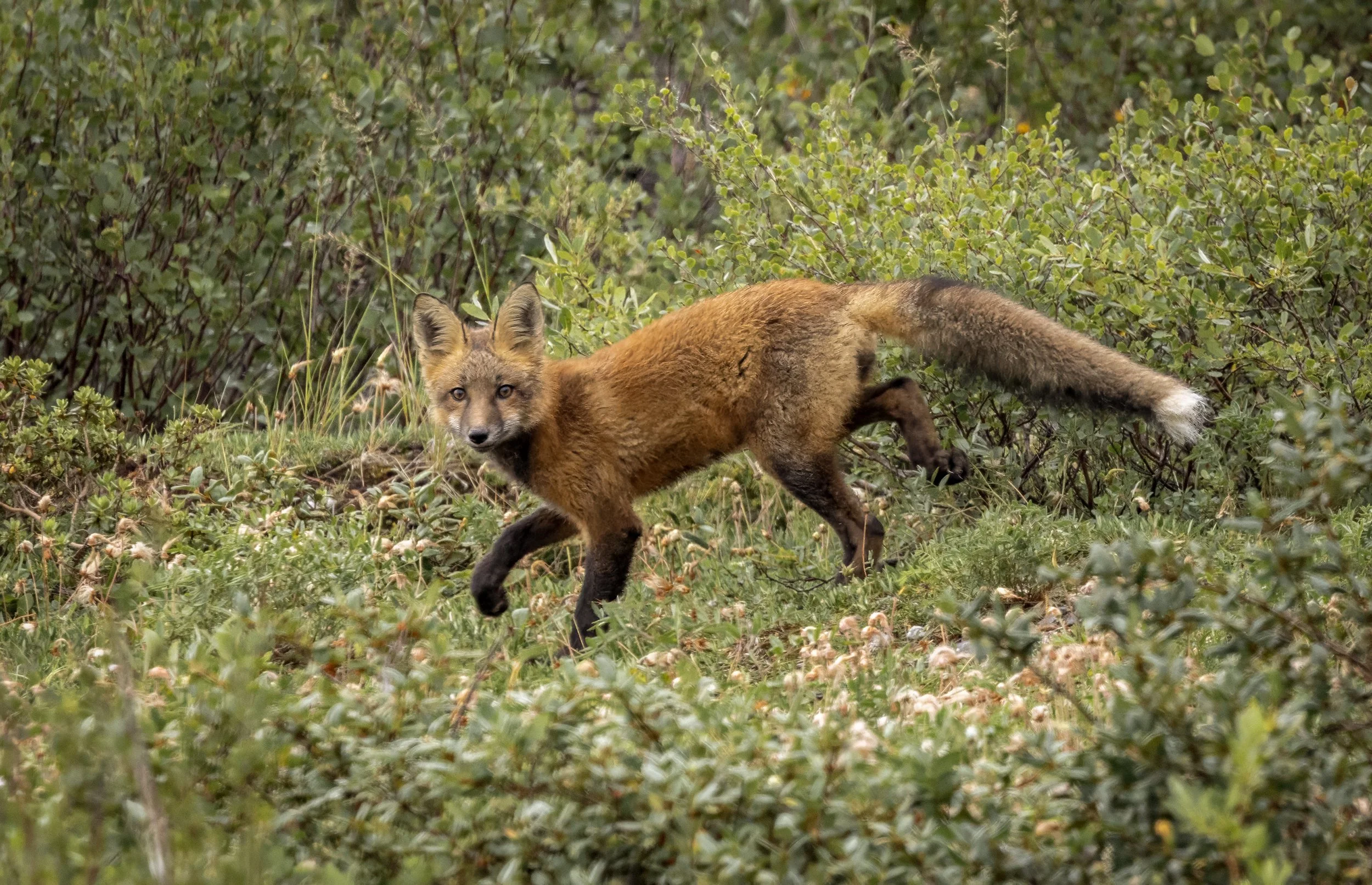
Our shy boy.
From there, we headed to the Churchill River for our second day of beluga boarding.
Thankfully, yesterday's cold, rainy weather had disappeared. In its place was a beautiful blue sky filled with sunshine.
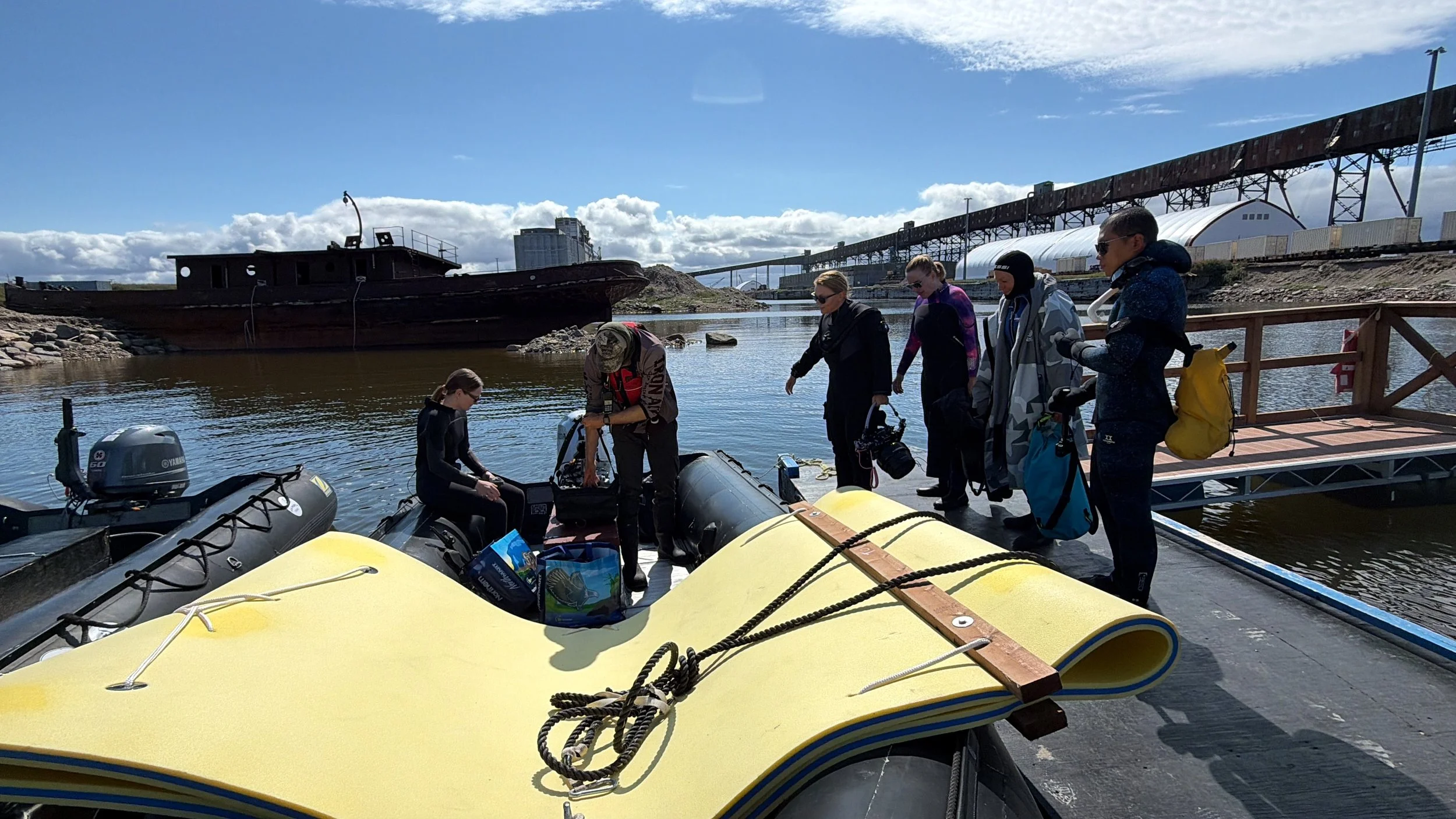
Unfortunately, the underwater visibility hadn't improved.
A heavy thermocline haze combined with the river's brown water made for some very challenging shooting conditions.
Just as we arrived, our captain Alex received a report that four polar bears had been spotted near the point.
We went to investigate.
Yesterday we got a bear report, but I recommended that we stay with the belugas, the action was way too good to leave.
The first bear we found was a mother resting with her two-year-old cub near the old Prince of Wales Fort. The pair were peacefully sleeping together, giving everyone a chance to capture some wonderful photographs before we quietly moved on.
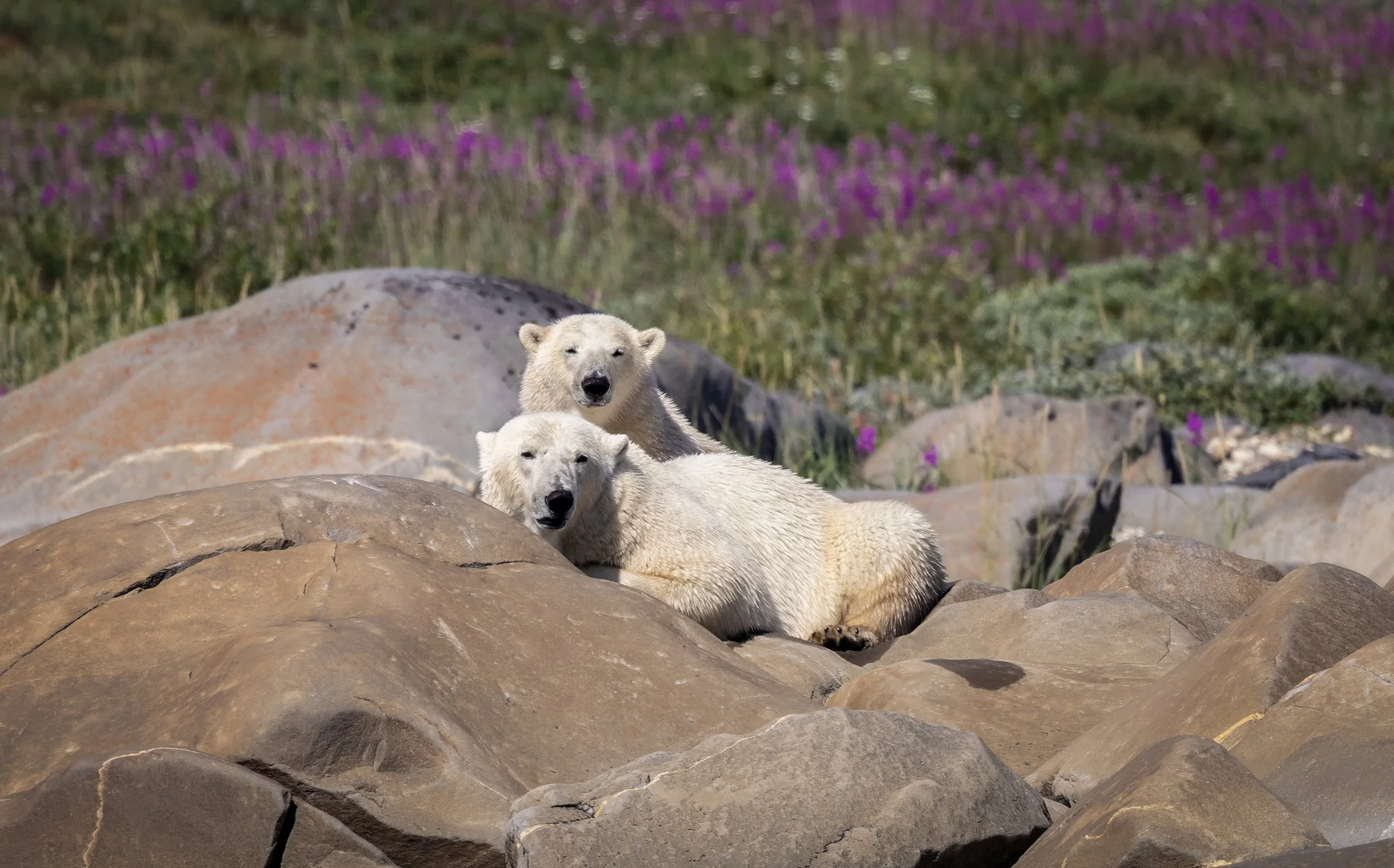
Rounding the point, we discovered another bear trying to nap on the shoreline.
Unfortunately for the bear, a group of Arctic terns had other ideas.
They relentlessly dive-bombed its head every few seconds, making sleep nearly impossible. It was an amusing reminder that even polar bears aren't always at the top of the food chain when it comes to neighborhood bullies.
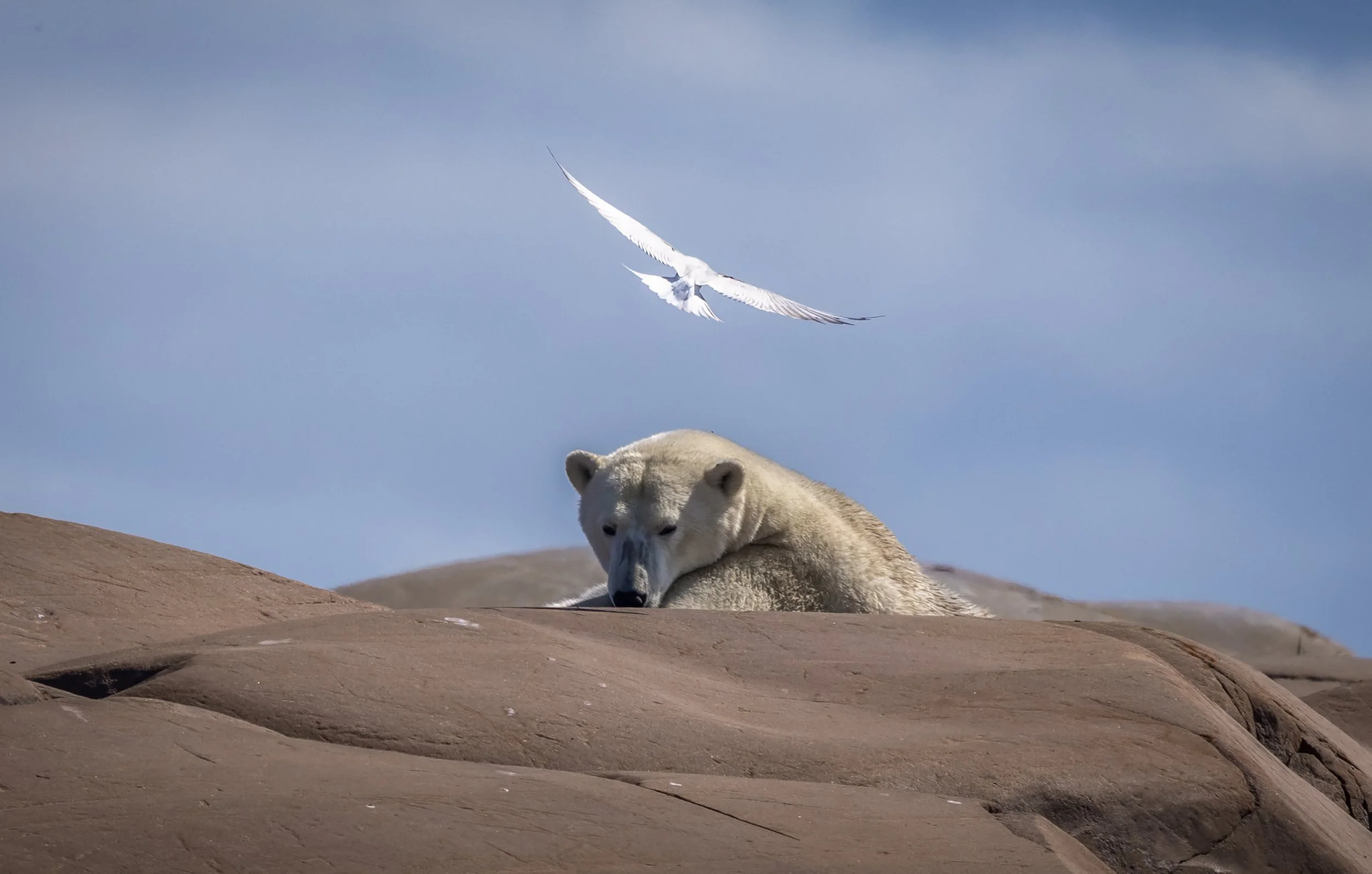
The swells around the point were larger than we liked, preventing us from approaching safely, so we decided to leave the bears alone and return to the river.
As we motored away, we spotted the fourth bear sitting farther on the rocks at the point, but the rough conditions made it unsafe to get close, so we continued on toward the belugas.
Finding whales took a little longer today.
Eventually we located a good concentration of belugas, and it was game on.
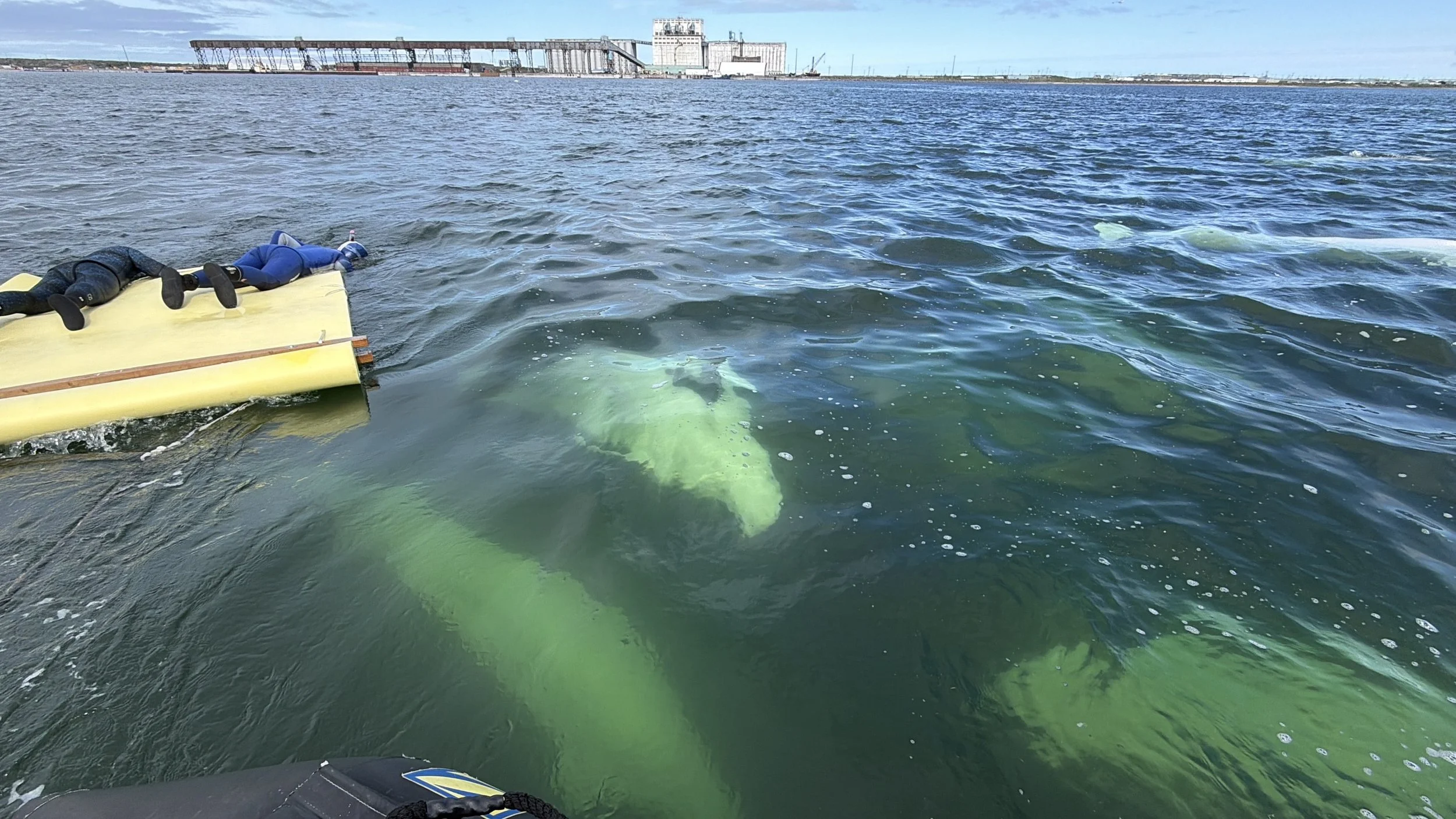
The visibility remained crappy, but still good enough for photos if the belugas came in close.
Brown water, suspended particles, and thick thermocline haze made photography challenging, but when the animals were in your face, it makes you forget all about the conditions.
Our first couple of water entries were quiet.
Then everything changed.
The second and third jumps were absolutely epic.
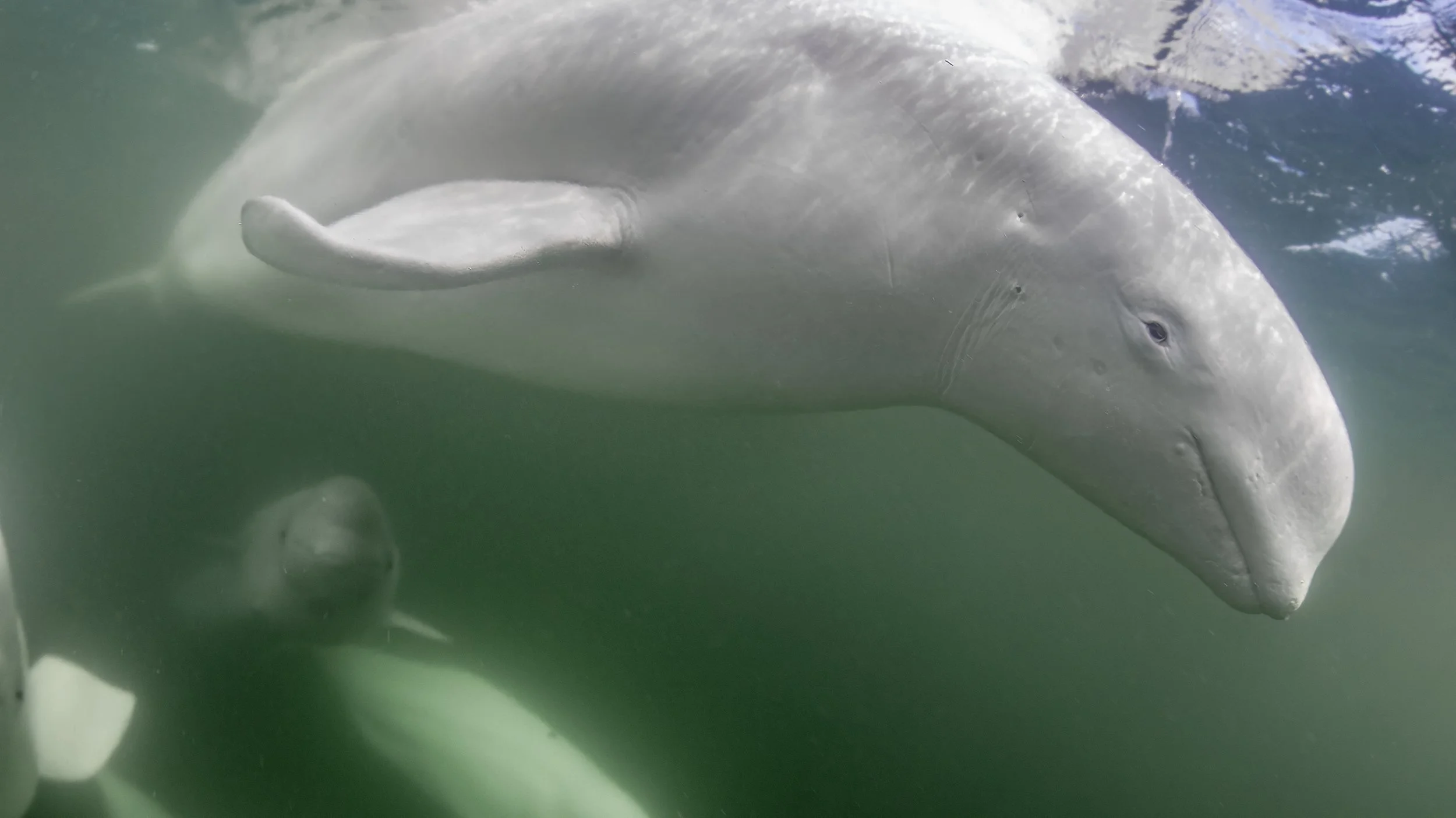
A bachelor pod of male belugas arrived and immediately became curious about us.
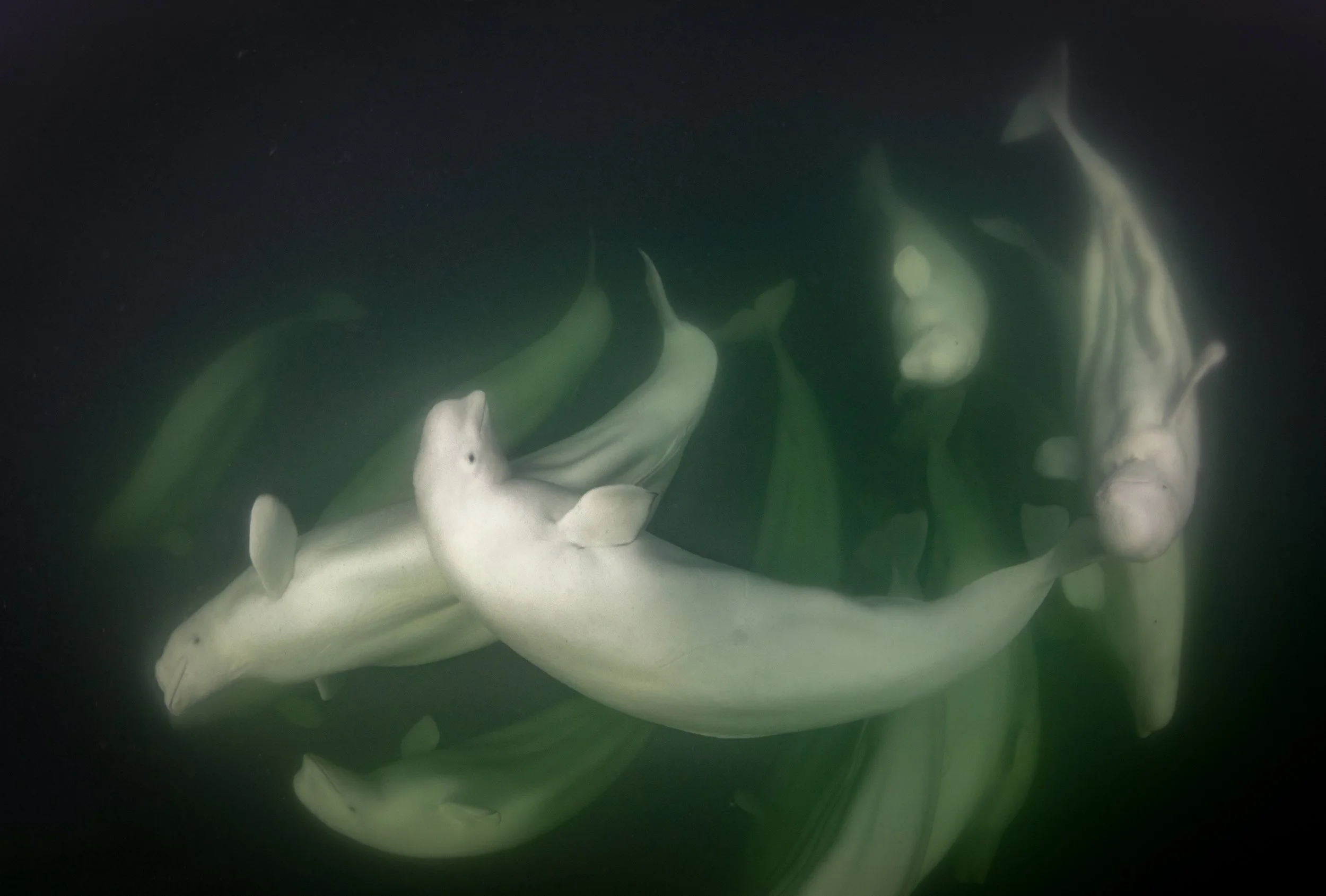
Despite the poor visibility, they came insanely close.
One whale passed so close that I could have reached out and given it a back rub.
Of course, I didn't.
But that's how close it was.
The males gathered directly beneath our boat, socializing with one another while constantly interacting with us. They bumped our dome ports, gently mouthed the 360 camera, investigated the GoPros, and seemed just as entertained by us as we were by them.
It was pure magic.
After our time in the water, we went back out onto the tundra, and returned to check on our fox family.
Once again, the bold youngster was out in the field hunting while the second kit cautiously darted in and out of the den, never straying too far from safety.
We spent a little more time photographing them before continuing our search across the tundra.
After some driving, we found several Pacific loons.
They're beautiful birds and always one of my favorite Arctic species to photograph.
Earlier in the day, my friend Andy had mentioned that a polar bear was sleeping on some rocks not far from town.
Sure enough, when we arrived, the bear was still there enjoying its afternoon nap.
The bear got up, moved around the rocks and then laid back down in the exact same spot.
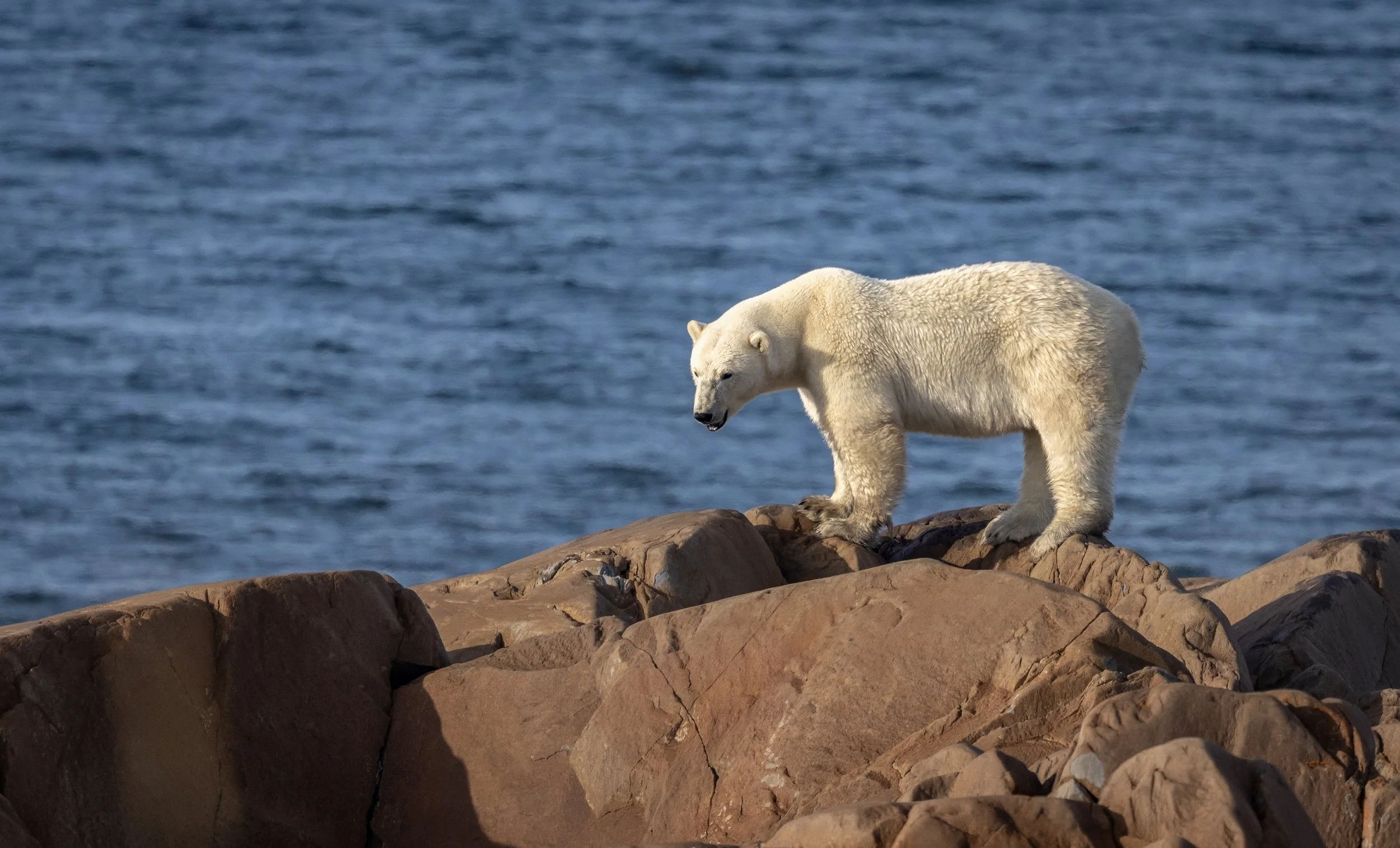
We quietly photographed it for a few minutes before leaving it to continue sleeping undisturbed.
Day Two delivered another fantastic mix of wildlife.
Week Three just keeps getting better.
I can't wait to see what tomorrow brings us.
August 8, 2026. Day Four
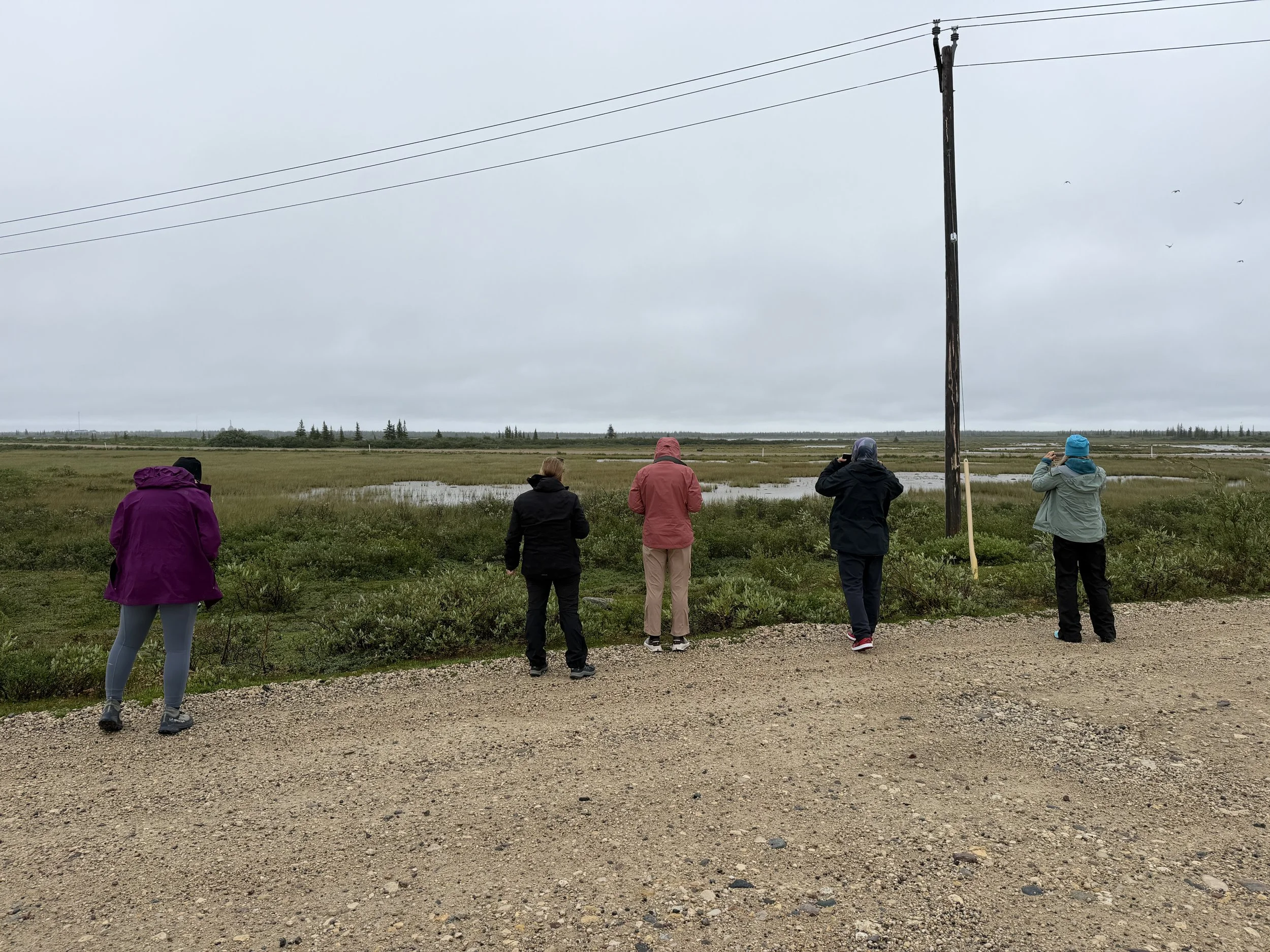
Today felt exactly how you imagine the Canadian Arctic.
Cold.
Rainy.
Windy.
The kind of weather that makes you question every life decision as soon as you step outside.
We began the morning with a drive toward Bird Cove.
Along the way, we noticed a few vehicles pulled over on the side of the road. Whenever you see that in Churchill, it's usually worth stopping.
Sure enough, a mother polar bear and her cub were making their way across the tundra.
They were a long way off, but it was still a beautiful sight watching them quietly wander through the Arctic landscape. We spent a few minutes enjoying the moment before continuing on our way.
When we arrived at Bird Cove, another group of vehicles had gathered.
This time, they were watching a caribou.
We were excited to see one, but the moment quickly became bittersweet.
A local hunter had legally harvested another caribou nearby.
It's simply part of life in the North.
The animal will be used for food, and sustainable subsistence hunting has always been part of the culture here. Even so, it's never easy seeing such a beautiful animal after it's been harvested.
We photographed the surviving caribou for a while before it slowly moved away across the tundra, leaving the area behind.
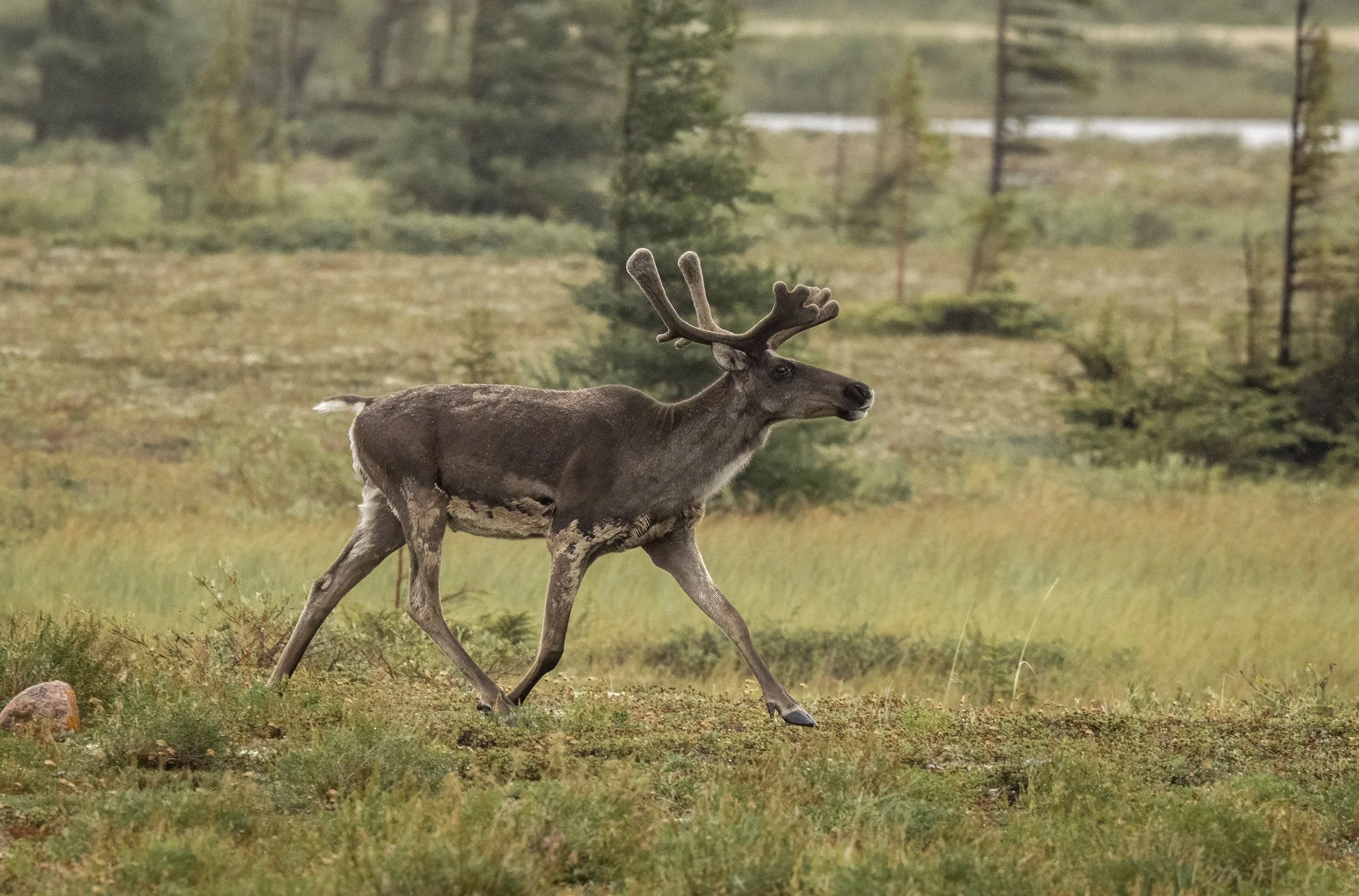
We sort of helped escort it safely in the opposite direction from where the hunters were.
From there, we continued toward yesterday's bear location.
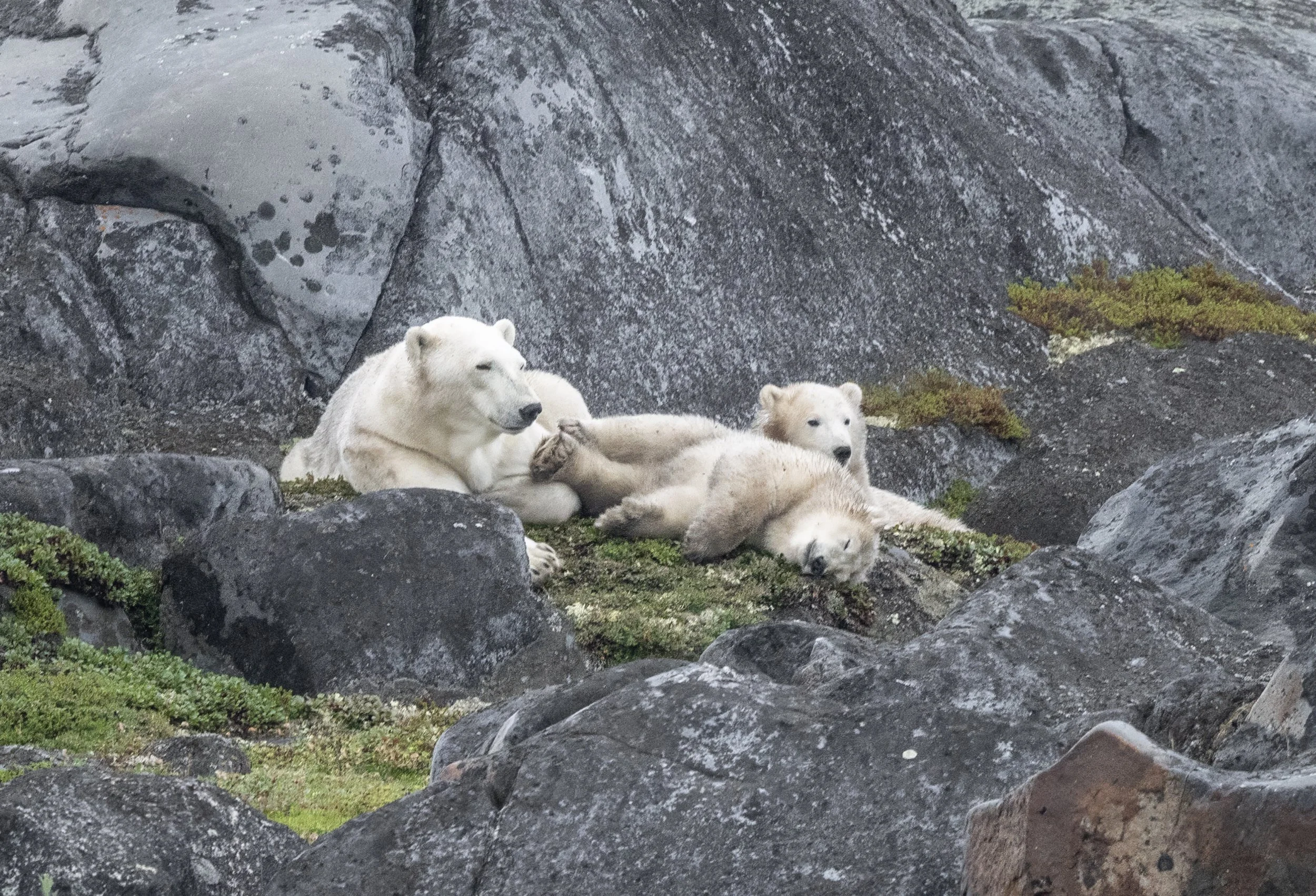
Just as we had hoped, the mother polar bear and her two cubs were still sleeping peacefully among the rocks.
We spent about thirty minutes quietly photographing the little family before leaving them undisturbed and heading back toward town.
At 2:00 p.m., it was time to head for the river.
The skies remained overcast.
The rain continued.
The wind had increased to nearly 18 knots, pushing enough swell into the river to remind us that today was going to be a very cold day on the water.
As soon as we lowered the viewing board into the river, curious belugas appeared.
For whatever reason, these whales seem to love the worst weather imaginable.
While everyone else dreams of sunshine, the belugas always seem happiest when it's cold, windy, and raining.
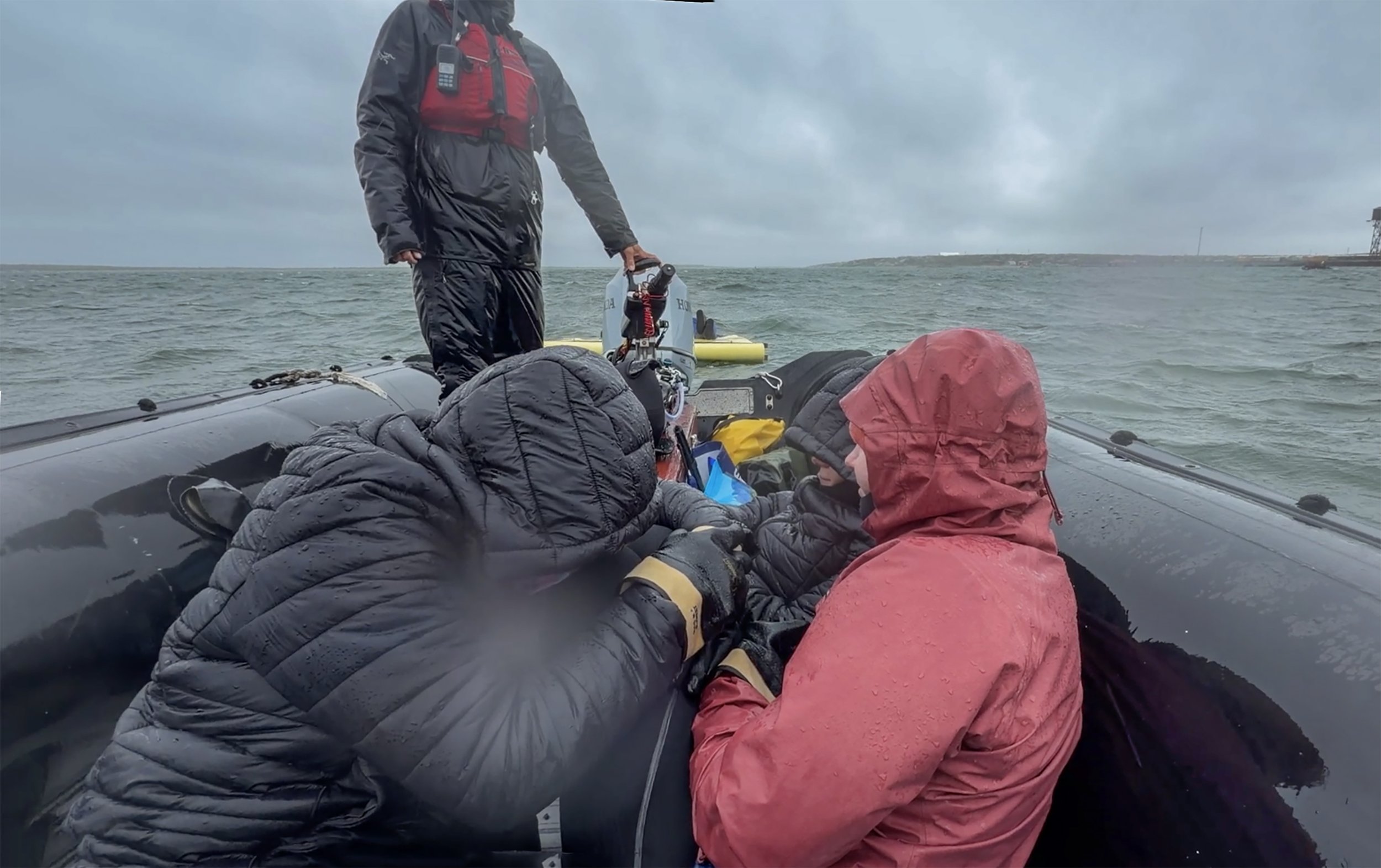
By late afternoon, the cold had settled deep into our bones.
It hurt.
There really isn't another way to describe it.
Hands ached. Faces stung. Every minute in the water out of the water demanded a little more determination.
But then...
Everything became worth it.
The underwater visibility was bad.
The river was murky, and most of the time the whales only appeared as pale white shapes emerging from the darkness.
but if the animals came in close, the vis was alright.
Then three juvenile belugas arrived.
For the next several minutes, they stayed with us, right in our face.
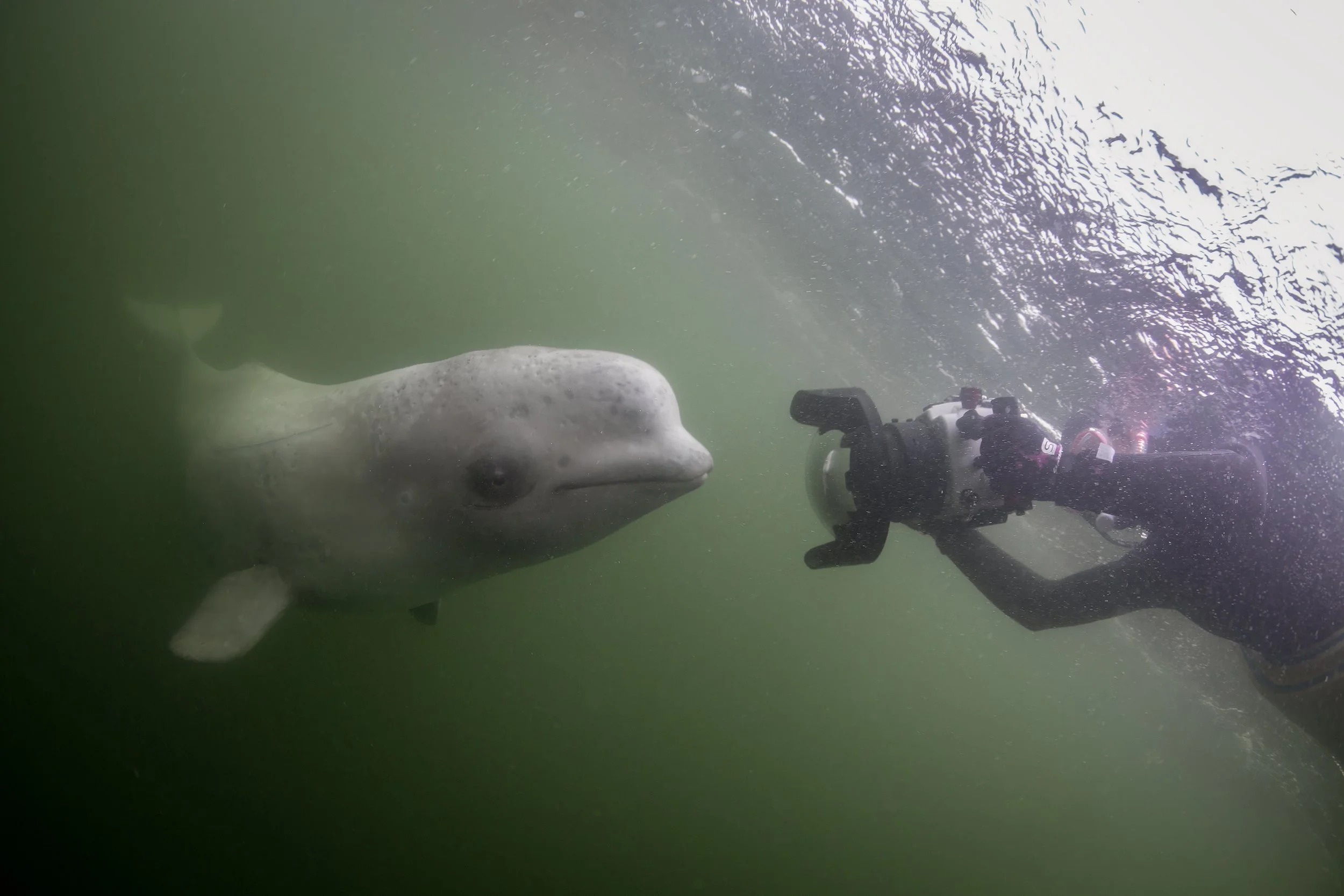
One of the Jr’s. was completely fascinated with our cameras, repeatedly swimming in close to inspect the dome ports, GoPros, and housings before looping around for another pass.
Despite the terrible visibility, the interaction itself was sooo good!
Those curious young whales made one of the coldest days of the expedition into one of its most memorable.
Sometimes wildlife photography isn't about perfect conditions.
Sometimes it's about embracing the cold, enduring the discomfort, and getting rewarded with a few extraordinary moments that make every frozen finger worthwhile.
Day Four was absolutely incredible.
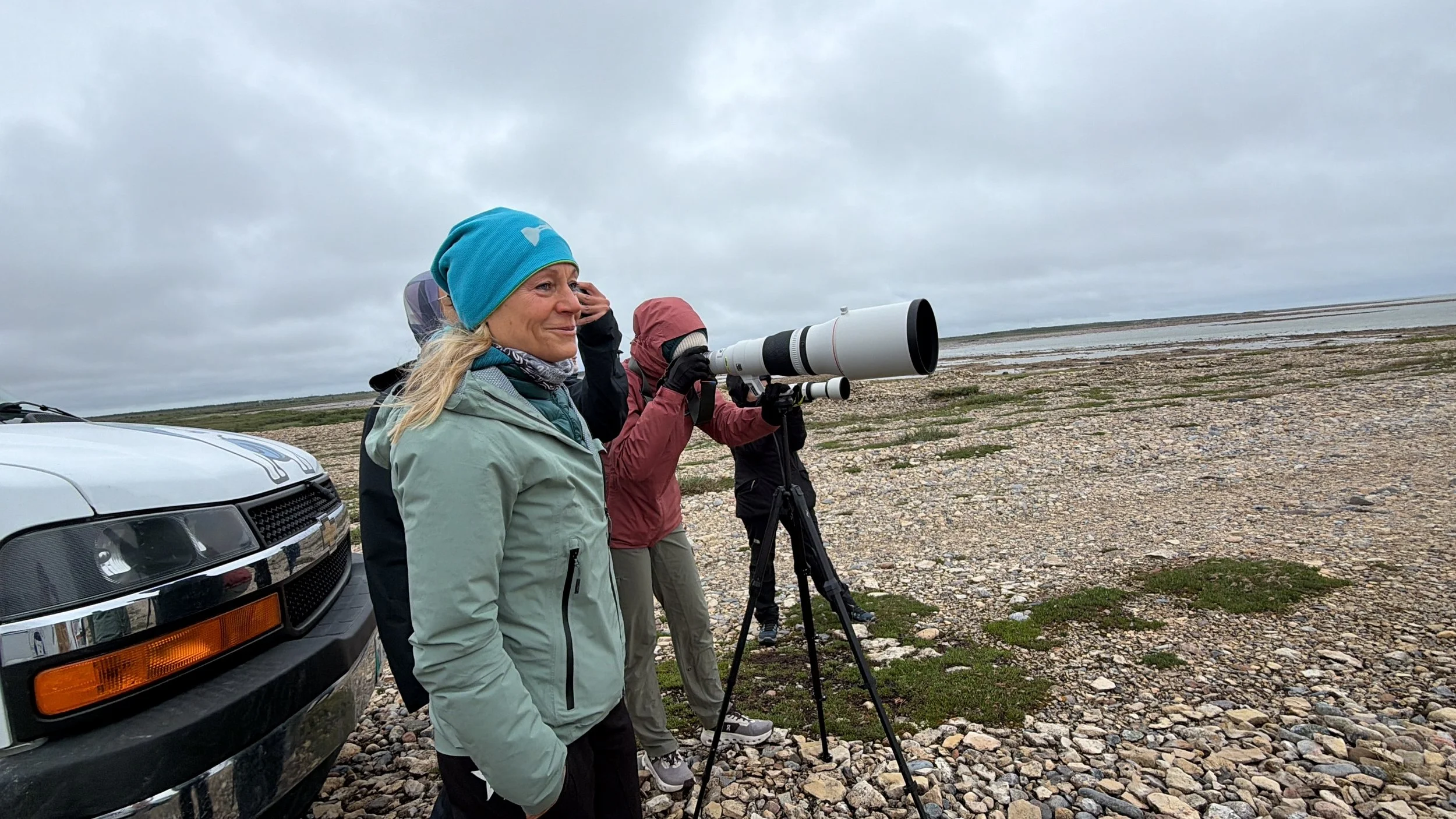
August 9, 2026. Day Five
We woke to a cold, rainy, and windy morning.
Not exactly the kind of weather you hope for on your final day in Churchill.
But...
Our last day was fire.
We began the morning with one final tundra safari, heading straight for Bird Cove where a mother polar bear and her two cubs had been spending the past couple of days.
As we pulled into the area, several vehicles were already parked along the road. Looking out across the rocks, I could just make out the familiar shape of a sleeping bear.
Our bear family was still there.
But there was another surprise.
A second mother with two cubs had settled nearby, also fast asleep.
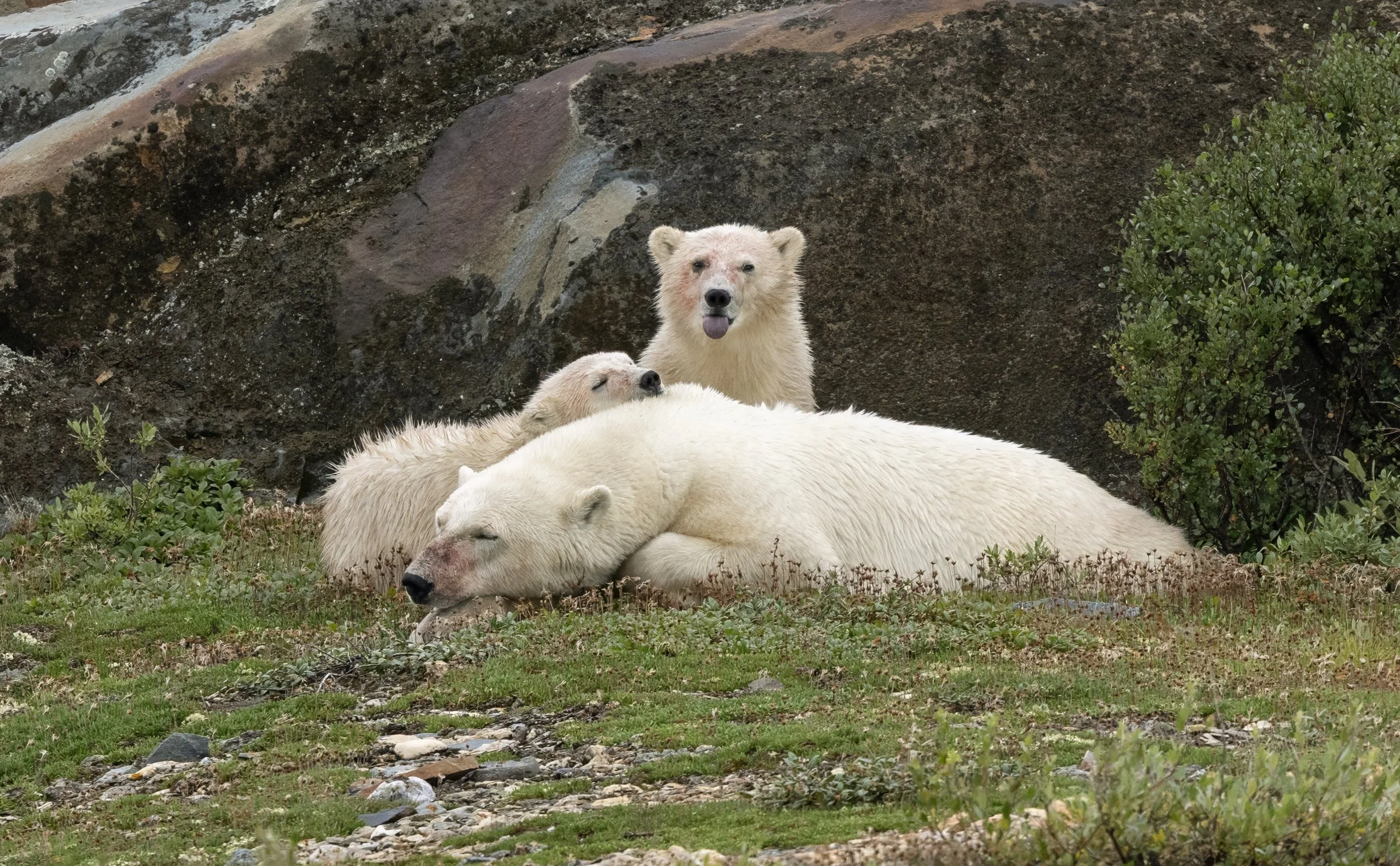
With those six bears, our week's total climbed to 17 different polar bears, a great number for a single expedition.
The newly arrived family had blood stained across their faces, an obvious sign they had recently made a successful meal.
It's always wonderful to see healthy mothers raising healthy cubs.
As we quietly watched them sleep, the morning suddenly got even more interesting.
One of the younger cubs became fascinated by the other family's cubs and kept trying to wander over to say hello.
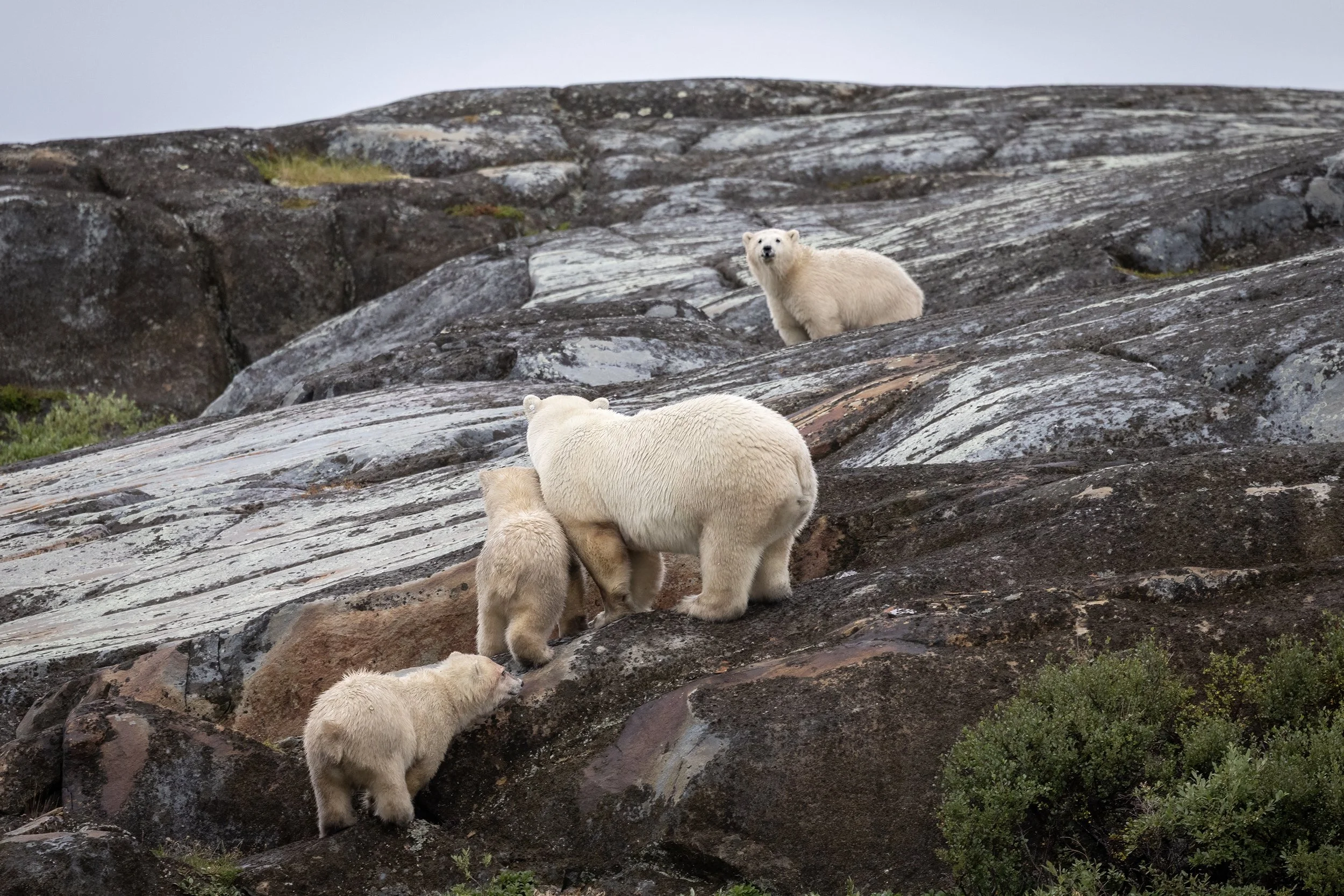
Mom had other plans.
She immediately got up and intercepted her mischievous youngster before it could get too close.
Her movement caused the neighboring family to wake up as well, and for a few magical minutes we watched both polar bear families carefully assess one another.
At one point, one of the mothers stood up on her hind legs to get a better look at the approaching bears.
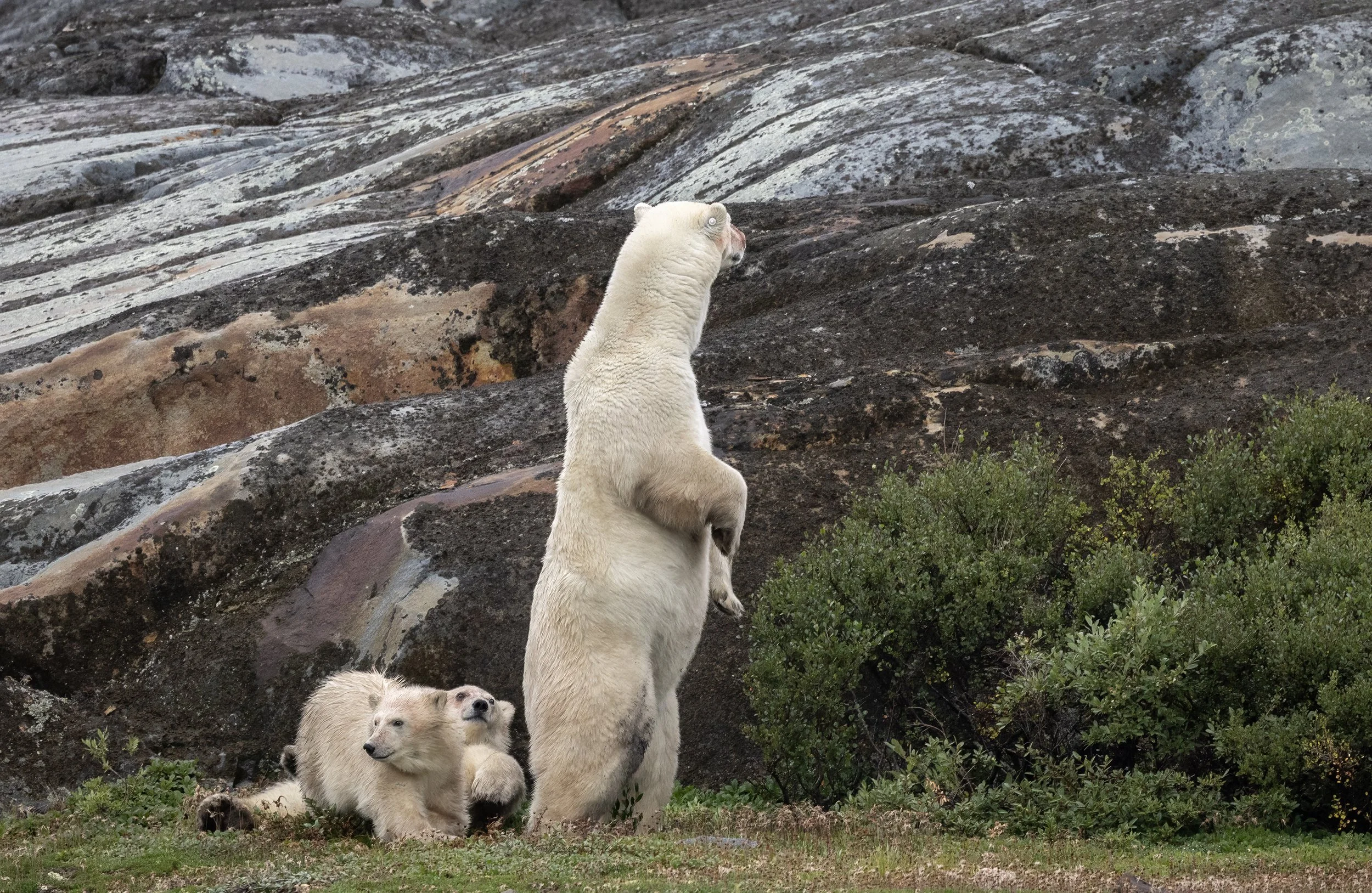
Both mothers were clearly protective of their cubs, but neither appeared stressed.
If they had been, they would have immediately moved away.
Instead, it was simply cautious parenting.
The curious cub continued its little game of trying to approach the other family, while the mothers patiently managed the situation.
Eventually, our original bear family decided it was time to move on.
As the mother walked away, both cubs began pestering her for food.
She finally sat back on her haunches, and both cubs immediately began nursing.
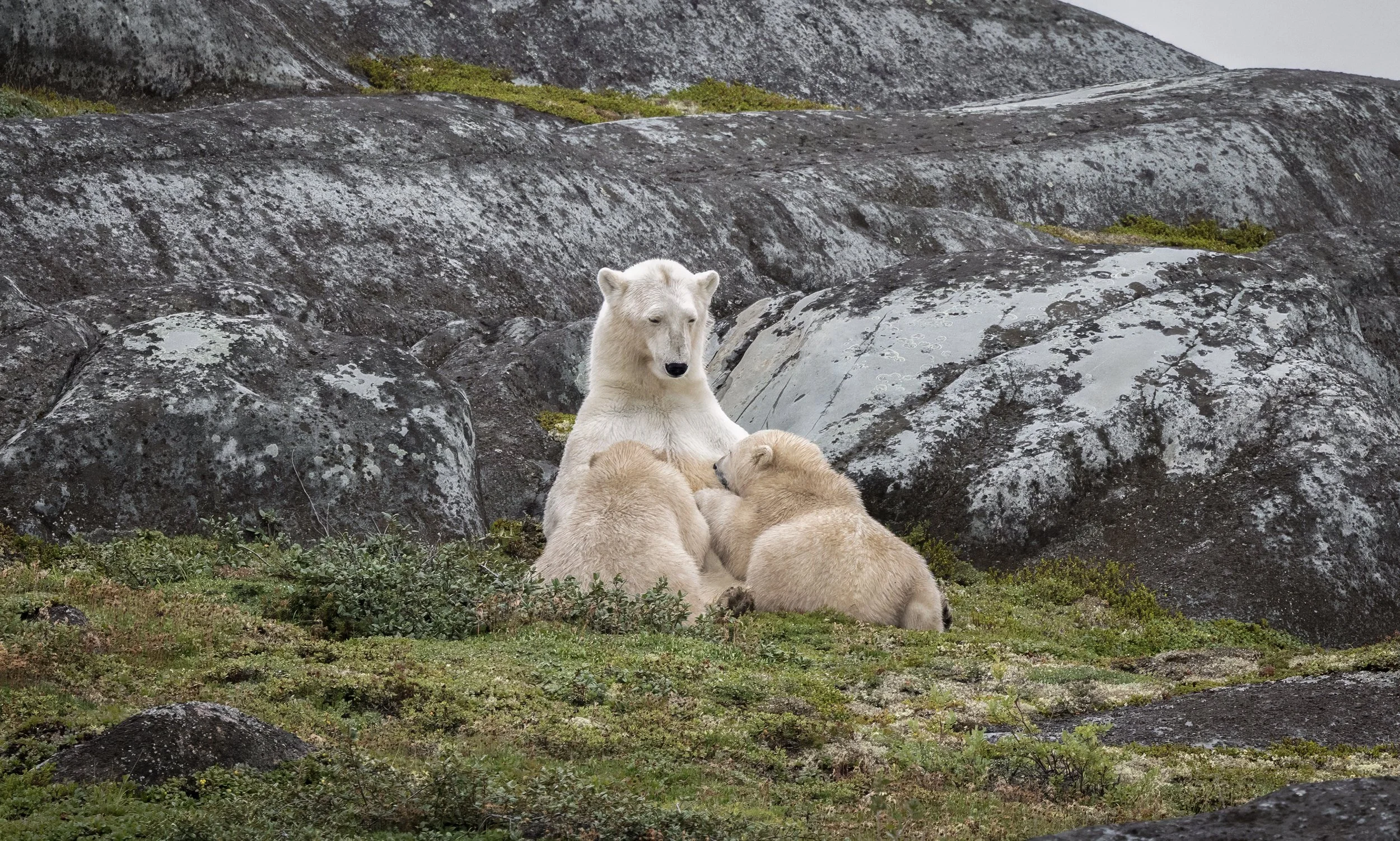
It was one of those deeply emotional wildlife moments that few people ever get the privilege of witnessing.
Maryline and Katy both had tears streaming down the faces.
I love that so much.
Watching wild polar bear cubs nurse beside their mother in the Canadian Arctic is something none of us will ever forget.
Unfortunately, the Arctic reminded us that beautiful moments often come with frozen fingers.
The wind was relentless.
My ears were numb.
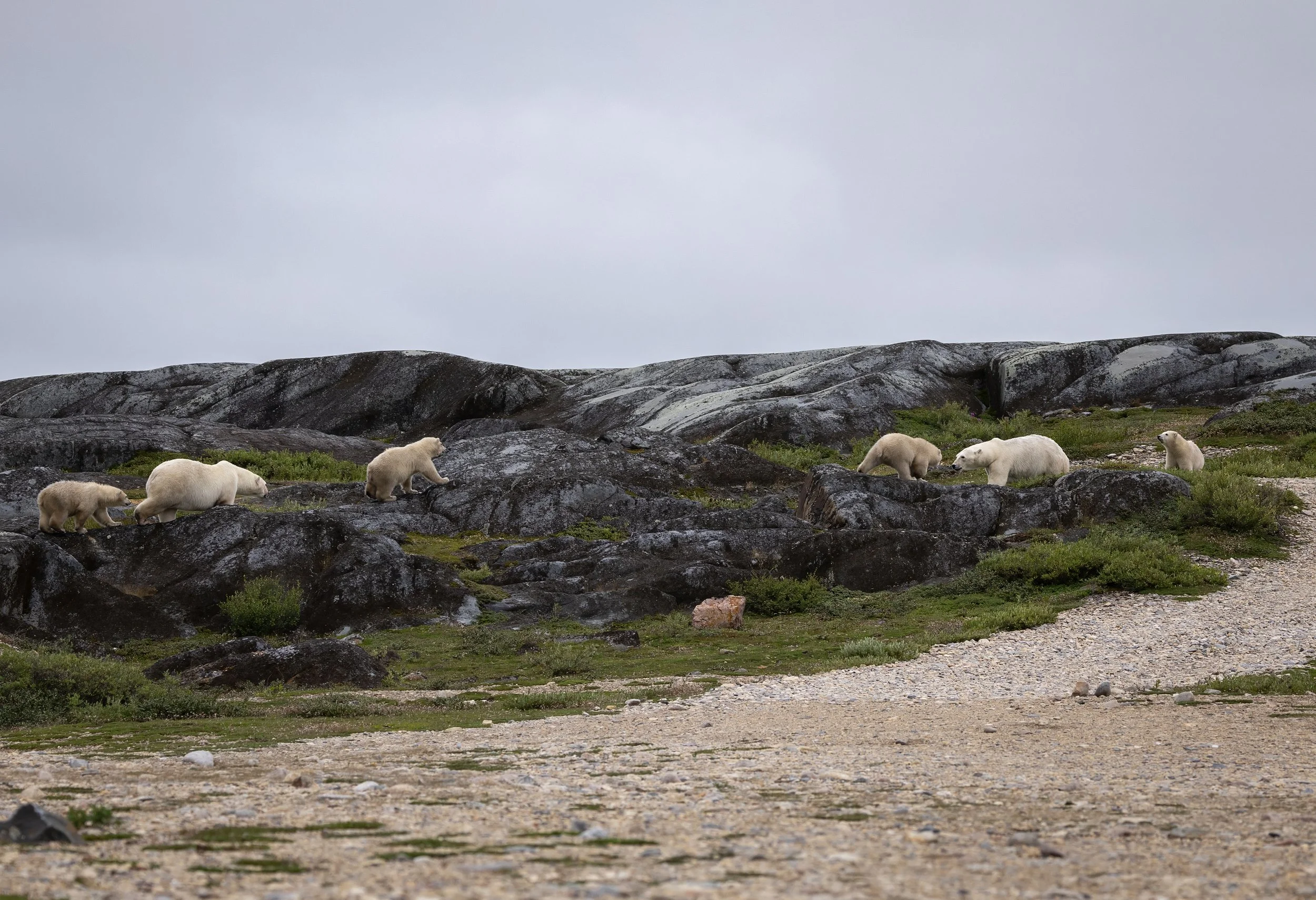
Camera batteries were dying one after another from shooting so many photos.
Eventually we accepted defeat, left the bears in peace, and headed back to town to warm up.
On the drive back, we noticed a vehicle stopped near our fox family's den.
We slowed to see what they were looking at.
Out in the meadow, one of the adult red foxes was hunting Canada geese.
The field was filled with geese and their goslings.
The adults desperately wanted to fly away, but they refused to abandon their young, forcing them to run instead.
We quickly pulled over.
Only a handful of us had any battery life left in our cameras.
Mine was flashing its final red warning.
Just enough power, hopefully, to capture whatever happened next.
The fox disappeared across the tundra in pursuit of the flock.
A few minutes later it suddenly reappeared far away, running along the railroad tracks.
This time it had a goose clenched firmly in its jaws.
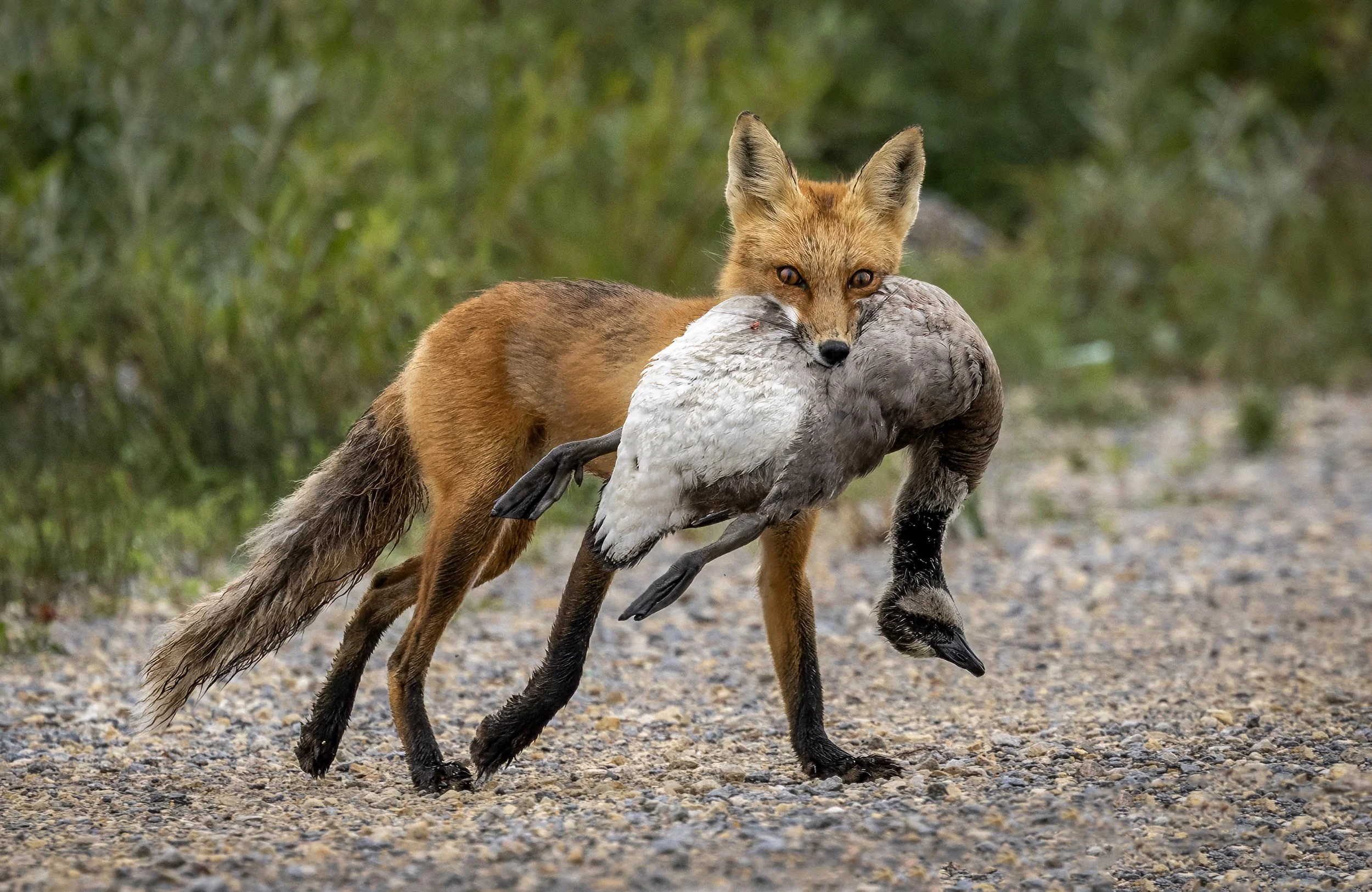
We knew exactly where it was heading.
Sure enough, it crossed the road directly in front of us before disappearing toward its den to feed its family.
It was another unforgettable reminder that life on the tundra is beautiful, but it can also be incredibly harsh.
Predators must hunt.
Parents must feed their young.
It's simply nature working exactly as it should.
What an absolutely incredible morning.
After warming up, we made our way to the river for one final afternoon with the belugas, to freeze again.
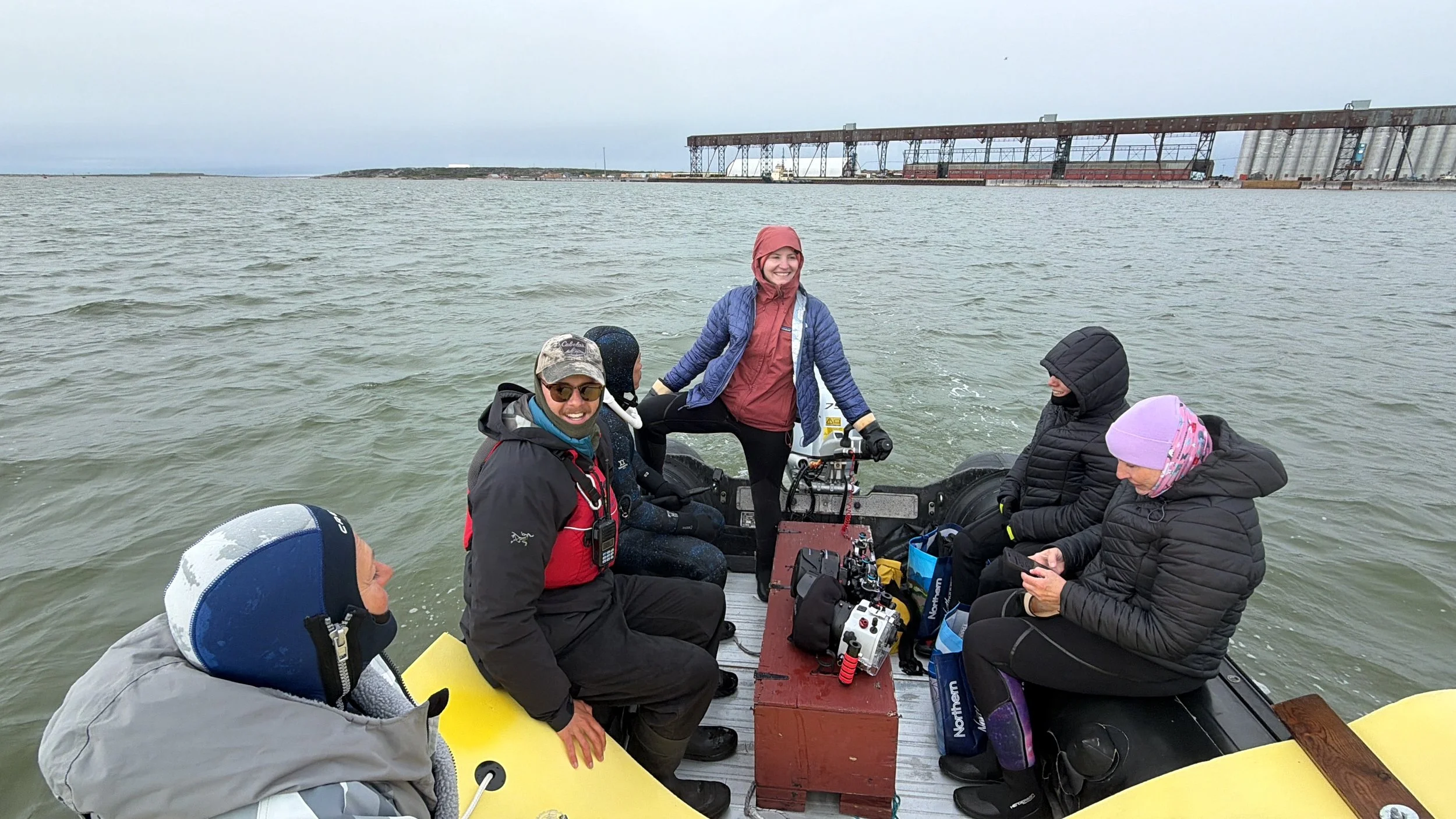
Captain Katy at the helm.
It was cold, windy, gray.
But…
Some of our very best whale encounters this season had happened in weather just like this.
Unfortunately, the river had other plans.
The visibility was the worst we'd seen all week.
The water was thick, brown pea soup.
We tried several different locations, hoping to find a cleaner patch of water, but every jump produced the same result.
You just couldn't see anything.
After a few attempts, we made the difficult decision to call it a day.
Thankfully, nobody was disappointed.
The rest of the week had been so good that everyone left the river appreciating just how special our earlier encounters had been.
Looking back over the week, it's hard to imagine how much we experienced.
Playful beluga whales.
Fox kits playing at our feet.
...and then one final bear spotted resting on the rocks while we were out on the river, bringing our total to 18 different polar bear sightings for the week.
It was truly one for the record books.
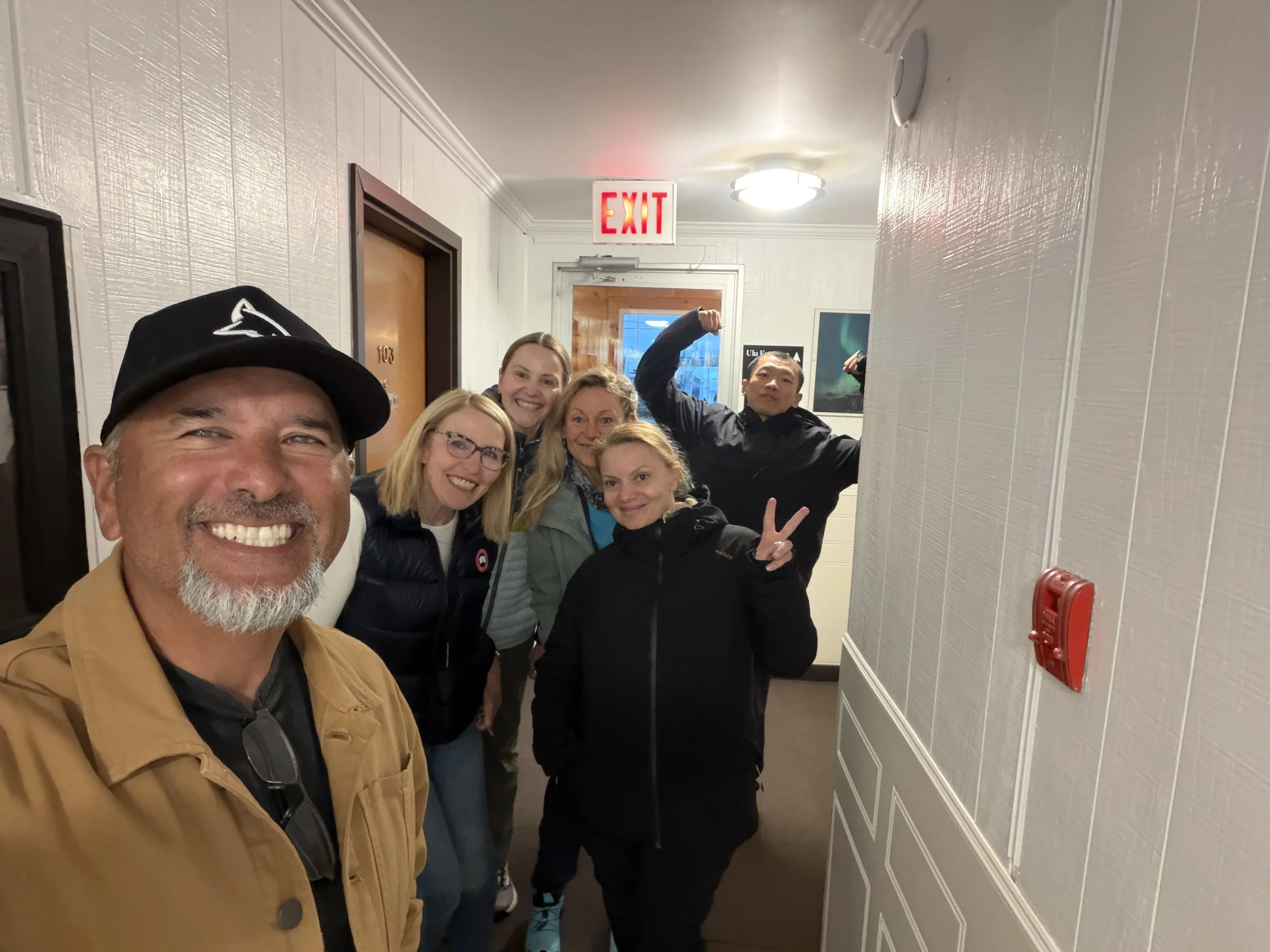
To my friends who joined us this week, thank you.
Thank you for your laughter, your patience, your enthusiasm, and for sharing these incredible moments with us.
It's the people who make these adventures just as memorable as the wildlife.
Until the next one…