
Bird Photography Gallery

Willow Ptarmigan, Churchill Canada.
This page is for the Twitchers, the bird brains, and anyone who can’t look away when a bird flies into view.
Whether it’s Arctic seabirds soaring over the fjords or songbirds flashing through a jungle canopy, birds are reminders that the wild is alive everywhere.
With over 10,000 bird species around the world, there’s always something new to see, study, and photograph.
From tiny, quick flashes of color to giants soaring across the sky, birds remind us just how diverse and alive the planet really is.
So, whether you’re a dedicated birder or just curious about our feathered friends... welcome.
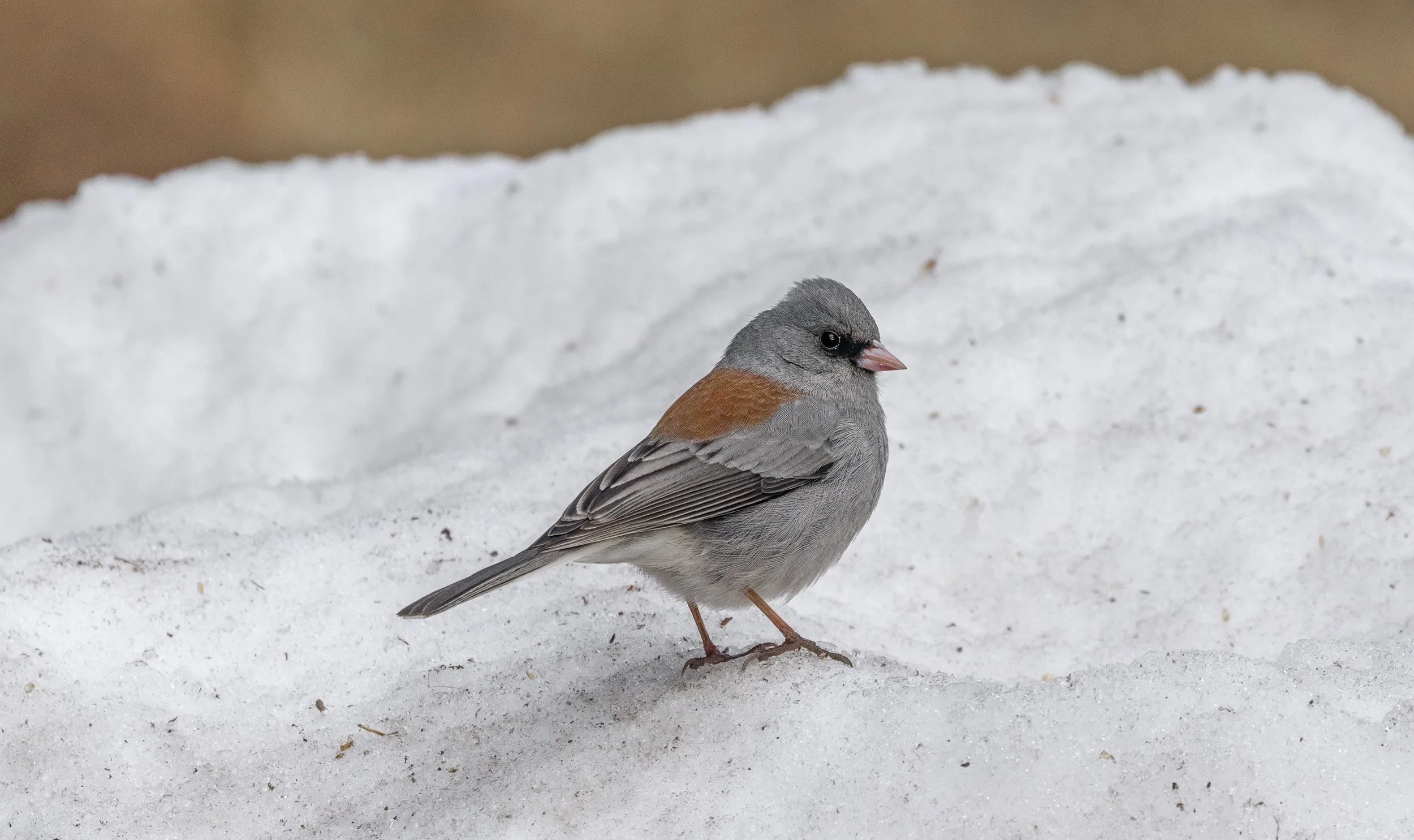
1/2000, f7.1, ISO 1000
Gray-Headed Dark-Eyed Junco
Junco hyemalis
A Gray-headed Dark-eyed Junco photographed near Purgatory, Colorado. Snapped this little beauty while on a recent ski trip. Just because I am skiing, doesn’t mean I am not going to stop and snap some images of birds!
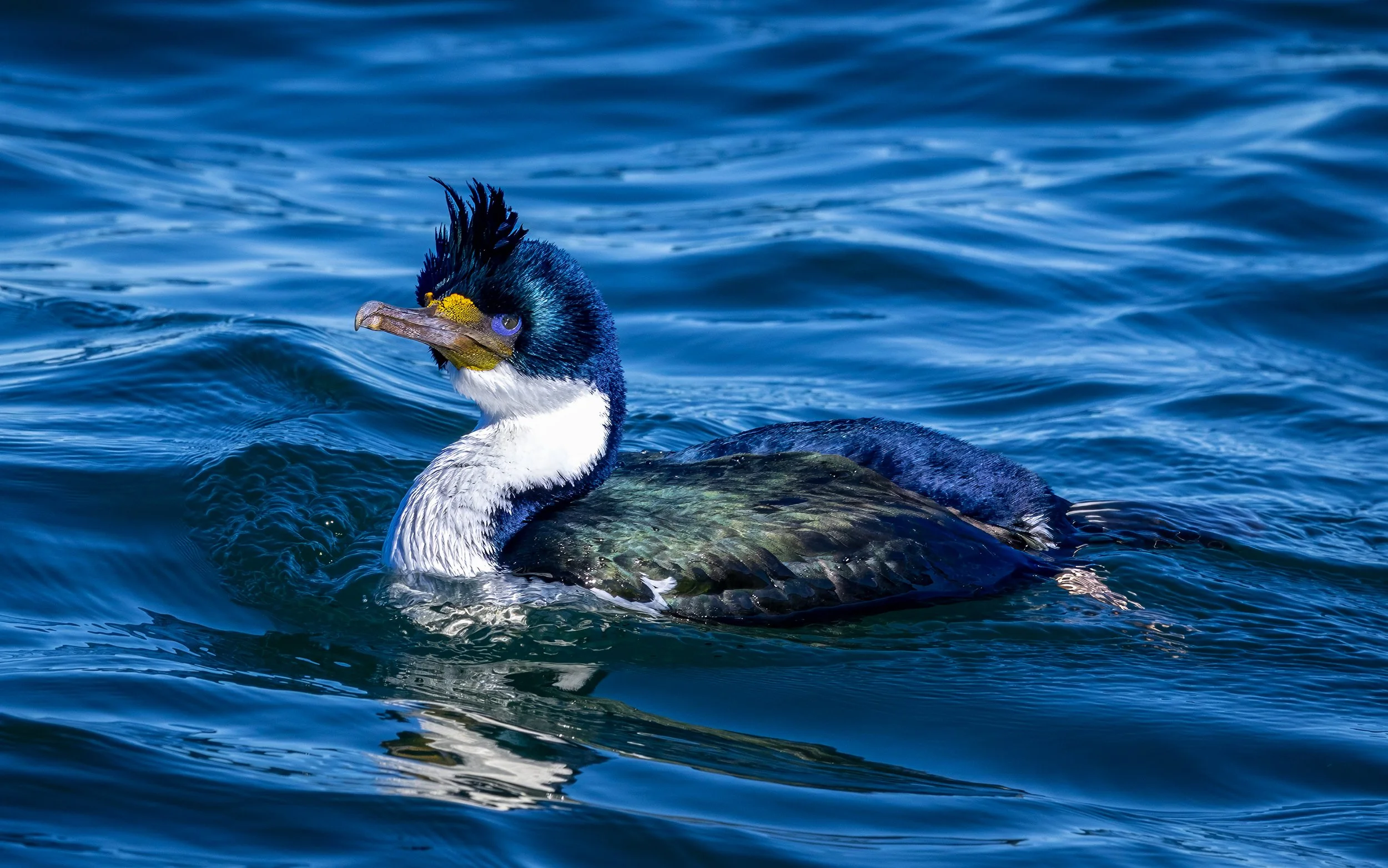
1/1000, f9, ISO 500
Imperial Cormorant
Leucocarbo atriceps
An imperial cormorant photographed off Puerto Piramides, Argentina. This seabird is recognized by its iridescent plumage, which glows bright blue and green, with a bright blue eye ring. They are such beautiful birds. A dream for me would be to photograph them underwater when they dive to hunt fish. Until then, I will enjoy these small moments with them.
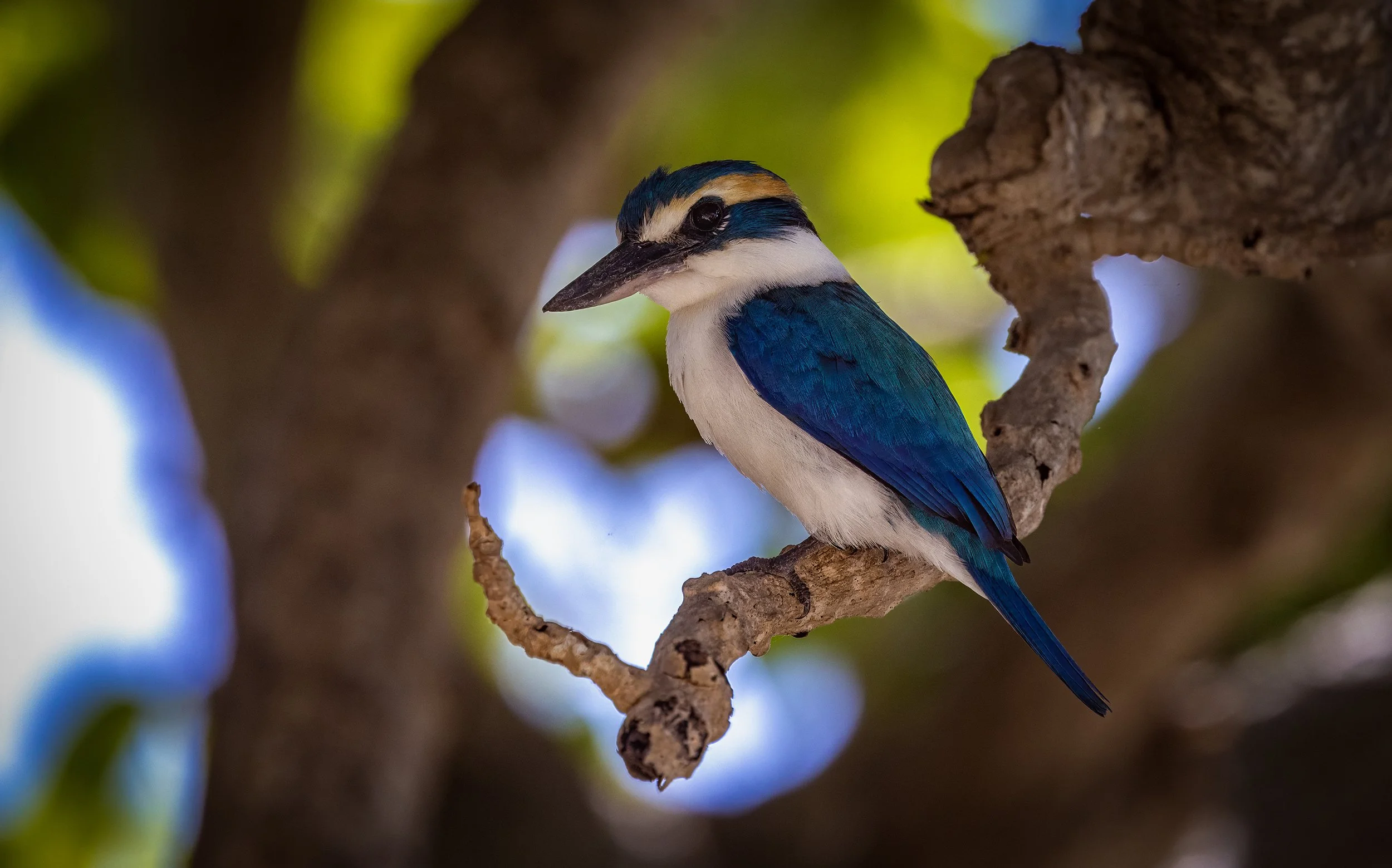
1/1000, f7.1, ISO 800
Pacific Kingfisher
Todiramphus sacer
A Pacific kingfisher photographed in the tropical island habitat of Haʻapai, Tonga. This coastal kingfisher feeds on insects, lizards, crustaceans, and small fish. Everytime I am there, I spend time trying to photograph this colorful little bird. Such beauties.
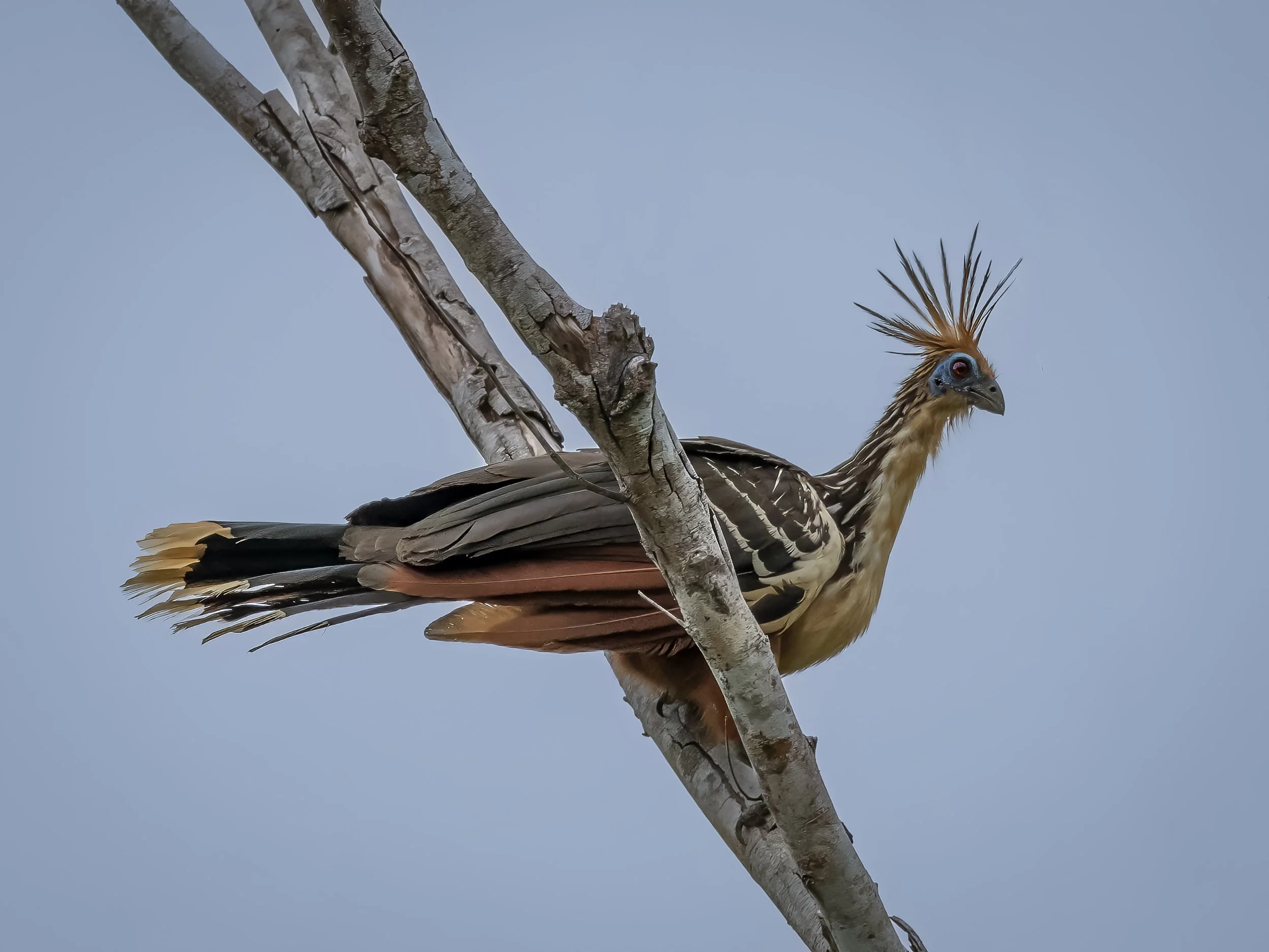
1/800, f7.1, ISO 320
Hoatzin
(Opisthocomus hoazin)
One of the most fascinating birds I've ever had the pleasure of photographing.
The Hoatzin (Opisthocomus hoazin) is unlike any other bird on Earth. Often described as a living relic from the prehistoric world, it has one of the most unusual evolutionary stories in the animal kingdom.
Its diet consists primarily of leaves, and its chicks are born with tiny claws on the ends of their wings. If a predator approaches the nest, the young birds will leap into the flooded forest below, swim back to their tree, and use those claws to climb back to safety. It's one of nature's most incredible survival strategies.
This image is simply proof that we found one. I'm still chasing a proper portrait of this bird.
In the dense forests of Brazil's Amazon, they're very difficult to photograph.
Next season… I'll get my bird.
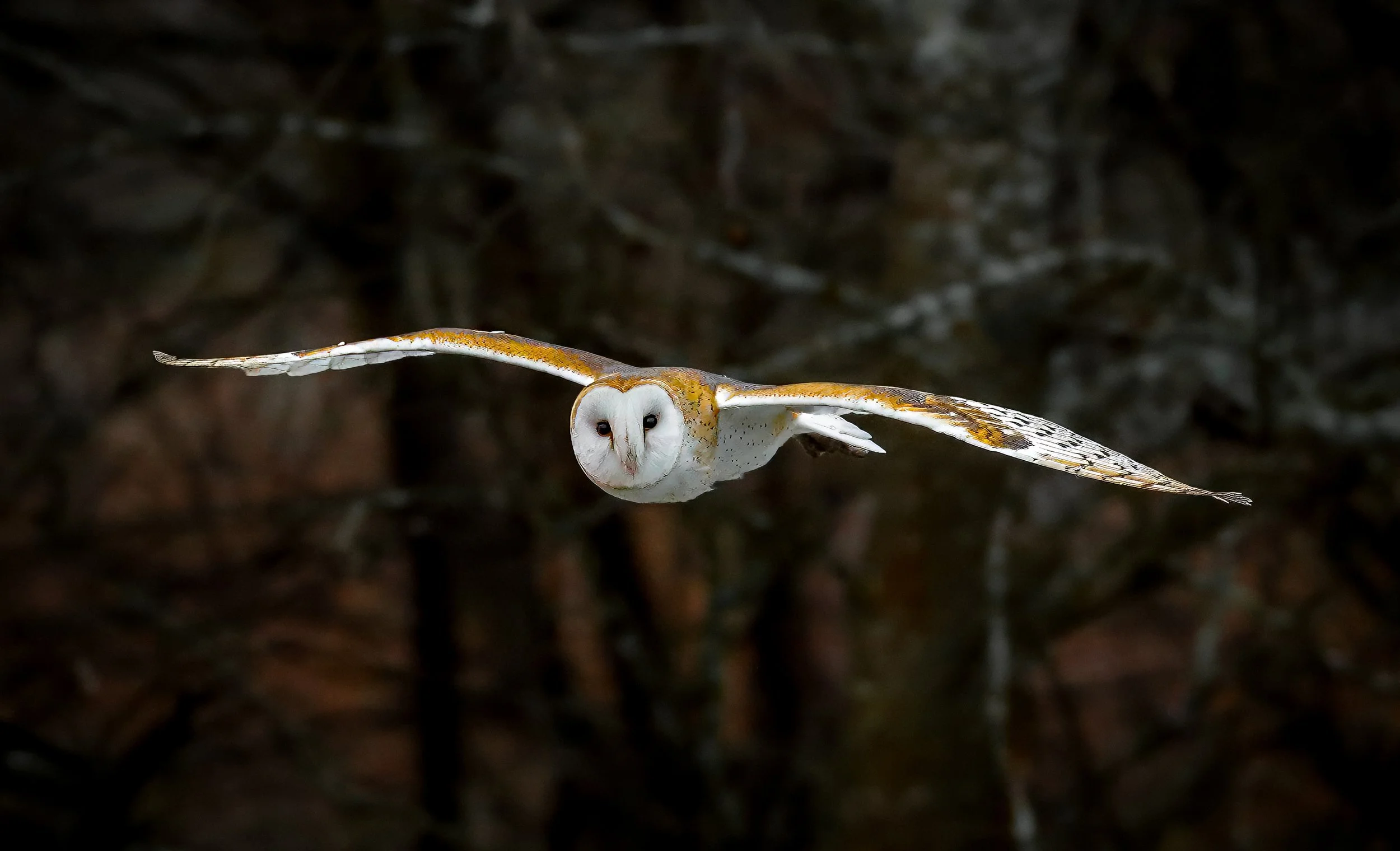
1/640, f6.3, ISO 6400
Barn Owl
( Tyto Alba )
One of the most coveted owl species in the world, at least for me, is the barn owl.
With its ghostly white face and striking appearance, it's easy to understand why this species has inspired so many myths and legends. From tales of witches and spirits to modern-day alien stories, barn owls have long captured the human imagination.
I had been hoping to photograph one for years.
That opportunity finally came while I was in Florida photographing bobcats with a good friend. Almost casually, he turned to me and asked, "Hey, do you want to photograph a barn owl?"
Of course I did.
A short time later we found this beautiful bird flying in the shadows of the forest. The lighting was challenging, forcing me to push my camera settings more than I would have liked, but sometimes wildlife photography isn't about perfect conditions.
Sometimes it's simply about finally getting your chance.
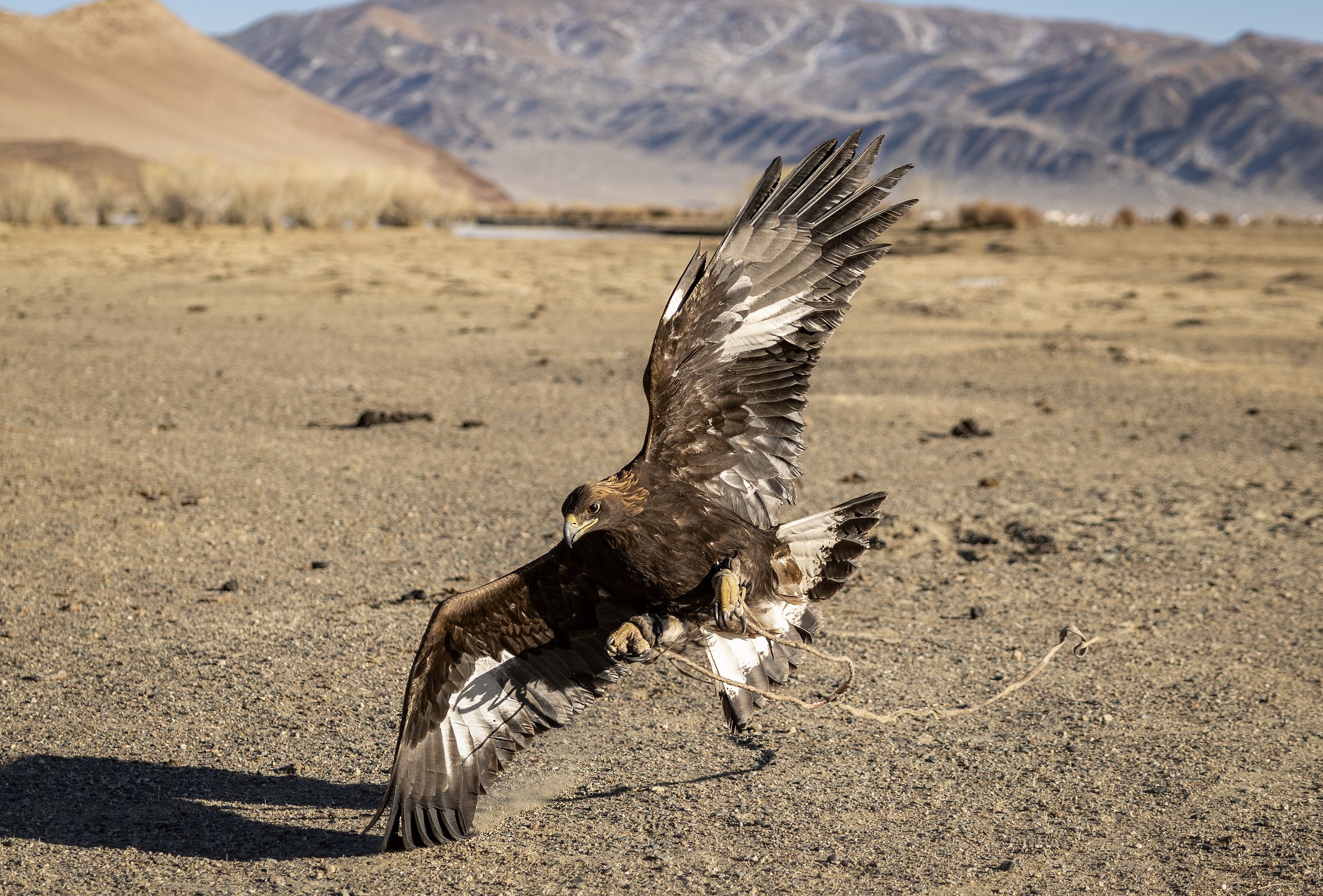
1/2000, f2.8, ISO 100
Golden Eagle
( Aquila chrysaetos )
Normally, I do not enjoy photographing captive birds.
But the opportunity to document the relationship between Mongolia's eagle hunters and their birds is simply too fascinating to ignore.
This is a story that stretches back generations.
In one of the harshest and most unforgiving landscapes on Earth, the people of Mongolia developed a partnership with these magnificent birds of prey that helped them hunt, survive, and thrive.
The bond between hunter and eagle is unlike anything else I have encountered in my travels.
It is a living piece of history, a tradition passed down through families and preserved in a rapidly changing world.
The vast landscapes, the people, the culture, and the birds themselves all come together to tell a remarkable story.
While I generally prefer photographing wildlife in completely wild settings, some stories are simply too important not to share.
This is one of them.
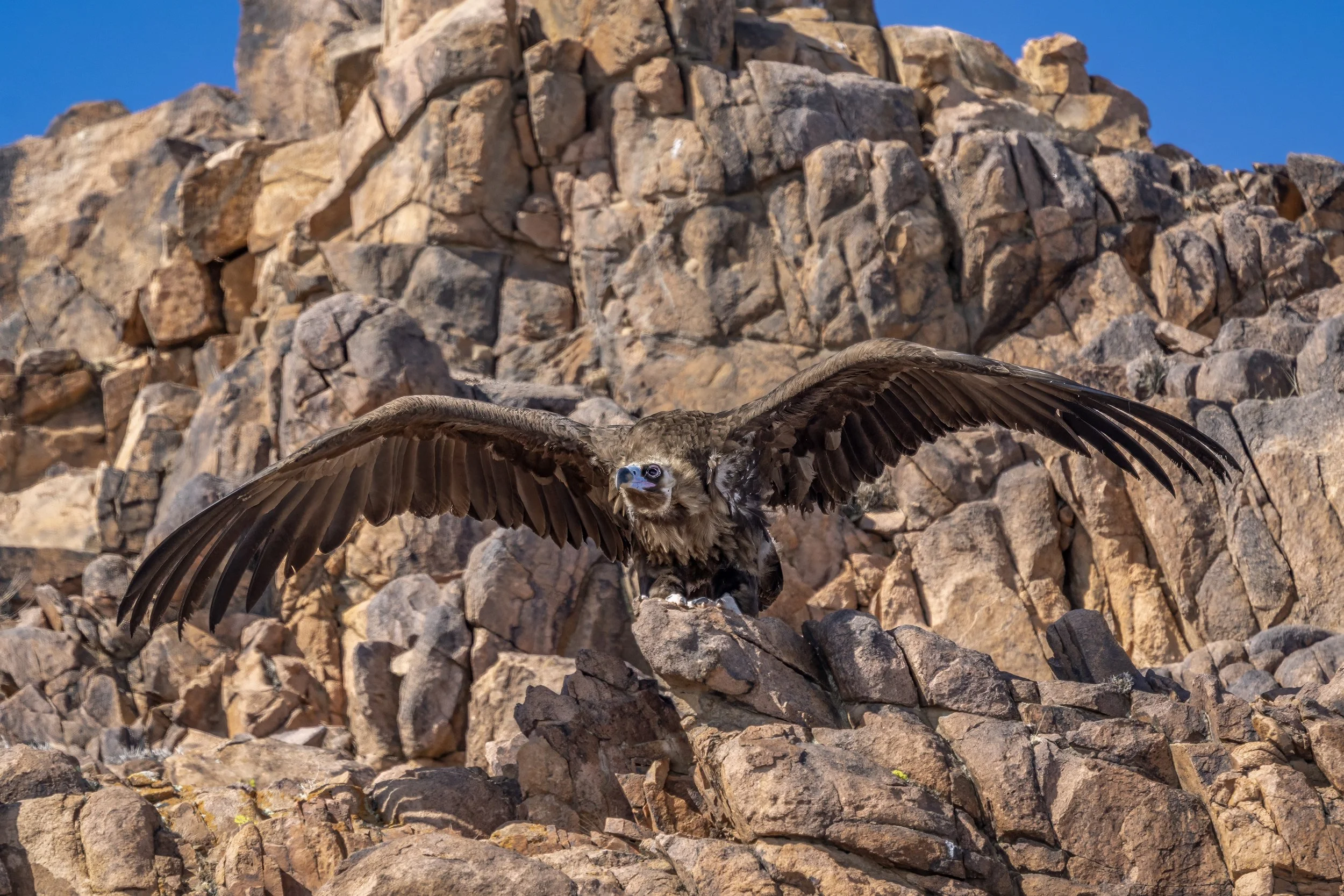
1/2500, f7.1, ISO 640
Cinereous Vulture
( Aegypius monachus )
The cinereous vulture is one of the wildest looking birds in Mongolia.
Up in the mountains, this wicked scavenger rides the cold air, searching for whatever the harsh winter has left behind.
Out here, winter is survival, and for these birds, that means opportunity.
1/1000, f7.1, ISO 1000
Summer Tanager
(Piranga rubra)
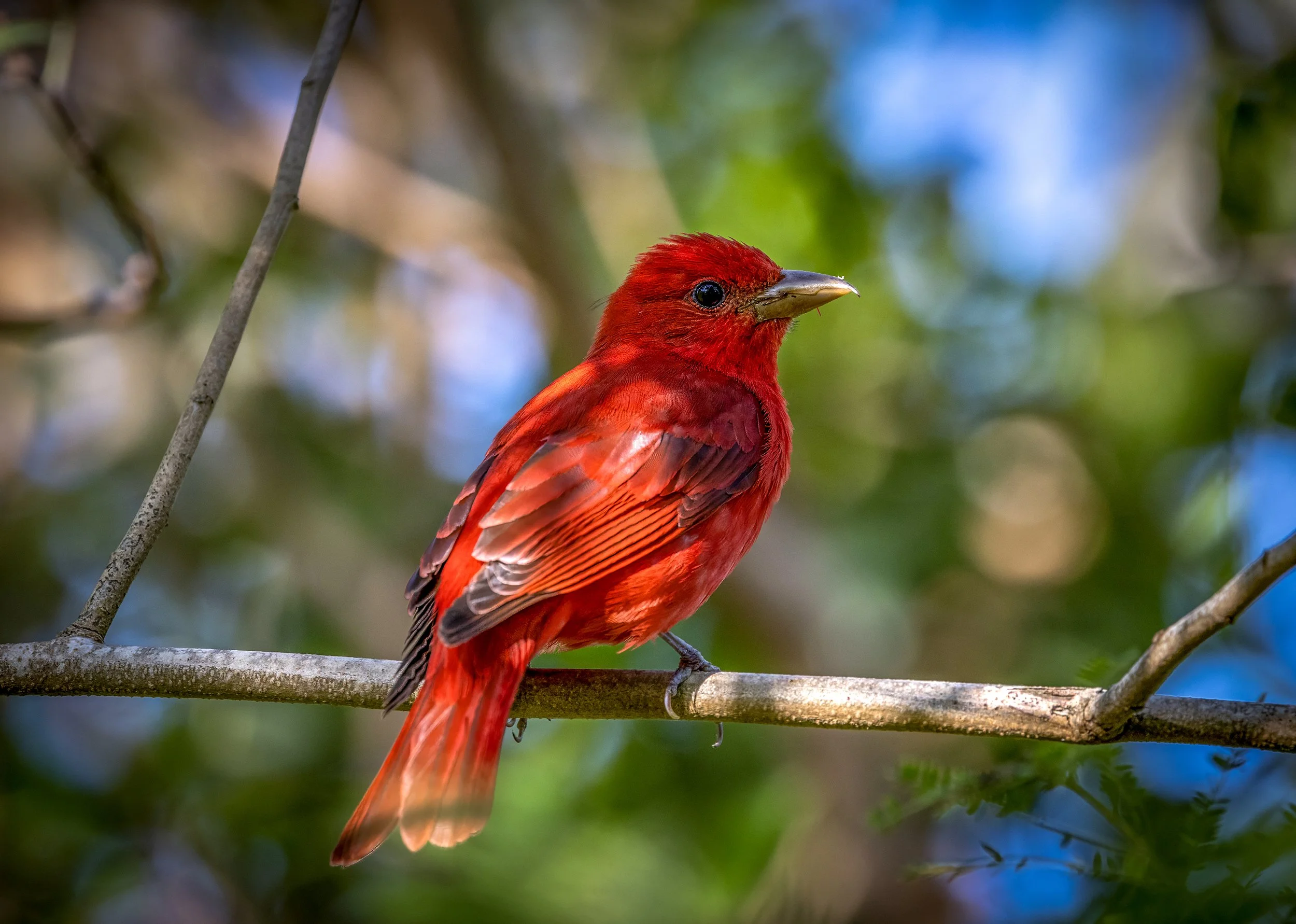
Every spring, these colorful migrants return to South Texas. The summer tanager is one I always look forward to.
I find myself visiting the same hotspots each year, hoping for that flash of red moving through the trees.
They don’t stay long… just enough to remind you they’re here. Birds like this are a big part of where my appreciation for birdlife began.
Simple moments… but the ones that stick.
1/1600, f7.1, ISO 800
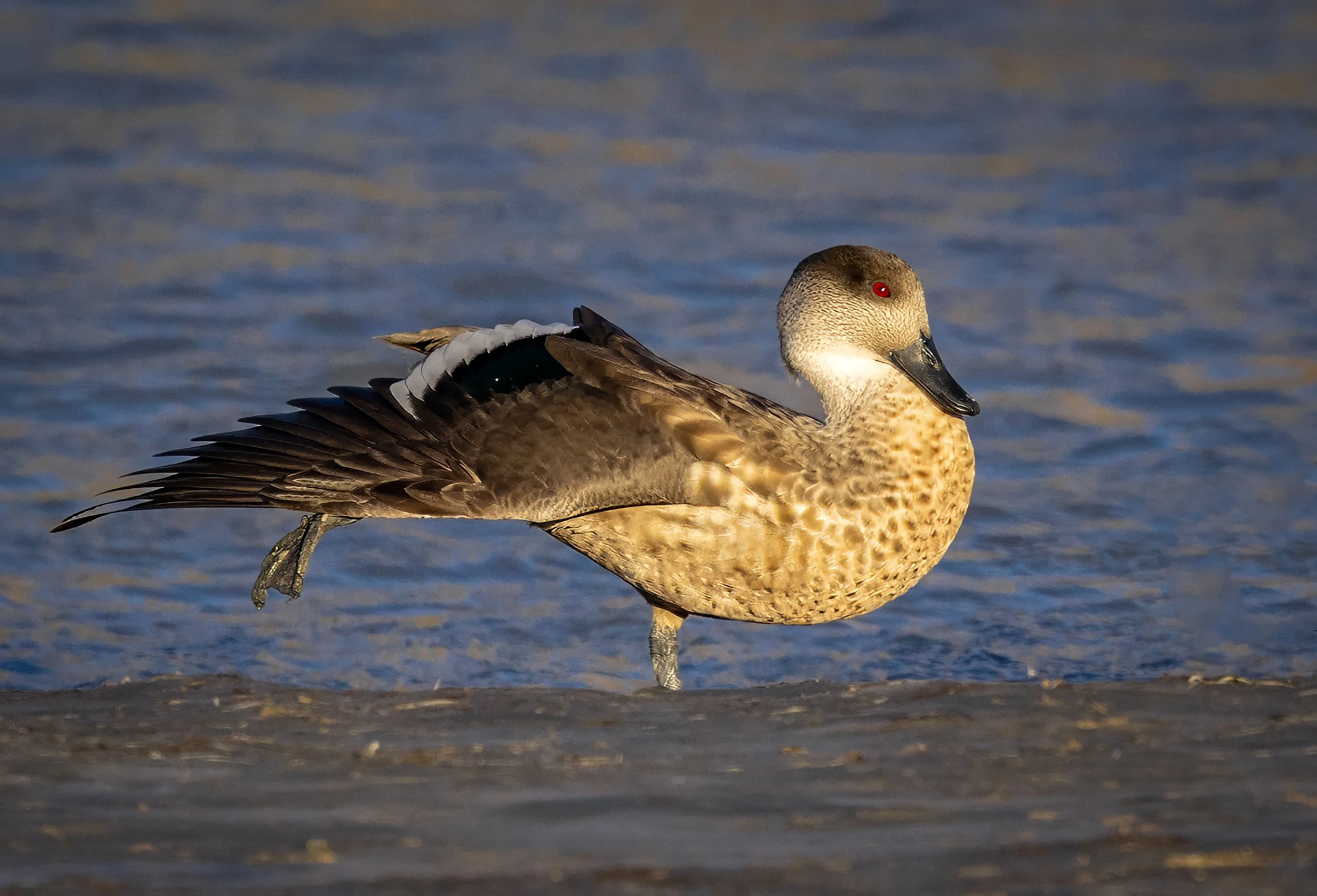
White-Cheeked Pintail
(Anas bahamensis)
Photographed this beauty off the Patagonia coast.
There was a small group of them, resting by the water. (I’m not even sure what the proper term is for ducks… flock sounds right.)
They were gathered near a small stream emptying into the ocean.
I slowly crept as close as they would allow. Any closer, and I could see them starting to get uneasy.
So I found my line.
One of the pintails stood up to stretch… and I captured this image.
They are such beautiful ducks, with incredible eyes.
1/2000, f7.1, ISO 1000
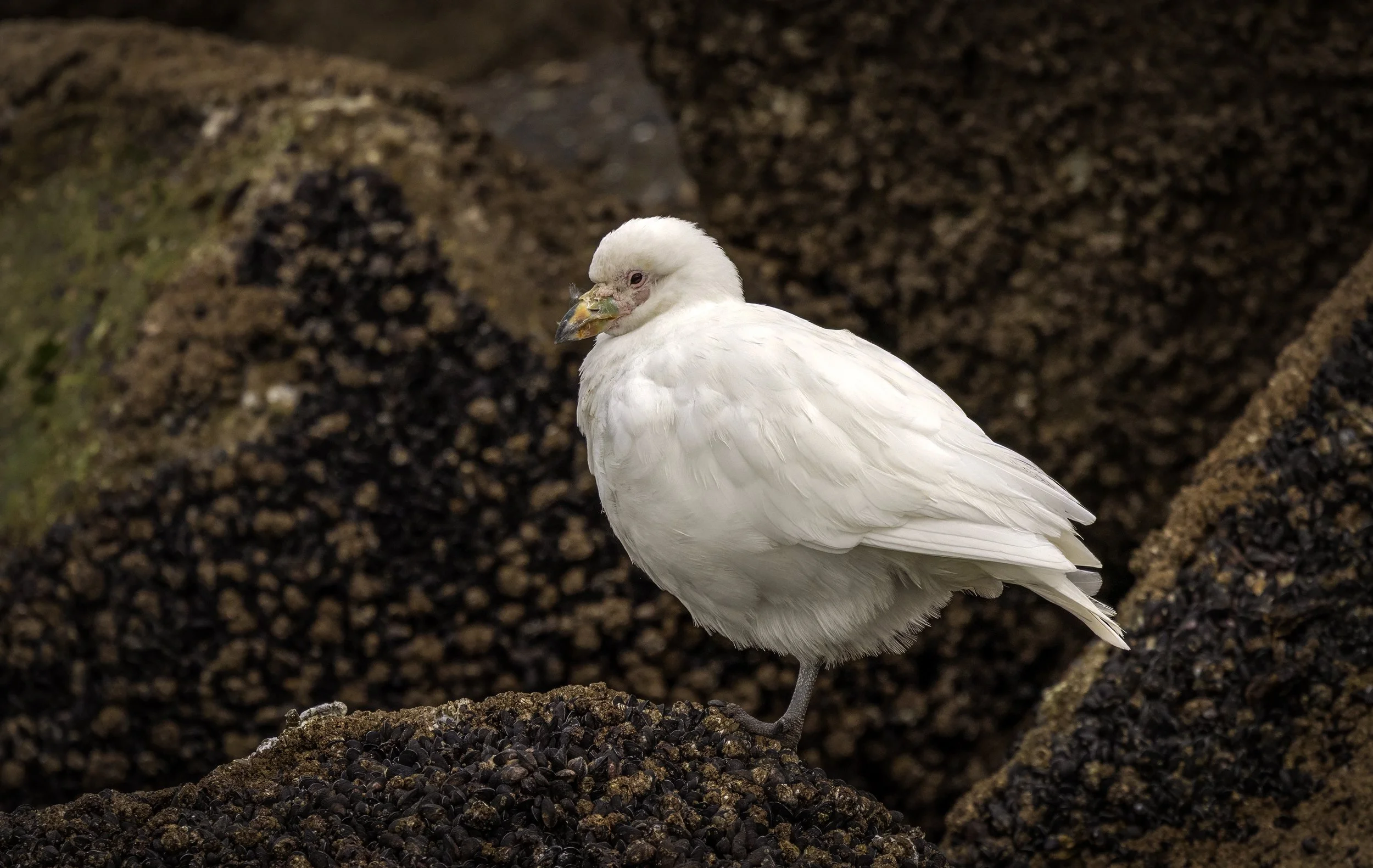
Snowy Sheathbill
( Chionis Albus )
Photographed in Rada Tilly, Argentina.
Most white birds are beautiful. These guys aren’t.
The Chionis albus is awkward, not pretty in the traditional bird way.
But it’s exactly where it’s meant to be.
It survives on the edge of the world. Living in Arctic environments, cleaning up what others leave behind, quietly doing their part, holding the ecosystem together.
Not pretty. But important.
And honestly… kind of perfect because of it.
1/1600, f7.1, ISO 1600
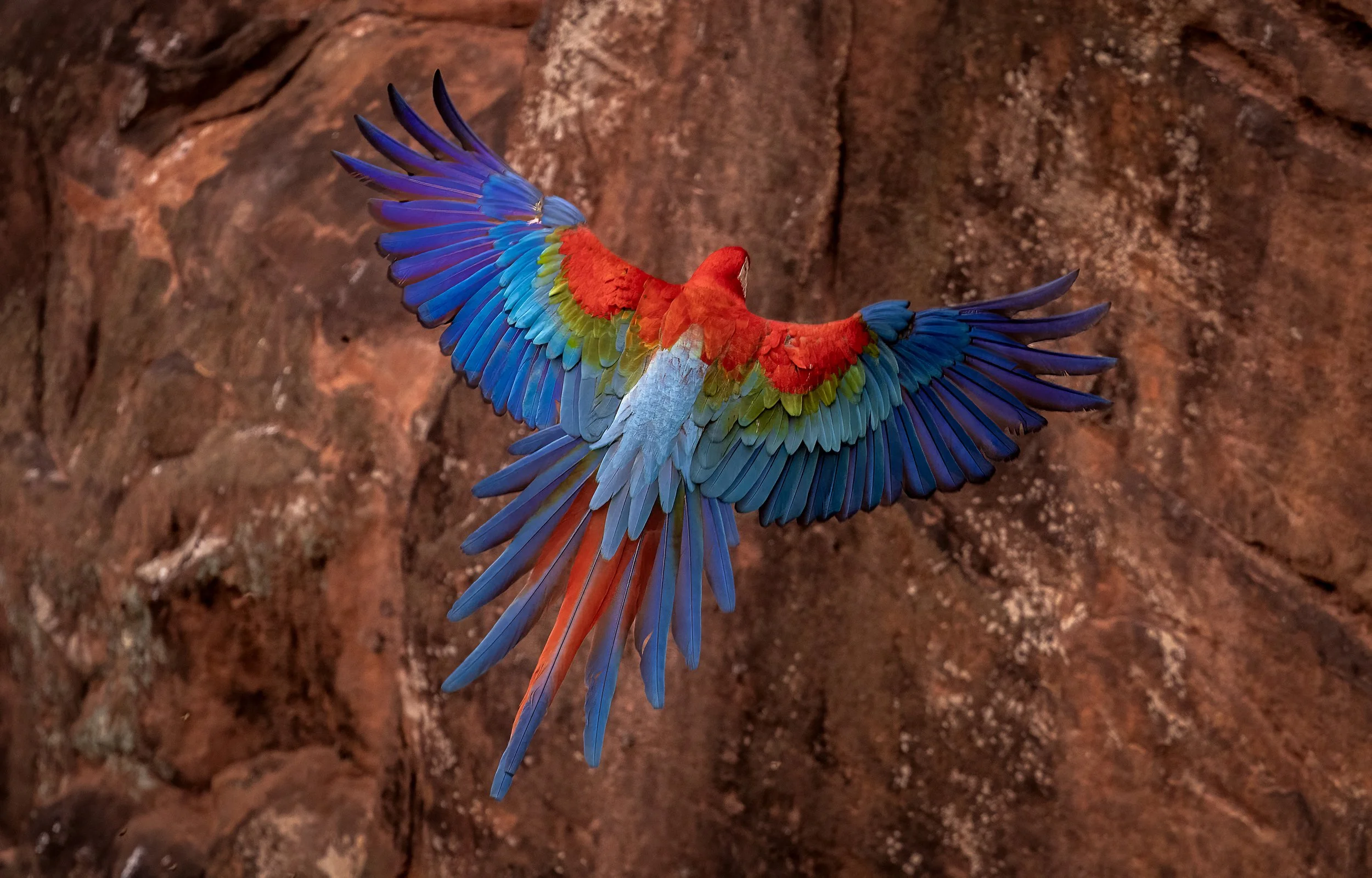
Red and Green Macaw
( Ara chloropterus )
We visited the sinkhole in Brazil, Buraco das Araras to photograph the wild red and green macaws that nest and live here. It is a magical place with sweeping views and constant movement in the air. The birds circle the cliffs, squawking loudly, their calls echoing through the cavern.
The challenge isn’t just capturing a beautiful image of a macaw, it’s capturing the brilliance of their plumage while they’re in flight.
They fly fast.
We stand on a platform looking down as they dart past us, the goal being to photograph them with their wings fully extended, revealing those explosive reds, greens, and blues. It’s not easy. It takes patience, timing, and constant tracking as they cut through the air without warning.
This is where a higher frame rate becomes essential. You need those extra frames to catch the split second when everything aligns, wings open, light hitting the feathers, body sharp.
I captured this image just as a macaw was about to land on a rock. Its wings opened wide, braking for landing, colors fully exposed. It was a challenging shot to pull off, but moments like this make the work worth it.
1/800, f9, ISO 200
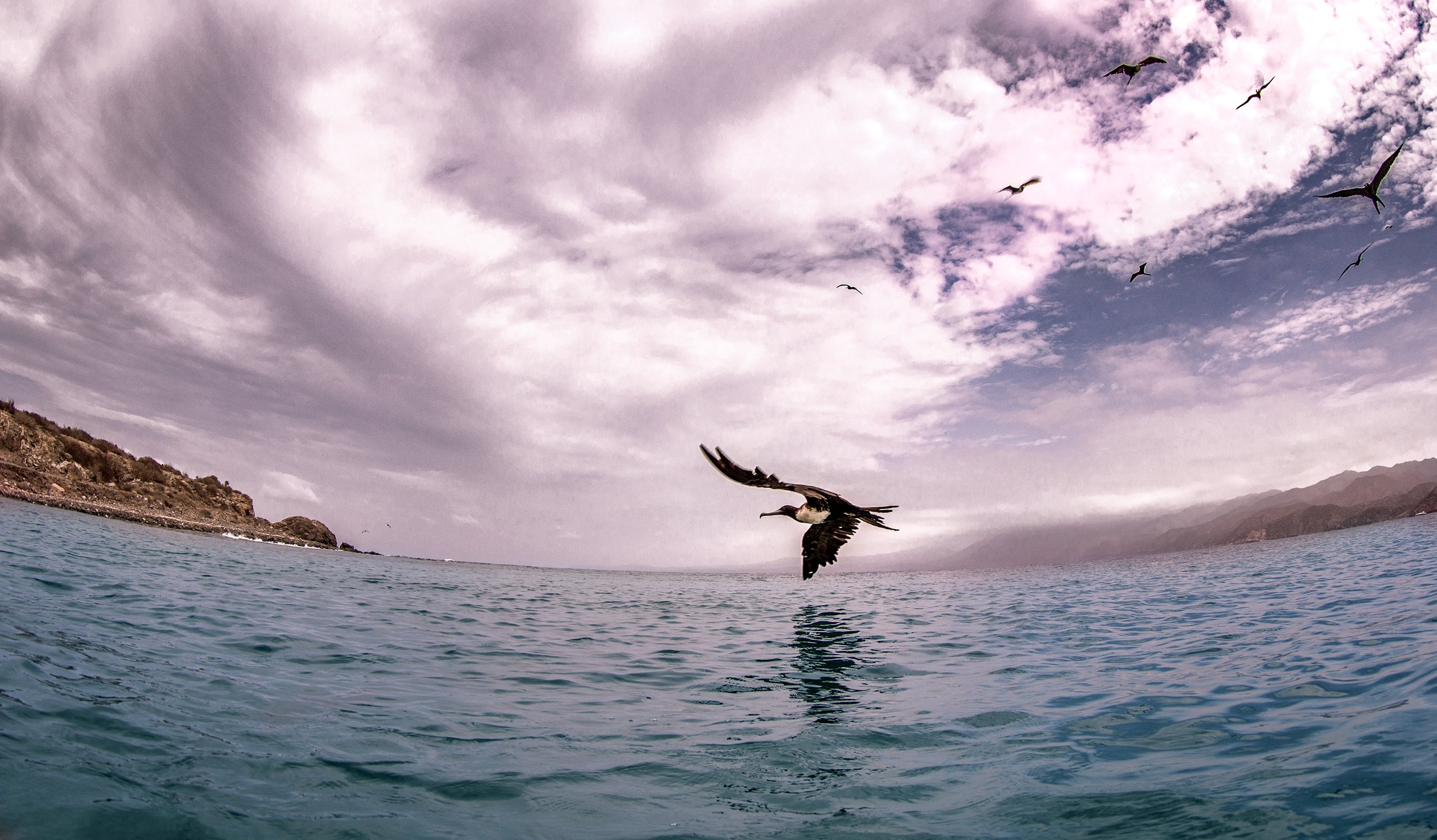
Magnificent Frigatebird
( Fregata magnificens )
We were snorkeling with hundreds of pufferfish in a beautiful bay. The fishermen were tossing scraps into the water, and the puffers went wild, turning the waters into a feeding frenzy.
Above us, magnificent frigatebirds circled like giant pterodactyls, taking full advantage of the chaos. They swooped down to steal scraps right off the surface, barely missing the water as they snatched their prize.
I took the opportunity to snap a few images as they dive-bombed overhead.
I was shooting with a 15mm fisheye lens, which makes getting tight shots tricky. This particular frame doesn’t look especially close, but when that bird buzzed past me, it was much closer than it appears.
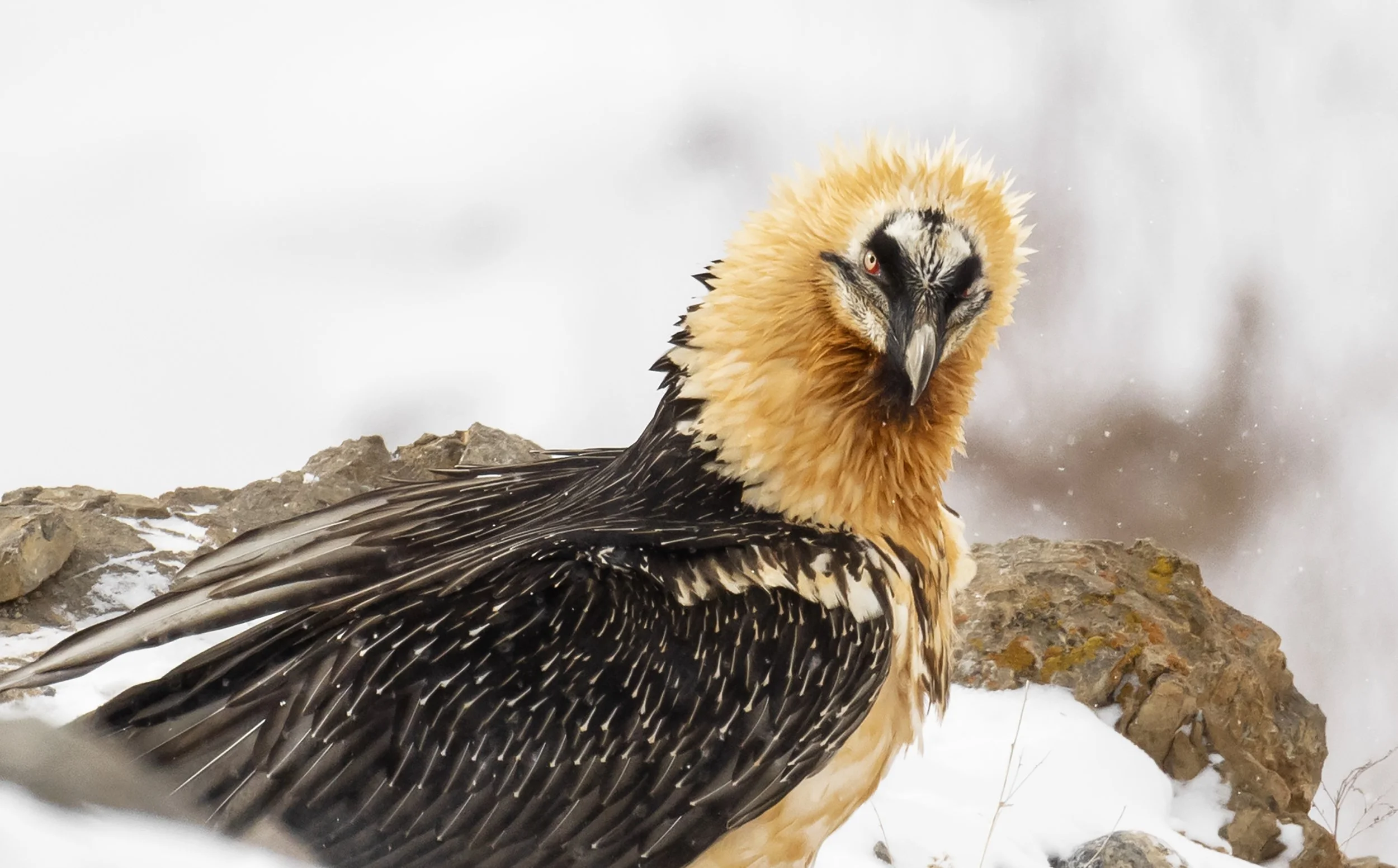
Lammergeier
( Gypaetus barbatus )
The lammergeier, also known as the bearded vulture or bone eater, is an amazing bird.
We photographed this iconic species in the Himalayas while searching for snow leopards. We were just about to head out for the day when one of our local guides ran into my room and told me to grab my camera…now.
Right outside our homestay, the lammergeier was gliding silently on the mountain winds, floating almost effortlessly in front of us. We stood there snapping frame after frame as it held its position in the air, completely unbothered by our presence.
Eventually, the bird landed and picked up a piece of old bone it found on the ground. I’m not sure if it ate it or simply inspected it, but watching that moment unfold up close felt surreal.
It was an incredible experience, and one that made me feel genuinely lucky to share space with such a rare and powerful bird.
1/800, f6.3, ISO 6400
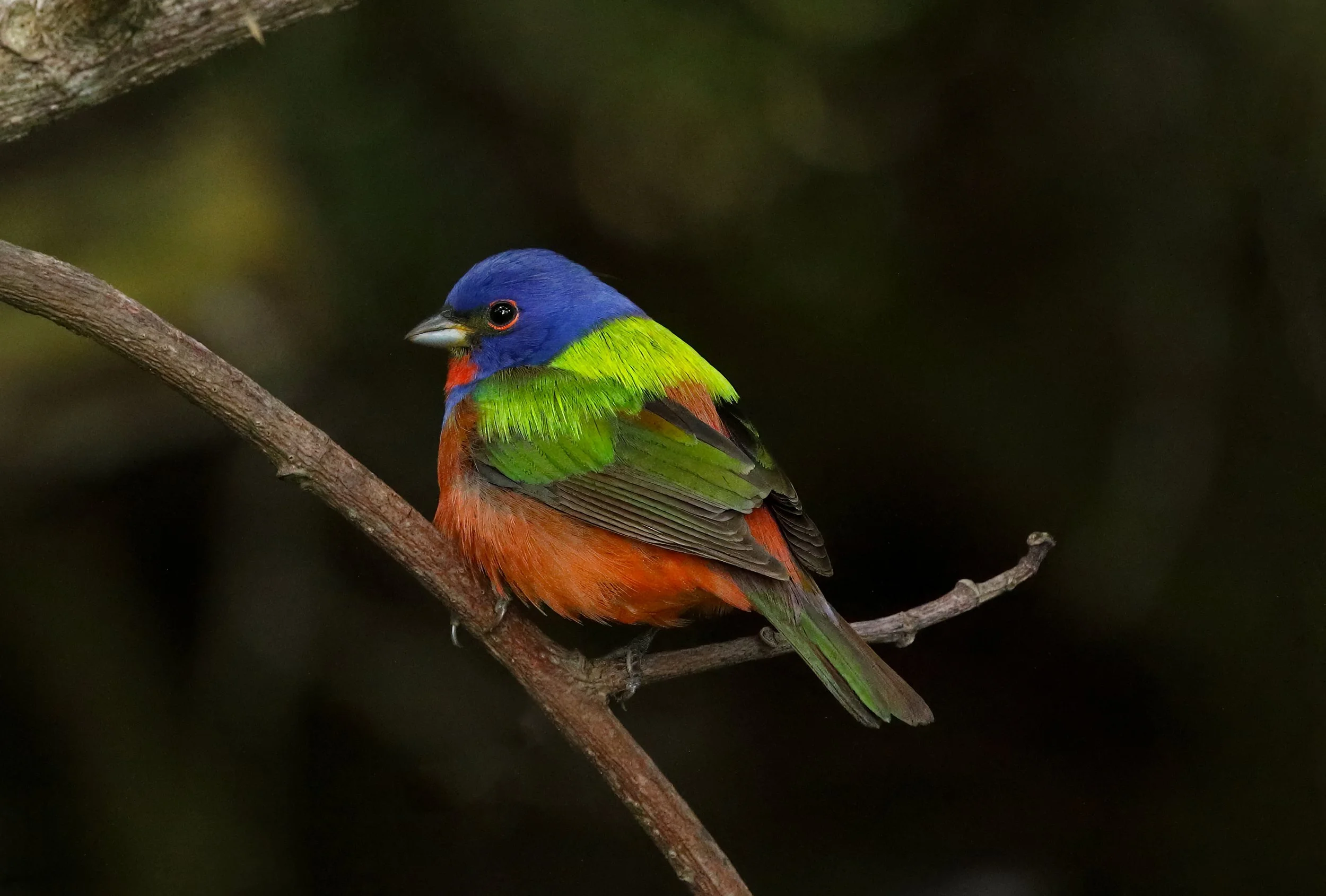
Painted Bunting
( Passerina ciris )
The painted bunting is one of the most coveted songbirds in North America.
Every spring, painted buntings migrate to South Texas, where I live, and I’m always on high alert for any news of their arrival. When word came that the buntings had shown up during a fallout, I dropped everything.
Songbirds of all kinds had arrived in record numbers at a known hotspot on South Padre Island, Texas.
And I was there for one reason… this bird.
1/2000, f7.1, ISO 2000
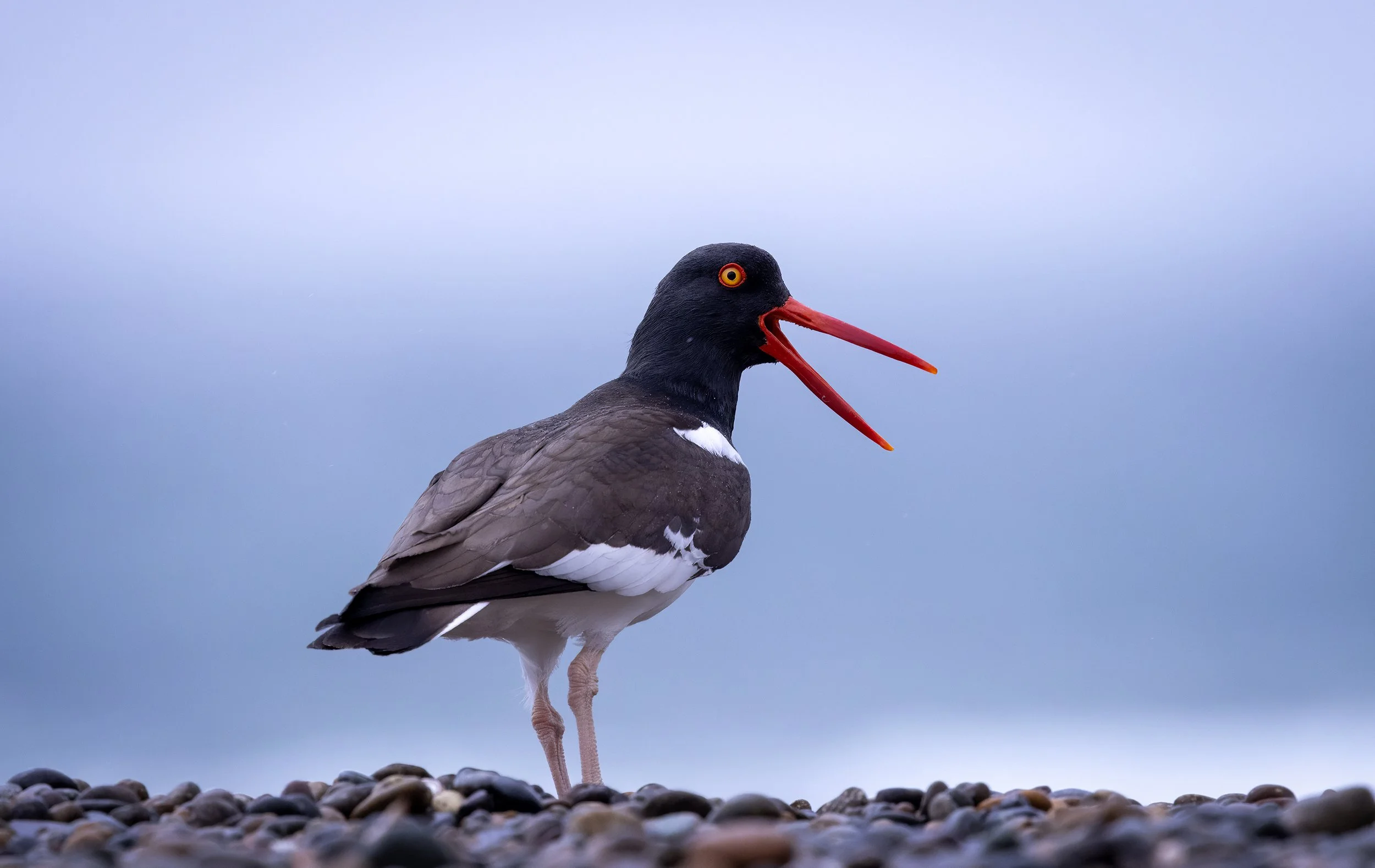
Magellanic Oystercatcher
Haematopus leucopodus
We photographed this oystercatcher while stealthily approaching a group of elephant seals sleeping on the Patagonia beach.
It quickly became clear the bird likely had a nest nearby, it was pitching a fit and refused to leave the area. We tried to move past as efficiently as possible, especially as the elephant seals started getting curious about what all the yelling was about.
Of course, I had to snap a few frames before we cleared the area… They are such beautiful, coastal birds.
1/1000, f5.6, ISO 500
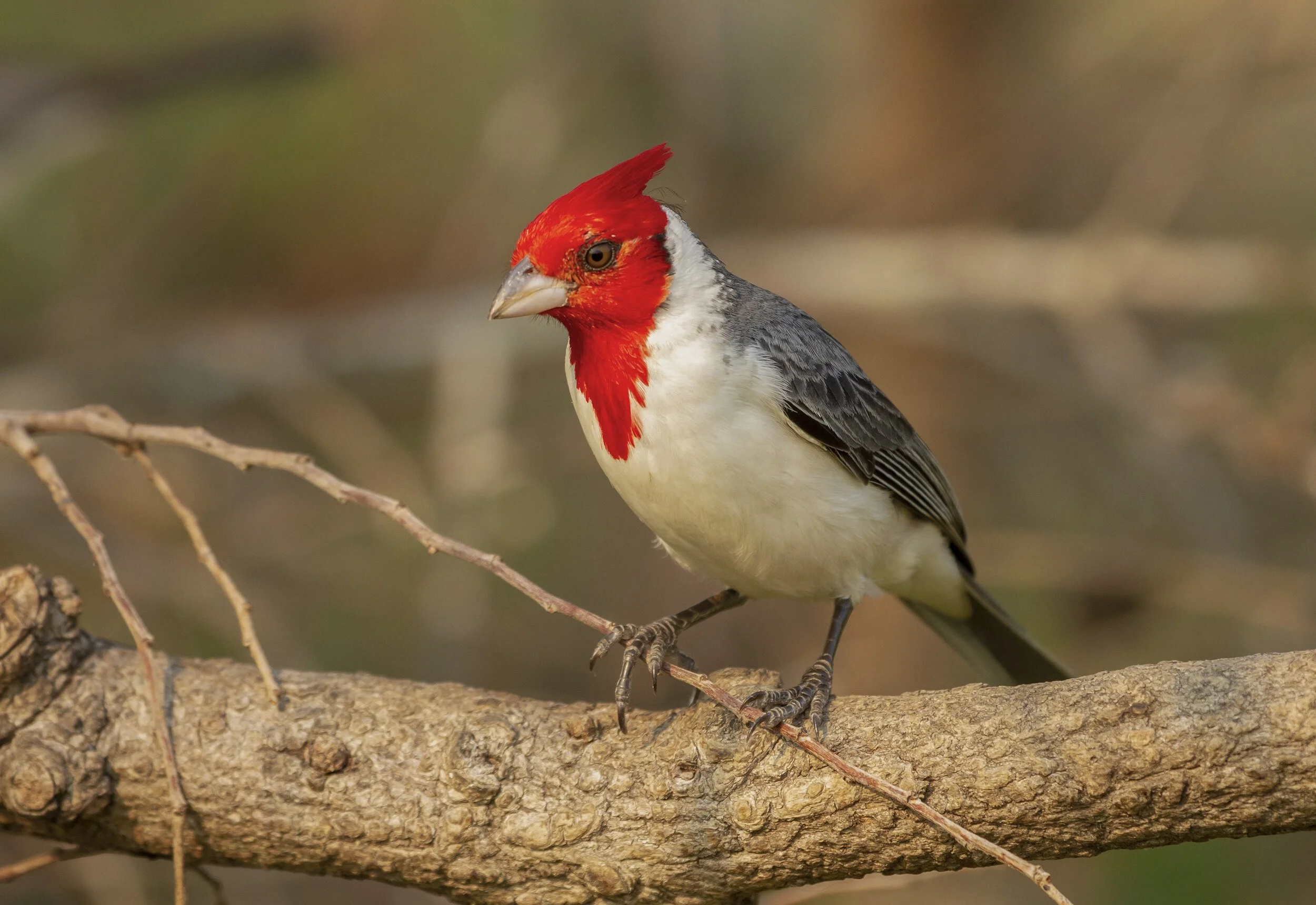
Red Crested Cardinal
( Paroaria Coronata )
I was in Bonito, Brazil, on our anaconda diving expedition when we came across a group of these small birds gathered among a pile of dead branches. The area was alive with colorful birds of all kinds, and it wasn’t immediately clear what had drawn so many of them in, they were likely feeding on something hidden within the branches.
These birds were incredibly striking, and it was the first time I had ever encountered this species. I got lucky and captured a few images of them before they moved on.
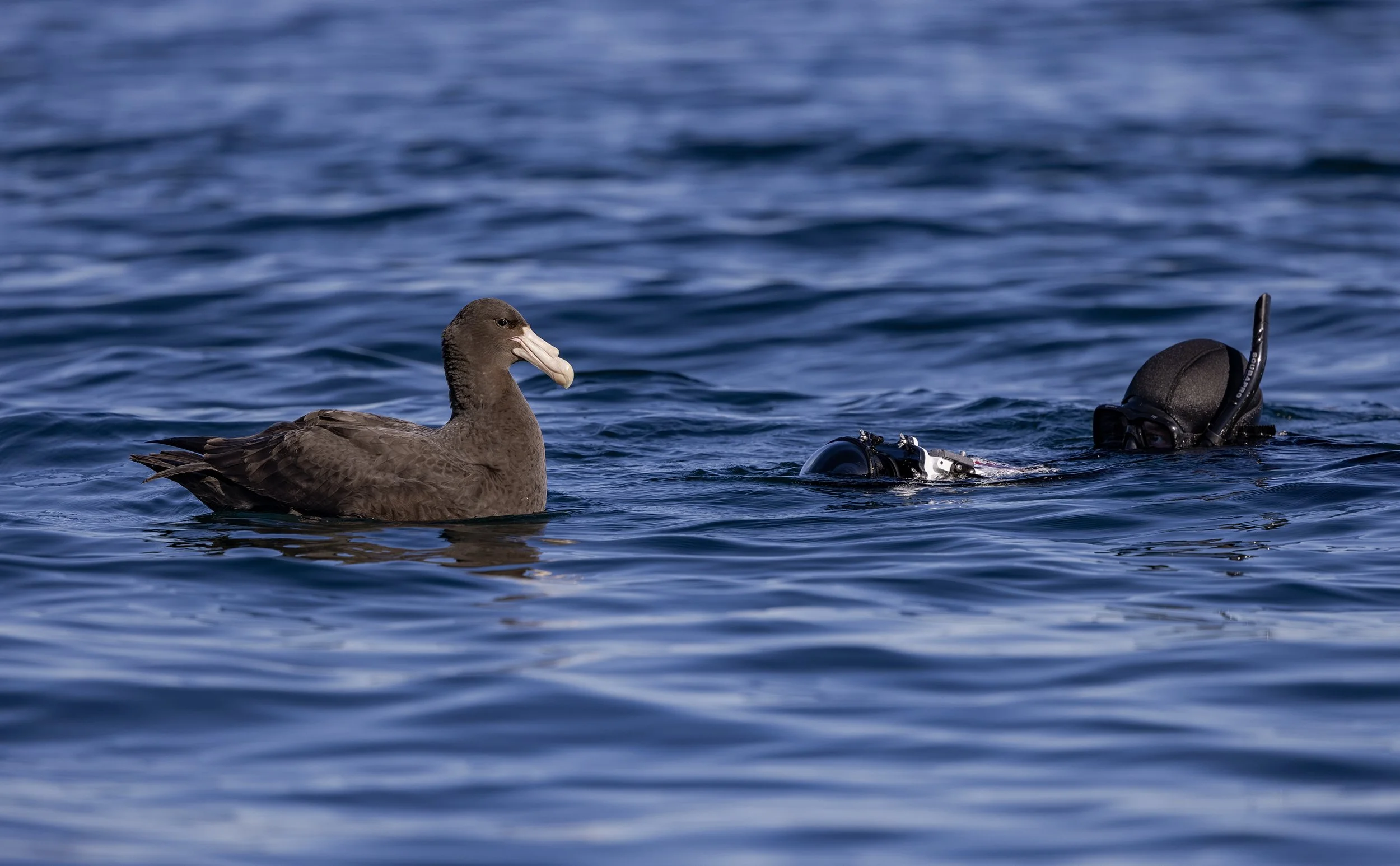
Southern Giant Petrel
( Macronectes giganteus )
We were in Puerto Pirámides, Argentina, searching for southern right whales. My friend Nathan was in the water, patiently waiting, when he was suddenly approached by this massive bird, curious about him.
Southern giant petrels are enormous, so while Nathan was excited by the encounter, he was also a bit nervous, wondering what the bird might do. The petrel spent a few brief moments checking him out before calmly floating off.
But not before I managed to capture a really cool shot of Nathan and his new friend.
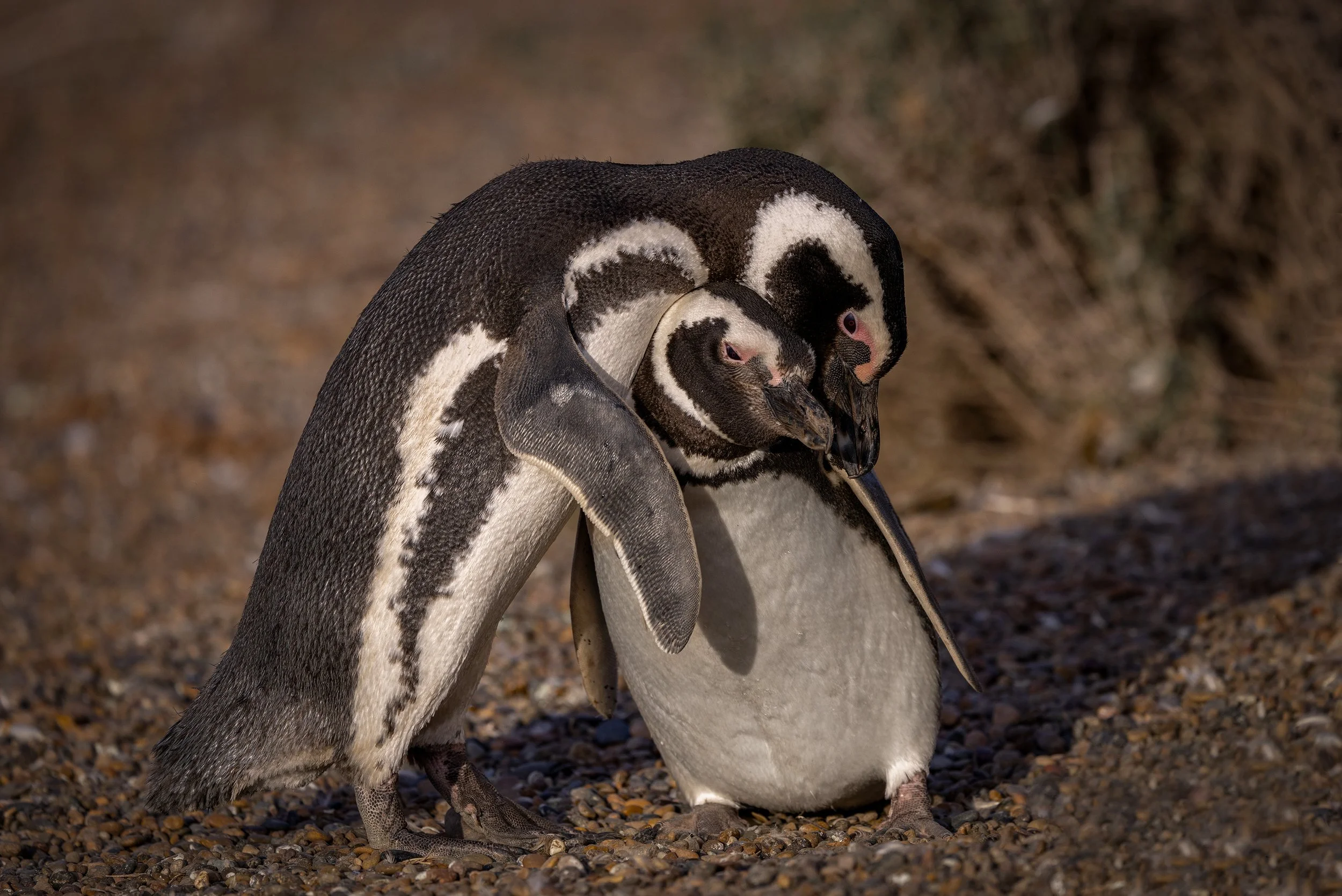
1/1000, f5.6, ISO 200
Magellanic Pengiuns
( Spheniscus magellanicus )
Every year tens of thousands of these penguins visit the Patagonia coastline off Argentina to breed and give birth to their chicks. These very friendly goofy birds are so much fun to photograph.
I love that these penguins are easy to approach, and easy to photograph. Of course it makes them vulnerable for predators, but thats why these birds gather in such large numbers, relying on the safety of the colony.
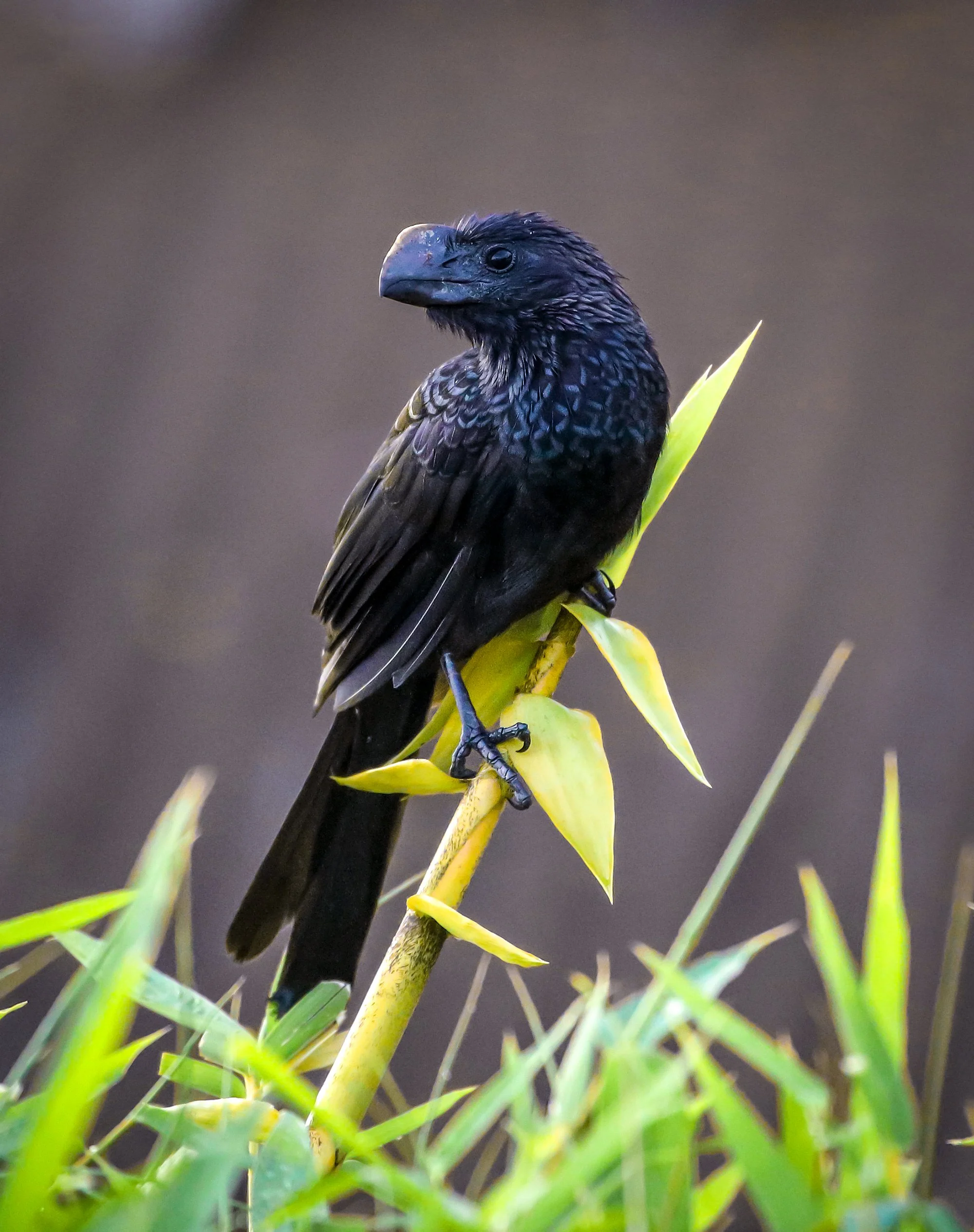
1/1000, f5.6, ISO 6400
Smooth Billed Ani
((Crotophaga ani)
I photographed this bird on Dominica Island. I was sitting in our hotel when I heard its familiar call.
We have the groove billed ani’s where I live in South Texas, they sound similar. So I jumped up and looked around the trees and found a few of them getting ready to roost for the night. I ran to my room grabbed my camera and shot a few images of them before I lost the last of the light. It was nice find.
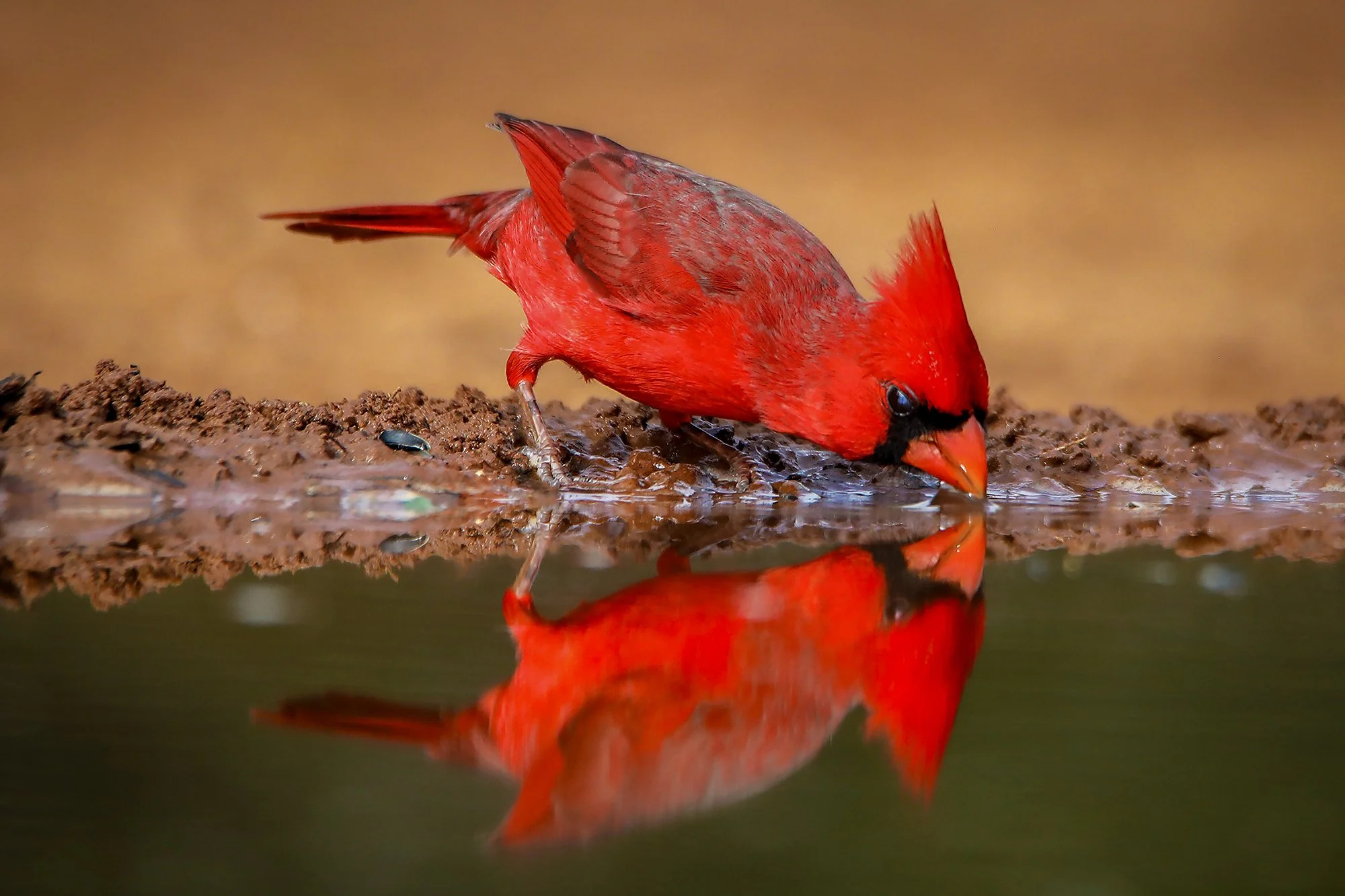
1/1250, f6.3, ISO 640
Northern cardinal
(Cardinalis cardinalis)
I photographed this little beauty from a photo blind. That’s what I love about bird photography, not just the challenge of capturing an image, but the chance to truly appreciate the animal in front of you.
Birds like the northern cardinal are so stunning, yet without the eyes of bird photographers, so many of these little wonders would go unnoticed.
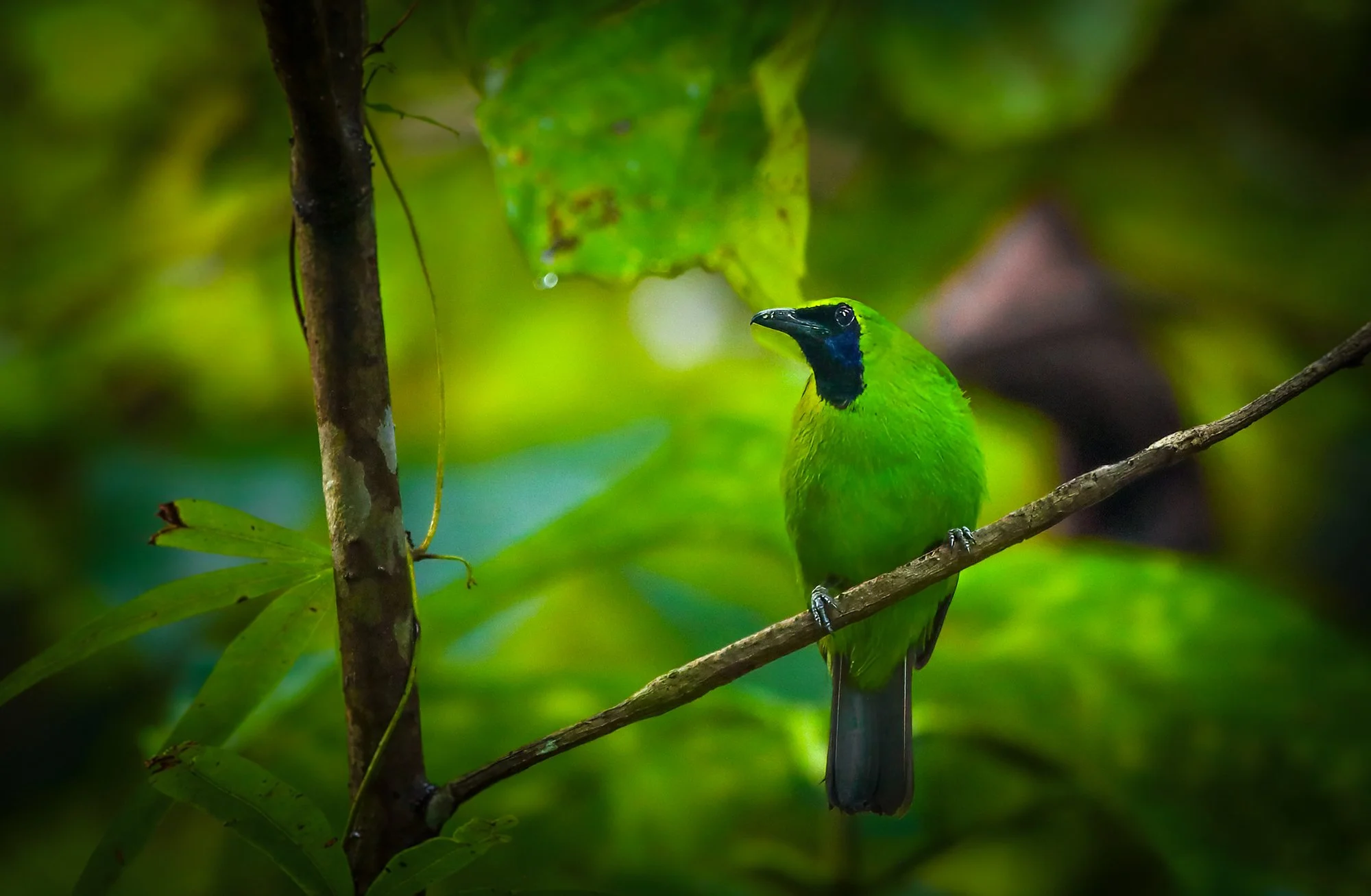
1/200, f5.6, ISO 1250
Bornean leafbird
(Chloropsis kinabaluensis)
I photographed this little beauty in the Deramakot rainforest, Borneo. It landed for only a heartbeat, two quick perches beside the road, I managed one photo, and then it flew back into the rainforest. I never saw it again.
I got lucky with this photo, because my settings were completely wrong, somehow before the photo was taken, while hiking the trail, I somehow rolled my shutter speed from 1000 to 200.
1/1600, f5.6, ISO 320
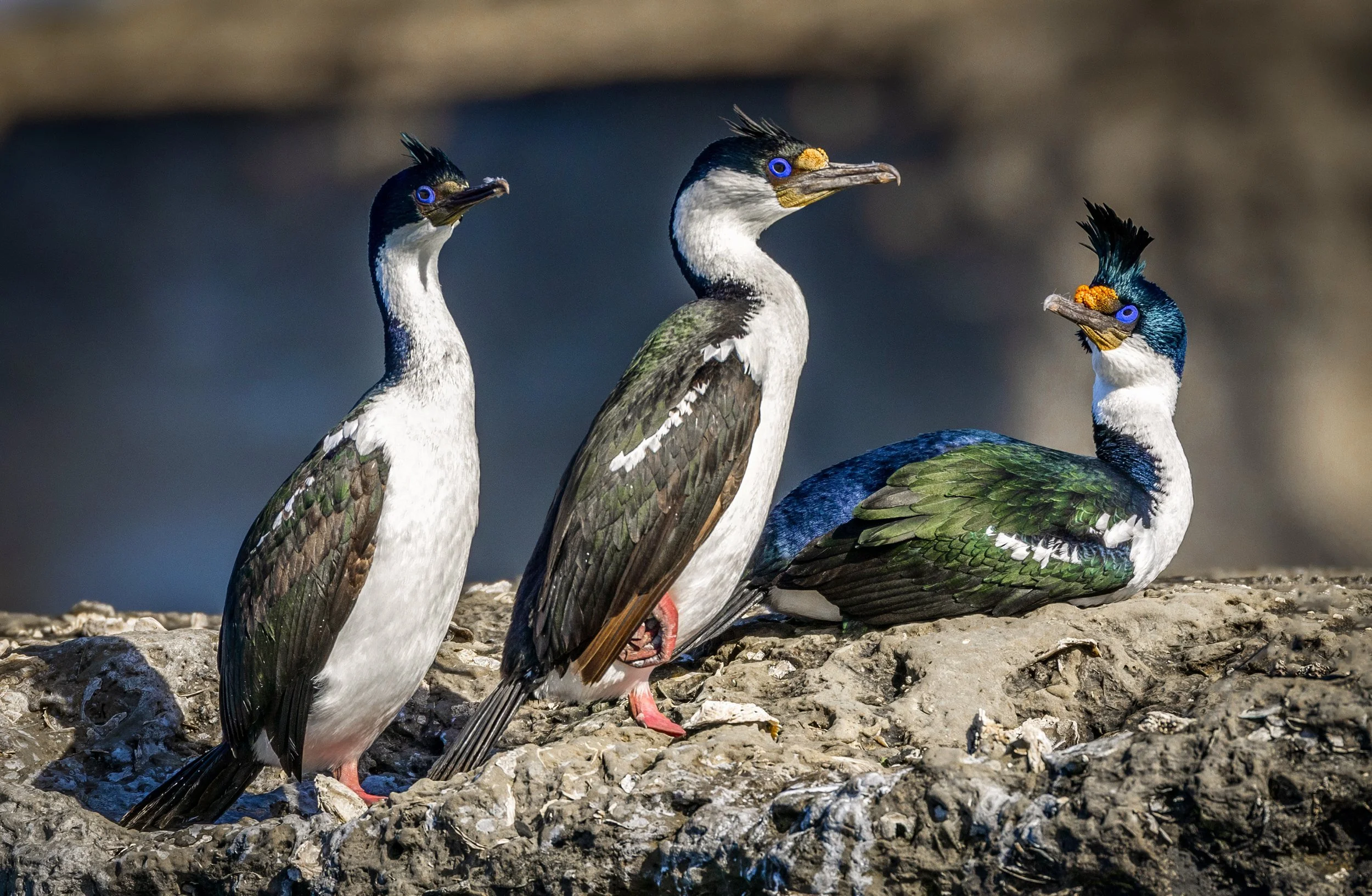
Imperial Cormorant
(Leucocarbo atriceps)
These beautiful water birds are easy to spot around Puerto Pirámides, Argentina, and in my opinion, they’re one of the most beautiful of all the cormorant species.
When the sun hits their feathers just right, iridescent colors shimmer across their feathers. The colors just explode, deep blues, iridescent greens, and that unmistakable white chest.
Such incredible birds to photograph, especially in the golden light of Patagonia.
1/1250, f5.6, ISO 320
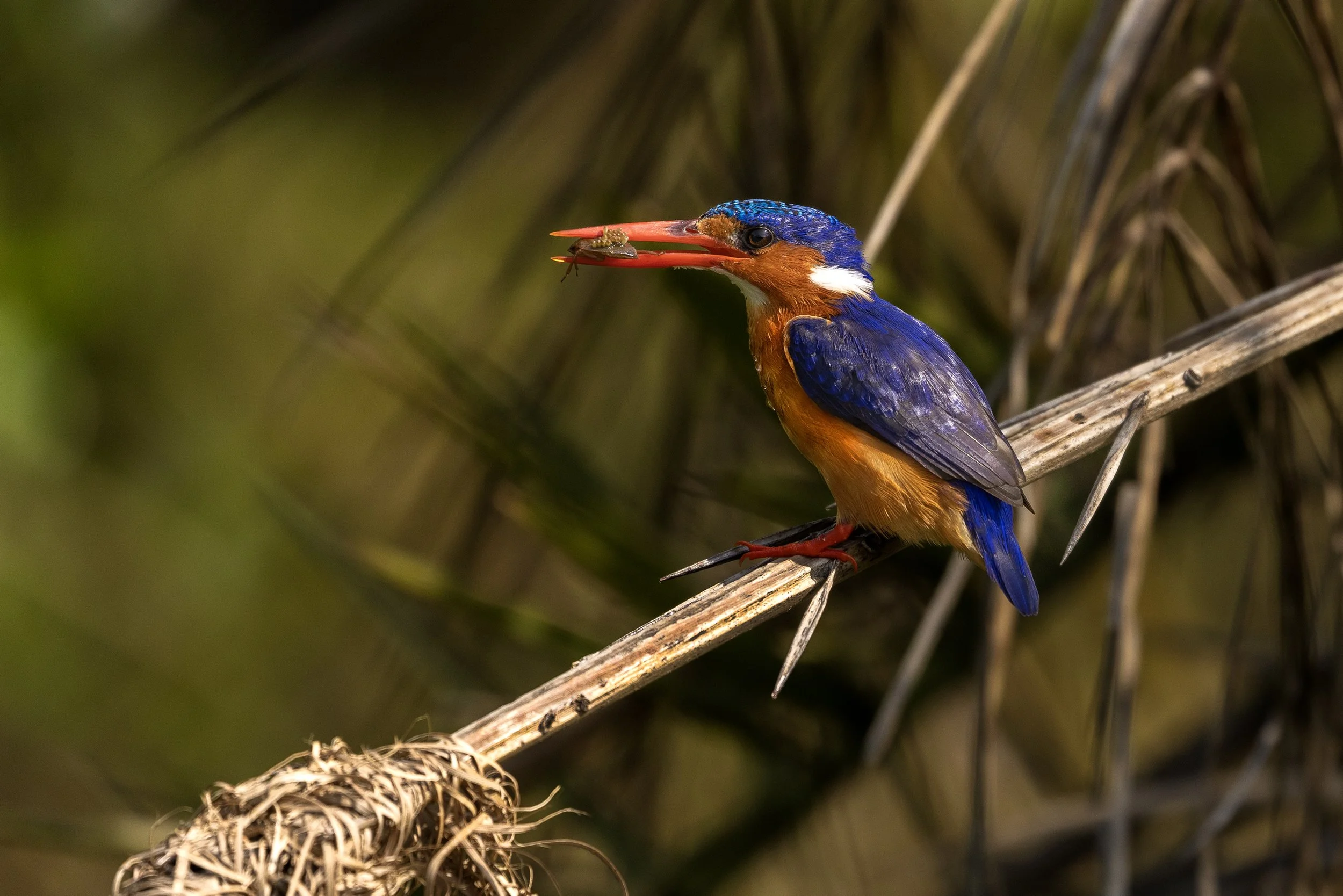
Malachite Kingfisher
(Corythornis cristatus)
Kingfishers are some of the most coveted birds in the world, small, quick, and impossibly colorful. They’re efficient little predators, masters of timing and precision, and simply cool to watch.
We found this Malachite Kingfisher along the river in Queen Elizabeth National Park, Uganda. A flash of color darted through the air and landed on a branch in front of us. Our boat captain knew exactly what to do, the rule on the river is, if you see a kingfisher, move in quietly for photos.
We managed a handful of shots before it took off again, disappearing as quickly as it appeared. Uganda is home to several kingfisher species, but this one, with its vivid blues and fiery orange chest, is one of the most sought-after by birders and photographers alike.
1/1250, f5.6 ISO 1000
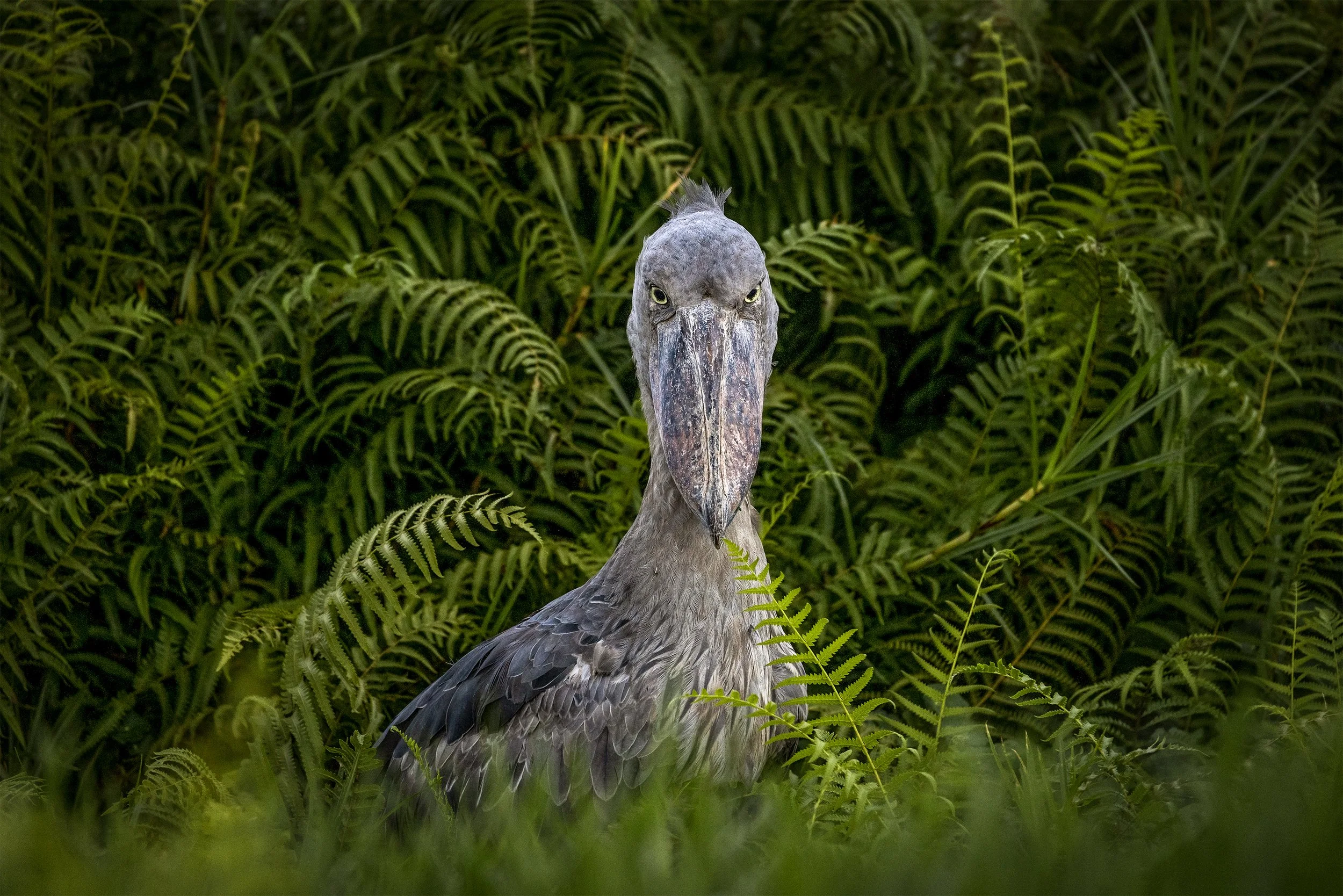
Shoebill Stork
(Balaeniceps rex)
This was a bird I had been dreaming of photographing, the incredible shoebill stork, one of the most prehistoric-looking birds on Earth. Everything about it feels ancient: the massive shoe-shaped bill, the piercing eyes, the deliberate, almost dinosaur-like movements.
Seeing one in the wild was like stepping back in time. We found this individual quietly hunting along the river in Uganda, a dream come true and one of the most unforgettable encounters of my life.
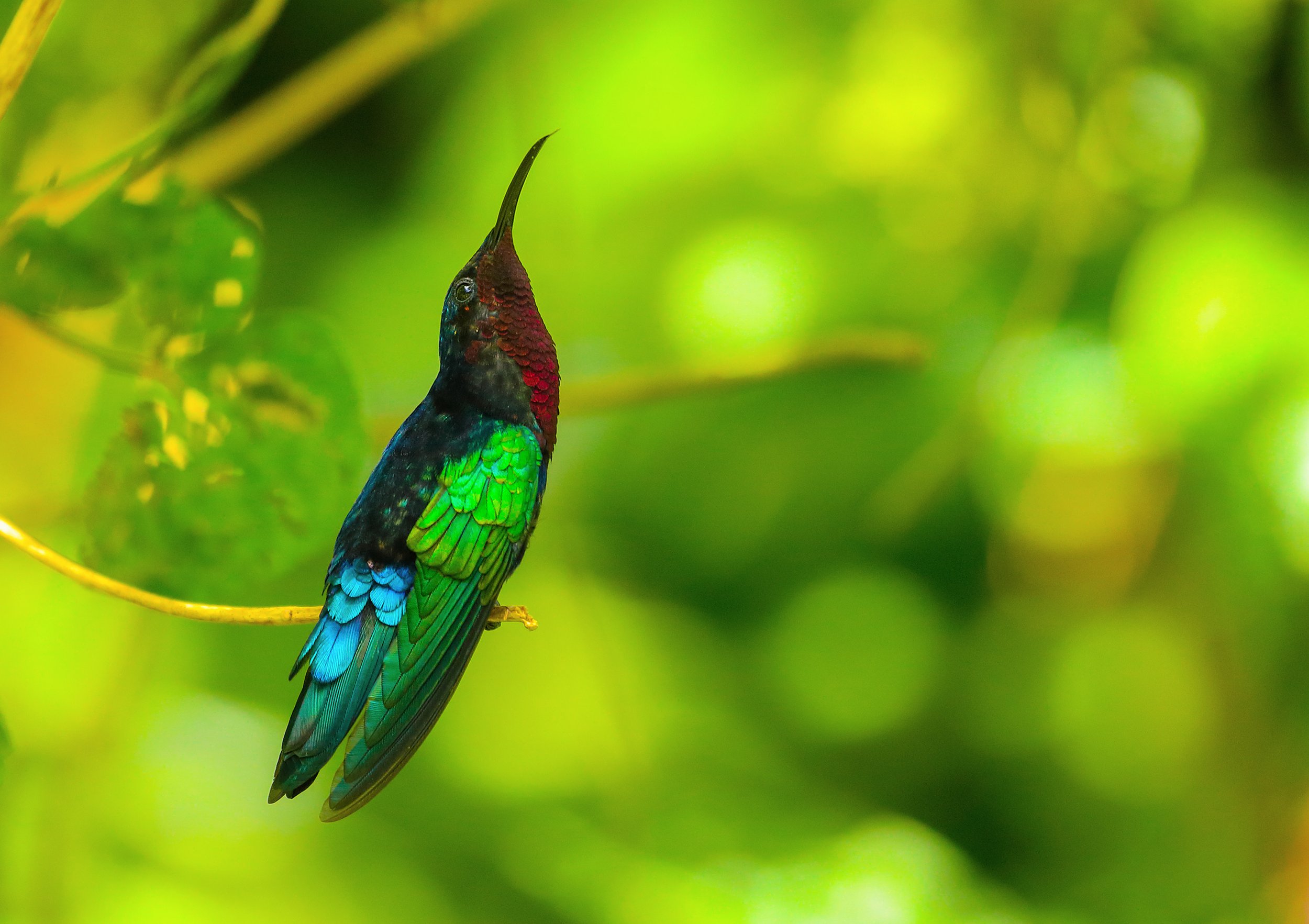
1/800, f5.6, ISO 2000. Dominica Island, Caribbean
Purple-throated Carib
(Eulampis jugularis)
The Purple-throated Carib is a brilliantly colored hummingbird found throughout the Lesser Antilles, including Dominica, Guadeloupe, Martinique, and Saint Lucia. It’s one of the larger hummingbirds of the Caribbean, and thrives in the island rainforests where flowering plants are abundant.
We photographed this individual high in the rainforest on Dominica. I once even photographed a carib flying far out over the open ocean, a rare sight. They aren’t known to migrate between islands, so it was likely a bird blown off course by a storm or exploring beyond its range, so wild to witness.
Though the species isn’t globally threatened, its limited range means healthy island forests are essential to its survival.
It is truly one of the Caribbean’s true jewels.
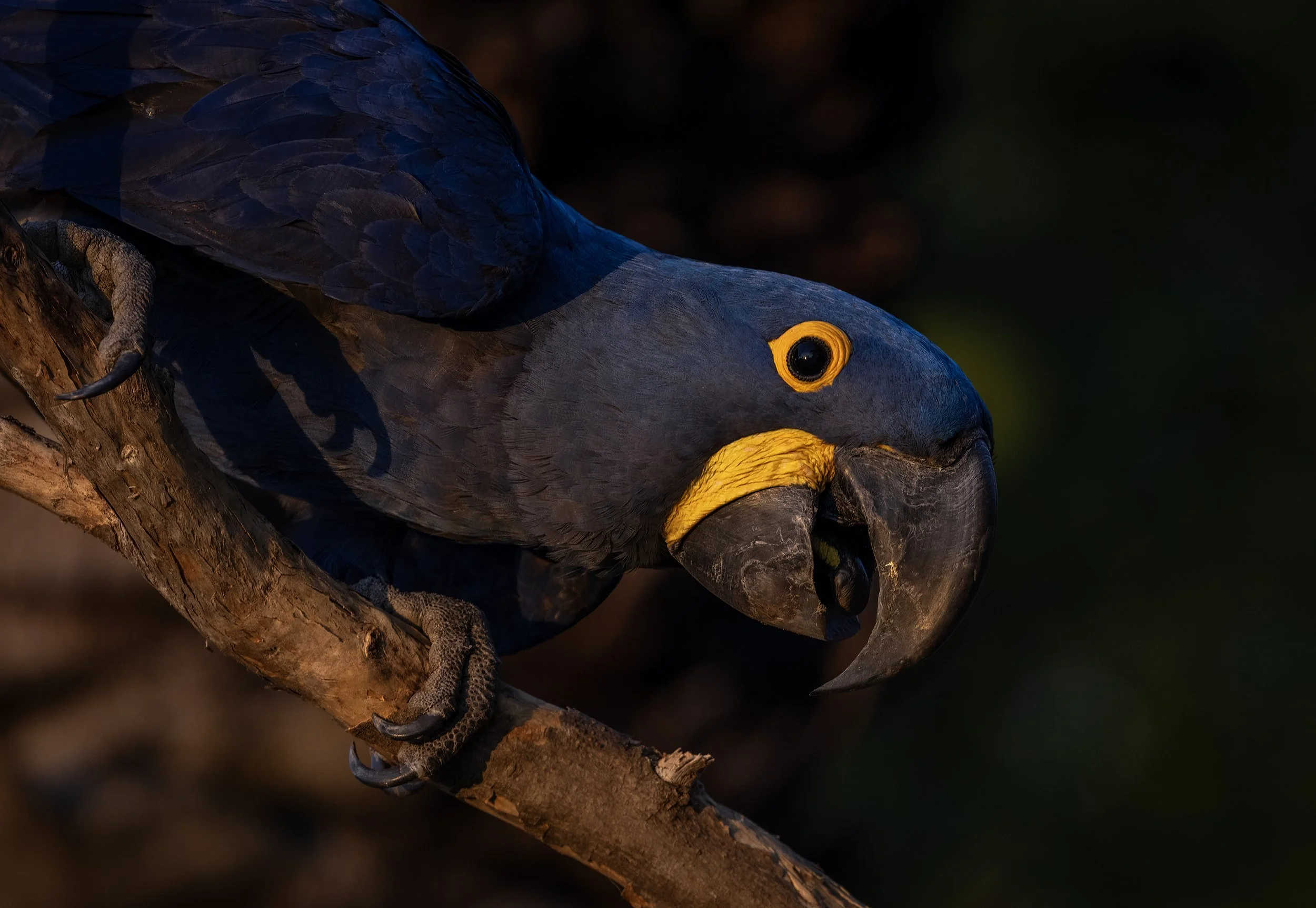
1/800, f7.1, ISO 1000. Northern Pantanal Brazil
Hyacinth Macaw
(Anodorhynchus hyacinthinus)
One of my favorite things about our lodge in the Northern Pantanal is the population of resident hyacinth macaws that live and breed on the property. These noisy and beautiful blue parrots are under serious threat from the illegal pet trade and habitat destruction.
It is written that around 90% of nesting sites in the Pantanal depend on one type of tree, the manduvi, making them extremely vulnerable when these trees are lost.
Still, there is hope, dedicated conservation programs and protected areas across Brazil are helping the species rebound.
At our lodge, the macaws gather each evening, which is a great reminder of what focused protection and habitat management can achieve.
Posted - November 12, 2025

1/250, f7.1, ISO 3200. Northern Pantanal Brazil
Black Banded Owl
(Strix huhula)
We photographed this beauty in the Northern Pantanal during a night safari while searching for maned wolves. The lodge where we were staying has a pair of resident owls that hunt in the mango trees on the property.
When the trees fruit, rodents arrive at night to feast on the fallen mangoes, and the owls wait patiently above, ready for an unlucky visitor. Black-banded owls aren’t commonly seen in this region, except around this particular lodge, making the encounter a truly unique and exciting find for us.
Posted - November 12, 2025