
Right Whales Trip Report 2026
Puerto Pyramides, Argentina
September 7 - 14, 2026
*All wildlife photographs were captured under government-issued permits.
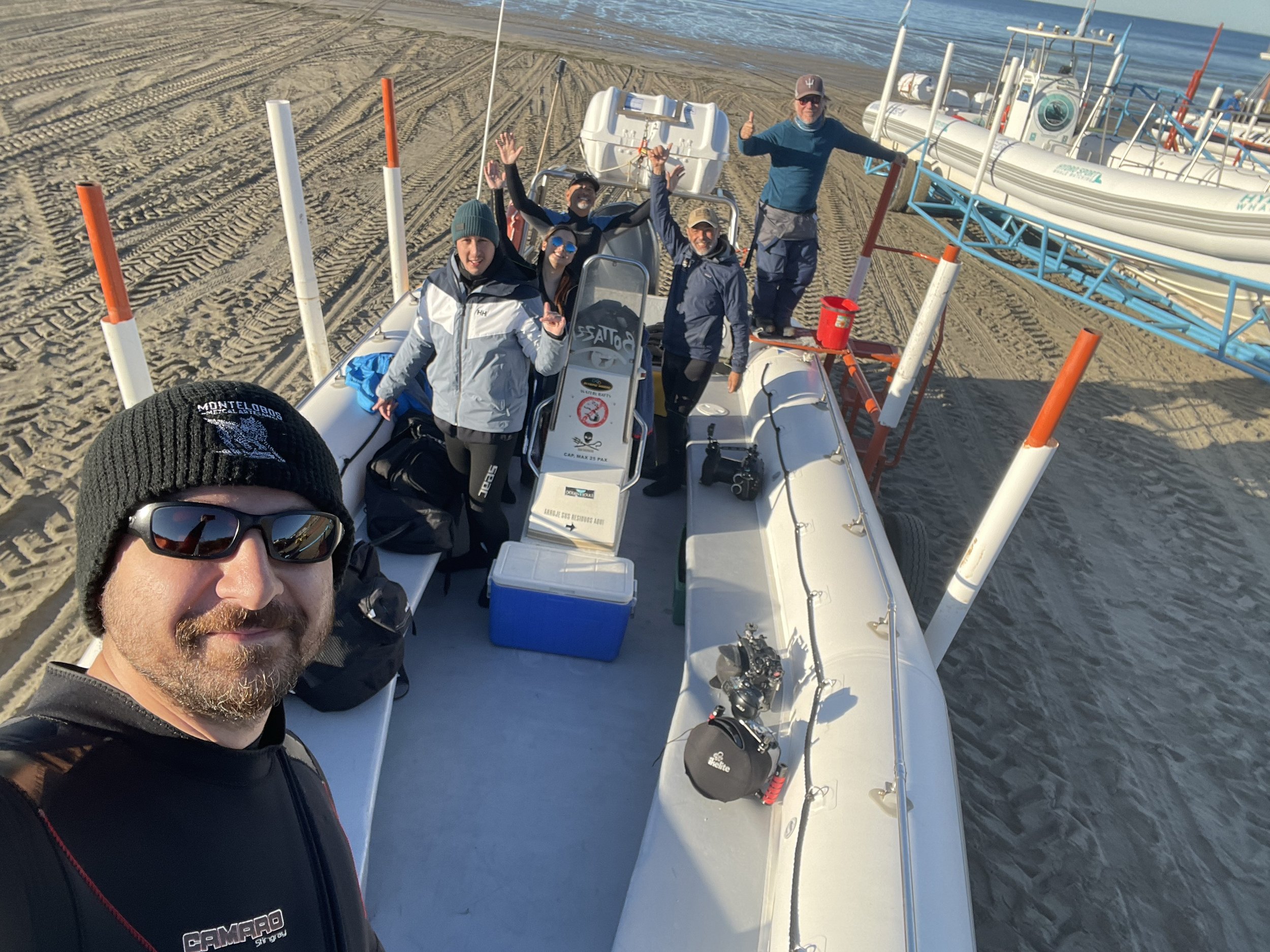
September 8, 2026. Day One
We headed out for our first day at sea beneath beautiful blue skies, with flat water and whales everywhere. It was the perfect way to begin our expedition.
Sadly, our captain, Boro, told us that a large number of southern right whale calves have died this season, and researchers are still trying to understand why.
More than 30 calves have reportedly washed ashore near Puerto Pirámides, with over 130 deaths recorded throughout the region this season.
It is horrible news and devastating for a population that remains incredibly precious.
Despite the concern hanging over the season, I was hopeful that we would have a great week of whales and weather for the friends who traveled so far to join us. David and Alice came all the way from Australia, and my bro K traveled from Washington, D.C.
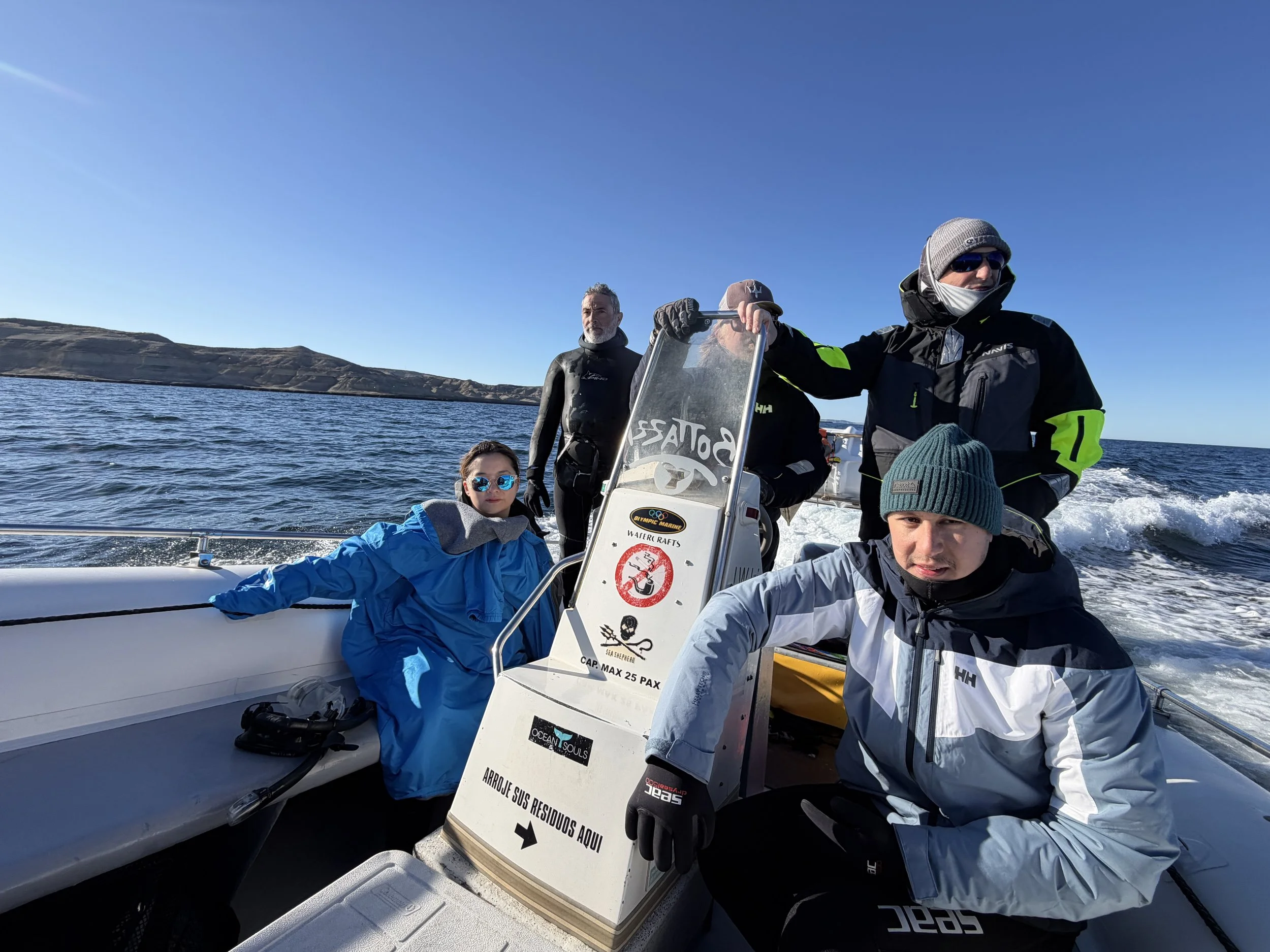
They are all a long way from home, so I want this week to be everything they dreamed it would be.
The week begins!
When we reached the area where we would begin looking for whales to swim with, we slowly approached one to see whether it showed any interest in us. As we did, an imperial cormorant swam past the boat.
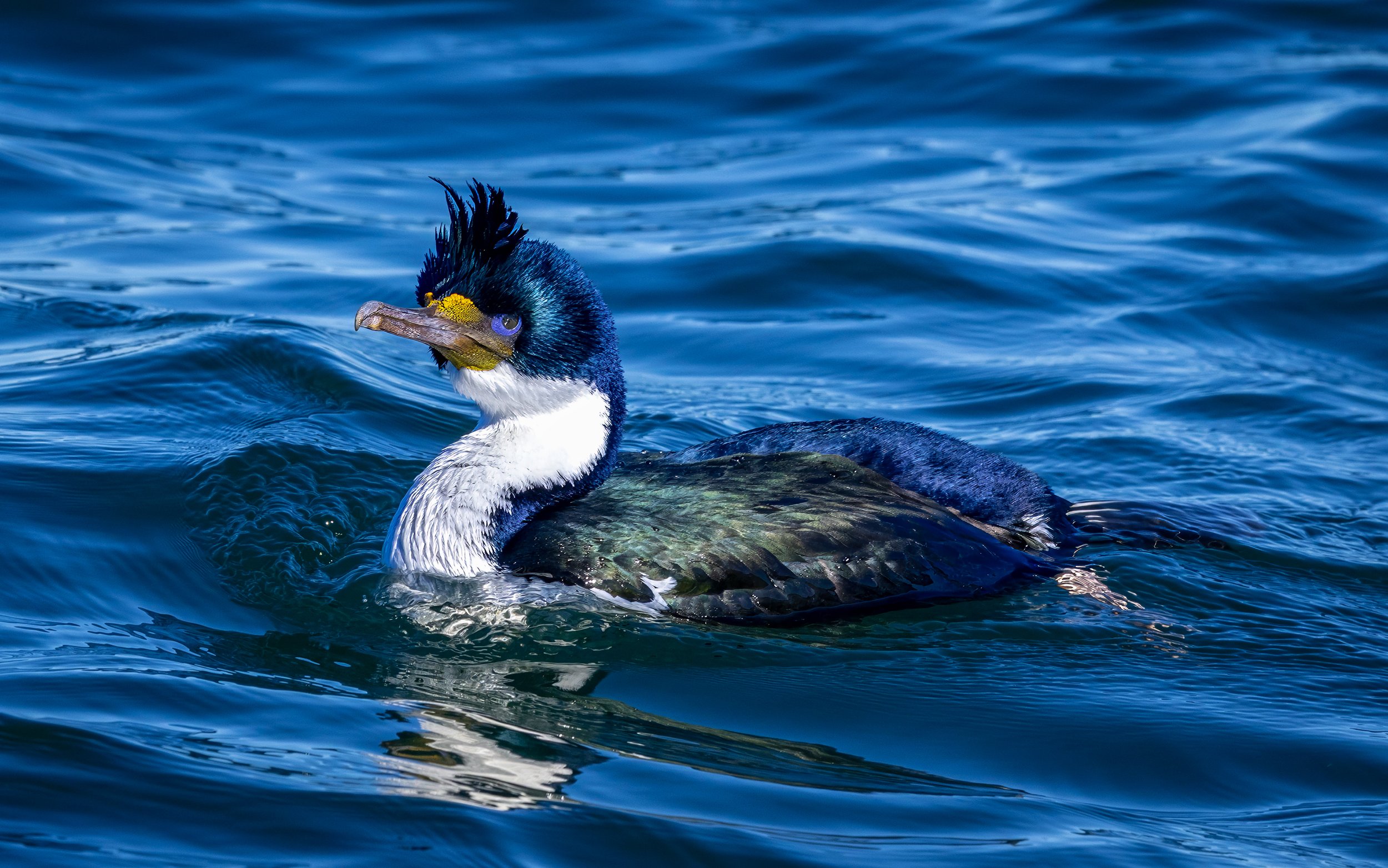
This is one of my favorite cormorant species. They are just so beautiful. I am hoping I get the opportunity to photograph one underwater during this trip. With a little luck, we will, and I am feeling lucky!
But back to the whales…
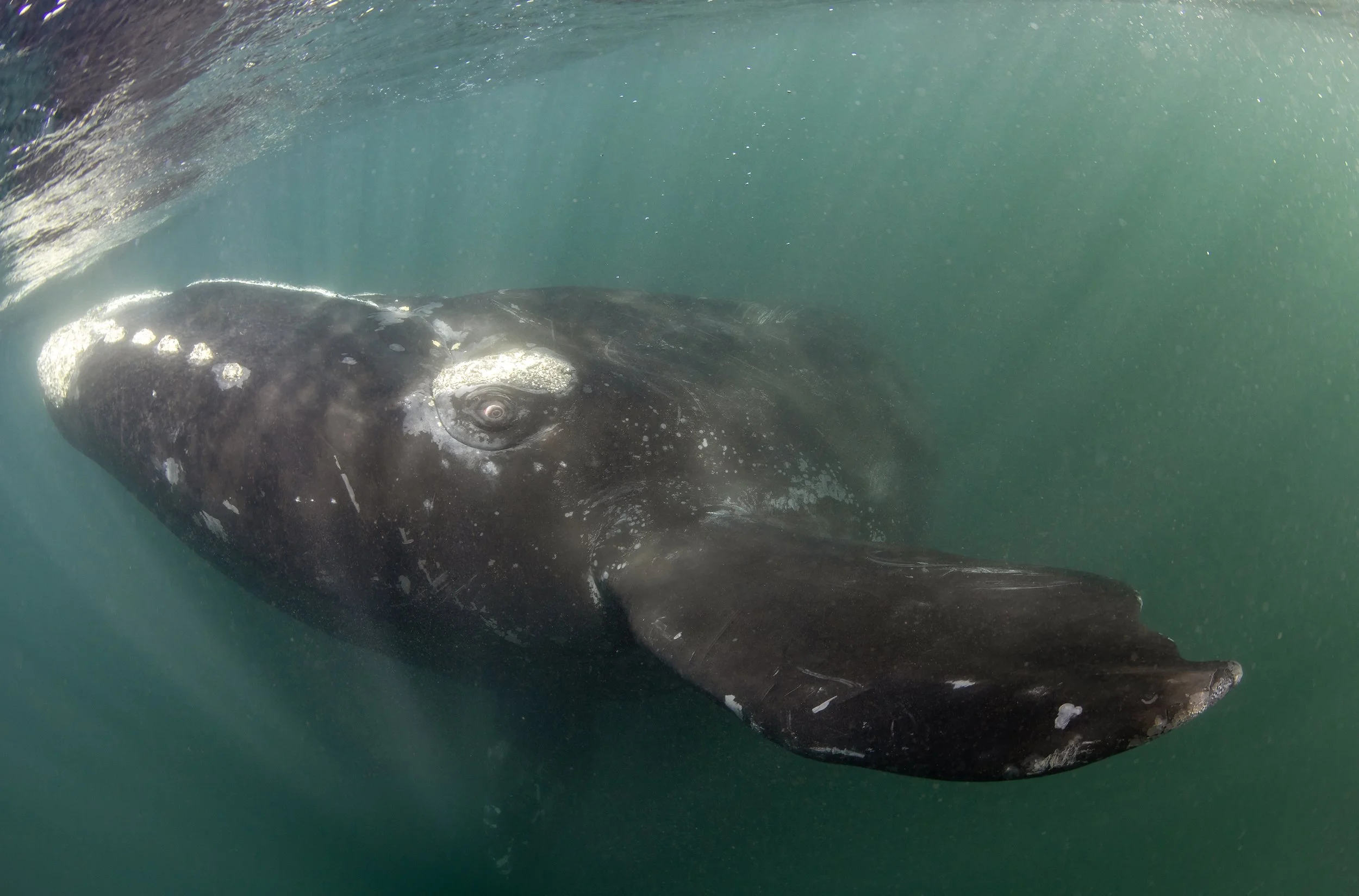
The first whales we entered the water with were a mating pair. They were not the whales we were most interested in, though. It was the juvenile male hanging around in the background whose attention we hoped to catch.
Juvenile males are often the best whales to encounter. Many have already been weaned by their mothers but are still too young to join the adult males. They are curious, playful, and sometimes appear to be looking for companionship, or at least some entertainment from the strange sea monkeys splashing around in their world.
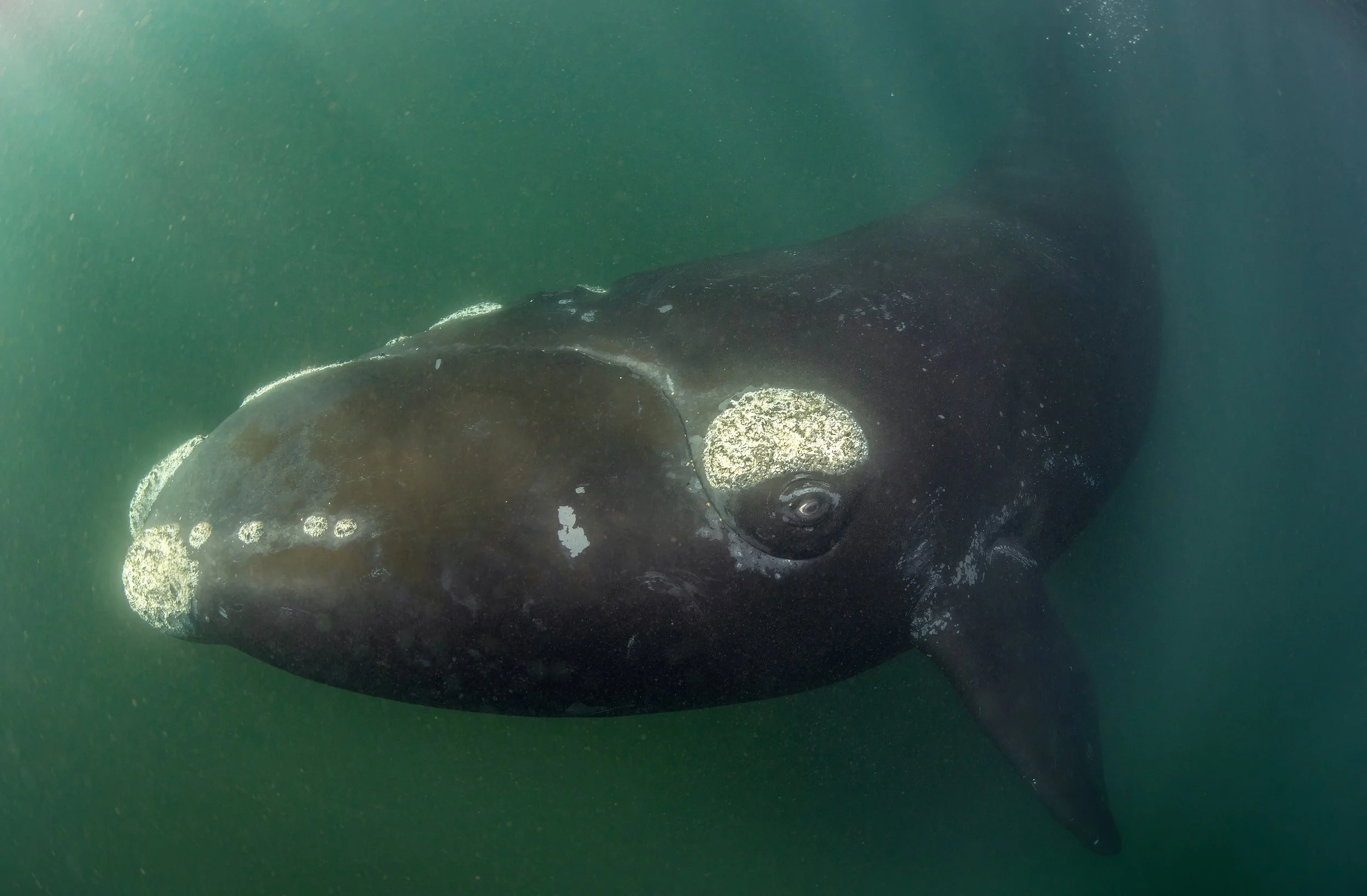
Our juvenile stayed with us for a long time. With the boat sitting still, the sun shining, and almost no wind, it was an amazing morning.
Eventually, the wind arrived and the sea became a little snotty, but the whales continued to be incredible.
We spent nearly our entire day with two enormous whales. Our captain later told us that we had been with them for about five hours.
Five hours of almost nonstop whale encounters!
It was such a great day.
Even with the visibility was not very good.
There was so much plankton and debris suspended in the water that photography was a serious challenge. Every once in a while, however, we found a clean-ish patch where the plankton was not quite as thick, and we managed to capture a few photographs that we could get excited about.
Eventually, it was time to finish for the day and begin motoring back toward Puerto Pirámides. Everyone aboard was smiling from ear to ear.
Then, in the distance, we noticed a mob of giant petrels feeding on something at the surface.
We immediately realized what they had.
A freshly dead southern right whale calf.
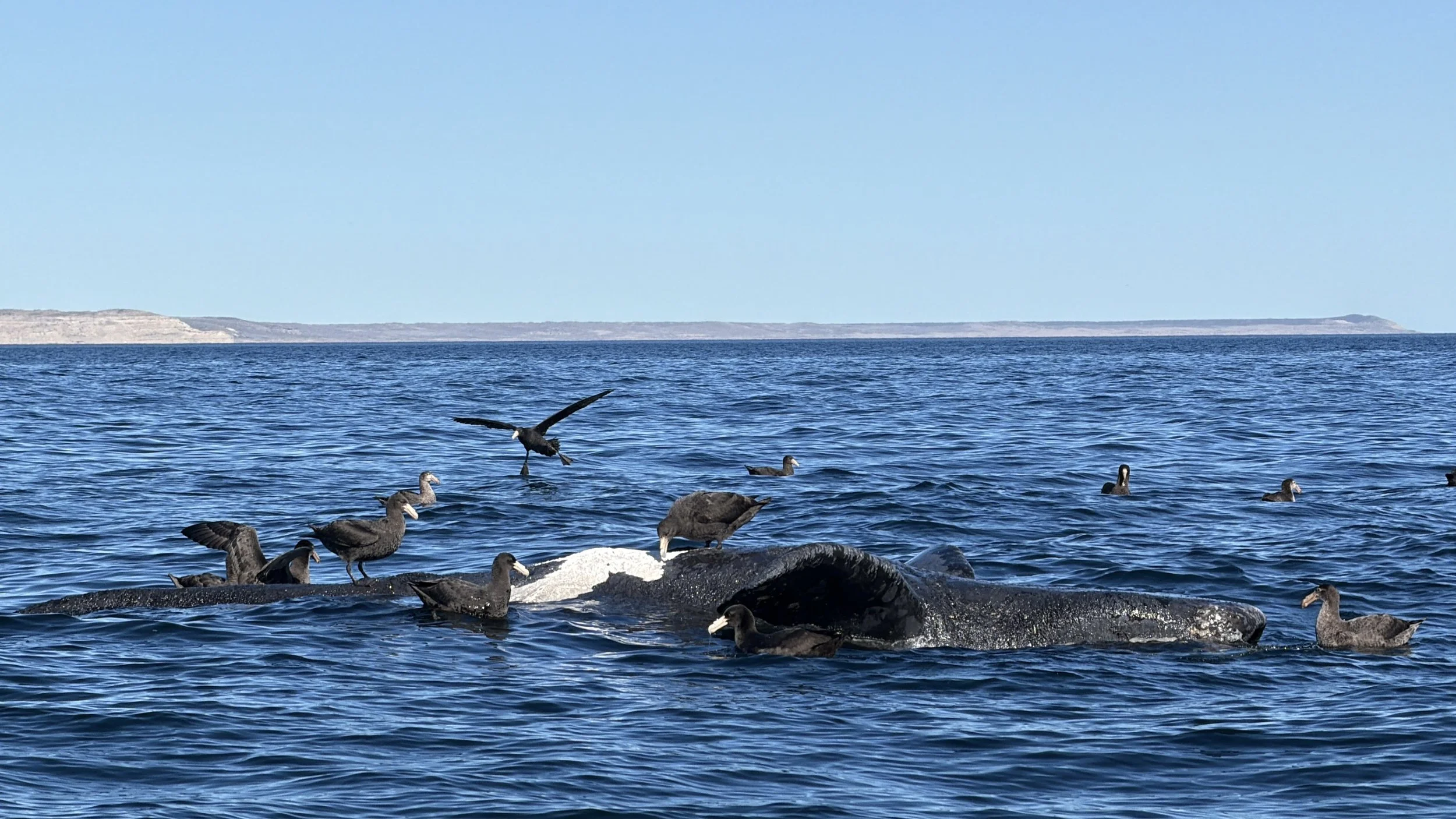
It was a sobering and heartbreaking way to end an otherwise incredible first day.
I do not know what is happening to our beloved right whales. I can only hope researchers find an answer, and that whatever is causing these deaths comes to an end very soon.
September 9, 2026. Day Two
Another bright, beautiful sky greeted us this morning, but it was much windier than yesterday. The seas were lumpy and rolling, making for a rougher ride as we headed offshore.
Once we reached the search area, we found a few southern right whales and attempted our first jump.
The visibility was terrible. The sun was still low in the sky, which was not helping our cause. Yesterday, once the sun moved overhead, the light improved and we began finding patches of cleaner water to work with. We hoped the same thing would happen today.
But sadly today was not yesterday.
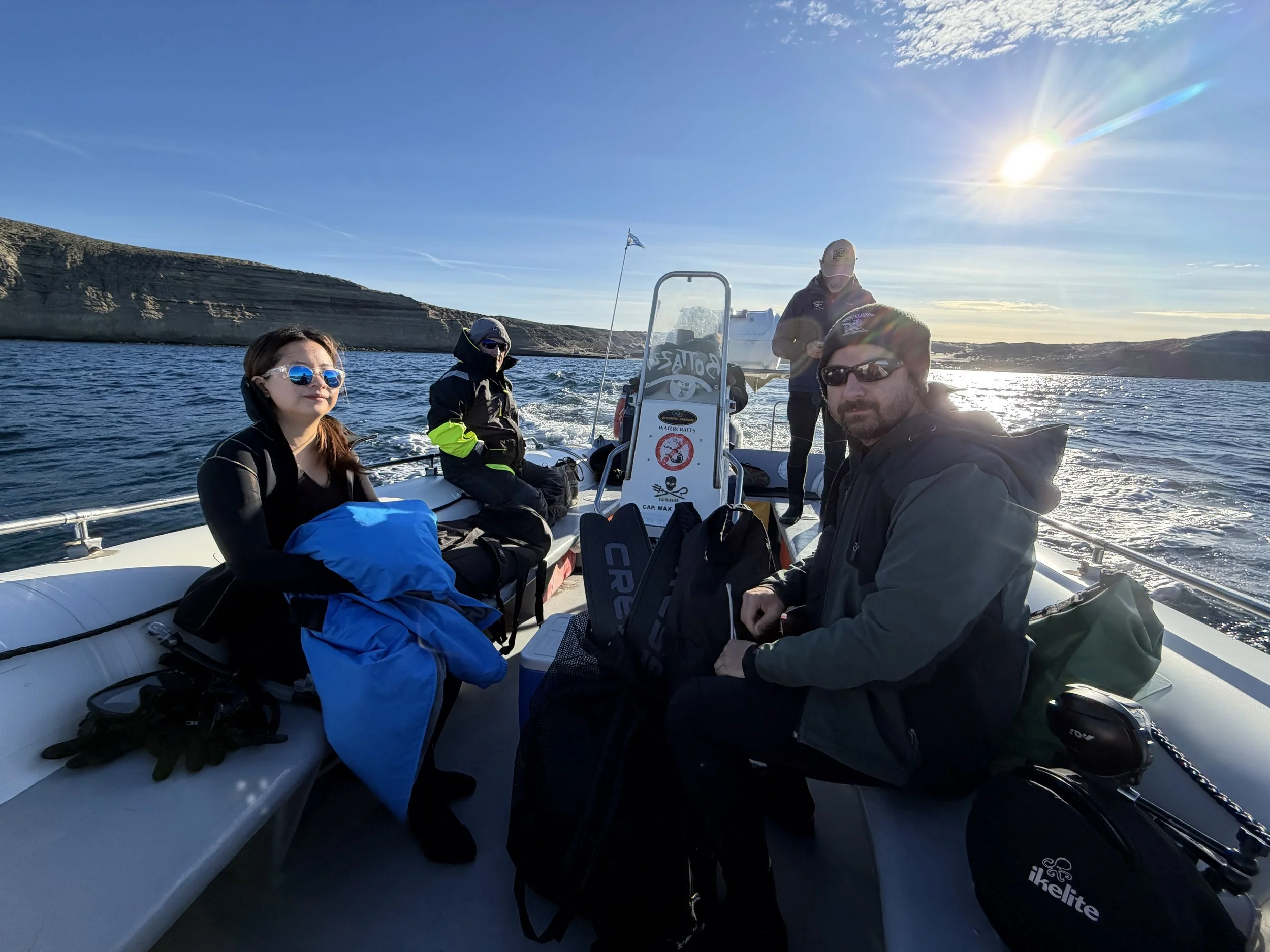
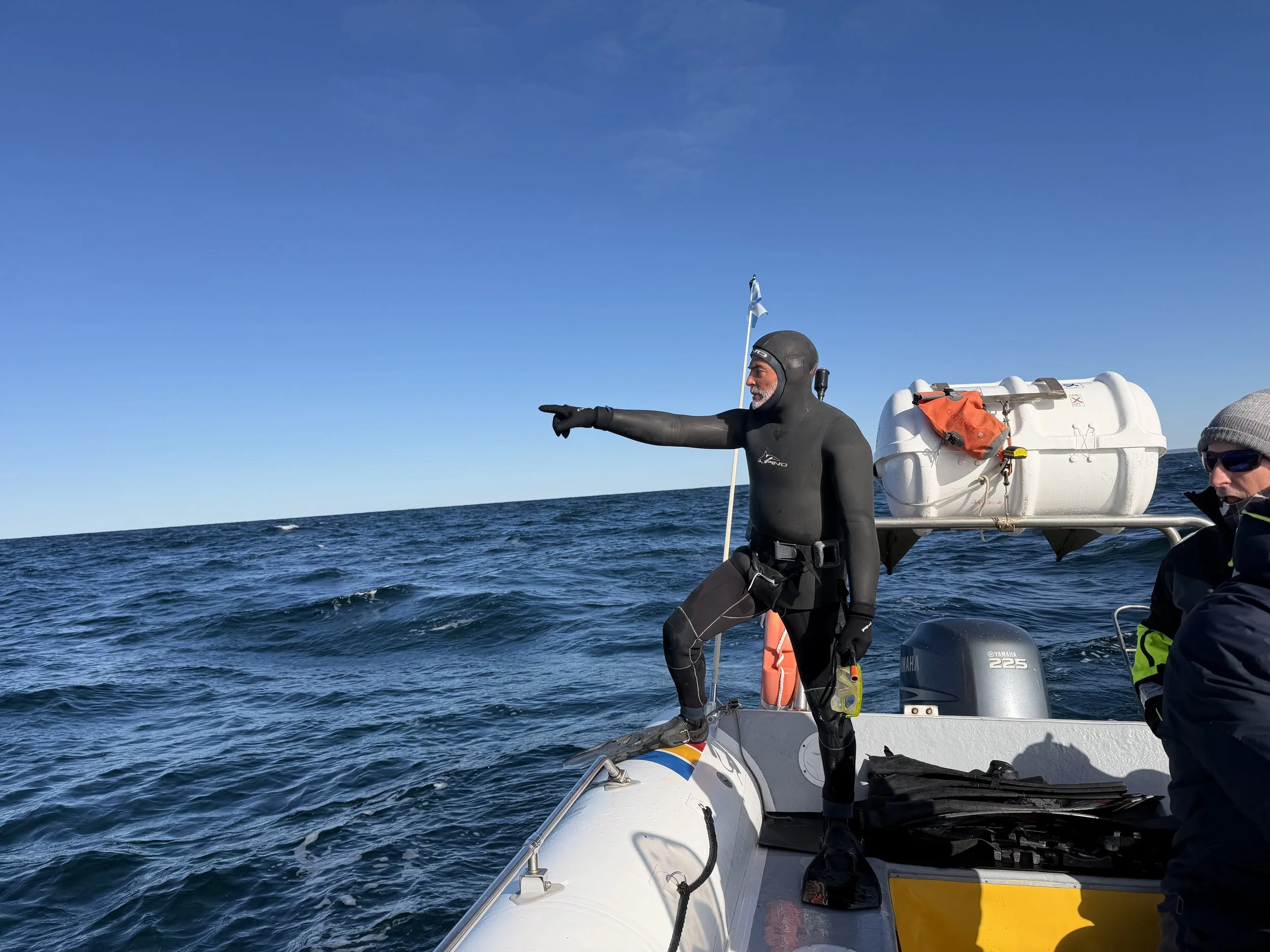
Our very badass safety diver, Juan Ma’. He is just a tough salty diver. I jokingly said with his look and attitude, every photo of him should be in black and white, and grainy.
The few right whales we encountered wanted absolutely nothing to do with us.
It was completely different from yesterday. With so many calves dying this season, it is difficult not to wonder what effect the mass losses are having on these whales.
We kept searching.
Thankfully, the wind eventually began to settle down, allowing us to travel farther and longer.
But today there was a chill in the air… it really felt like a ghost town out here. The whales were just not here.
Then, in the distance, we saw a blow, so we headed in that direction.
A second one followed, and then two or three smaller blows appeared nearby.
Those did not look like right whales.
As we moved closer, we realized what we were looking at…
Orcas!
We had found a large pod of orcas.
The entire boat erupted with excitement.
I threw off my jacket, grabbed Gloria, my underwater camera rig, and started getting her ready in case the orcas decided to swim alongside us.
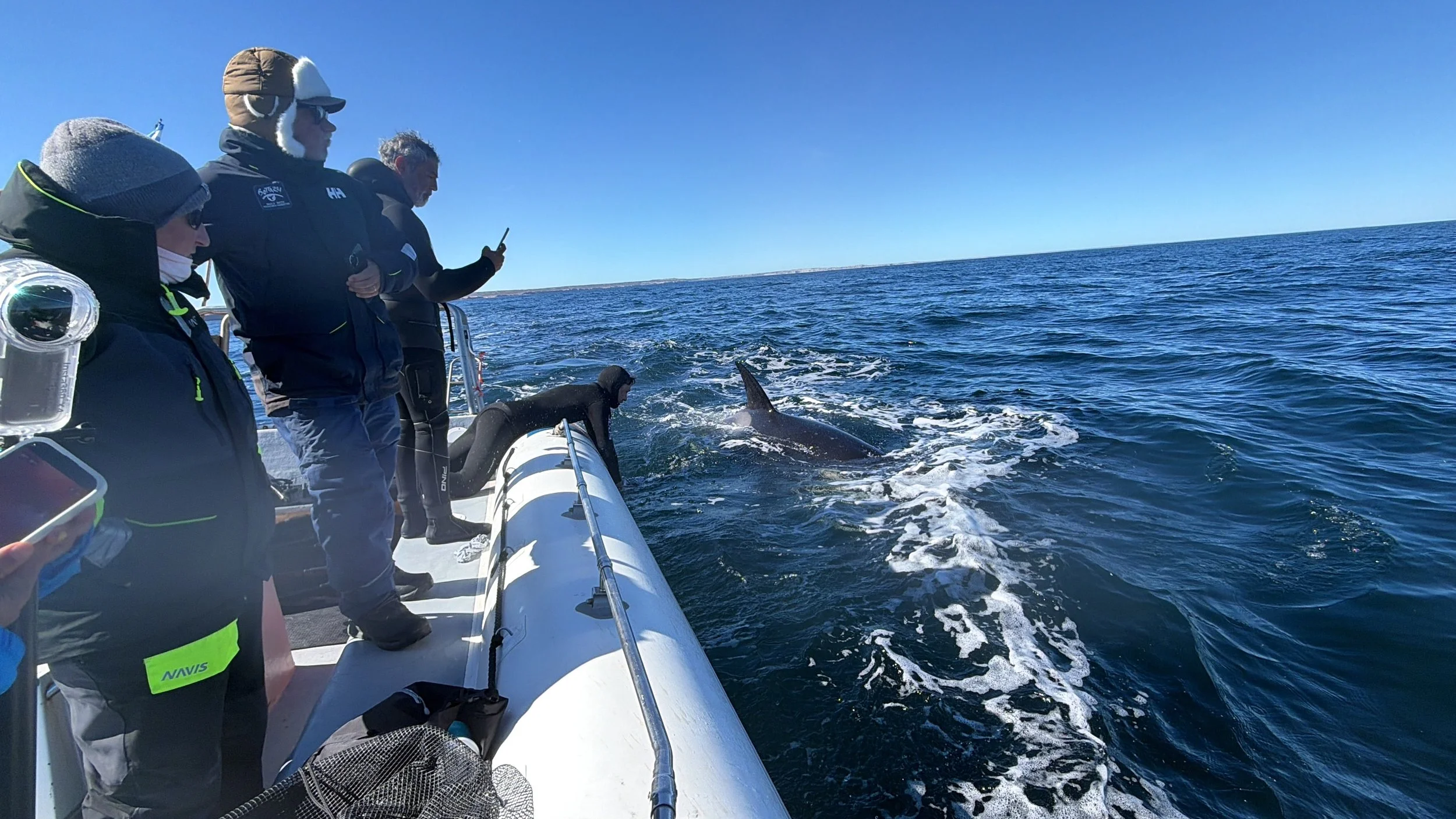
Thankfully, the orcas were just as curious about us as we were about them.
They came right up to the boat, giving us an absolutely epic encounter. They breached, played around us, swam alongside the boat, and even paused to investigate our cameras in the water.
They were playing with kelp and passing it around.
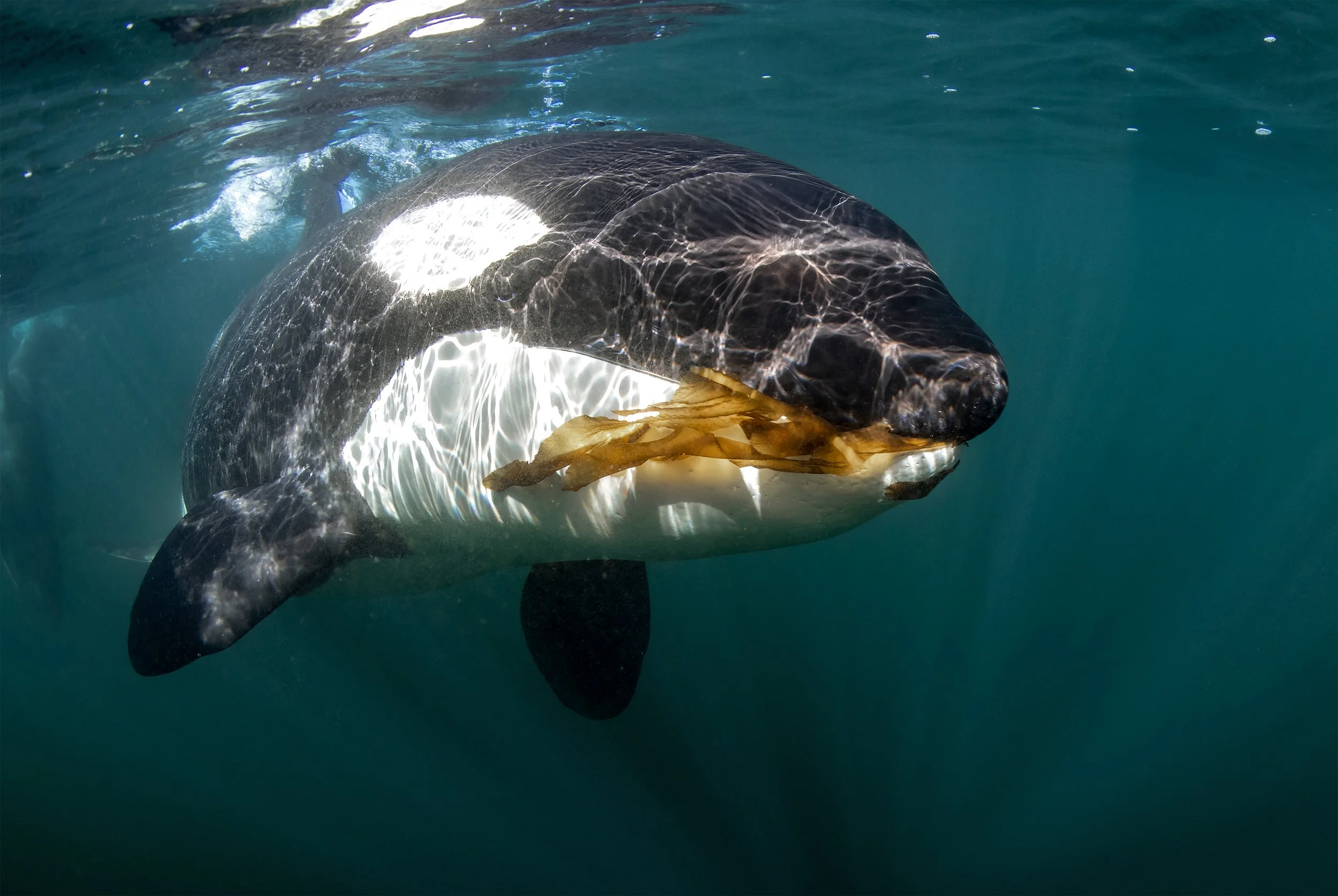
These orcas are the Patagonia beaching orcas and they are huge.
Massive animals capable of hunting whales, sea lions, and elephant seals. Absolute beasts, and unbelievably beautiful.
Man, I love them.
Photographing orcas underwater here has always been a dream of mine. Today, we got incredibly lucky.
We did not just find them, they came over and interacted with us, we really got some quality time with them.
It was so much fun.
There was so much plankton in the water, it made it very tough for photos.
I am hoping a few will come out okay, but the plankton was thick.
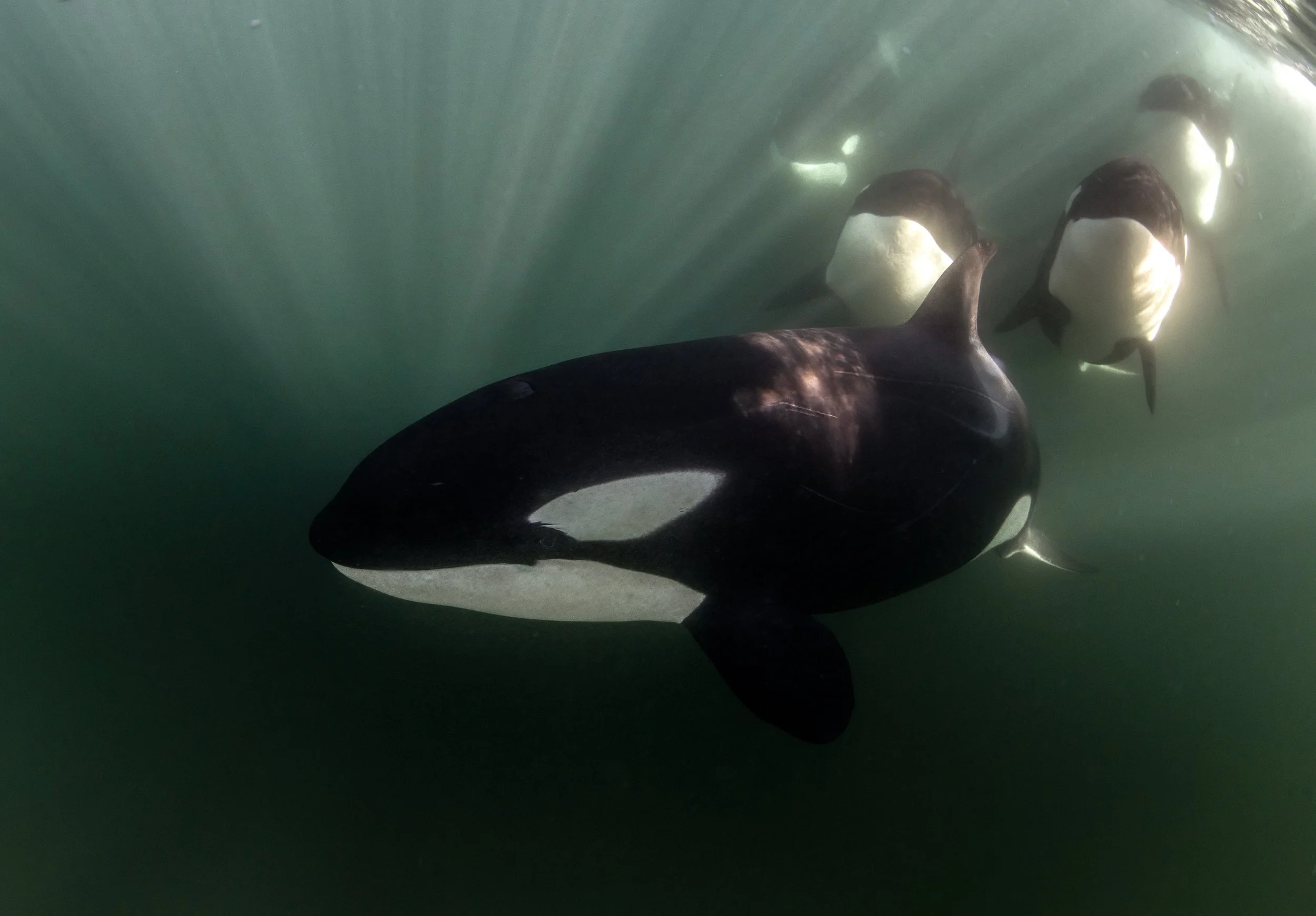
Today was a dream day for us. Not the right whales though, but for us… a magical dream.
The right whales had to have know the orcas were around, because most of the whales had completely disappeared. Whether they sensed the predators or simply moved elsewhere, we had no idea where they went.
All we know is we hope they return tomorrow.
After leaving the orcas, we eventually found one right whale and attempted a jump. It showed no interest in us and quickly swam away, so we left it alone and called it a day.
What a day.
What an epic, epic day!
Thank you, Patagonia.
September 10, 2026. Day Three
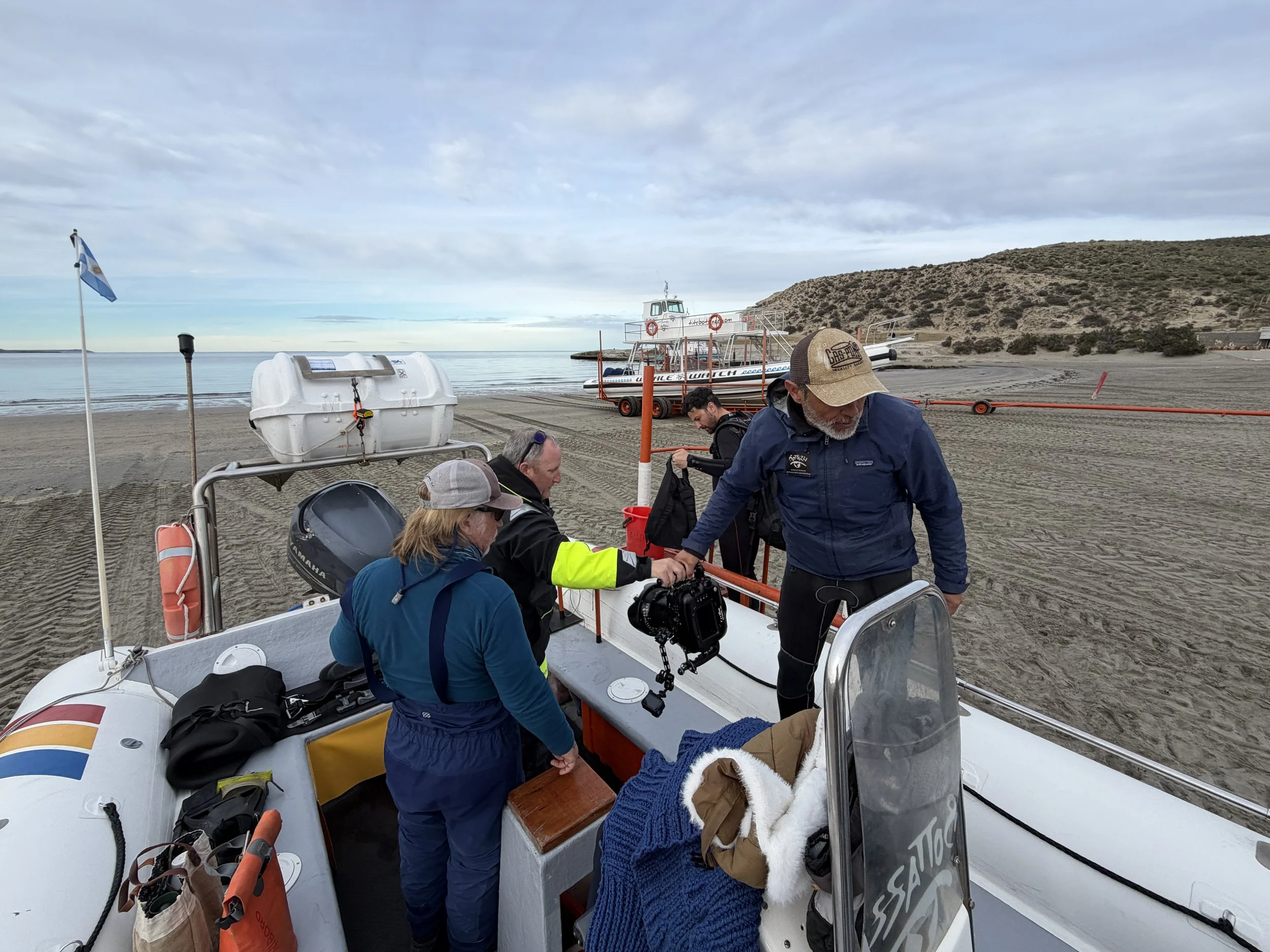
We woke to an overcast sky, but there was no wind and the sea was beautifully calm.
The calm before the storm, as they say.
Bad weather is expected tomorrow, and the port will be closed. So we are taking full advantage of weather window and hoping for another good day with the whales.
Yesterday, the right whales appeared to be spooked by the orcas. Today, we are seeing whales again, but only a few.
Compared with previous seasons, this place feels like a desert.
According to our local crew, many of the mothers left the area shortly after losing their calves, and a number of the males moved on as well.
Although there are still whales around, we are seeing perhaps 10% of what we would normally expect here at this time of year.
11:30 a.m.
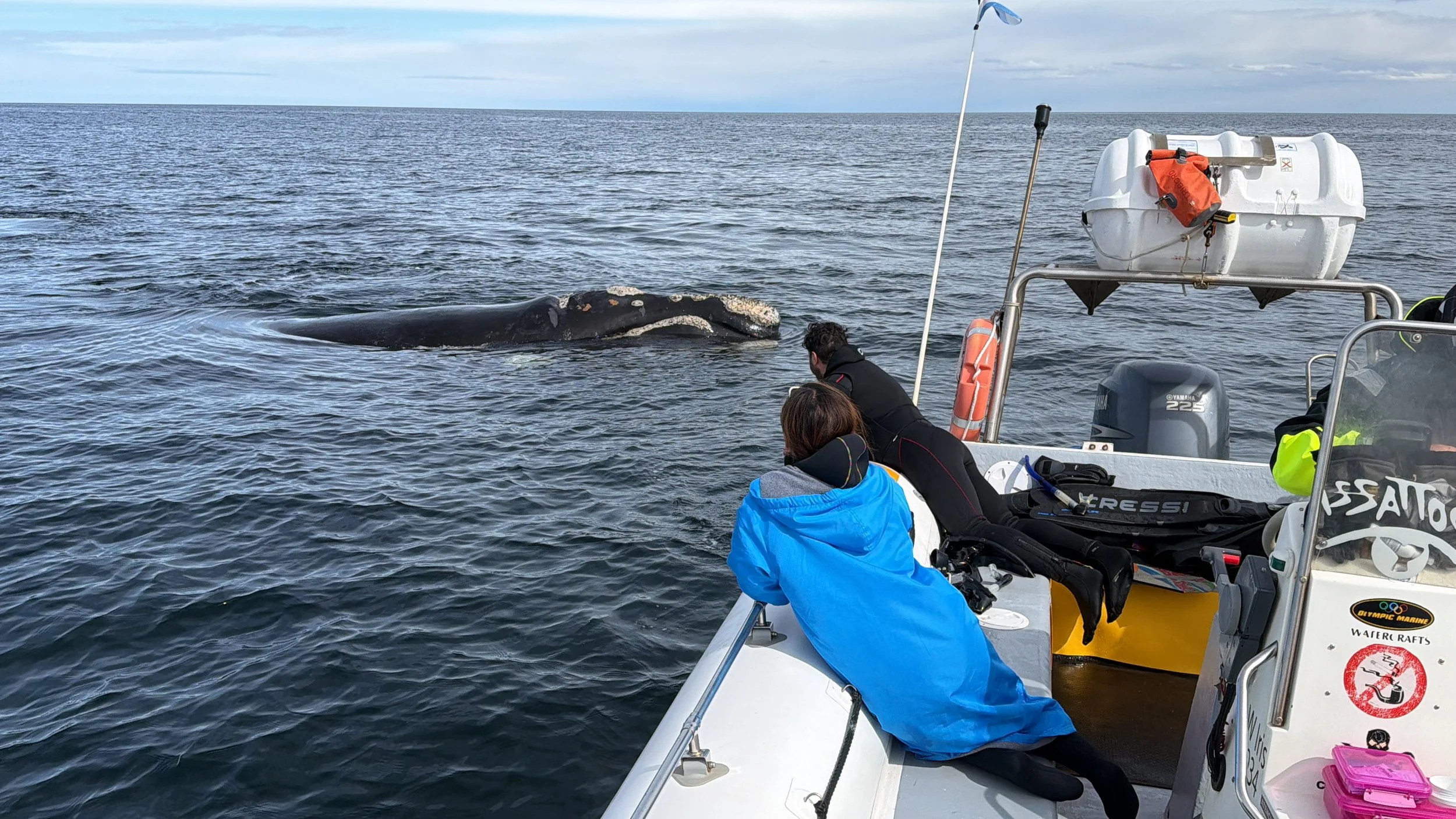
It took a while to find any interested whales, but after a long search, we finally found a few, and one was a mother with her calf!
They wanted nothing to do with us, so we kept our distance.
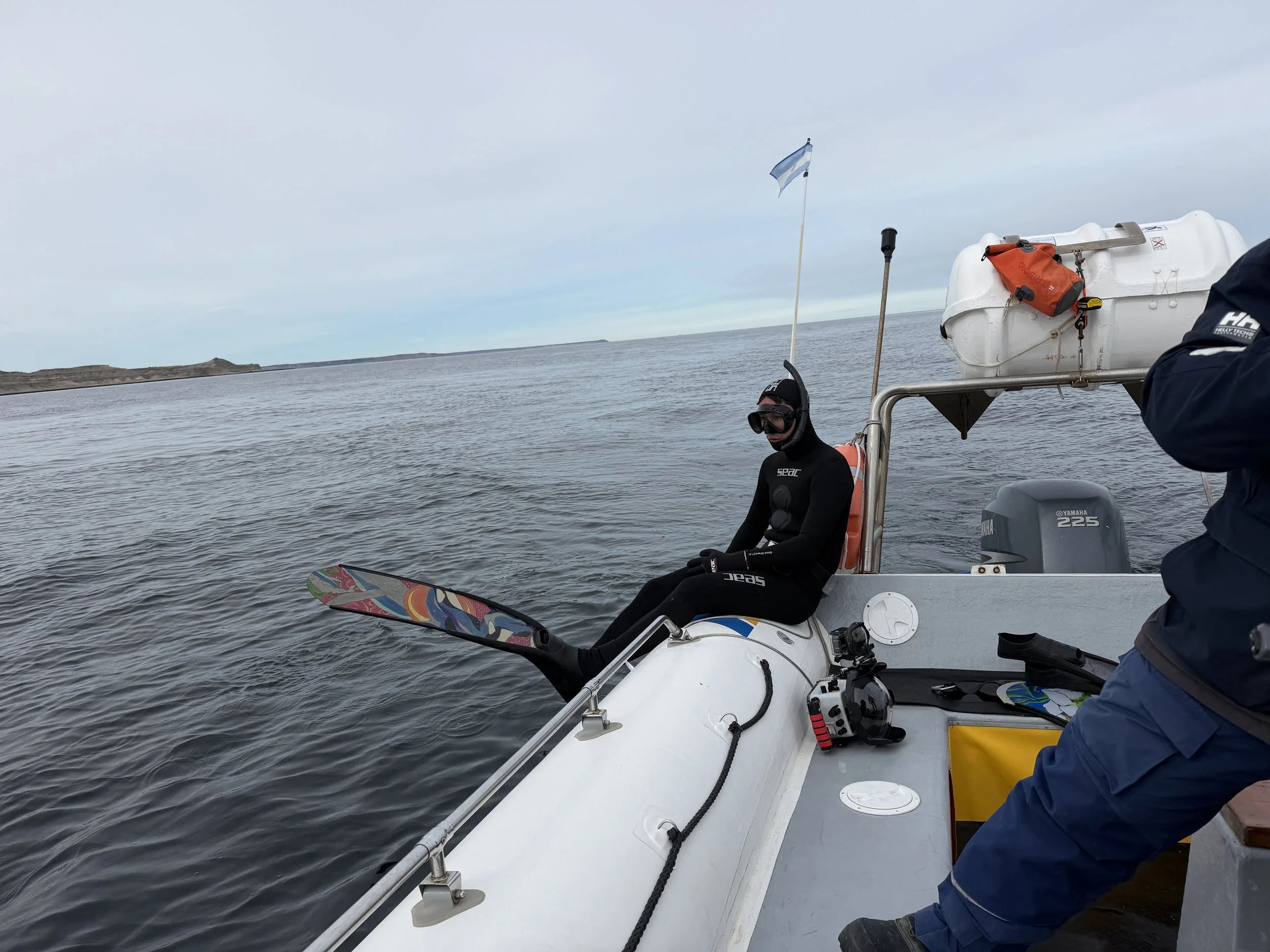
But after the devastating number of calf deaths this season, it was comforting simply to see a living calf beside its mother.
Hope Remains!
The sky remained overcast, but the sea was so flat and calm that it was absolutely beautiful.
Eventually, we found one playful whale that gave everyone one hell of a show. It was relaxed, curious, and stayed with us for quite a while.
The underwater visibility was horrible, making photography almost impossible, but it did not matter. The whale remained with us long enough for everyone to enjoy a wonderful encounter.
Toward the end of our time together, it began circling the boat over and over, giving us a fun show from the surface as well.
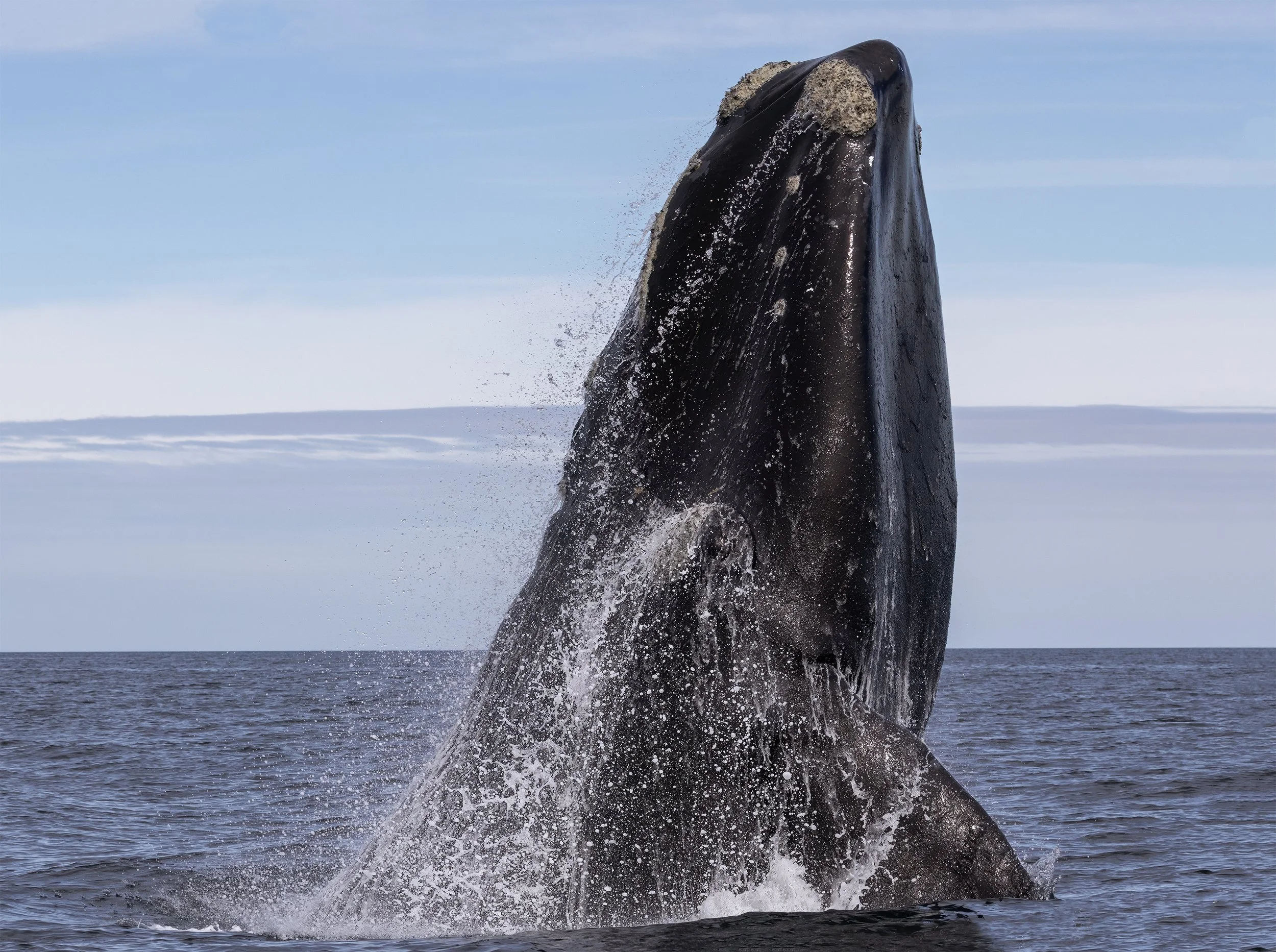
On our way home, we spotted a whale breaching in the distance. We slowly motored toward it, and then it breached again.
And again.
It breached five times, and it’s final breach was right next to the boat.
It almost didn’t fit in the frame it was so close.
I managed to capture some fun photographs at 1/1600 of a second, while everyone else recorded video.
It was a beautiful way to finish the day.
When we left the port this morning, I was worried about the lack of right whales and really hoped our guests would still have a good day out there.
Thankfully, they did.
September 11, 2026. Day Four
Today was a weather day.
We woke to heavy rain, very strong winds, and large swells at sea. We had planned to visit the penguin colony, but the weather was terrible across the entire peninsula, so our outing was cancelled.
That is simply part of working around wild places, the weather makes the final decision.
Tomorrow’s forecast looks better so hopefully we will be able to get back on the water and continue our search for the southern right whales.
September 11, 2026. Day Four
Today was a weather day.
We woke to heavy rain, very strong winds, and large swells at sea. We had planned to visit the penguin colony, but the weather was terrible across the entire peninsula, so our outing was cancelled.
That is simply part of working around wild places, the weather makes the final decision.
Tomorrow’s forecast looks beautiful, so hopefully we will be able to get back on the water and continue our search for the southern right whales.
September 12, 2026. Day Five.
We woke to a swelly ocean. There was no wind today and the sky was bright and sunny, but a chill in the air made it feel much colder. The swell was left over from yesterday’s storm.
It was supposed to lay down later in the day, though, which would be nice.
We returned to the area where we had been having luck with the whales and found a few adults.
Courtship behavior was taking place, so K got into the water and tried to film them, but the visibility was terrible, the water was thick and green with plankton.
We tried for a while before leaving to search for cleaner water.
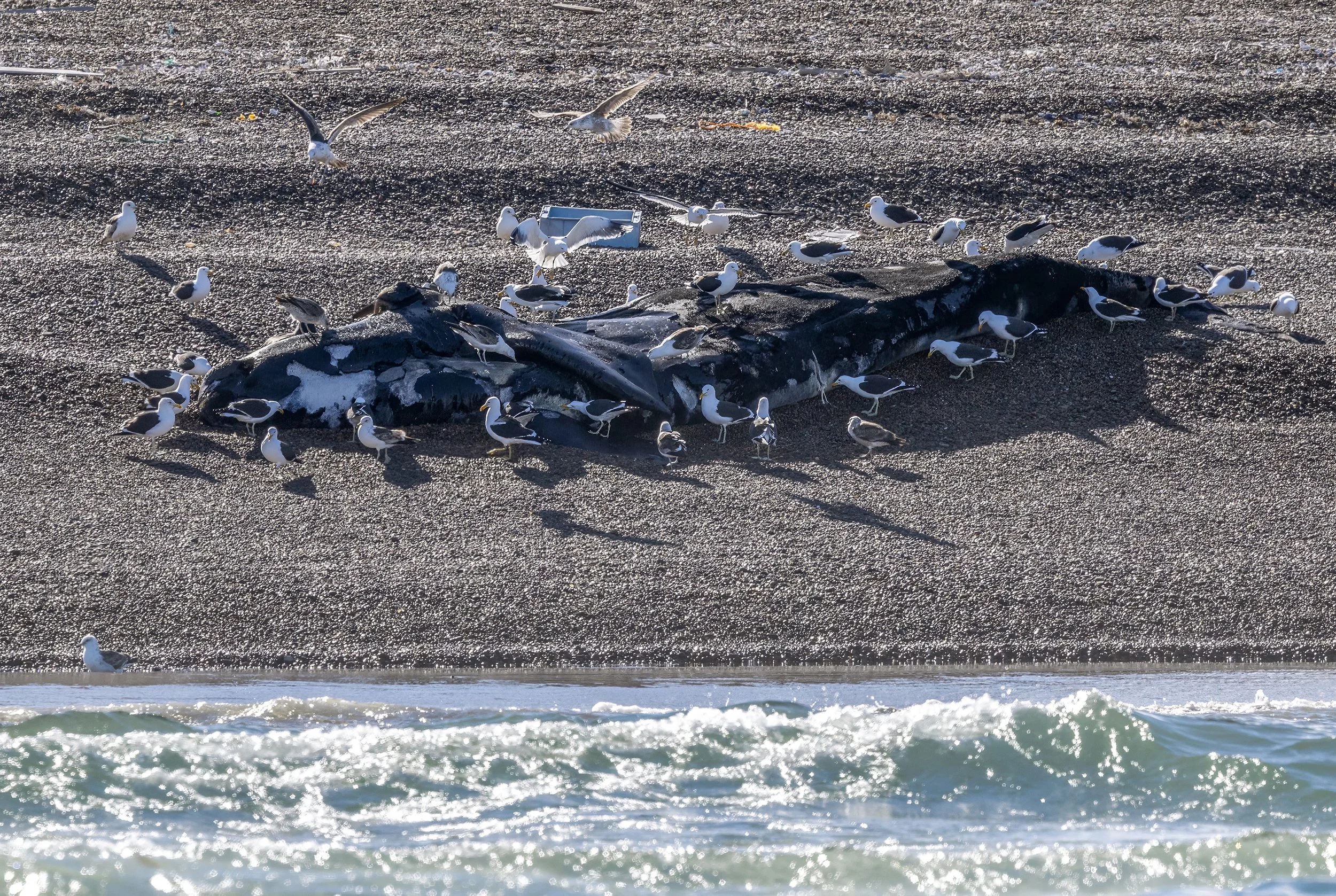
Near the shoreline, we stopped to photograph several dead whale calves lying on the beach. Gulls were busy feeding on them. We counted seven babies along this small stretch of beach, but more than 34 have been found along the coastline.
Poor babies.
While we were filming the scene, we received a call that an orca was hunting near the sea lion colony. We rushed over and found a large adult male cruising along the coastline.
It was Pao. A big resident male I photographed earlier this year while he was hunting sea lion pups in Patagonia.
Pao is one of the stars of Punta Norte and one of the area’s famous beaching orcas.
It was wild watching him hunt. He cruised along the rocky shoreline where the sea lions were resting, passing so close that he created panic throughout the colony. The sea lions began jumping into the water, right on top of him.
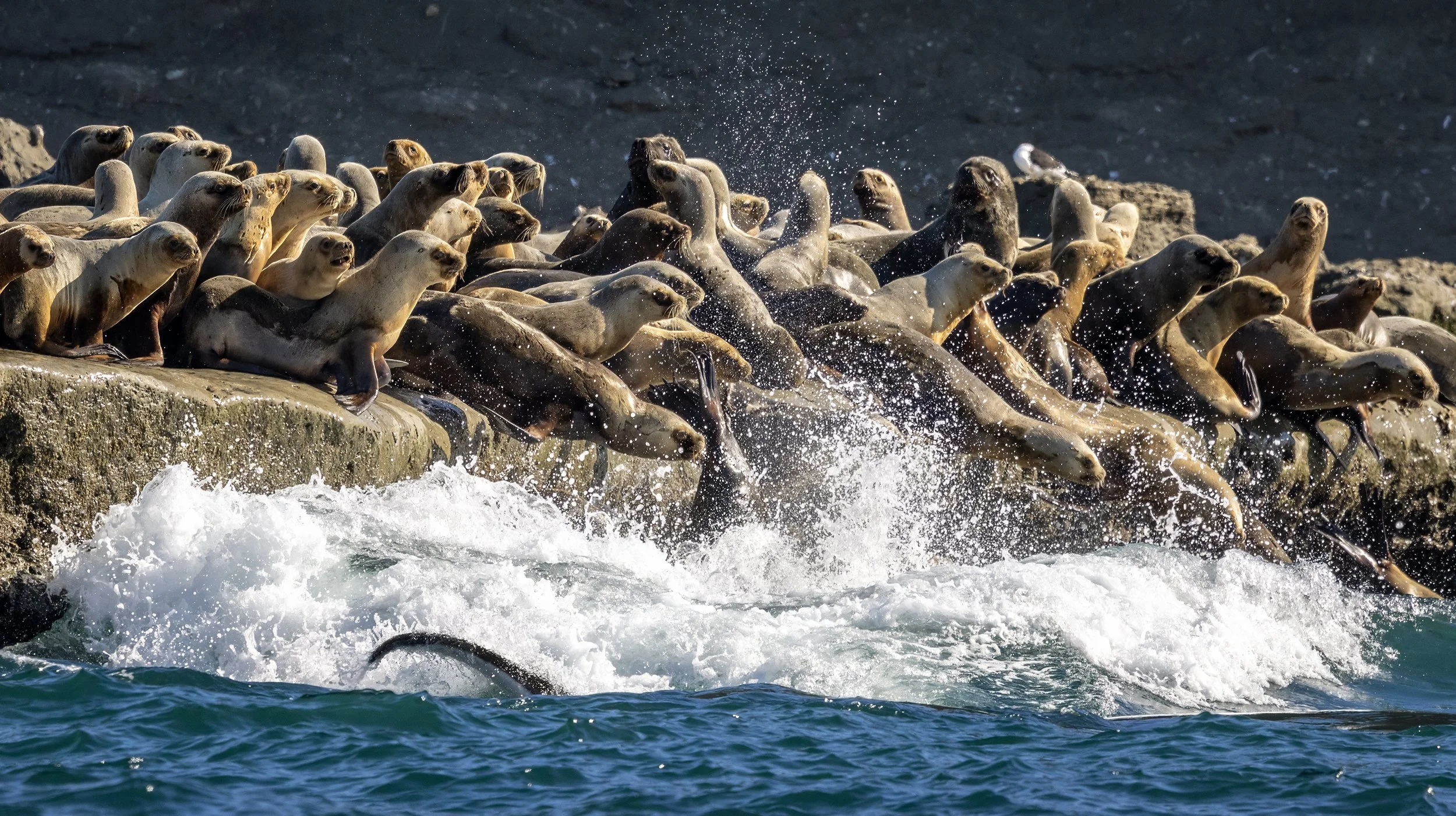
Pao creating chaos on the shoreline. This was super interesting hunting behavior to witness.
It was incredible to watch.
Pao didn’t catch anything, though, and eventually moved on. We followed him for a while to see whether he might be trying to catch up with his pod.
I was hoping he would get close to the boat so I could dunk my camera in for an underwater shot of him, but he never got close to us.
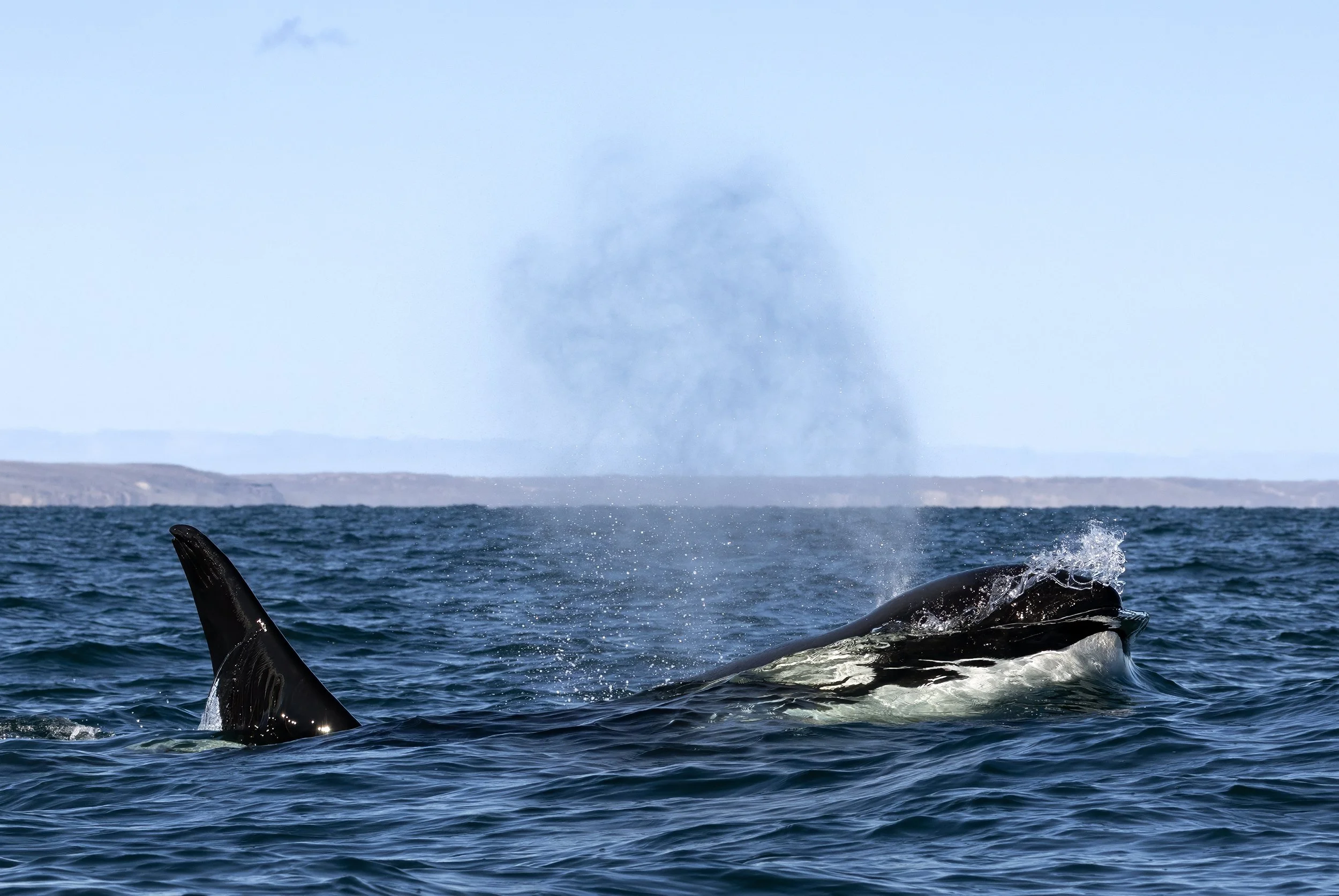
He continued traveling alone, so we decided to leave him and search for more whales, that were hopefully in cleaner water.
We eventually found a mating group of four whales: one female and three very excited males.
David entered the water, but the visibility was horrible, and with the whales so excited and active, it wasn’t safe to remain in the water. He climbed back aboard and sent up his drone instead.
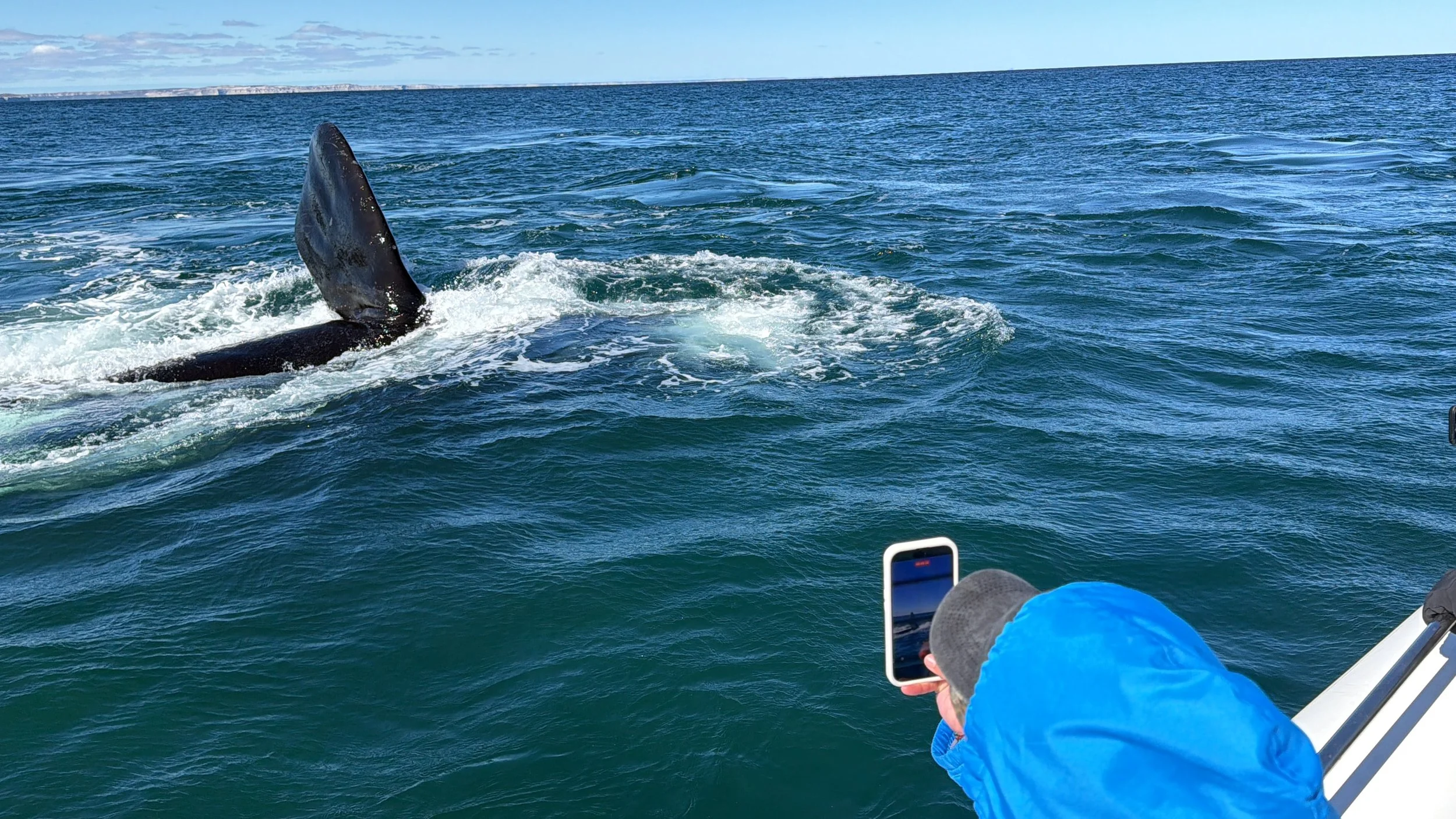
The scene from above was incredible, and David captured some epic footage of the mating behavior.
After the activity ended, one whale remained and repeatedly circled our boat. David tried one more jump, but the visibility was still terrible, so we finally called it.
We began motoring down the coastline, still hoping to find whales in cleaner water. The seas had finally flattened out, making the ride home much more pleasant.
On the way back, we stopped to photograph a whale repeatedly tail slapping at the surface.
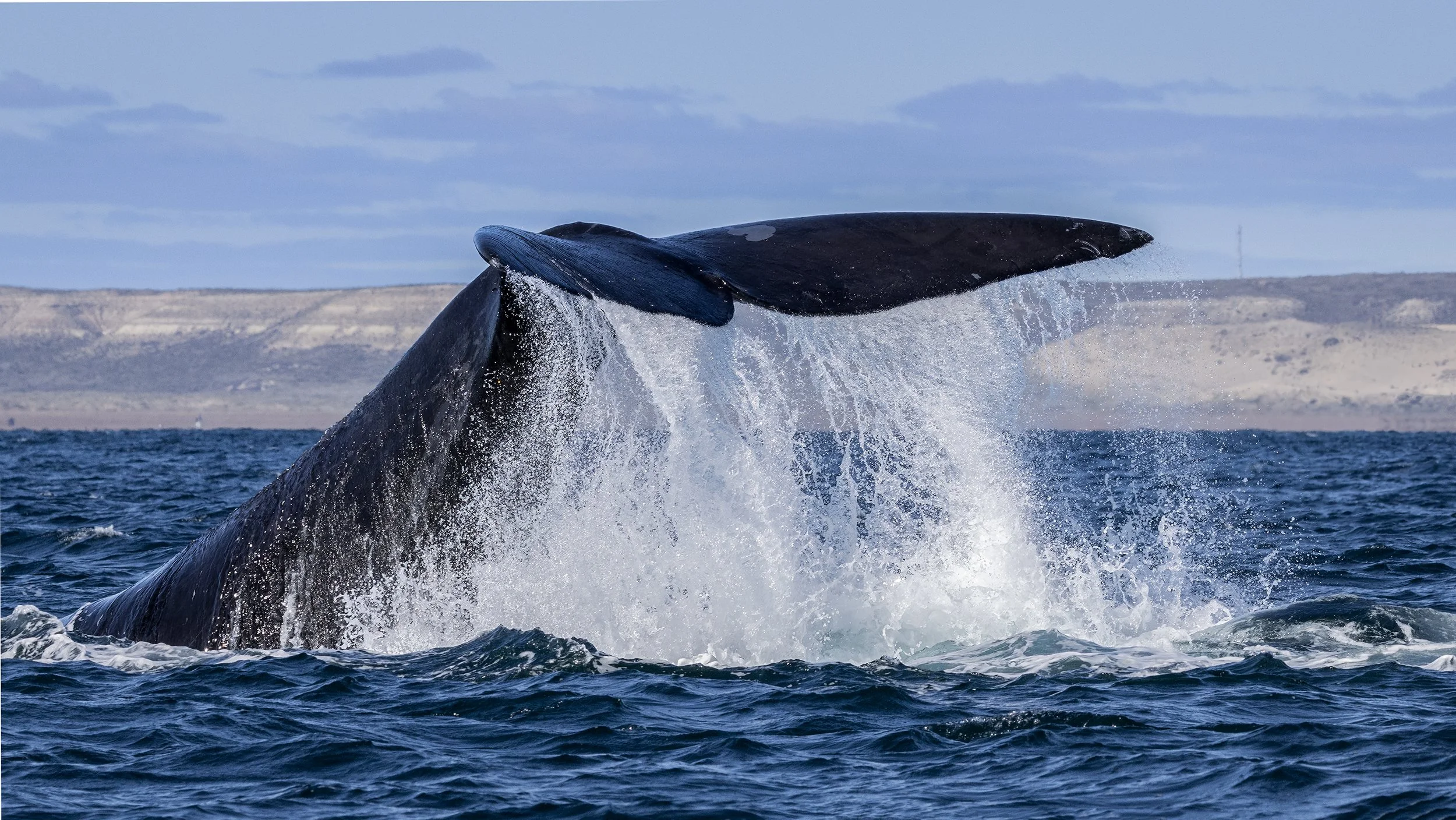
The sound of its massive tail crashing down against the water is one I love hearing.
It stays with you.
What a dreamy way to end the day.
September 13, 2026. Day Six.
Day six trip report will be added tomorrow evening. Too much happened today to try and jam it all in tonight.
It was a lot of epic epic moments!
September 13, 2026. Day Six
Magic, Magic, Magic!
I am struggling to find the right words for today. So much happened that it almost feels like a story someone made up to sell wildlife expeditions.
But every word of it happened.
We awoke to perfect conditions… blue skies, warm weather, and calm seas. The morning did begin with some disappointing news, though. We had planned to swim with the sea lion colony near town, but another dive operator had reserved the site for the time we wanted to visit.
Captain Boro suggested that we travel to another sea lion colony farther away. The visibility would probably not be as good there, but the colony was closer to the area where we planned to search for whales later in the day, so it worked out.
When we arrived, the visibility was terrible, almost zero, but hundreds of sea lions surrounded us. It still looked as though it was going to be a fun dive.
Underwater photos were going to be terrible though.
Captain Boro encouraged us to gear up quickly. The sea lions were excited by our arrival, but he knew their curiosity would eventually fade.
David was ready first and preparing to enter the water. I was right beside him when I looked up, and had to blink several times.
ORCAS!
Pao and his entire family were there, and they were here for breakfast.
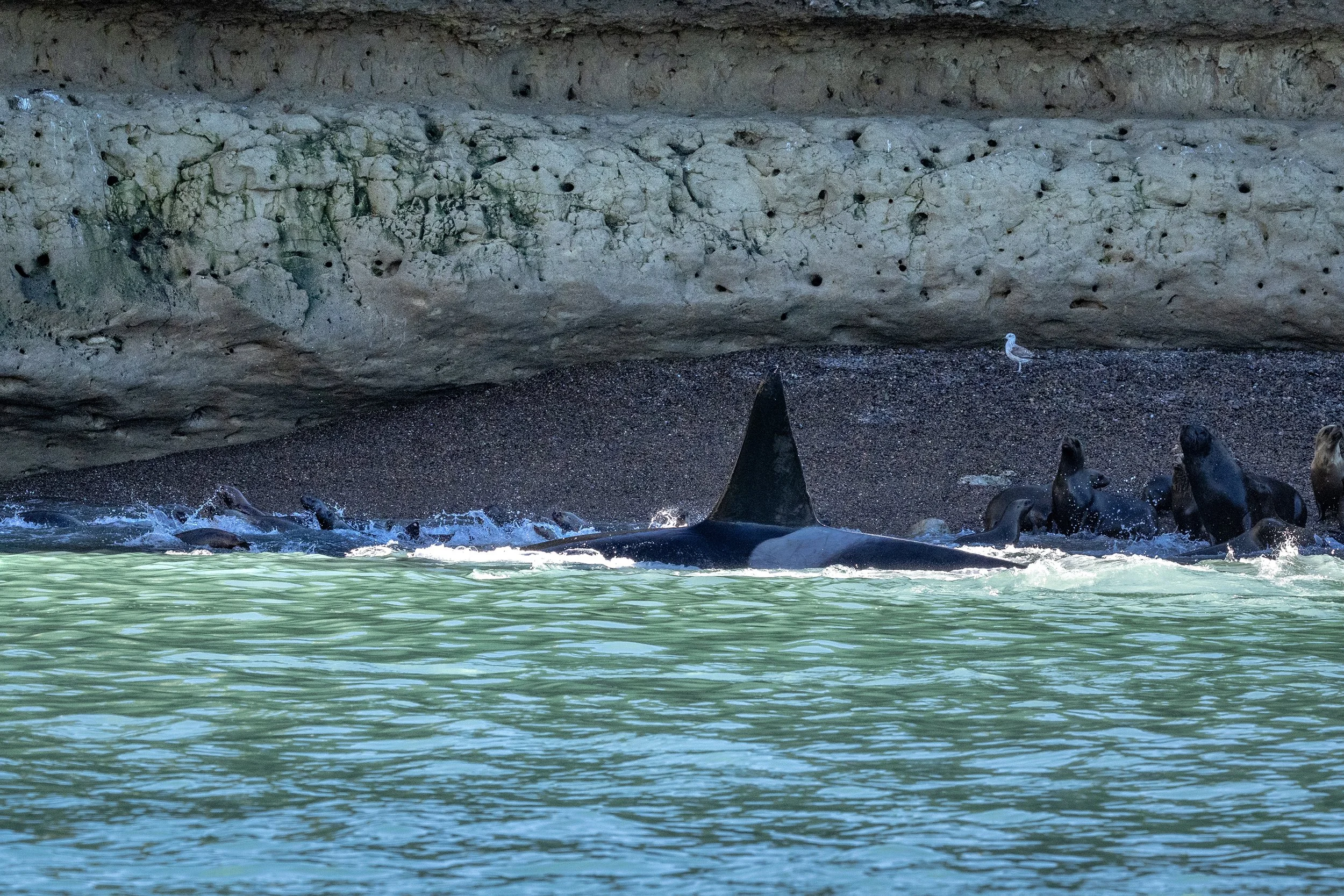
Everyone came alive. We entered the water but remained close to the boat because the visibility was so bad. We also did not want to interfere or disturb the hunt.
We watched and waited as the entire family shifted into hunting mode.
I had been dreaming of this moment for a long, long time.
Sadly, even though we were in the water, we couldn’t see it, because the vis was so bad.
The action was fast, chaotic, and incredible. Panicked sea lions raced through the water while the orcas moved tightly along the coastline, pressuring them away from the safety of the beach where most of the colony had been resting.
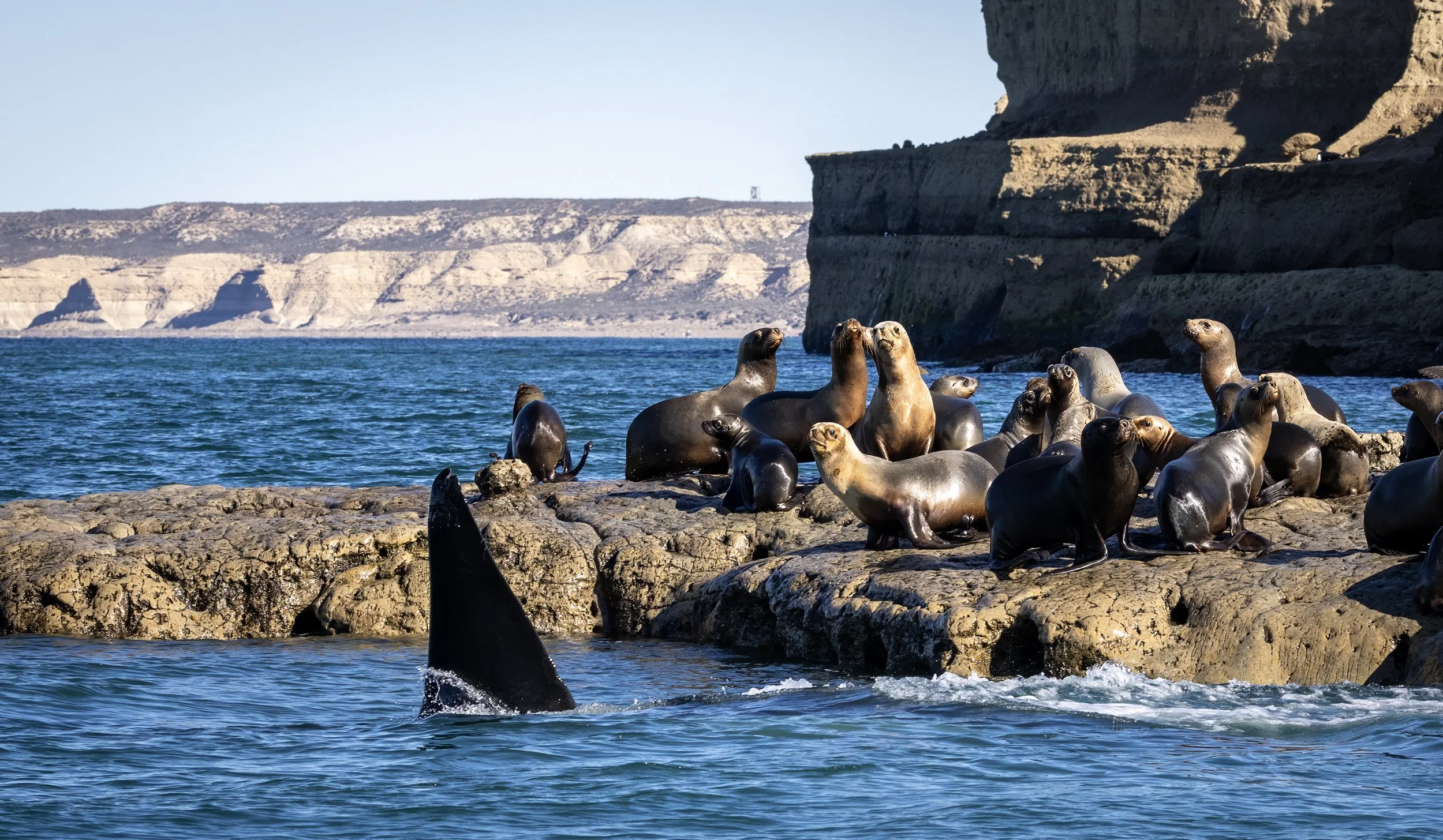
Some sea lions swam in circles. Others followed the orcas and appeared to nip at them. The younger orcas backed away, but Pao, the enormous adult male, continued the attack and eventually caught a sea lion.
He swam away with his prize as the rest of the family followed. They shared the food among themselves, and at one point, one of the juveniles swam around with a large piece of flesh in its mouth. It even passed beside our boat as though showing us what it had.
We watched much of the hunt from the water, taking only a few “proof of life” photographs before climbing aboard to document the encounter from the surface. David launched the drone, which gave us the best seat in the house.
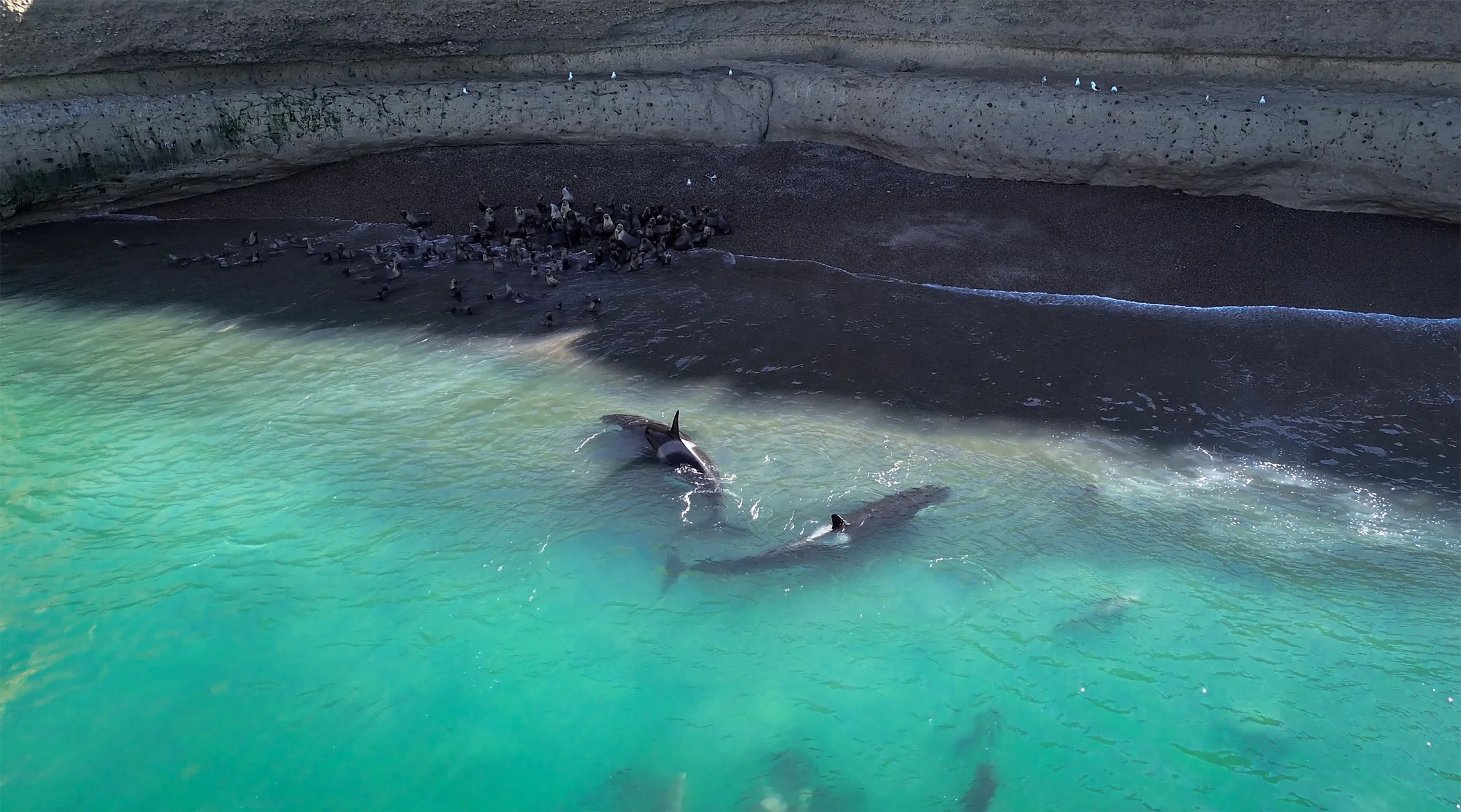
Image captured by David Edgar
After feeding, the orcas attempted to hunt again but eventually moved on. We followed from a respectful distance, curious about what they might do next.
They began traveling along the coastline, where the adults appeared to be teaching the juveniles how to intentionally strand themselves on the beach, a highly specialized hunting technique for which the orcas of Península Valdés are famous.
It was astonishing to witness. The family seemed to participate in the lesson, with adults demonstrating while the younger animals practiced approaching the shoreline, sliding onto the beach, and wriggling backward into deeper water.
Eventually, some of the younger orcas, and a couple of the adults, seemed to tire of practicing. Their attention shifted toward us and our boat.
With authorization and permits from the Argentine government, we entered the water to document them. The water was still murky, but visibility was a lot better than it had been near the sea lion colony. It was perhaps ten to twelve feet deep, becoming even shallower closer to shore.
The orcas immediately became interested in us.
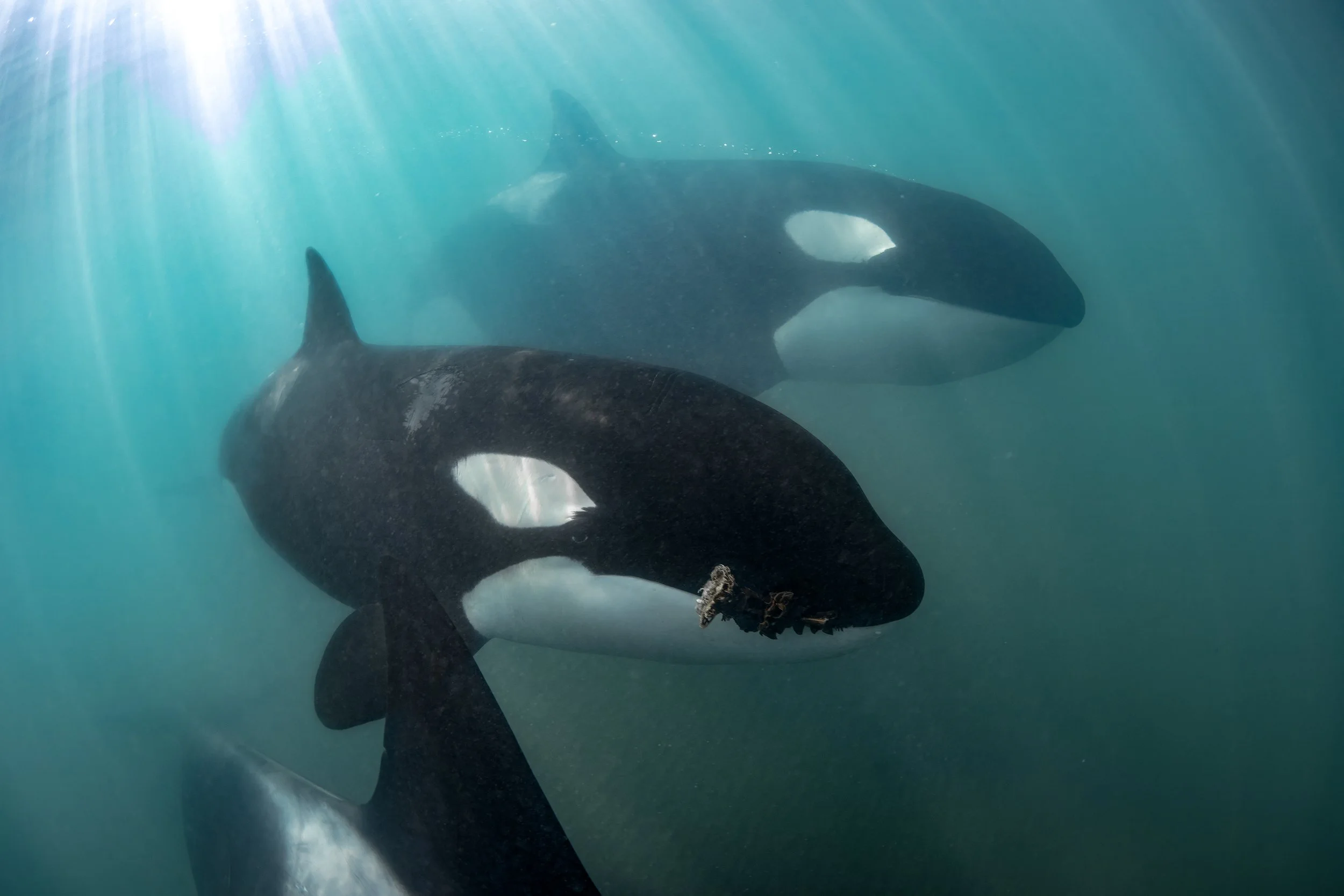
They circled the boat and swam around us repeatedly, making pass after pass. They investigated our cameras, our movements, and perhaps our clumsy attempts to swim beside animals so perfectly adapted to the ocean.
These were some of the largest orcas I had ever seen. This population hunts whales, sea lions, and elephant seals, and their size and power were overwhelming at such close range.
There is no feeling quite like watching a wild orca swim directly toward you, slow down, stop, and hover there while looking at you.
Studying you.
I cannot know exactly what they understood, but I believe they were examining us with both their vision and their extraordinary echolocation abilities. They appeared every bit as interested in us as we were in them.
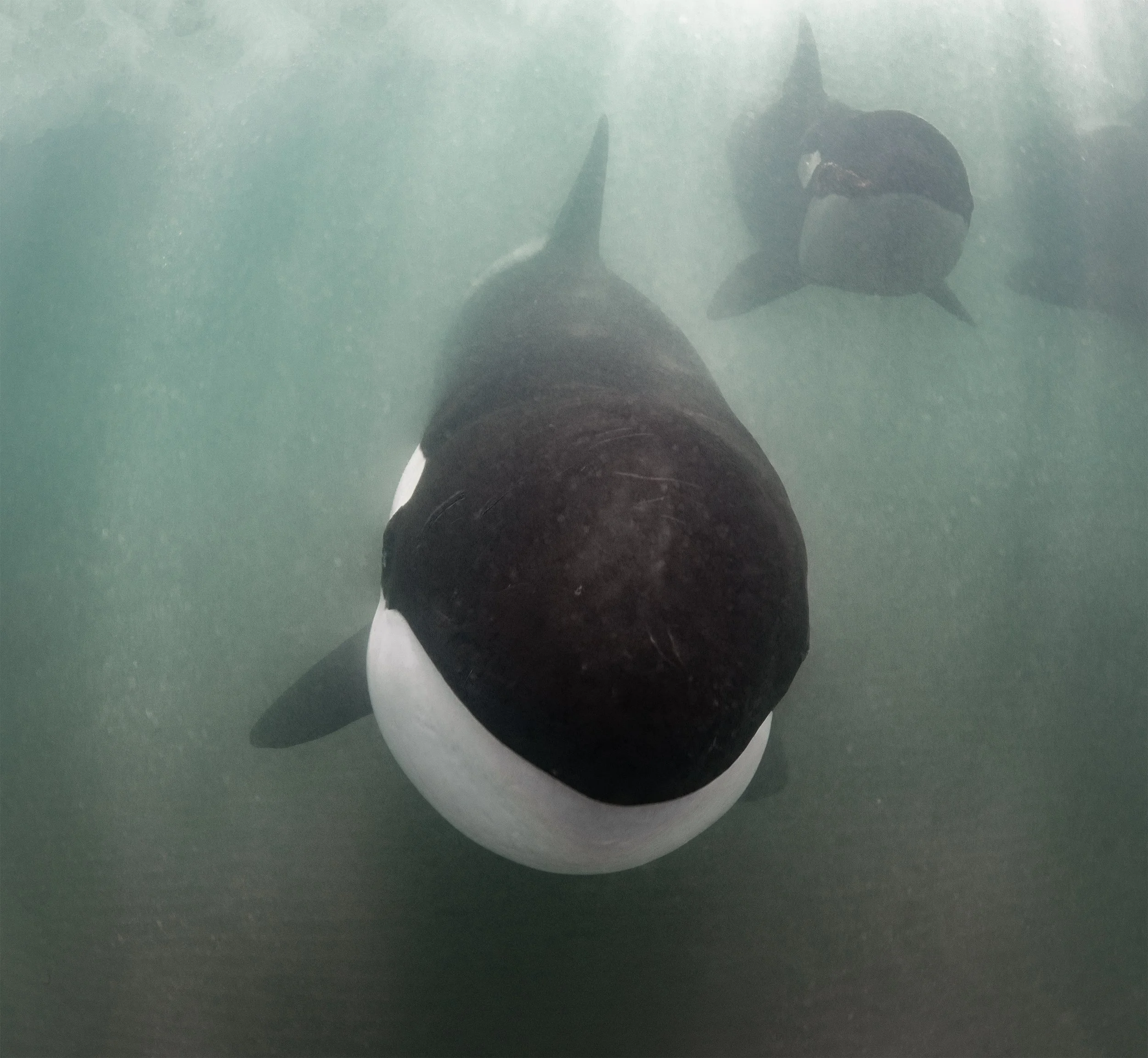
Eventually, Captain Boro told us it was time to get out and allow the family to return to its training.
But when we left the water, the orcas returned to the boat, as though wondering where we had gone.
Earlier, while we were swimming, one of the orcas had been carrying a piece of seaweed.
It released the seaweed and continued swimming, and David retrieved it after the animal had moved away, and brought it back to the boat.
When the orcas returned to the boat, Alice lowered the seaweed into the water and gently moved it in front of one of them.
The orca slowly approached.
Then, with incredible gentleness, it took the seaweed from Alice and swam away.
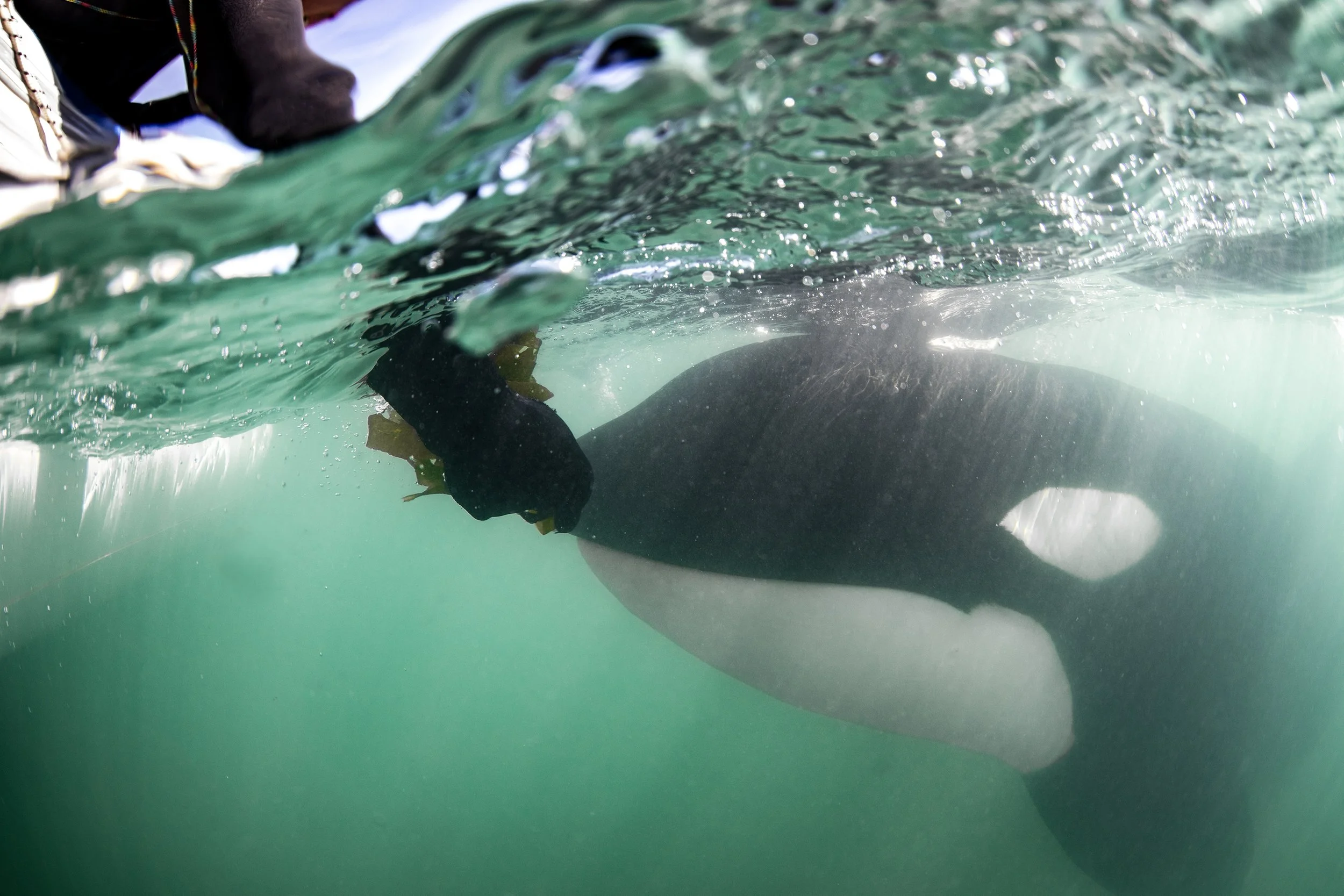
Alice and Captain Boro stood there in complete shock.
Boro later told us it was one of the most amazing things he had ever witnessed.
The family eventually returned to its training. We remained aboard the boat and watched as the orcas moved repeatedly up and down the shoreline, sliding onto the sand and then twisting their powerful bodies back into the water.
The juveniles practiced again and again.
At one point, one of the youngsters stranded itself farther onto the beach and struggled to return to the water. For nearly twenty minutes, it worked to free itself.
The adults remained close. They did not immediately push or pull the juvenile back into the sea. Instead, they appeared to wait, perhaps allowing it to solve the problem on its own.
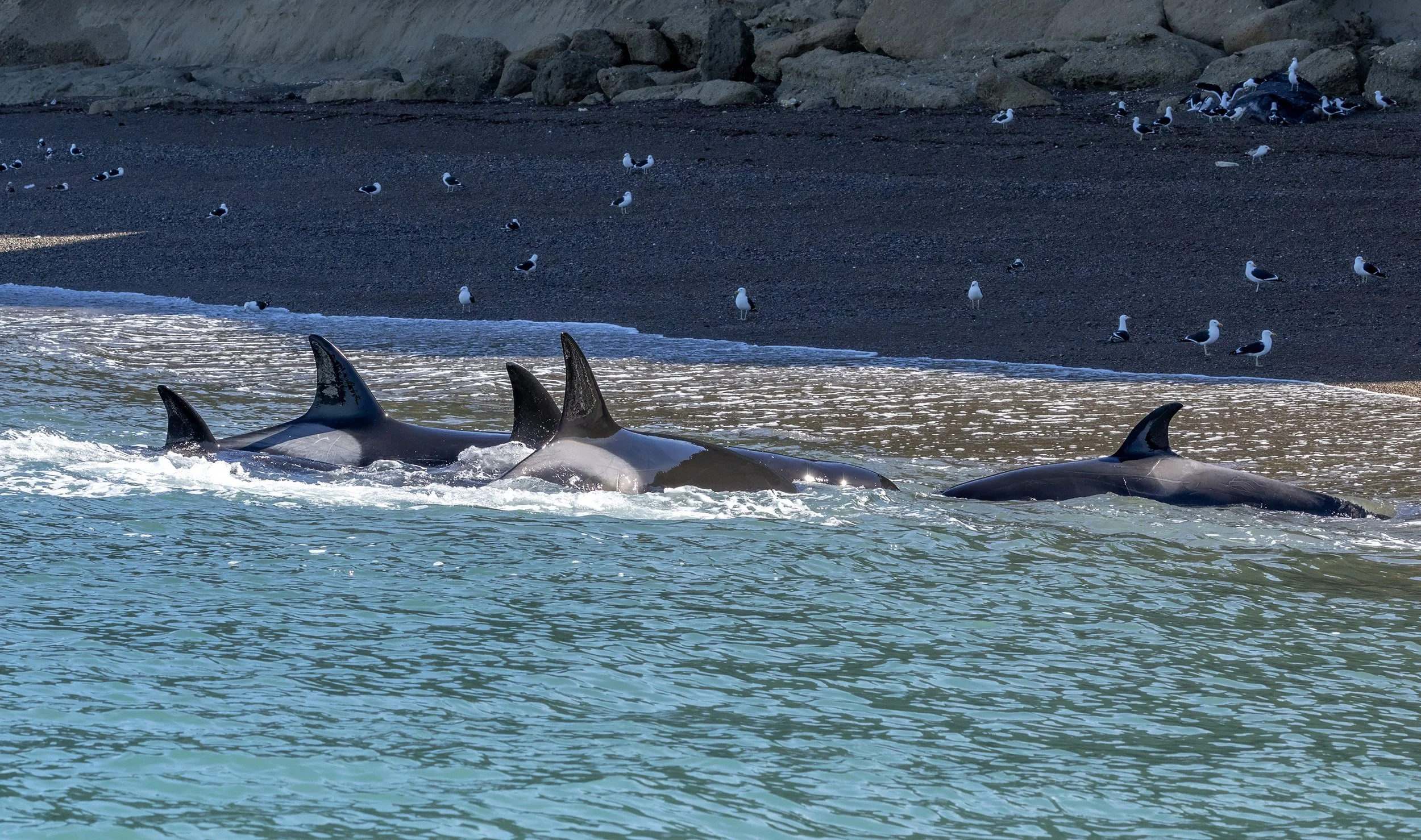
As more time passed, the adults became increasingly active around it, but the young orca still could not free itself.
Concerned for the animal, we cautiously went ashore to observe from a distance and make sure it was able to return to the water. We never touched it or approached closely.
As we drew nearer, the adults moved away from the juvenile. The youngster apparently heard our footsteps and made one powerful, desperate attempt to escape its sandy prison.
And then, with a powerful burst of speed, it freed itself and surged back into the sea.
Our strong-spirited juvenile had done it.
We walked back toward the boat with enormous smiles on our faces. I entered the hip deep water, and suddenly, the orcas stopped swimming.
They were all looking at me.
Three of them turned and approached together.
They swam directly toward me and stopped only a short distance away. For several seconds, three wild orcas hovered in front of me and watched.
I stood completely still.
They were close enough that I could have reached out and touched them, but I didn’t. First it is illegal to touch them and secondly… Touching them would have felt like touching a unicorn.
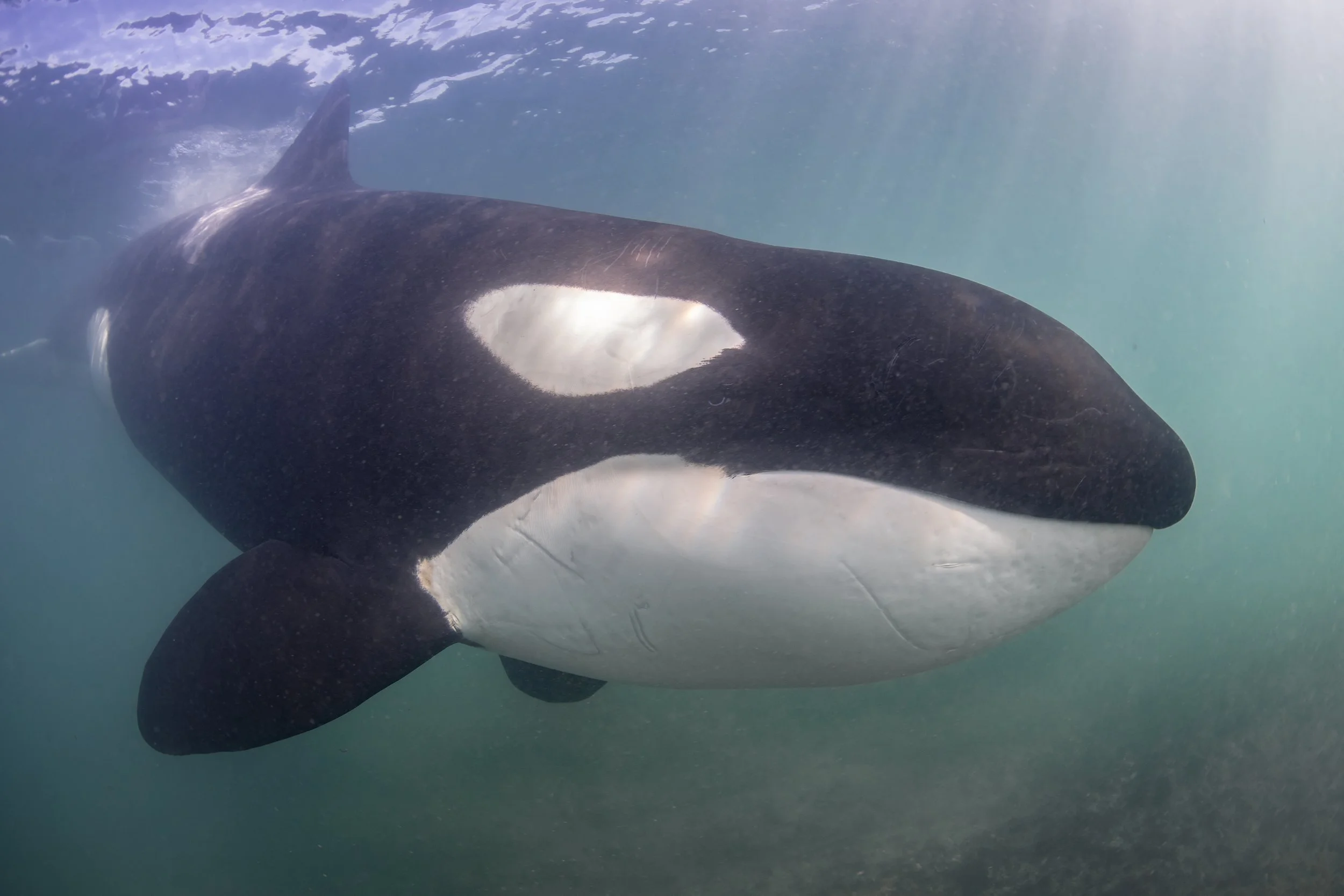
Like if I was taking something from a moment that was extremely sacred.
Then they turned and swam away.
Two of them returned for another look before leaving again.
Then one came back a third time.
It was exciting, beautiful, intense, and completely overwhelming. It was the most extraordinary ocean encounter I have ever experienced.
For those few moments, I was no longer simply observing the orcas.
I was the wildlife.
Eventually, we returned to the boat. Another vessel arrived, so we decided it was time to call it a day. Shortly after the second boat appeared, the orcas left the beach and headed toward the open ocean. Perhaps it was time to search for dinner.
We followed them from a distance for a little while longer.
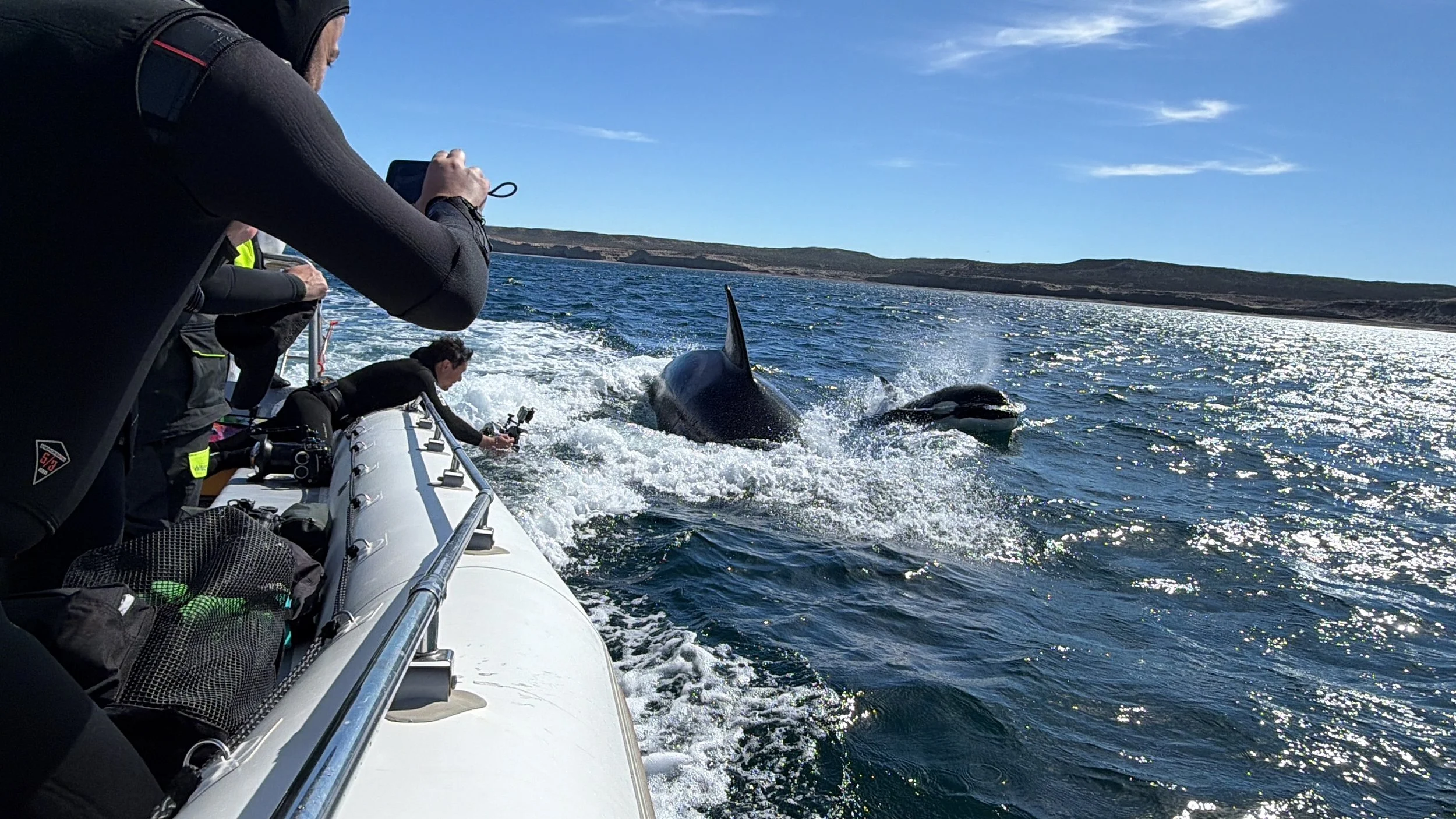
Then we said goodbye to our orca friends, and goodbye to an expedition none of us will ever forget.
This entire week had been insane, and so very special. Captain Boro usually sees orcas in these waters perhaps once a year.
We encountered them on three separate days this week. We watched Pao hunt, met the entire family twice, and on this final day were allowed to spend hours quietly witnessing their lives.
It was not simply a sighting. It was a series of encounters that became more extraordinary every time the family returned.
At one point, Boro was so overwhelmed that he began to cry.
In the end, all of us came together for one enormous group hug.
We had entered the water as friends, guests, and crew. Somehow, we emerged feeling as though we had crossed into another timeline, changed by something none of us could fully explain.
What a week.
What a day.
What a place.
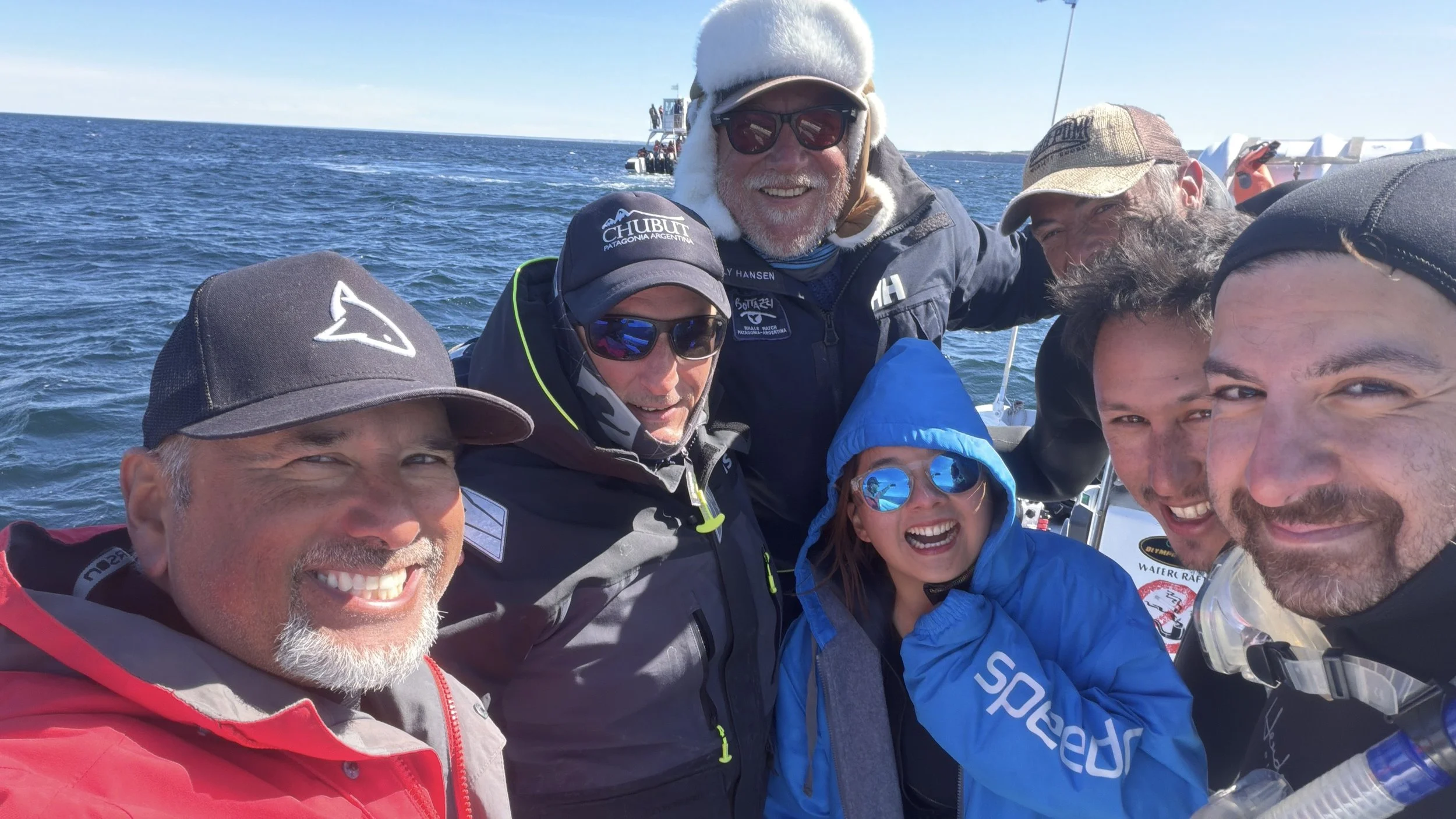
My deepest thanks to our friends and to the crew who made this experience possible.
Just wow, wow, wow.
*All wildlife photographs captured under Government permits.