
Amazon Pink River Dolphin Trip Report 2026
- Trip 1 -
Amazon River, Brazil
June 30 - July 4, 2026
Every expedition into the Amazon tells a different story.
Some days begin with thick jungle fog and curious pink river dolphins. Others are spent searching the canopy for sloths, photographing monkeys, colorful birds, or quietly drifting through flooded forests where every bend in the river holds the possibility of a new discovery.
This journal follows our 2026 Amazon Pink River Dolphins expedition day by day. Rather than sharing only the highlights, you'll experience the trip as it unfolded, its surprises, challenges, unforgettable wildlife encounters, and the quiet moments that make the Amazon one of the most extraordinary places on Earth.
June 30, 2026. Arrival Day
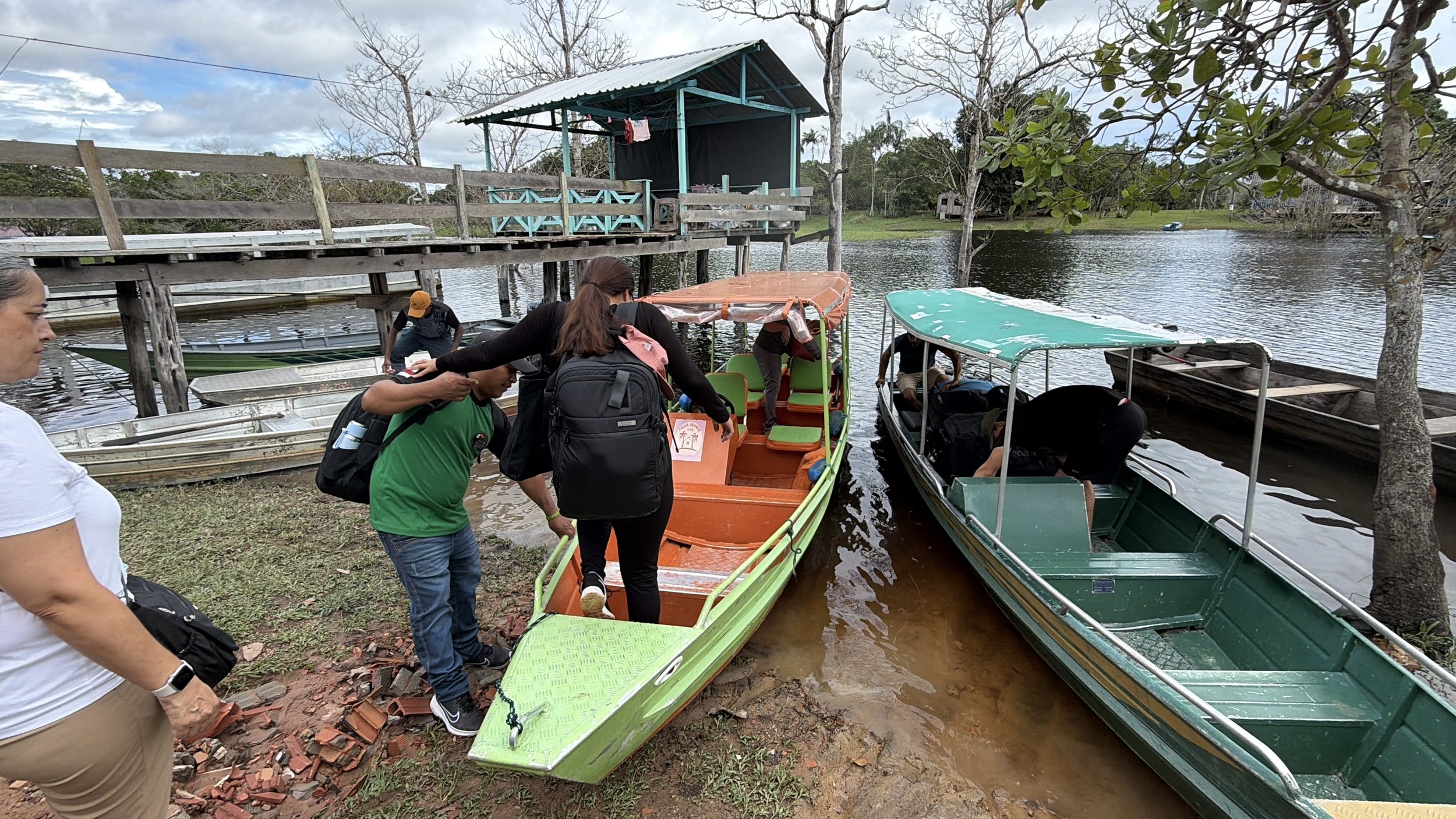
We were picked up from our hotel this morning and driven to the ferry dock. It's always a bit of a roller coaster ride through the suburbs of Manaus on our way to the jungle.
Cities have never really been my favorite places to be.
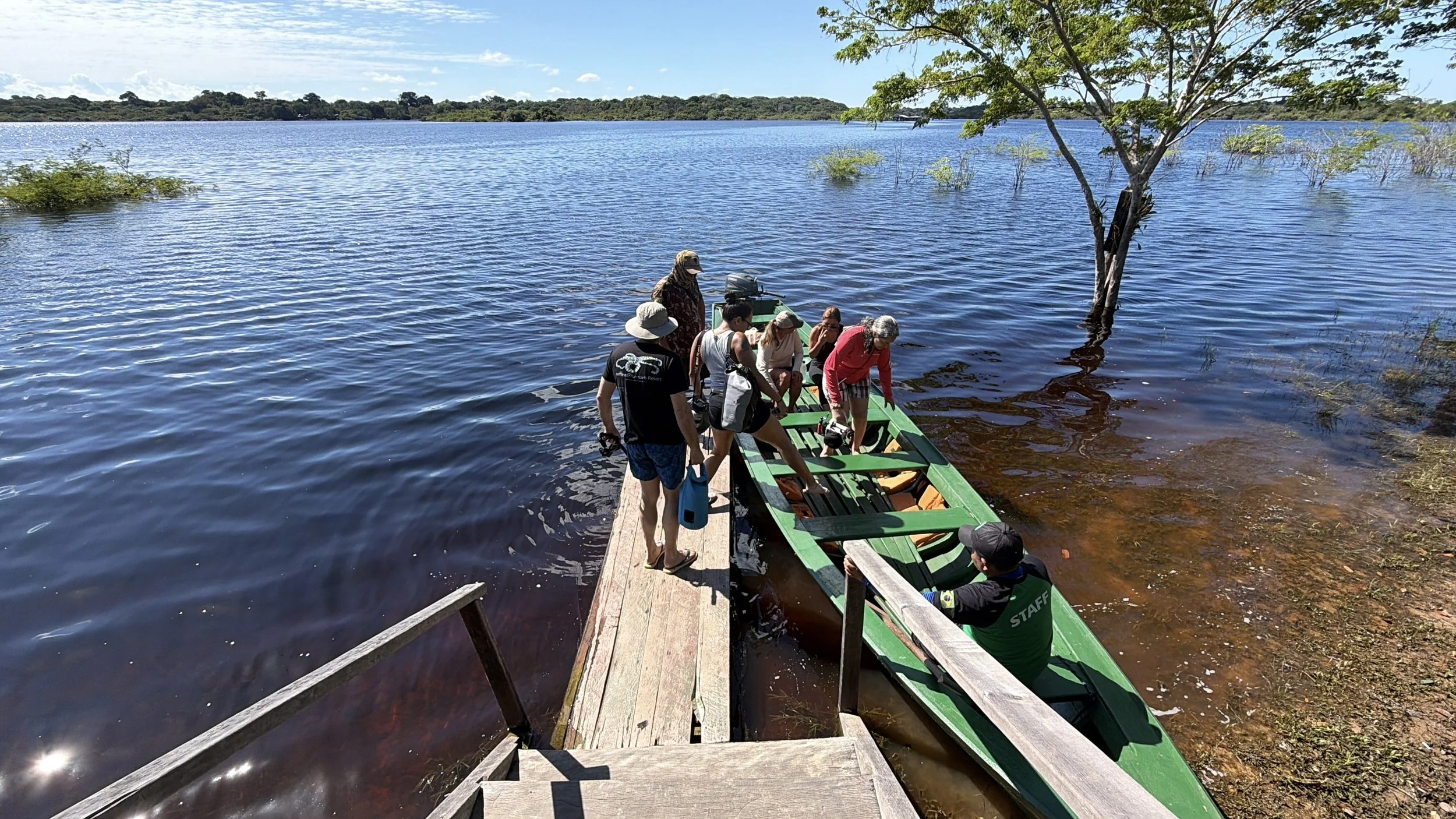
For me, the adventure begins the moment you step aboard one of the colorful little boats they use throughout the Amazon. They're long, narrow, lightweight, and powered by shallow-water motors that can be lifted almost completely out of the water when the river gets too shallow. They aren't fancy, but they're perfect for life out here.
After checking in, we headed to the mess hall for lunch. Meals are served buffet style with plenty of local dishes mixed in. The food is always good, and before long everyone had settled into the slower rhythm of the Amazon.
3:50 p.m. Time for our first outing of the trip.
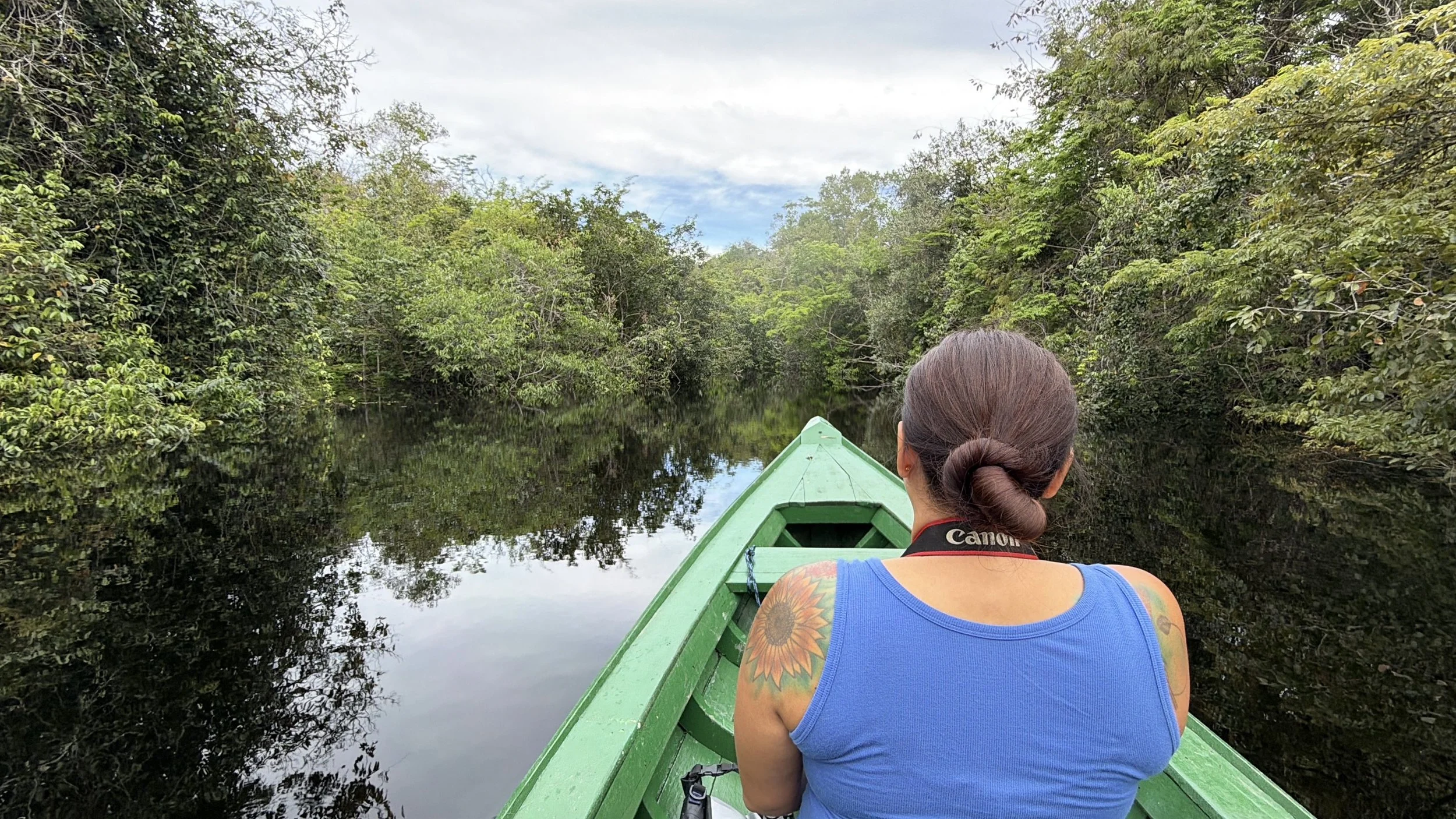
The search for sloths begins.
I have a few photo goals this season. The first is finally photographing a two-toed sloth… so far that species has eluded me.
The second is finding a mother carrying her baby. I'd also love a photograph of a sloth swimming across one of the rivers. Those moments are lucky and incredibly special.
Our first sloth was a female.
The second was a male. Male three-toed sloths have a beautiful orange patch across their upper backs, making them easy to identify. Unfortunately, both animals were tucked into difficult positions for photography, covered by branches and tree leaves. The male eventually turned his head toward us, giving us at least one decent opportunity. The female never moved.
Since this group also enjoys bird photography, we're stopping whenever something interesting appears. There's one bird in particular I didn’t know a lot about but now that I know this bird exists, I want this bird. The Hoatzin. It is a strange-looking, prehistoric, and unlike almost anything else out here.
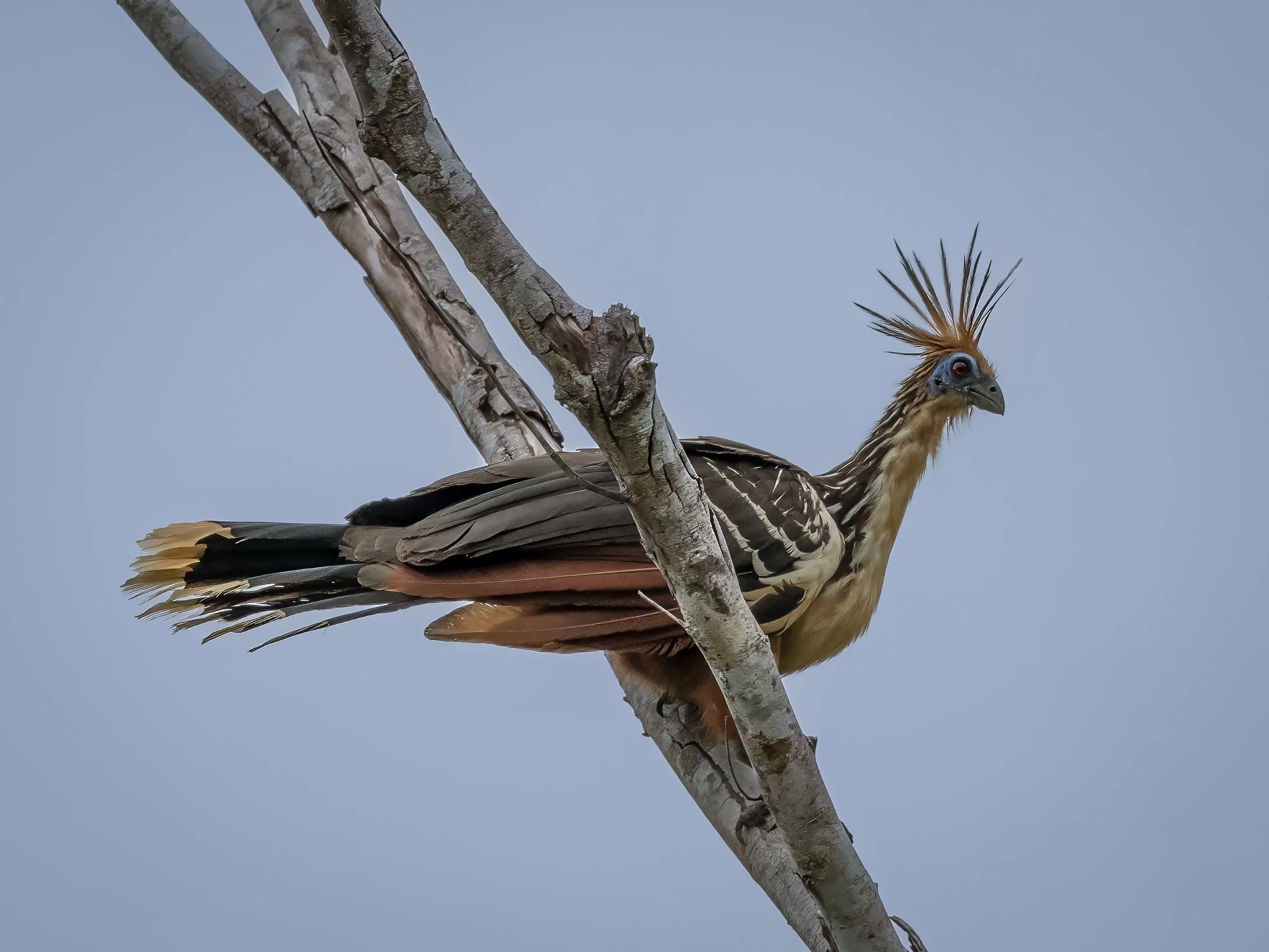
Their diet is almost entirely leaves, and they have a unique adaptation when they are born, they have claw like fingers on their wings. If threatened by a predator the chicks will fling themselves from their nests into the flooded forest below and then use their claw like arms to climb back up the tree and back into their nests.
I managed a proof-of-life shot today, but I'd love to snap a clean portrait of one. Now that I know how cool this bird is, I really want a nice portrait shot.
Anna spotted our third sloth of the afternoon, a huge male high in the canopy. He was positioned okay, but the light wasn't cooperating. He was backlite, leaving his face buried in shadow… another proof of life image.
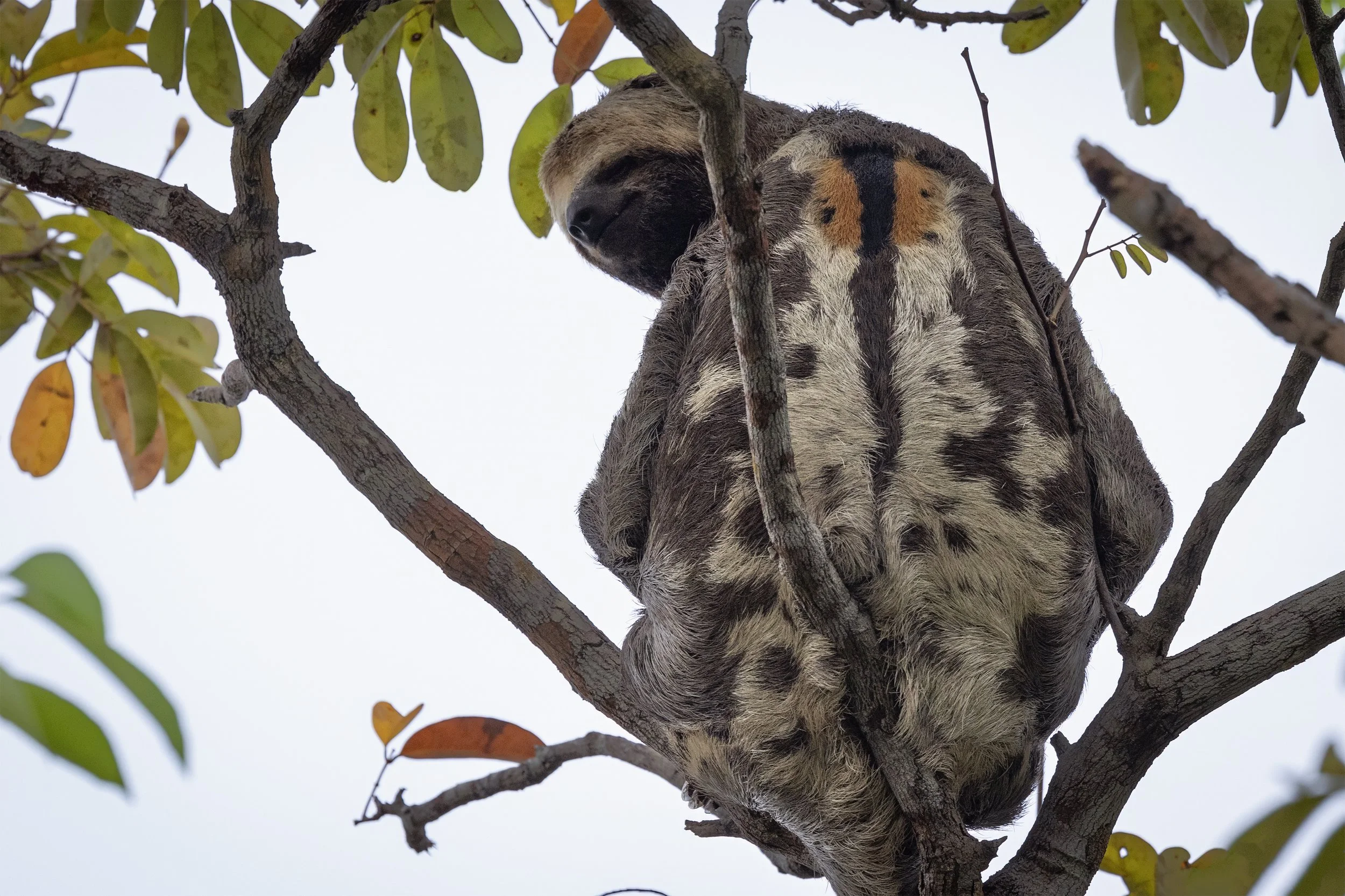
Then came sloth number four.
Another beautiful male...
...and another terrible position.
Nature has a funny way of doing that.
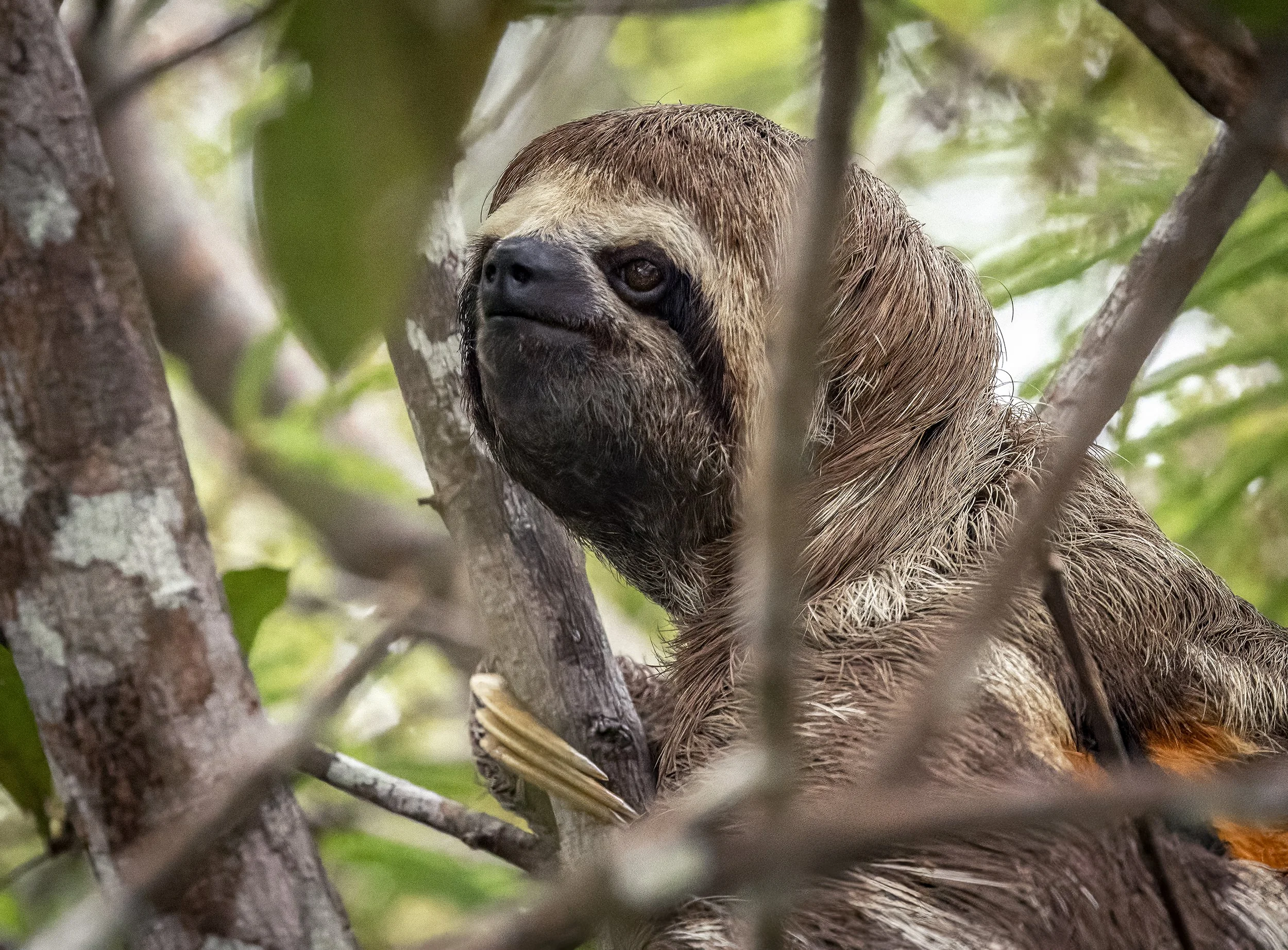
Photographing sloths in the wild isn't nearly as easy as people think. In places like Costa Rica, some of the famous sloth photographs always seem to be perfect. A sloth moving across the tree out in the open, on the perfect branch, on the perfect tree. But I know that is not the case, photographing sloths is difficult. They are naturally very shy and if they are disturbed tend to ball up and hide their faces. Our boats are loud so sneaking up on them is not easy. But we try hard not to disturb the vegetation whenever we are around them, so that they continue on with their day and we get a chance to photograph them eating or climbing up a tree.
Even when we do find a cooperative sloth, capturing nice images is difficult.
Sometimes the branches are in the way.
Sometimes the light is awful.
Sometimes the sloth simply refuses to look at you.
But, that’s wildlife photography.
As the afternoon faded, so did the light. Thick clouds rolled overhead, making an already challenging day even darker. With the sun dropping quickly toward the horizon, we pointed the boat back toward camp.
It has already been a good day one.
Tomorrow morning… Our first session with the Amazon's famous pink river dolphins begins.
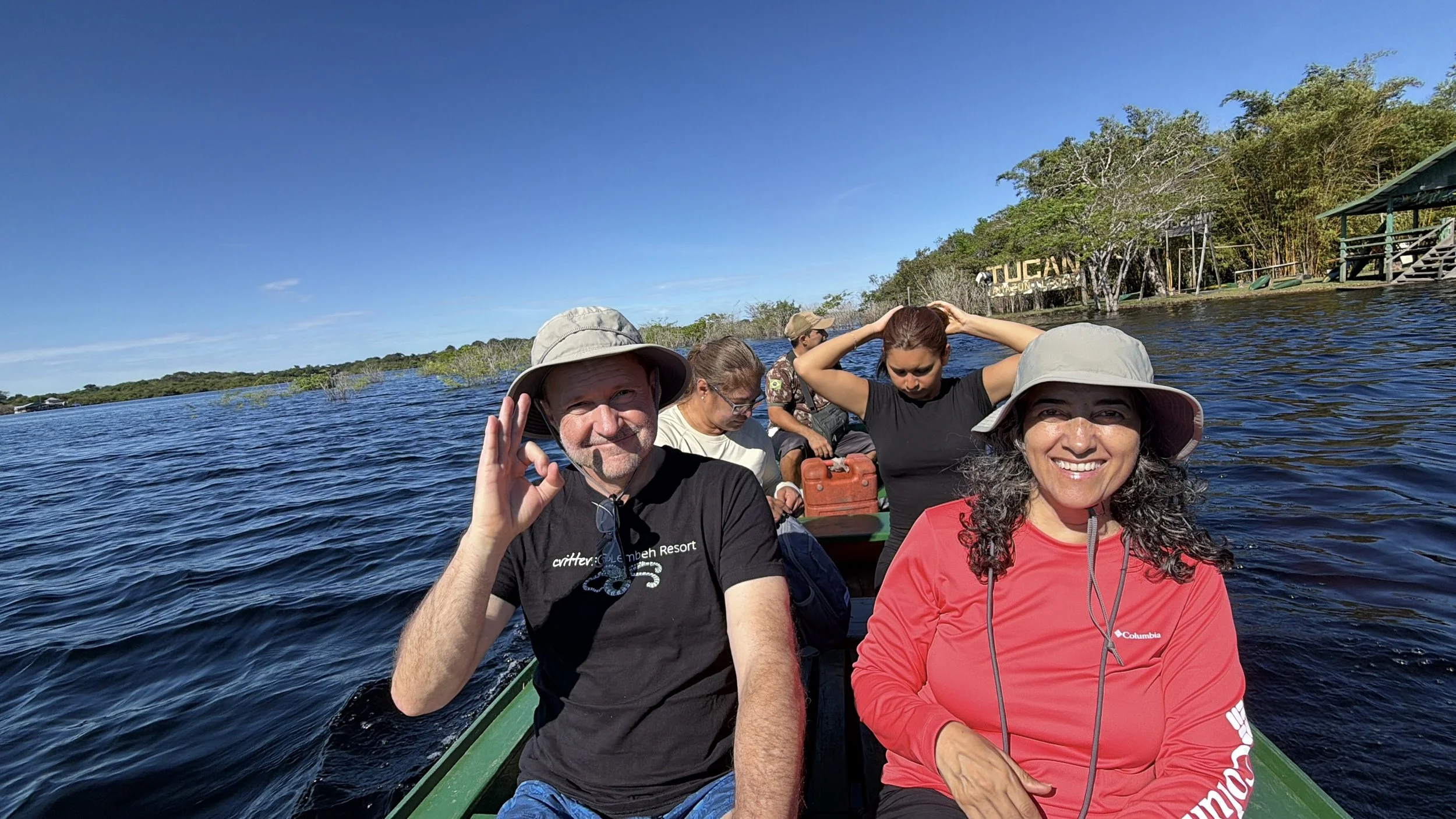
July 1, 2026. Day Two
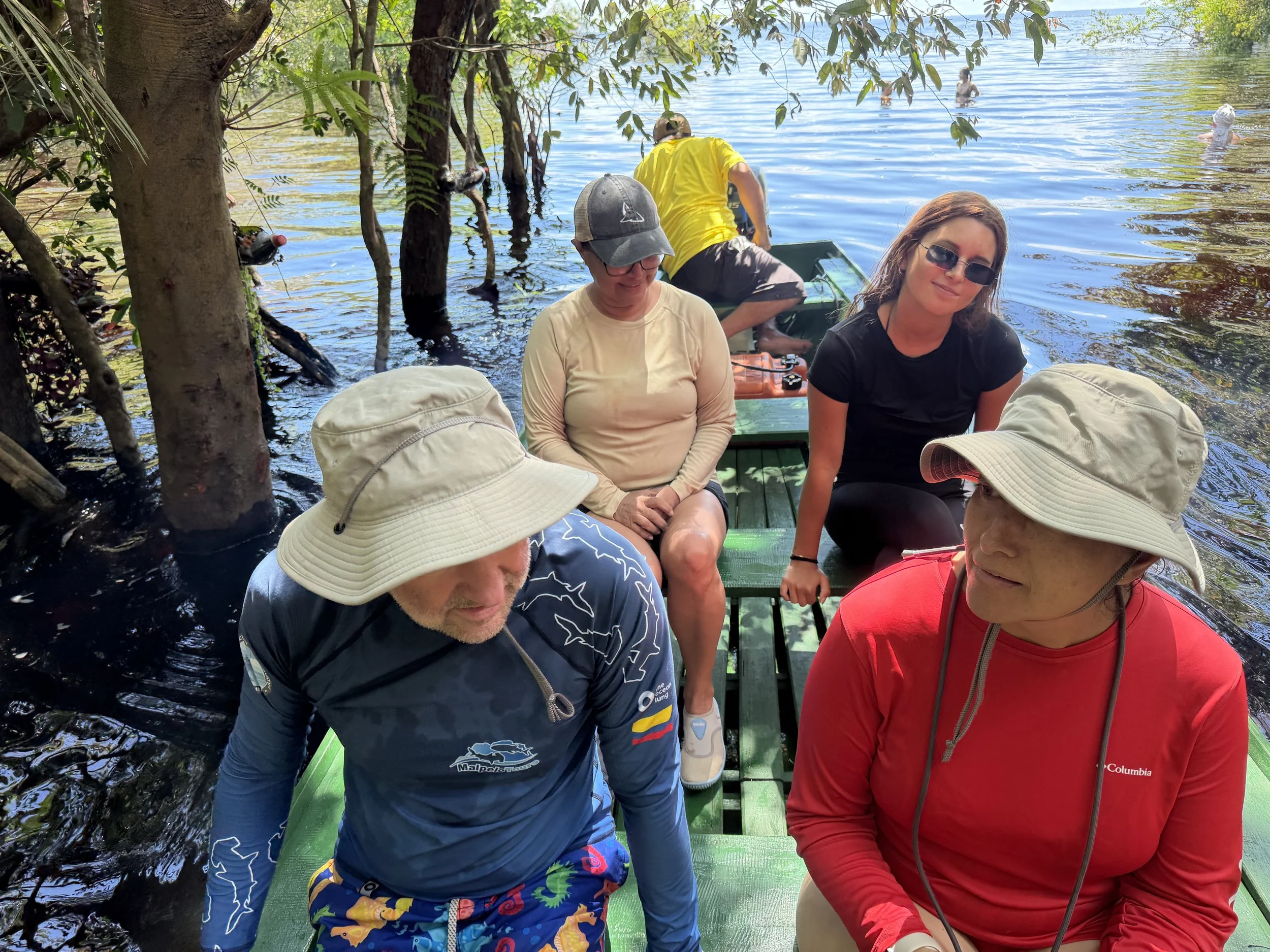
Our morning began with a boat ride to dolphin beach, where we would spend the first part of the day snorkeling with the Amazon's famous pink river dolphins.
This morning, I was hoping the dolphins would cooperate.
We visited dolphin beach today. We normally visit a couple of different locations on this trip. Always good to see the different dolphins, their sizes and personalities.
When we first pulled up… Nothing.
The dolphins weren't there.
Honestly, I like when that happens. It reminds everyone that these are truly wild animals. They aren't simply waiting around for handouts from the local tour operators. They still spend their days hunting fish throughout the river and show up whenever they choose.
Eventually, three dolphins appeared.
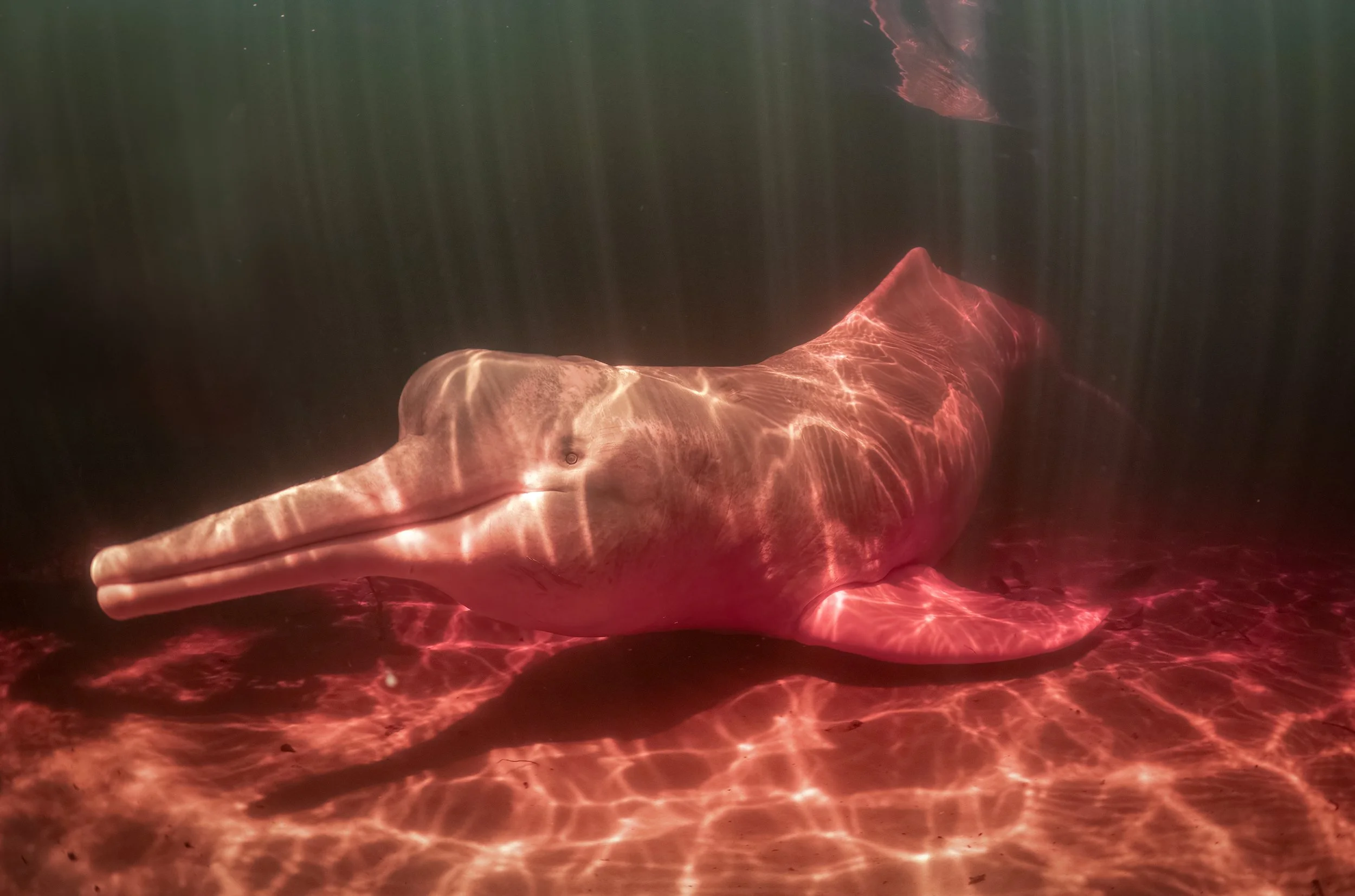
Watching them glide through the tannin-stained water never gets old. Their soft pink bodies against the orange-colored river create one of the most beautiful color combinations in nature.
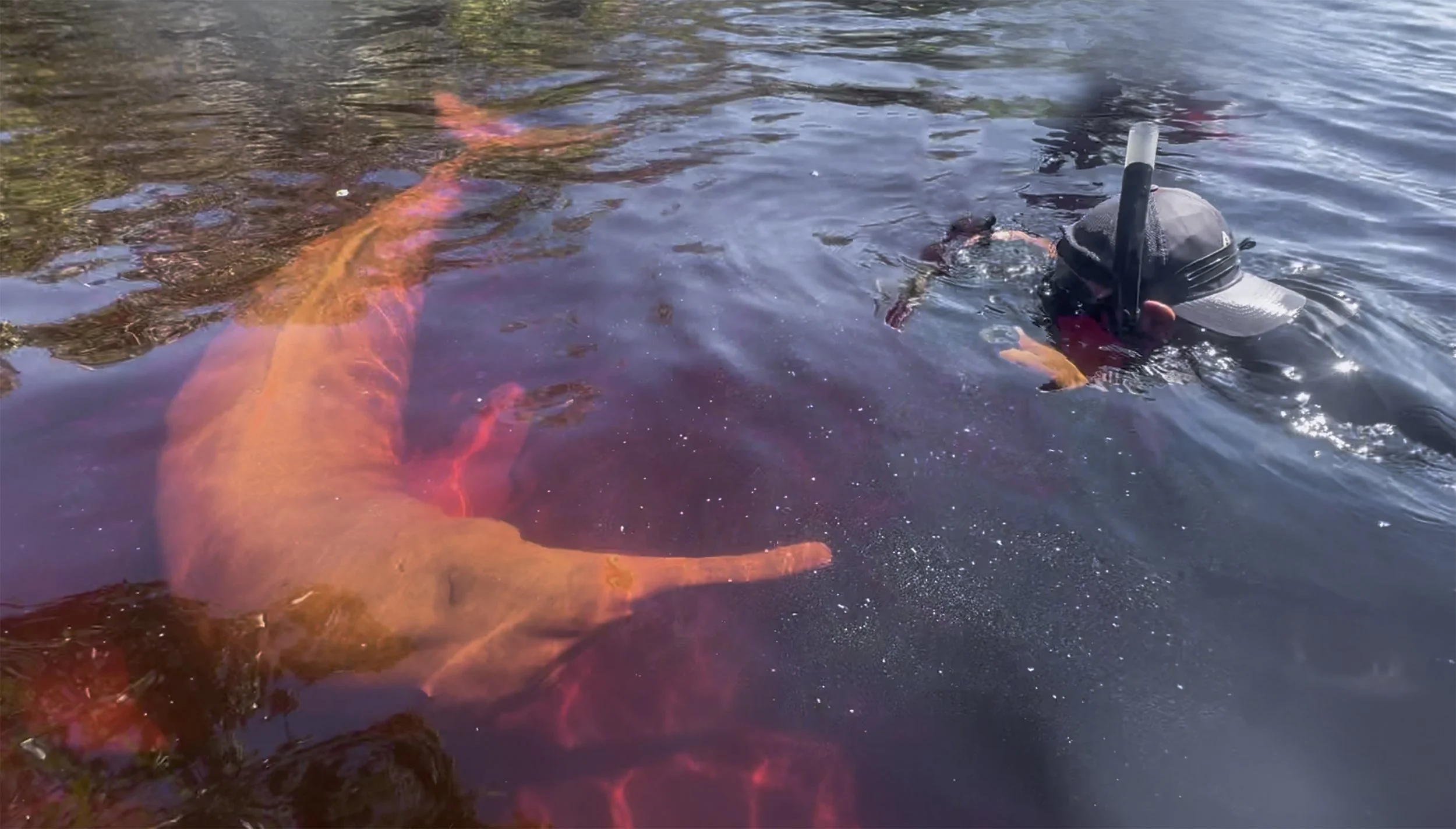
We spent the next couple of hours quietly hanging out with them, enjoying every moment they chose to stay with us. They're such playful, curious animals and an absolute joy to spend time with.
It was one of those mornings where nobody wanted to get out of the water.
After lunch back at the lodge, it was time for our afternoon mission.
Sloths.
3:30 p.m.
Today we decided to explore a different section of the forest, one a little farther from camp.
Yesterday we found four sloths. Today...
Who knows?
At this point, I'd happily trade four difficult sightings for one perfectly positioned animal.
Nature, of course, had its own ideas.
Our first sloth was a young female sitting low in a tree almost at eye level. It looked promising until we realized she had tucked herself tightly into the branches. We could see her...
The cameras could not.
Later in the afternoon we found another female.
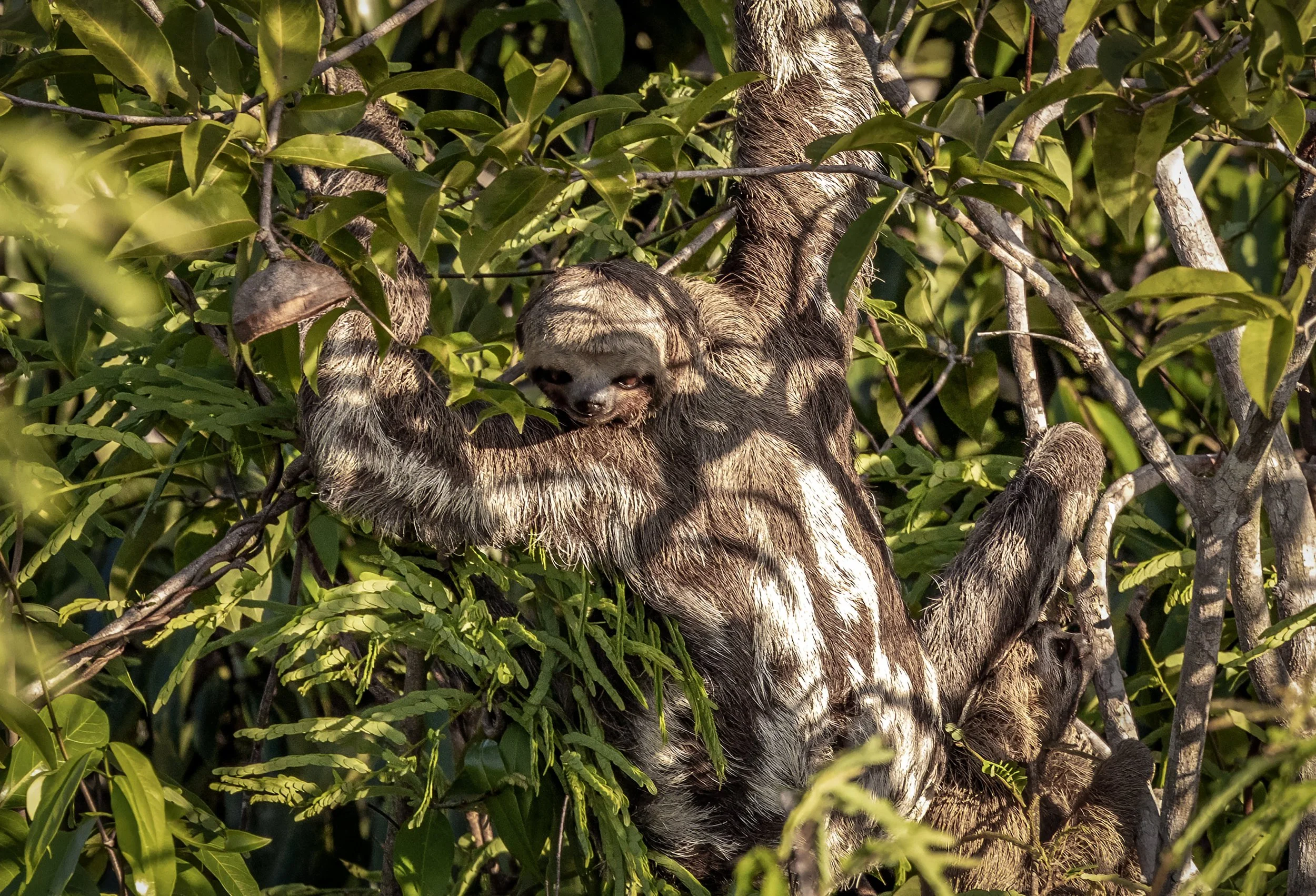
This one was stretched out comfortably, feeding on fresh leaves.
Keeping a respectful distance, we quietly photographed her as she continued eating, completely unconcerned by our presence.
Then Anna noticed something moving beneath her.
A tiny arm.
She had a baby with her.
The little one stayed mostly hidden below its mother's body, also feeding on leaves but every so often an arm would appear before disappearing again. It wasn't the mother-and-baby portrait I'd been dreaming about, but it was still incredibly special to witness.
It was also the first time I'd photographed a sloth actively feeding in the wild.
I'll happily take that.
As the afternoon light faded, we made our way back toward the lodge once again.
Another rich day in the Amazon.
And tomorrow... We'll see what the jungle decides to share next.
July 2, 2026. Day Three
Day three begins. This morning we're headed back to the dolphin beach for another session with the Amazon's famous pink river dolphins.
I really enjoy this place. The beach sits along the edge of the flooded forest, and unlike so many places in the Amazon, the bottom here is firm sand instead of powdery mud. You can walk into the water without every step turning the river into a cloud of silt.
Yesterday we spent time with three dolphins. One stayed well off in the distance, never quite comfortable enough to join us.
Today...
We'll see what happens.
The sky is completely clear, the sun is shining, and it feels like one of those mornings where anything is possible.
When we arrived, there was already a dolphin waiting for us.
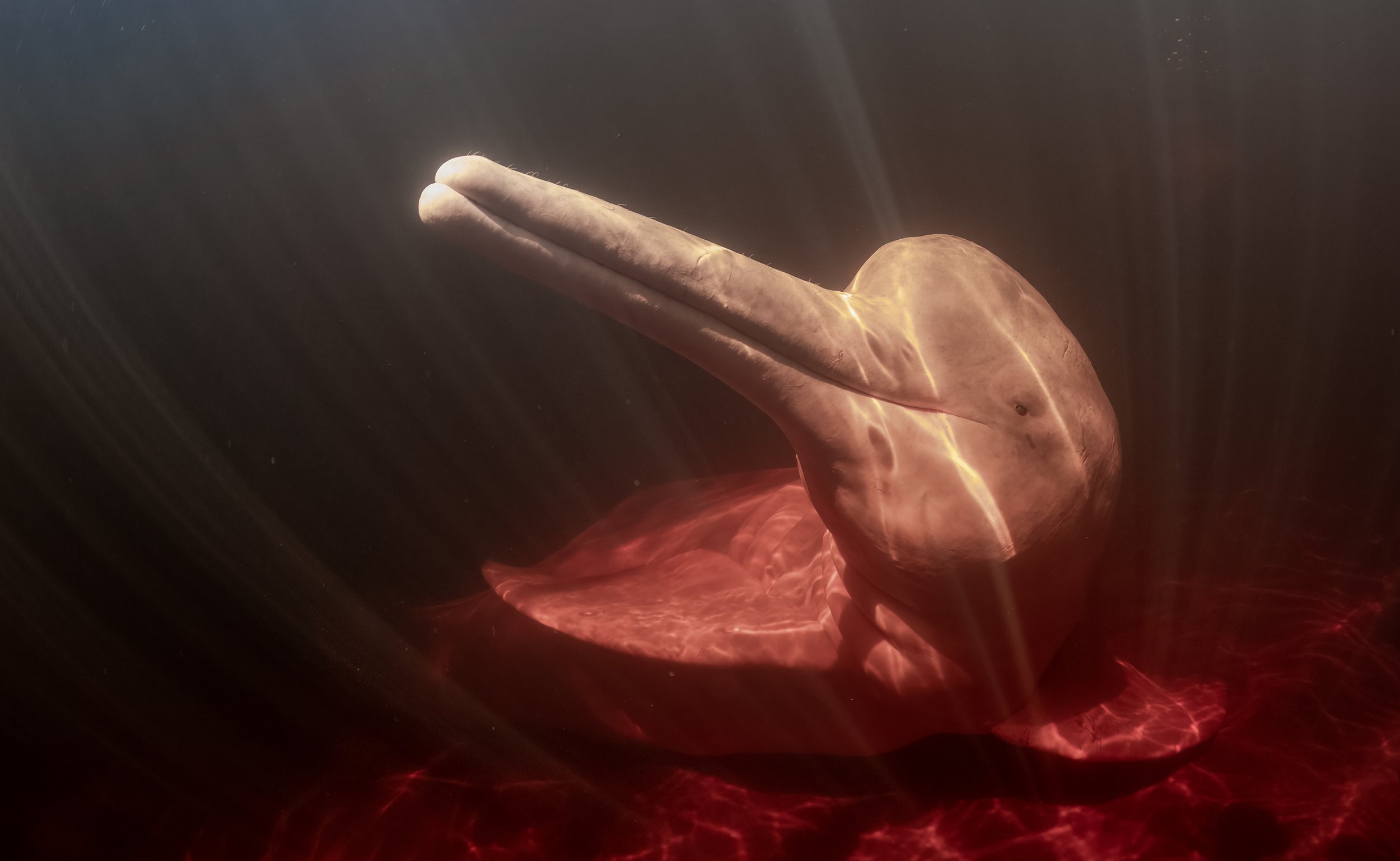
We slipped into the water almost immediately and spent the first part of the morning enjoying its company.
Two more dolphins lingered farther out, but they never came in. They seemed reluctant to challenge the dominant dolphin that had claimed the area.
Towards the end of our time with the dolphins, two more dolphins arrived…
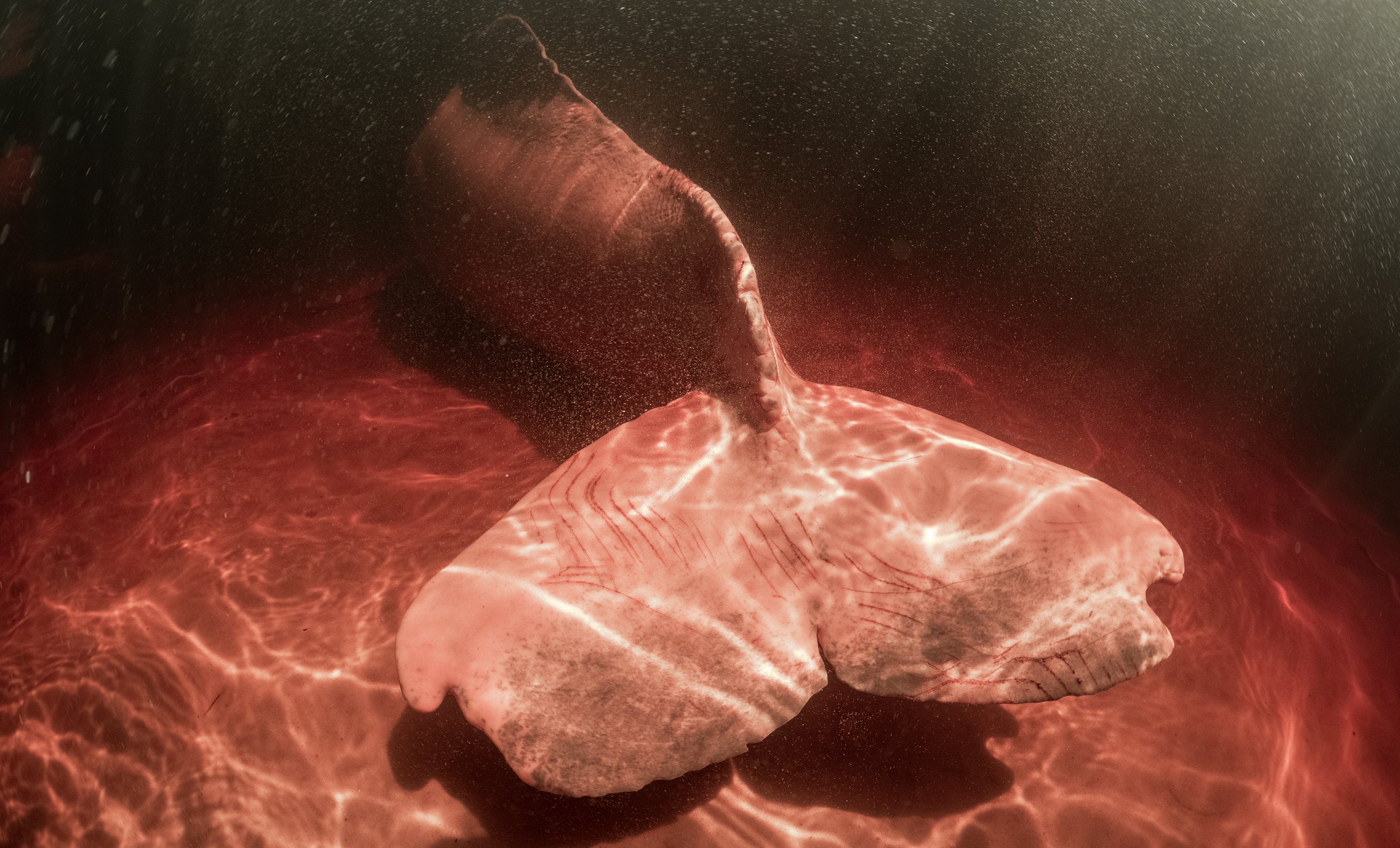
This time, an enormous old male named Ahktun joined us.
He was massive.
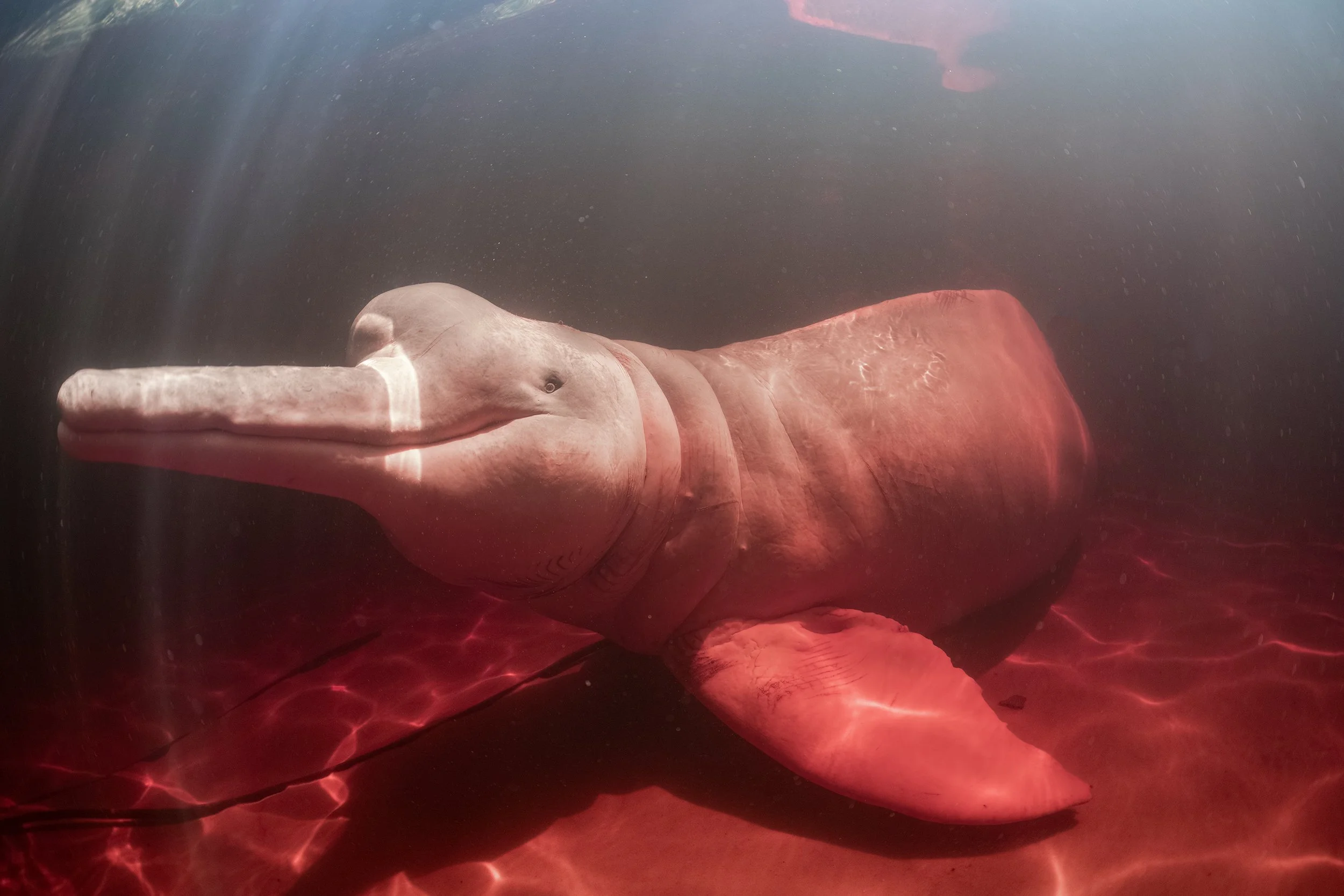
His body was covered with old battle scars, and his tail showed the wear of a lifetime spent competing with other dolphins. You could almost read his history just by looking at him.
Then came today's surprise.
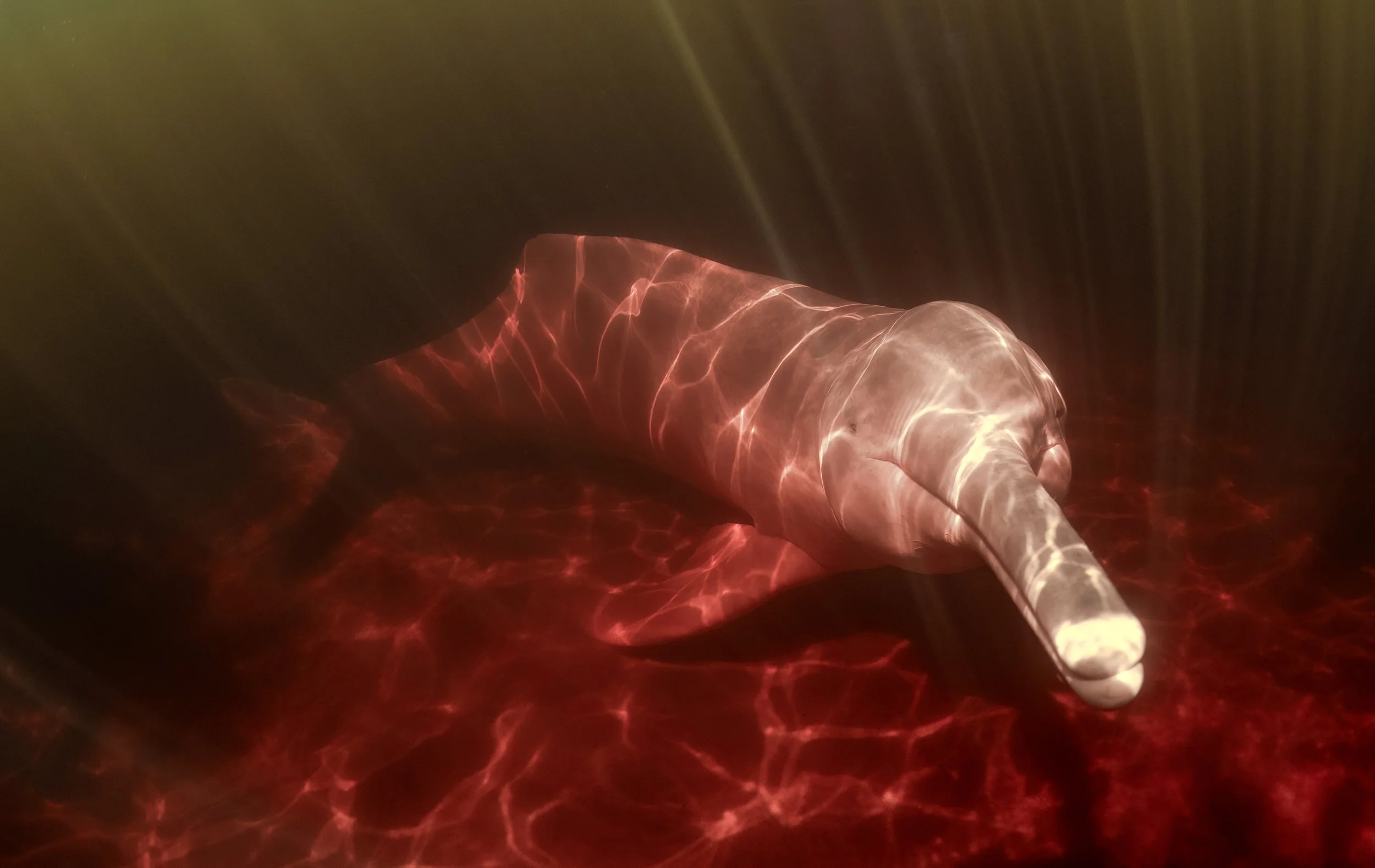
A young baby boto zipped through the water.
Still mostly gray in color, it darted around so quickly that photographing it became nearly impossible.
But… It was so damn cute!
Back to the lodge for lunch, a little break, and then another afternoon adventure.
Today's mission… Monkeys.
3:00 p.m. The area where they see the habituated monkeys is much farther from camp, so we settled in for a longer ride upriver.
This afternoon we encountered three different species of monkeys.
The first species we found were howler monkeys.
The howler monkeys gave everyone an unforgettable demonstration of exactly how they earned their name. The dominant males filled the forest with deep growls and booming territorial calls that echoed through the trees. Such a cool sound.
Then we found the Cairaras. Kin to the capuchin monkeys, they are a similar species.
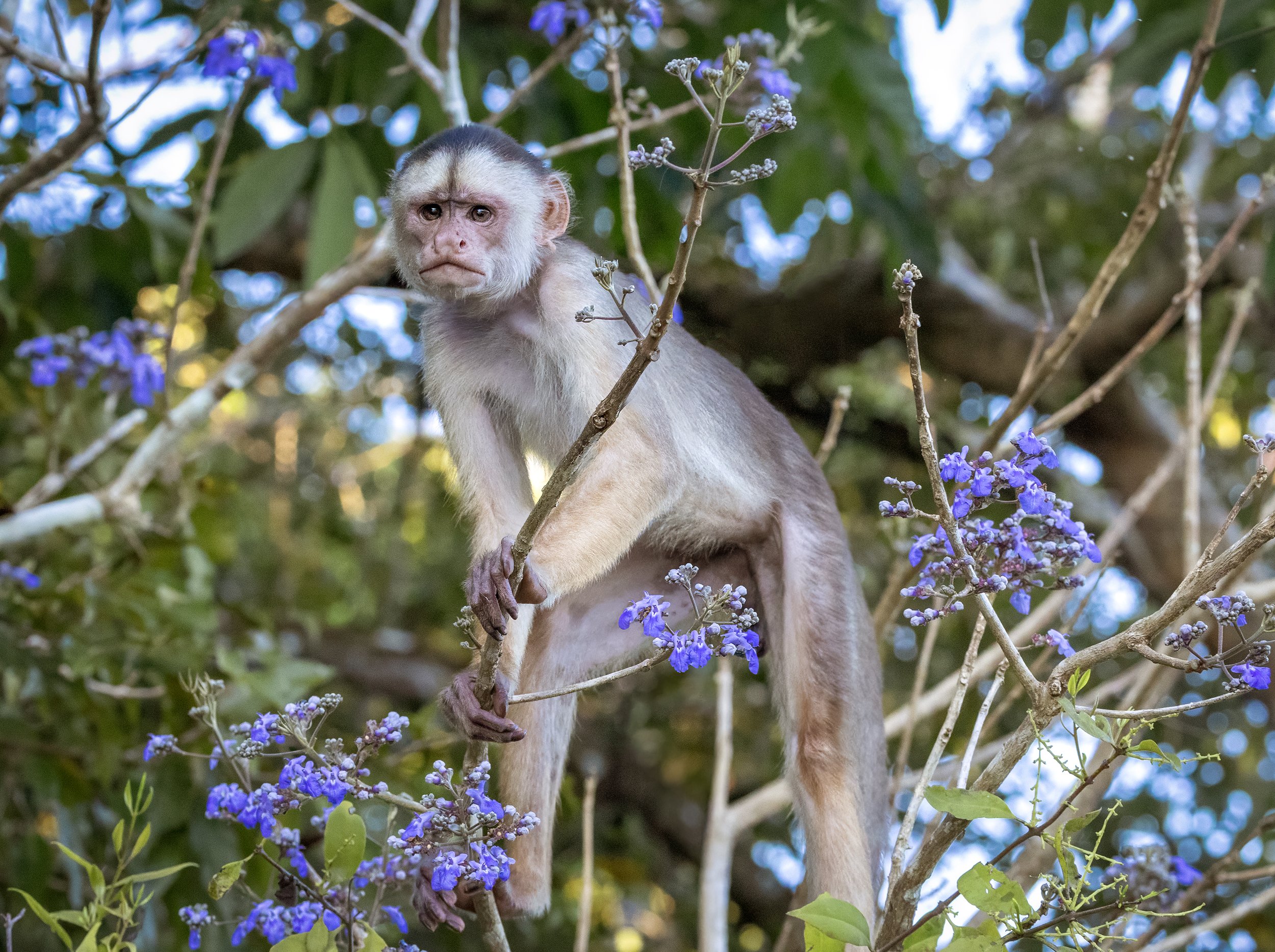
Many years ago there was a large ecolodge that hosted more than 200 guests.
Both the capuchins and the squirrel monkeys that live here became accustomed to people during those years.
The lodge shut down and eventually the jungle reclaimed the land.
The buildings disappeared.
The monkeys stayed.
And apparently...
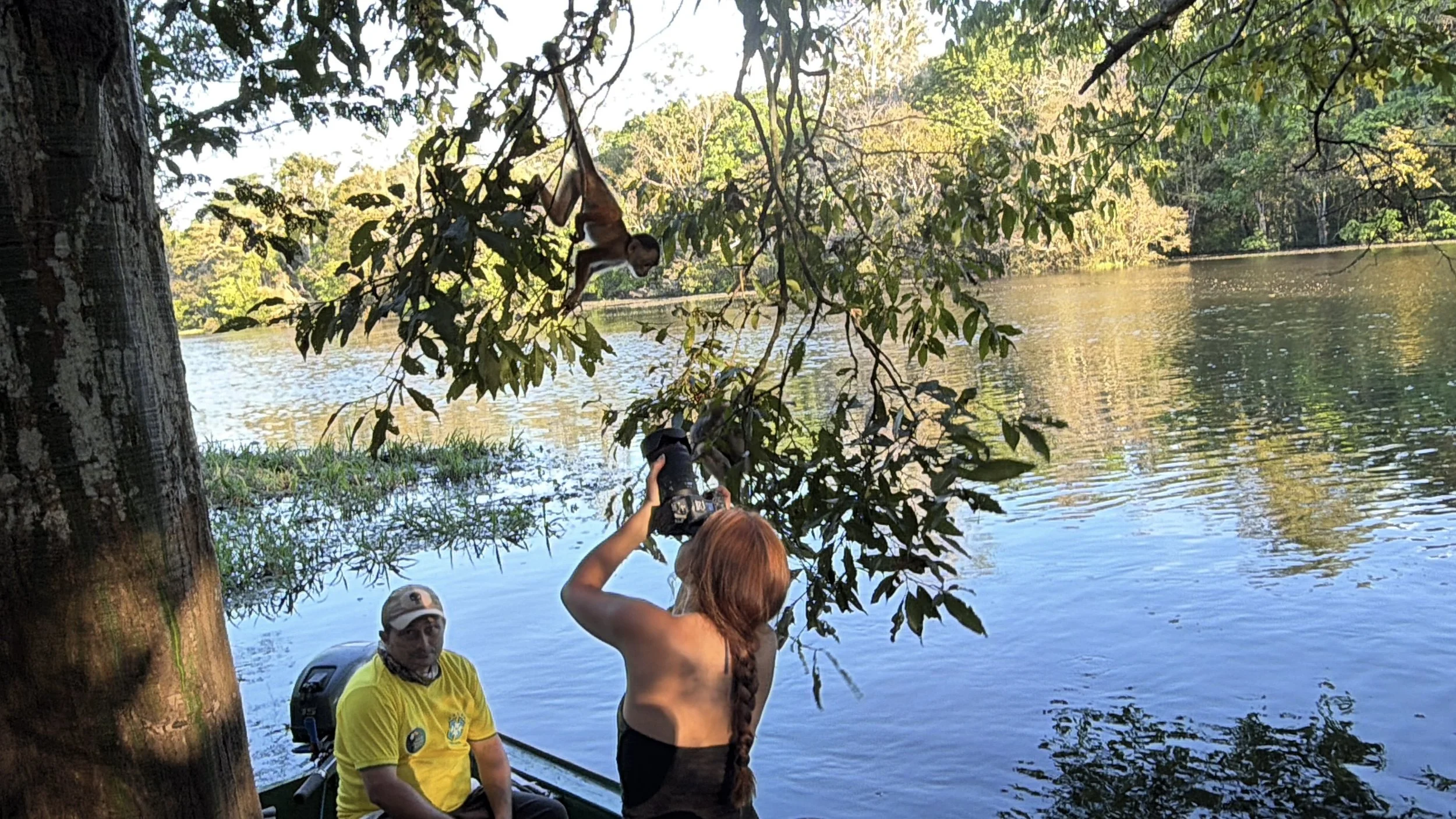
So did their appreciation for free bananas.
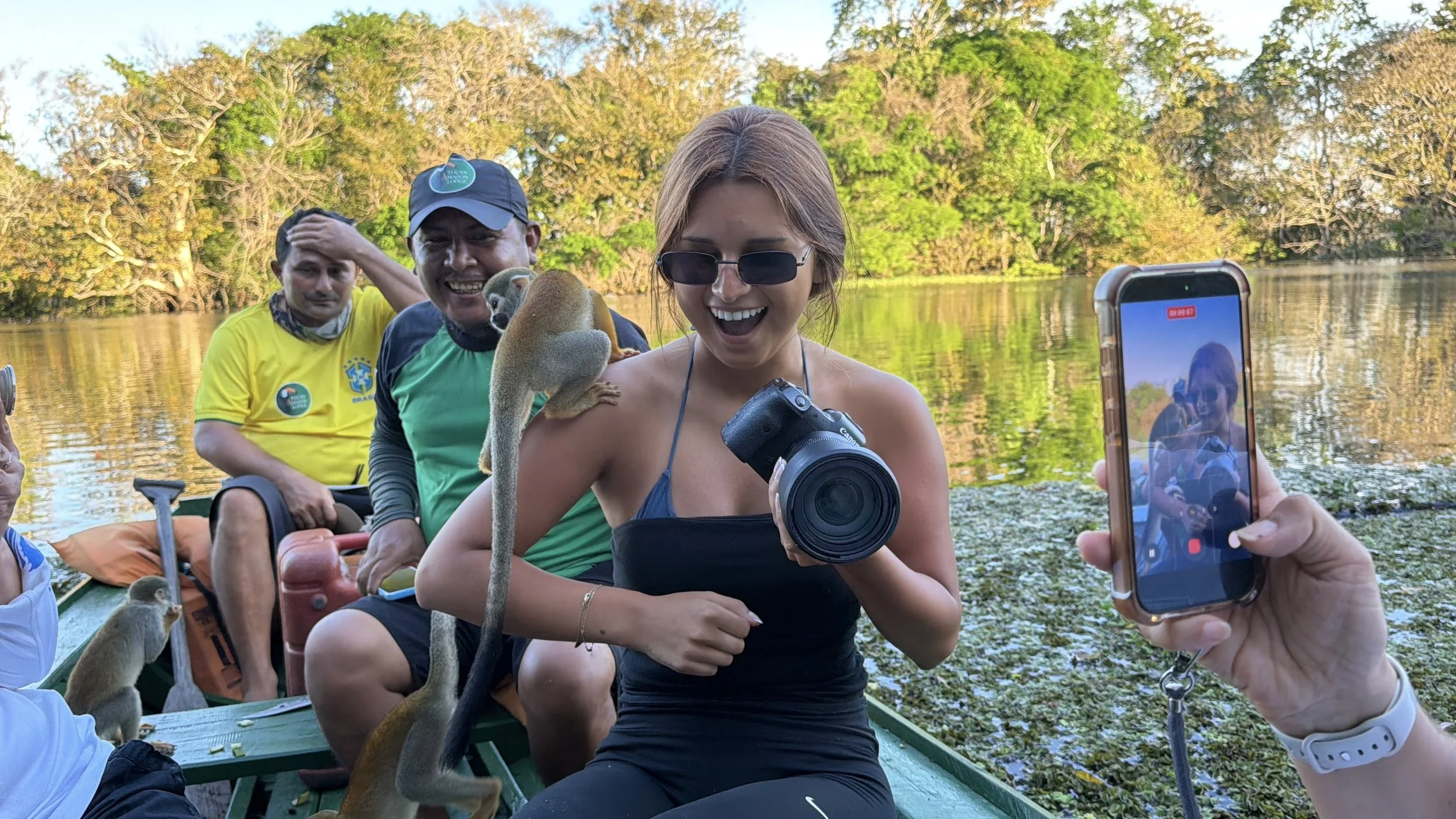
One thing visitors quickly notice is how comfortable many of the monkeys are around people. They'll often climb right onto the boats looking for bananas.
Every lodge in the area still feeds them.
I'm a torn soul on how I feel about it.
The animal lover in me, absolutely loves it… the conservationist in me dislikes it.
Then again...
I spend part of my life feeding sharks.
So I'm definitely not the right person to criticize how another culture chooses to interact with its wildlife.
Instead, I try to watch.
I try to understand.
The reality is that the people here depend on tourism. Beyond fishing and supplying restaurants in Manaus, tourism is how many local families make their living. Indigenous communities and Brazilian families alike rely on visitors coming to experience the Amazon.
Showing people monkeys up close helps support those families.
It's not a simple issue.
It's just life here.
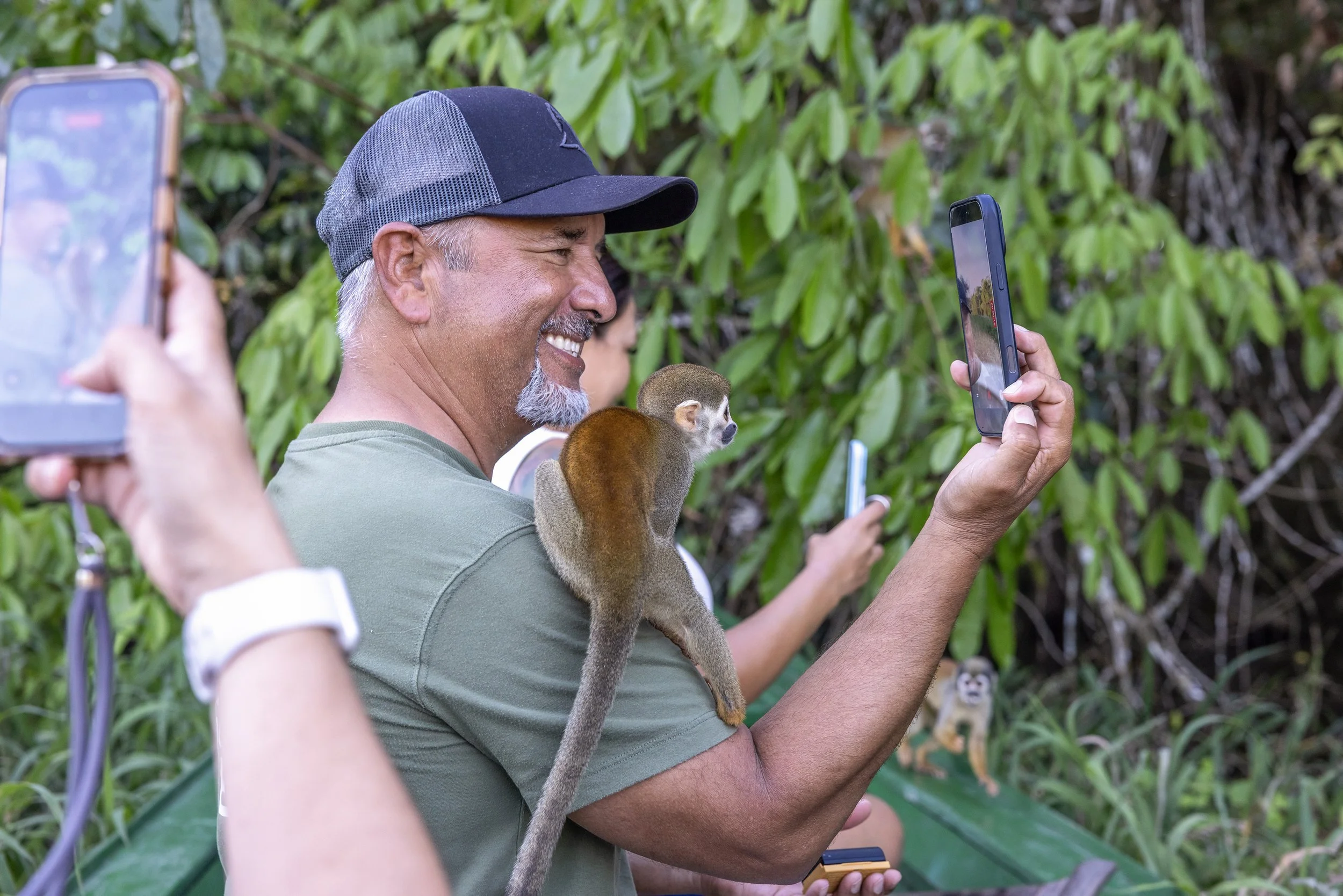
The final species we encountered was the squirrel monkeys.
Hanging out with them was pure entertainment.
They weren't shy in the slightest.
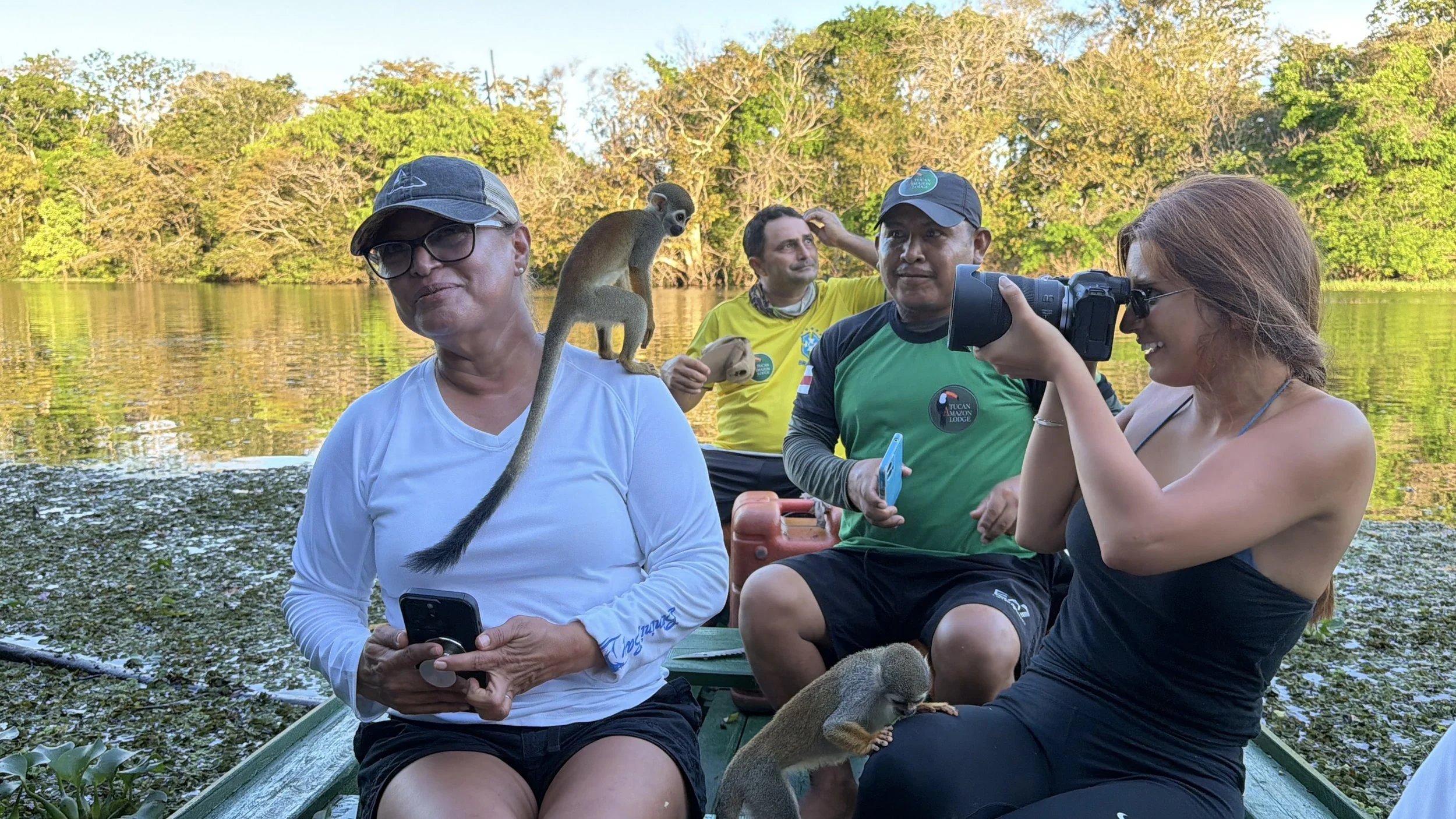
Within minutes they were sitting on shoulders, climbing on our heads, and using us like jungle gym equipment.
I'll probably need a shower tonight.
I'm fairly certain some of them left us with a few hitchhiking fleas.
Worth it.
Every second.
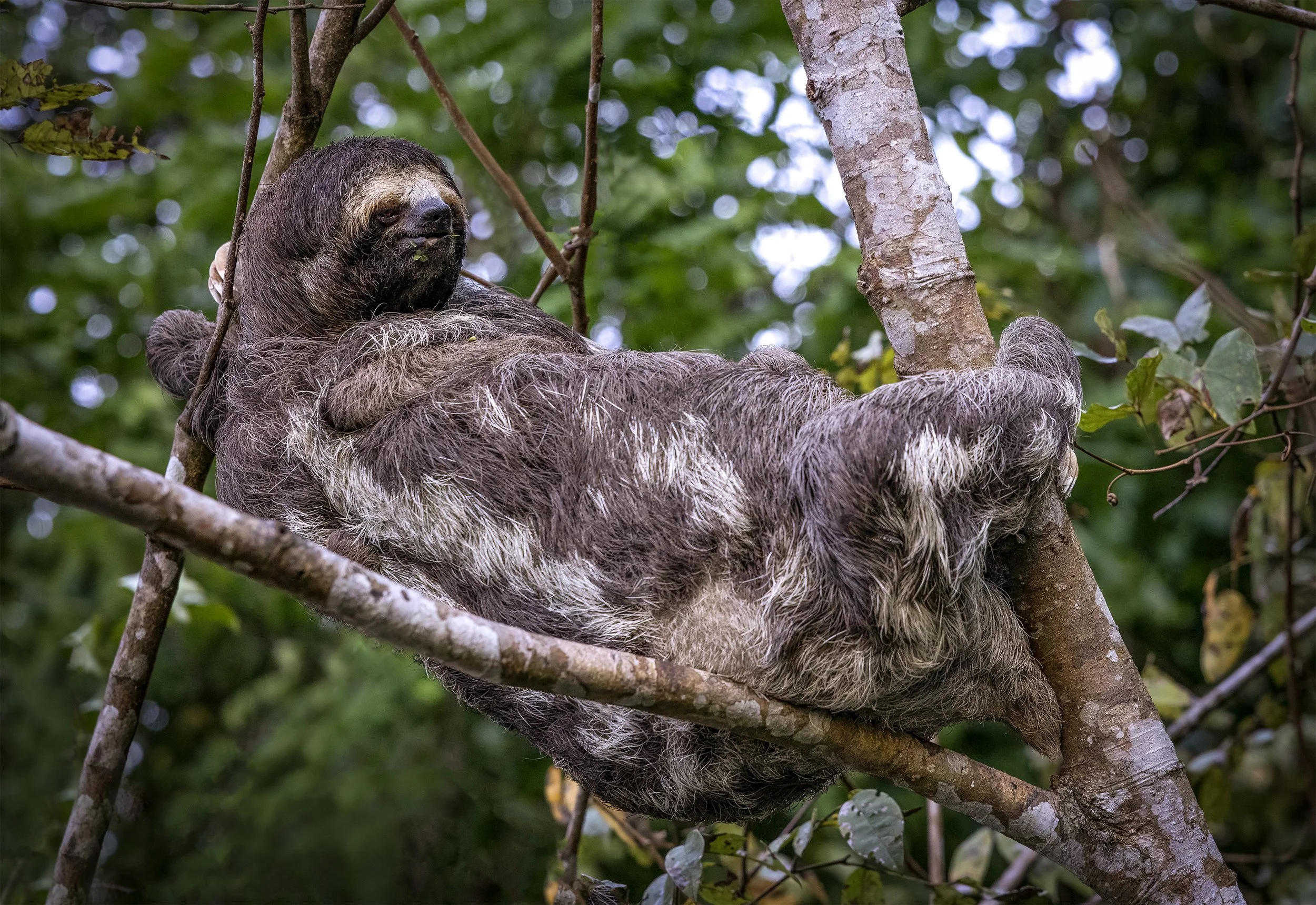
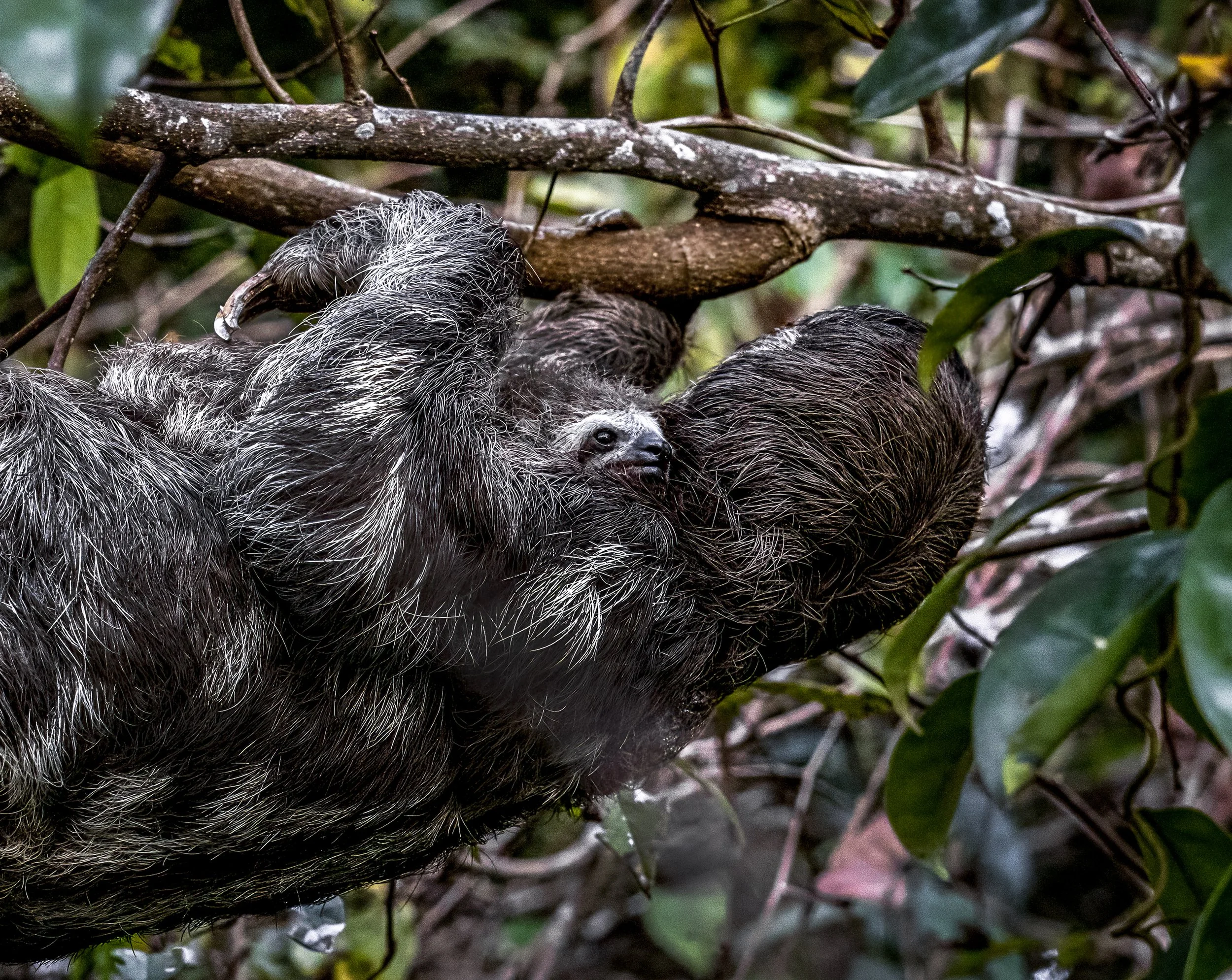
On the ride back, we found another sloth.
She was low in a tree with a tiny baby clinging tightly to her belly.
The moment she noticed us, she slowly began climbing back toward the safety of the forest.
We took a few quick photographs from the side, and then quietly backed away, allowing her to continue back into the forest to live out her life.
I was overwhelmed with excitement.
I've dreamed about seeing this moment for years.
What a dream.
Sorry, Momma Sloth...
If we caused you any stress, it was never our intention.
I hope your little one grows up to live a long, beautiful life...
Safe from forest fires.
Safe from predators.
Wild and free.
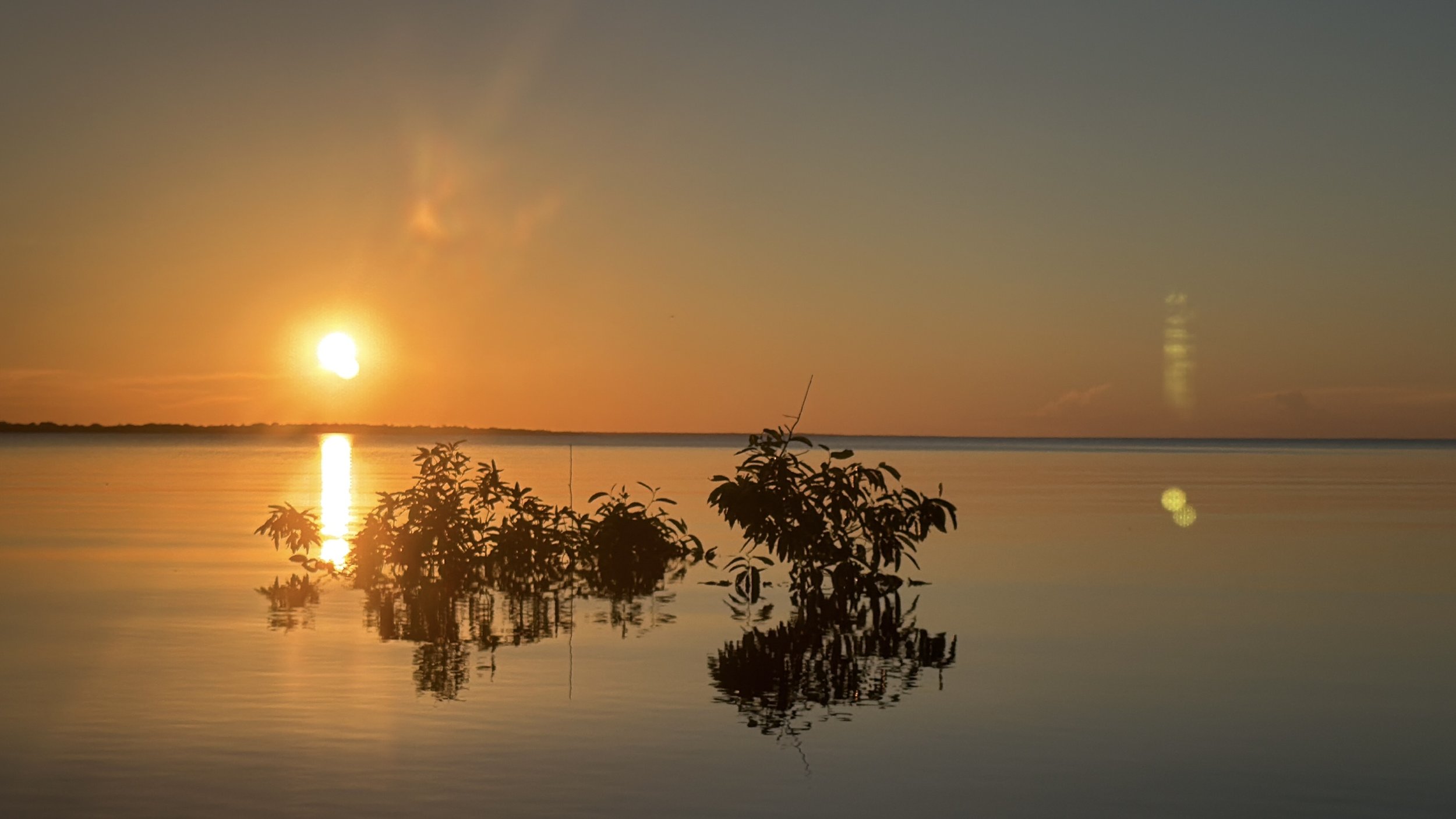
As we headed back toward the lodge, the sun dropped toward the horizon, painting the Amazon in shades of gold and orange.
The river seemed alive.
Everything around us felt full of energy.
And all I could think about was how grateful I was to be exactly where I was.
July 3, 2026. Day Four
We left a little later this morning. Unfortunately, Dolphin Beach had been taken over by a massive group, so we couldn't use the area today.
Instead, we headed to the Dolphin House. Different places mean different dolphins, different light, and different stories.
When we arrived, three dolphins were already waiting.
The first was impossible to ignore. It was very sick. It was heartbreaking to see, a reminder that life in the wild isn't always graceful. Nature is beautiful, but it is never gentle.
Beside it swam a giant old dolphin. He was enormous, with weathered skin that spoke of a lifetime spent surviving the Amazon. You could almost read his history in the scars and folds of his body.
Then there was the youngster.
Still mostly soft gray, with the blush of pink beginning to show through. Beautiful. Curious. Full of the kind of innocence that makes you smile the moment you see it.
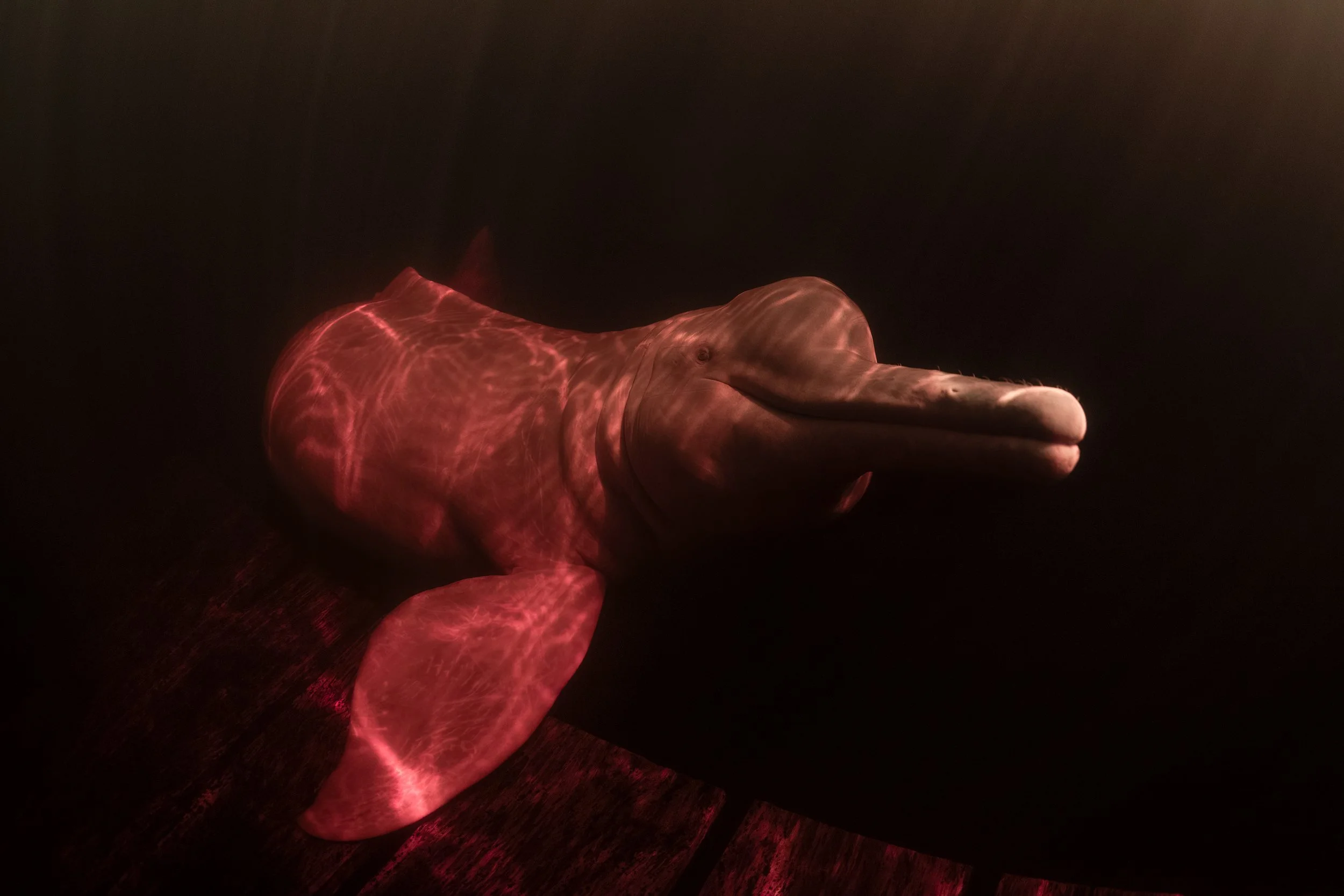
All three dolphins were incredibly relaxed around us, giving us plenty of opportunities to photograph them as they surfaced through the dark tea-colored water.
Today I spent a good amount of time practicing over-under photographs.
They aren't easy here.
The river is nearly black beneath the surface while the world above is bright, making the exposure a constant balancing act. The calm water certainly helped, allowing me to work with my smaller dome port, but because I shoot entirely with natural light, every setting becomes a compromise.
It is much easier for underwater photographers to simply fire a strobe.
I won't.
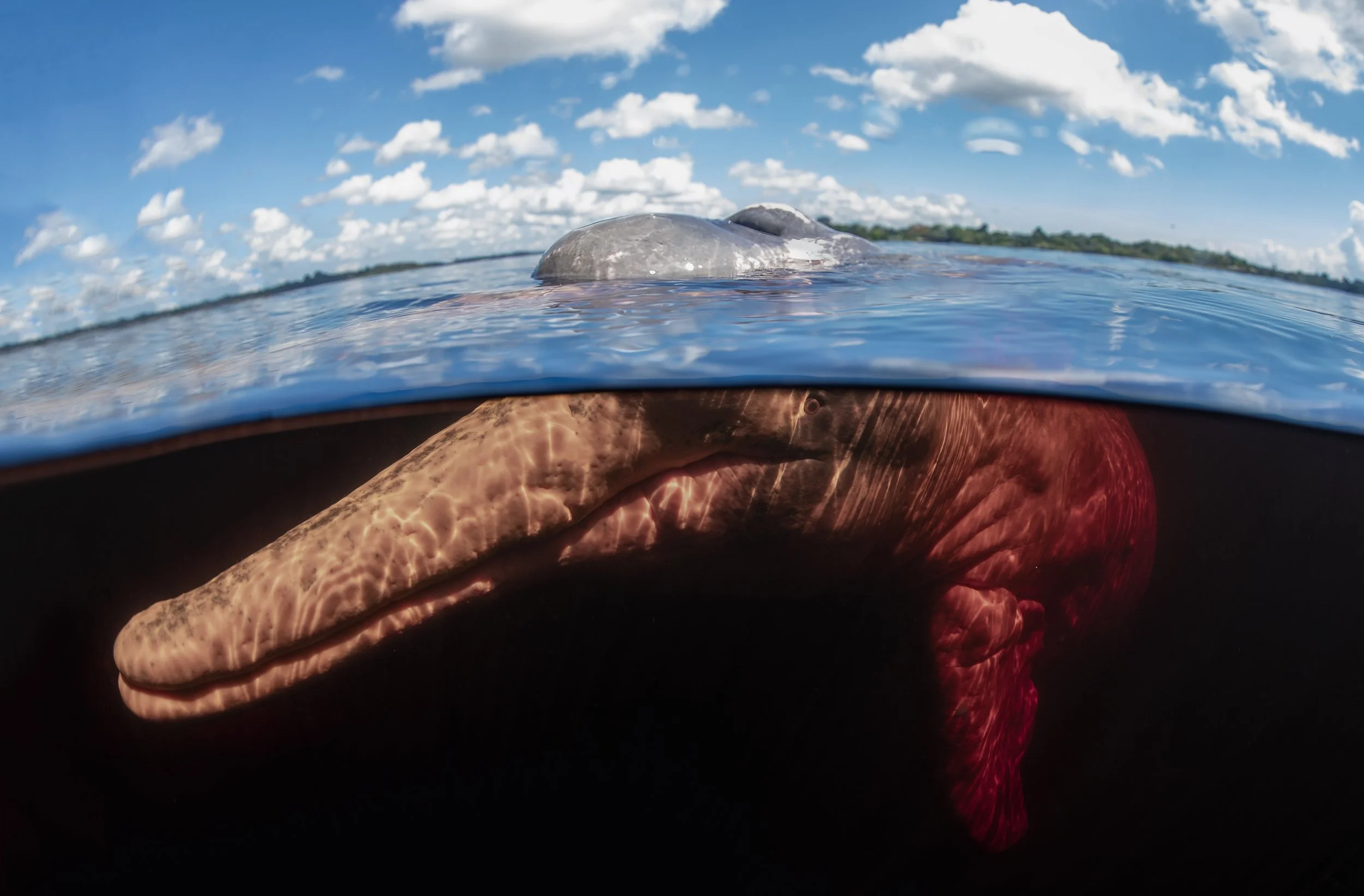
Flashing wild dolphins just isn't something I'm comfortable doing.
So I worked with what nature gave me.
My settings settled around 1/250 sec, f/10, ISO 320. To keep the bright sky from blowing out, I had to lower the ISO, which made the underwater half of the image much darker than I would have liked. Most of the photographs won't make the final cut, but I think a few may have turned out well enough to keep.
But that's photography.
You don't need every frame to work.
You only need one.
In the afternoon we visited the indigenous tribe to watch them perform their ayahuasca dancing ceremony that goes on all night. They do it once a year and it lasts 24 hours. The dancing never stops until its over. A long time to be high with nature’s juice.
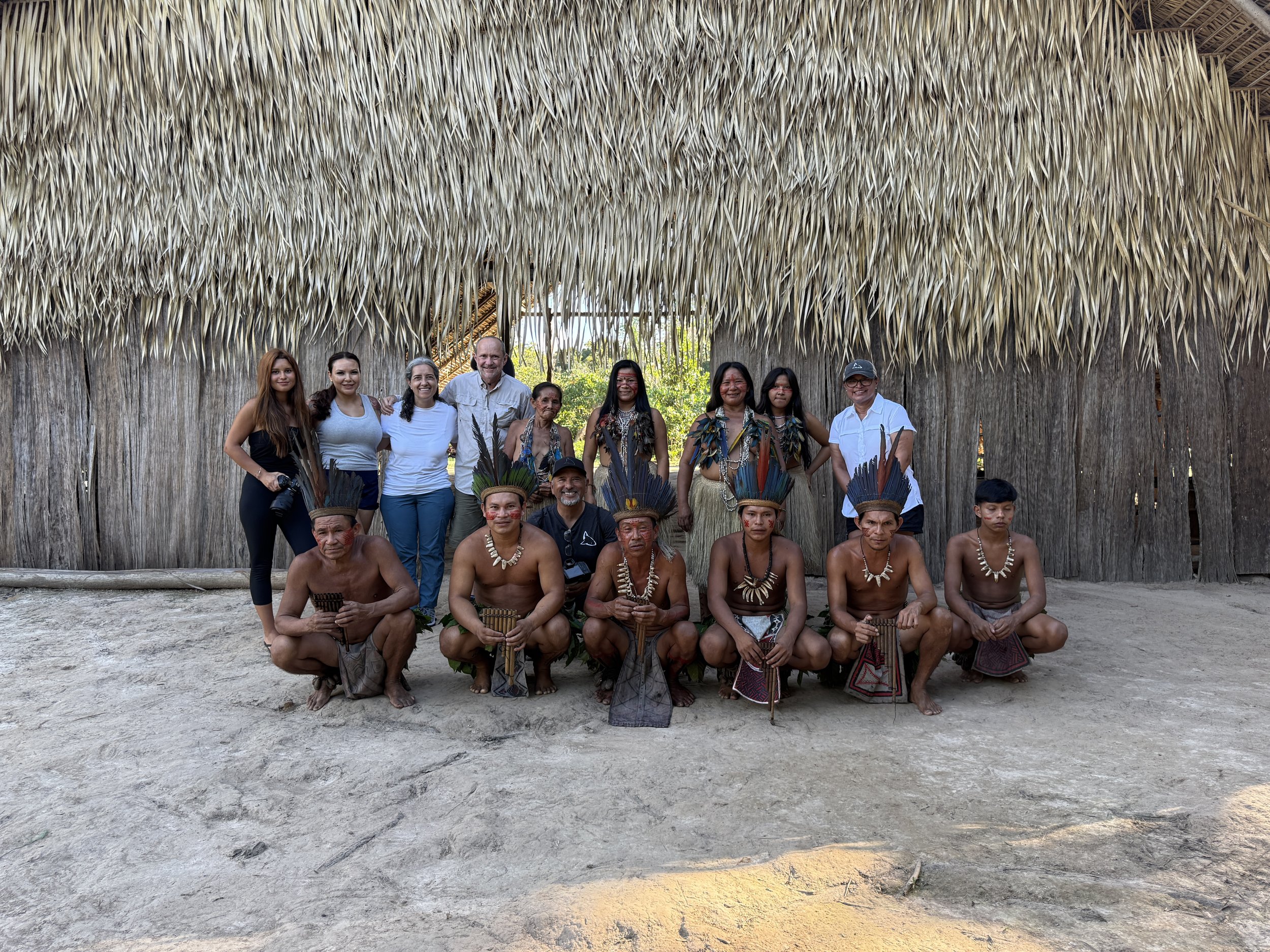
Afterward, we wandered over to the little community store/local pub the local gathering place. The guys grabbed cold beers, we watched a bit of the soccer match, and I am hoping they have one of the homemade fruit ice pops.
They're made from local Amazon fruits and are pretty damn good.
Today marked our final outing of the trip.
Tomorrow morning our group is heading back to Manaus.
Trips like this always end the same way. Always wish we had one more day with our friends and the wildlife.
Nature has a funny way of doing that.
It makes you leave while you're still wanting more.
That is definitely part of its magic.
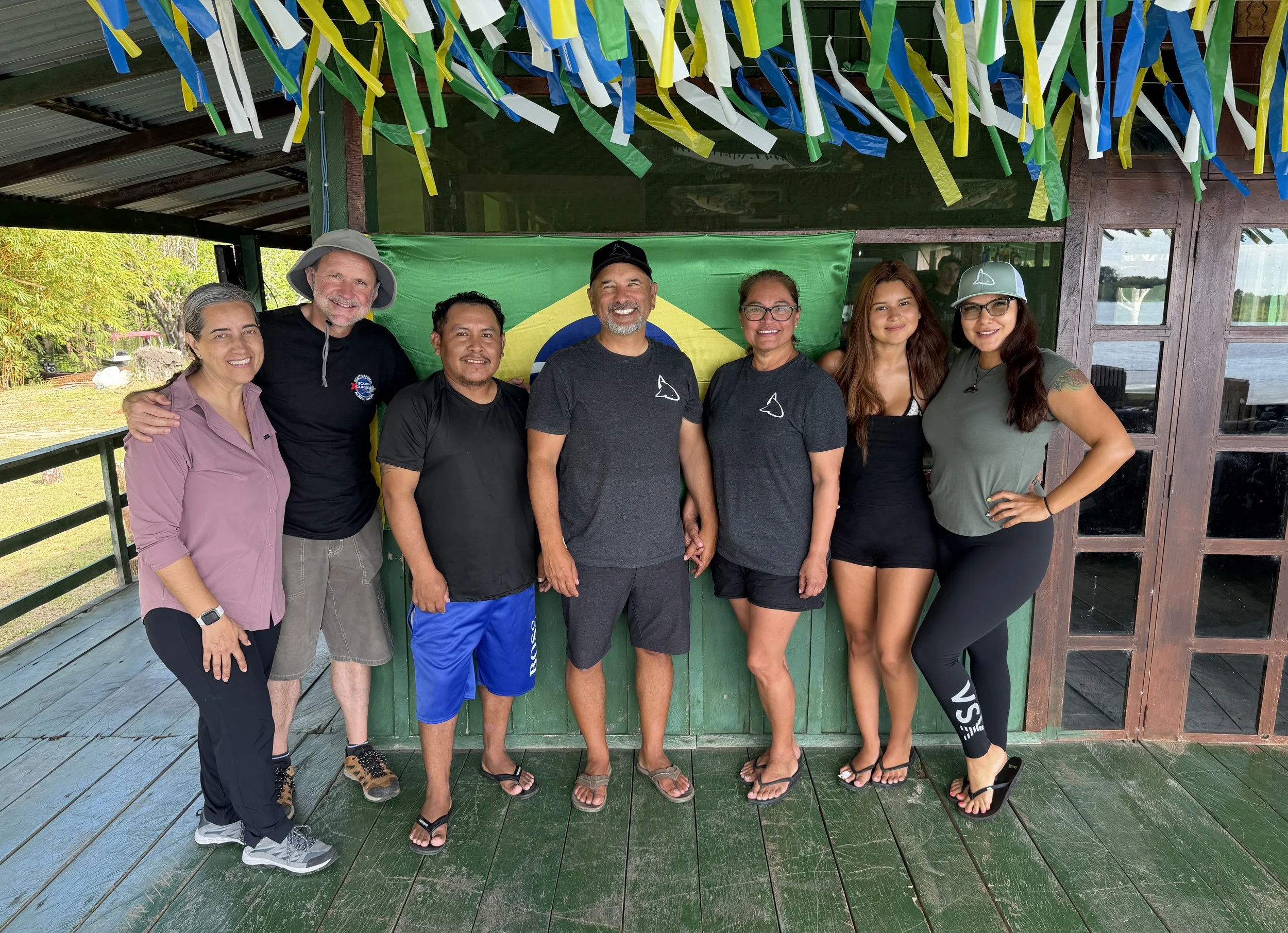
Experience the Amazon for Yourself
If swimming with the incredible pink river dolphins of the Amazon is on your bucket list, we'd love to have you join us next season. Every expedition is different, but the magic of the Amazon never disappoints.
👉 Click here to learn more about our Amazon Pink River Dolphin Expedition.