
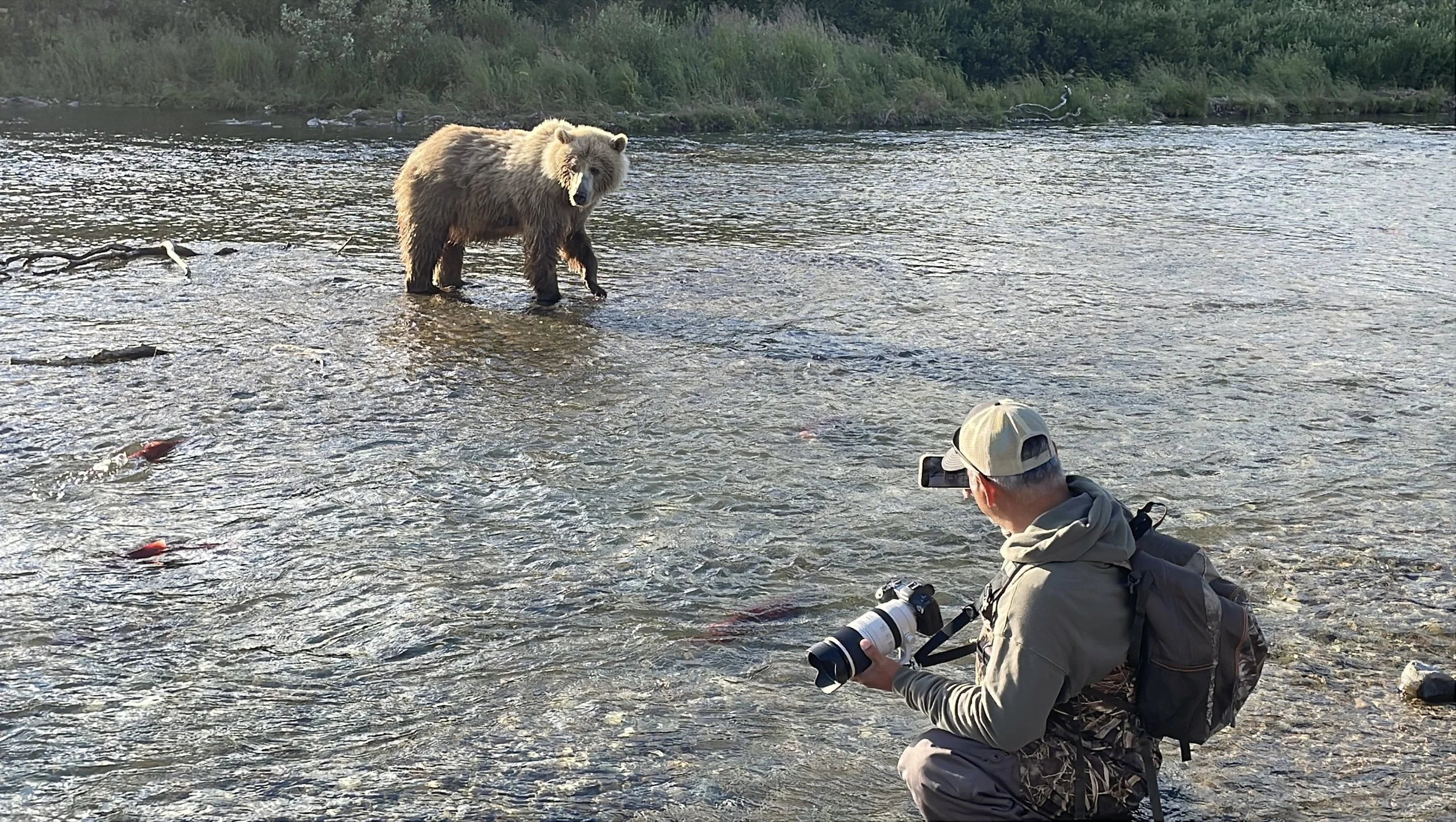
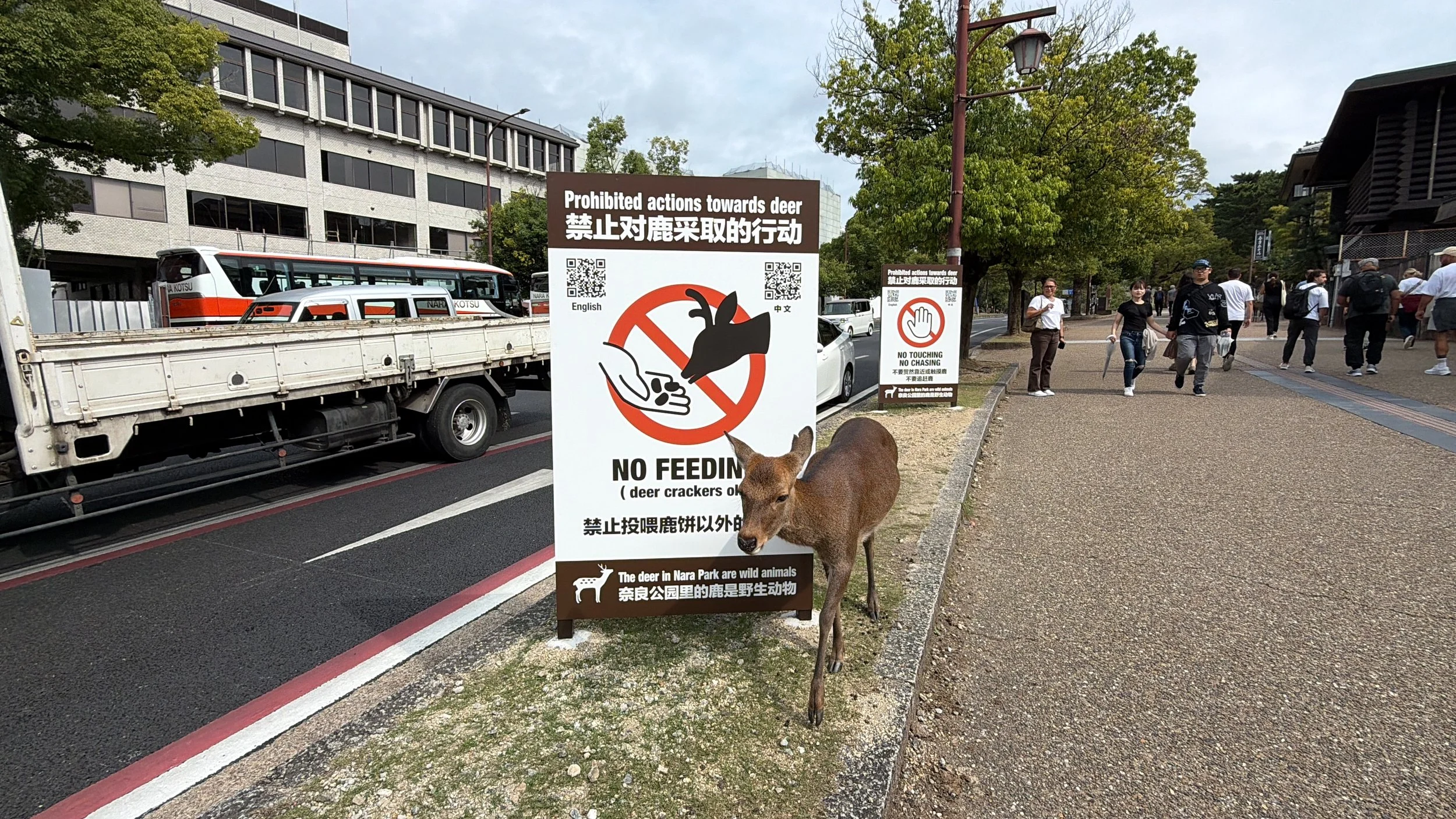
I fed the deer in Nara, Japan. I laughed, got bumped around, and discovered that a deer demanding another treat can deliver a surprisingly sharp bite.
It was cute and fun. It was also a little sad.
Those feelings stayed with me as I watched people interacting with the deer. As someone who has spent much of my life around wildlife, I found Nara fascinating.
Here was a city where wild animals moved comfortably among people, protected by a relationship stretching back more than a thousand years.
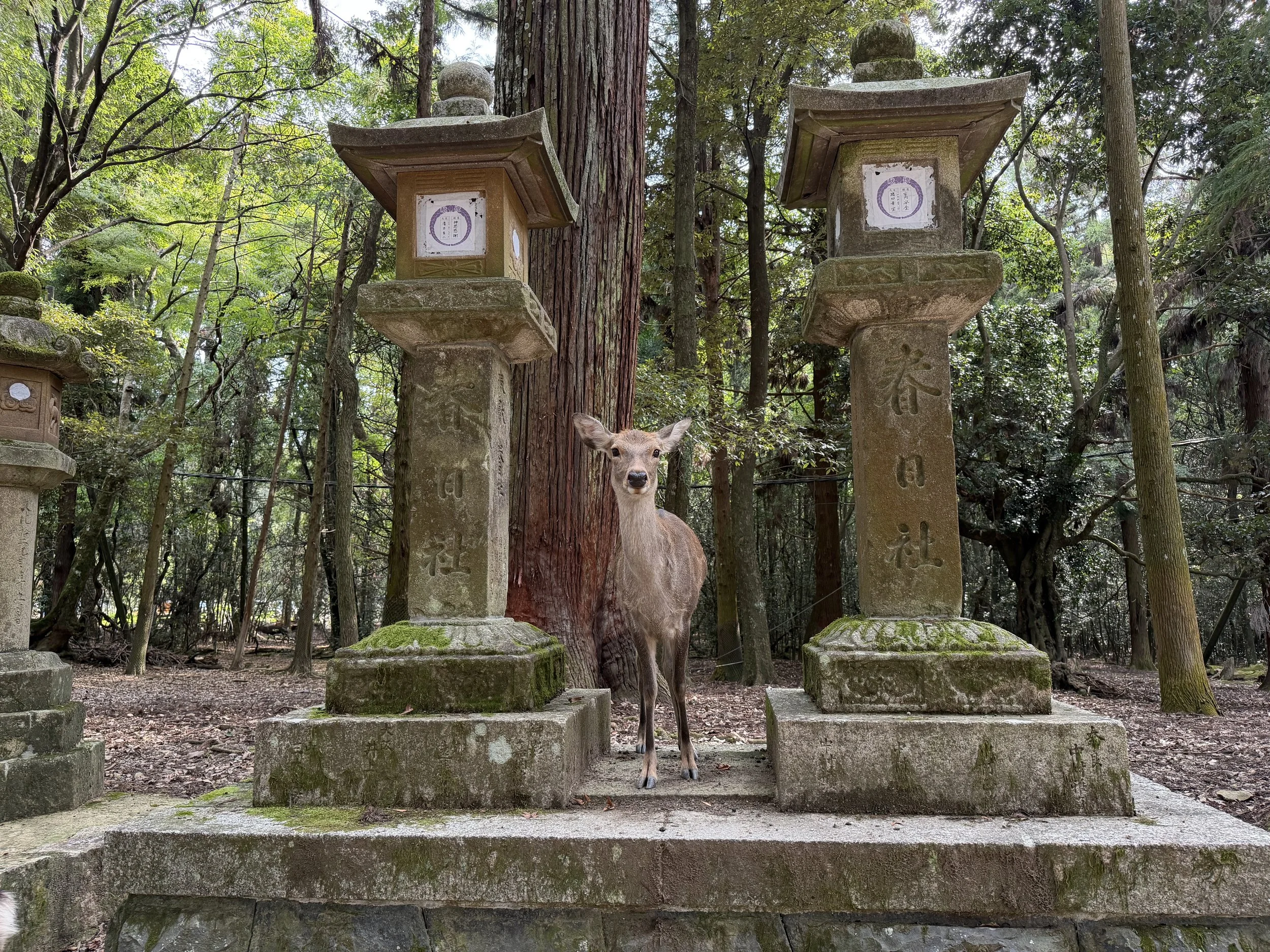
But around the feeding areas, I also saw how complicated that relationship has become.
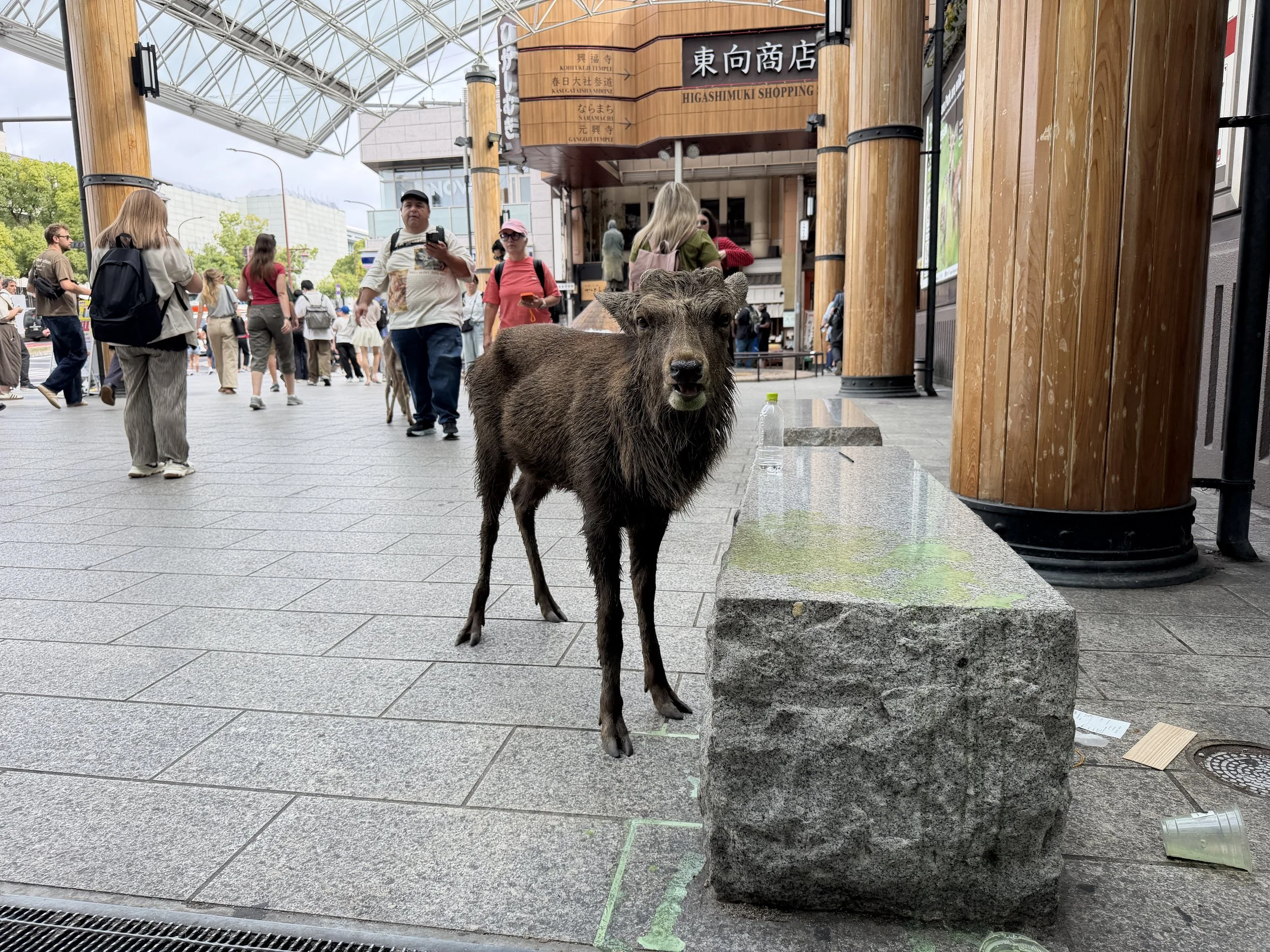
More than a thousand sika deer live around Nara Park.
They are free-ranging wild animals, yet many are remarkably relaxed around people. Seeing them sharing this landscape with residents and visitors was wonderful.
Their presence has deep cultural roots. According to the founding legend associated with Kasuga Taisha Shrine, the deity Takemikazuchi arrived in Nara riding a white deer.
Deer became revered as messengers of the gods, and their protection became part of the city’s identity. Historically, killing one could even be punishable by death.
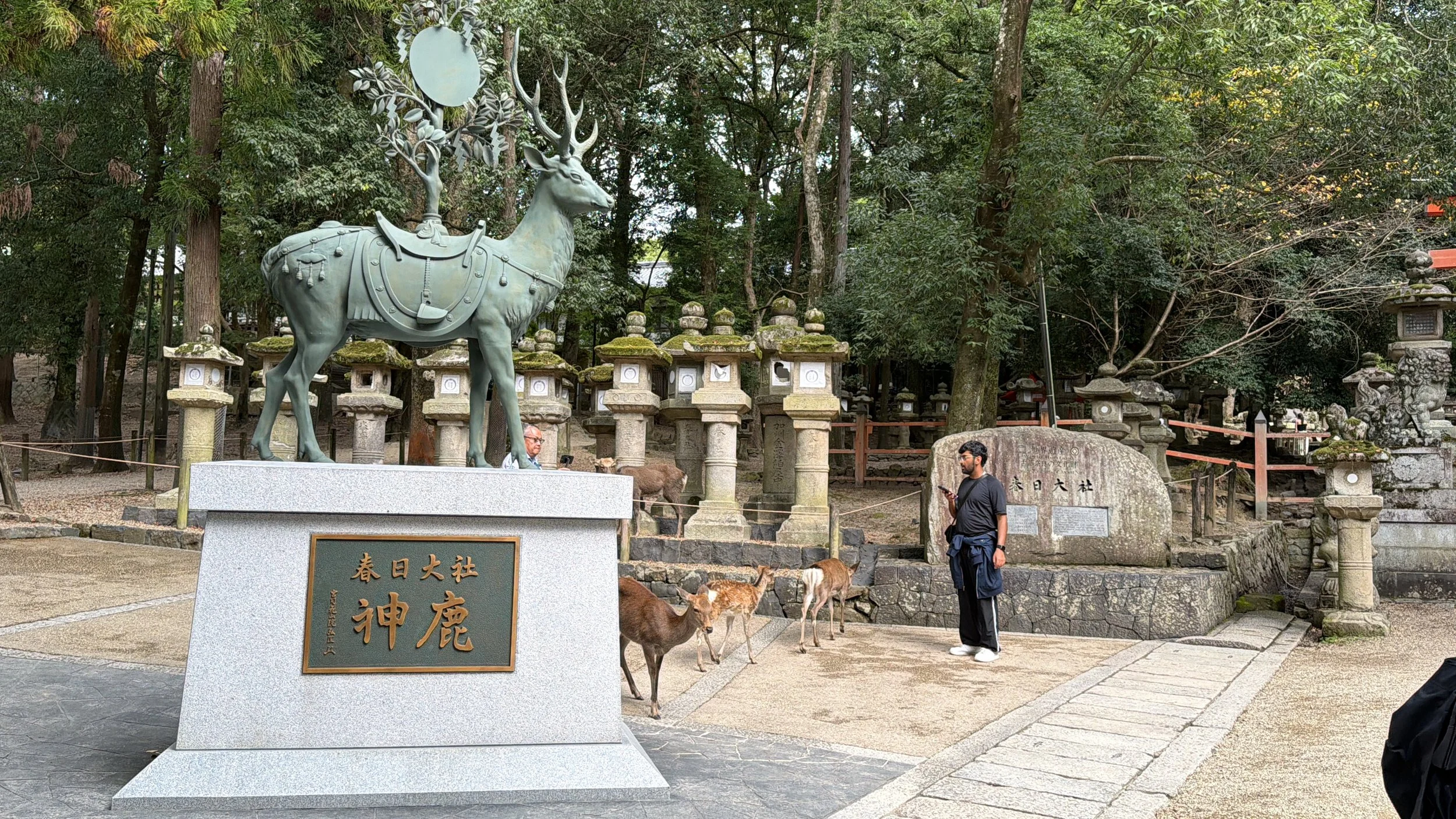
That history matters. Generations of people made a place for these animals, and today the deer are among Nara’s most recognizable attractions.
For me, there was something amazing about that.
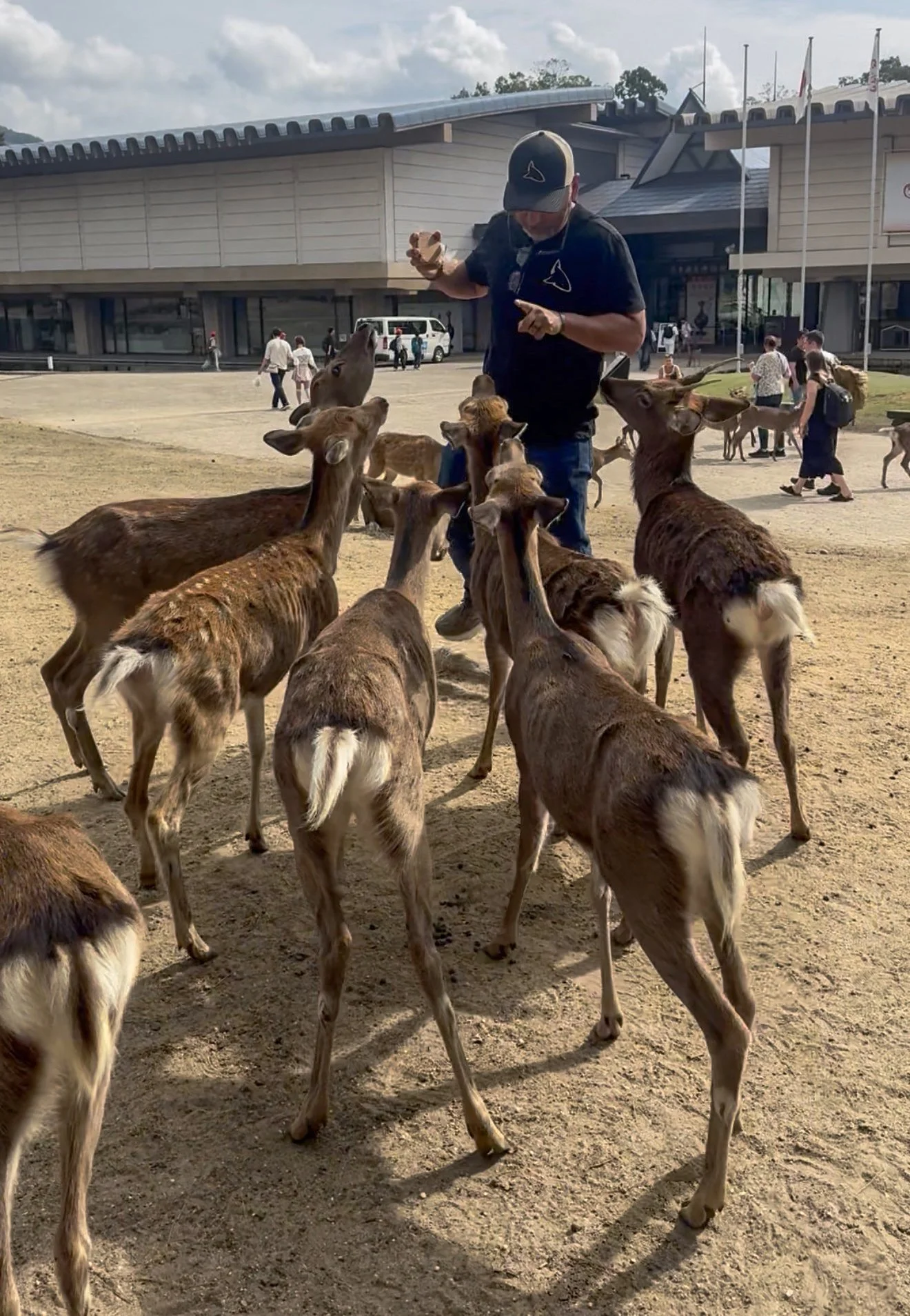
We spend so much time discussing conflict between people and wildlife that it was refreshing to be somewhere where coexistence is a part of daily life.
Then I started feeding them.
Visitors can buy special deer crackers, known as shika senbei, to feed the deer.
I joined in, and I completely understand the appeal. Having a deer approach you and take food from your hand is a memorable and fun experience.
But some of the deer I encountered were extremely persistent. They bumped me and bit me to get another treat.
And the bites stung!
I thought it was funny, but I was also paying attention.
I have years of experience around animals interested in food I am holding. I am comfortable staying composed when an animal gets pushy.
So many visitors do not have that experience.
A person who is thinking it will be a gentle encounter can suddenly find several deer crowding around them. I saw a few people screaming, running, one guy threw the food just to get away.
What feels funny to one person can feel frightening to another, especially a small child.
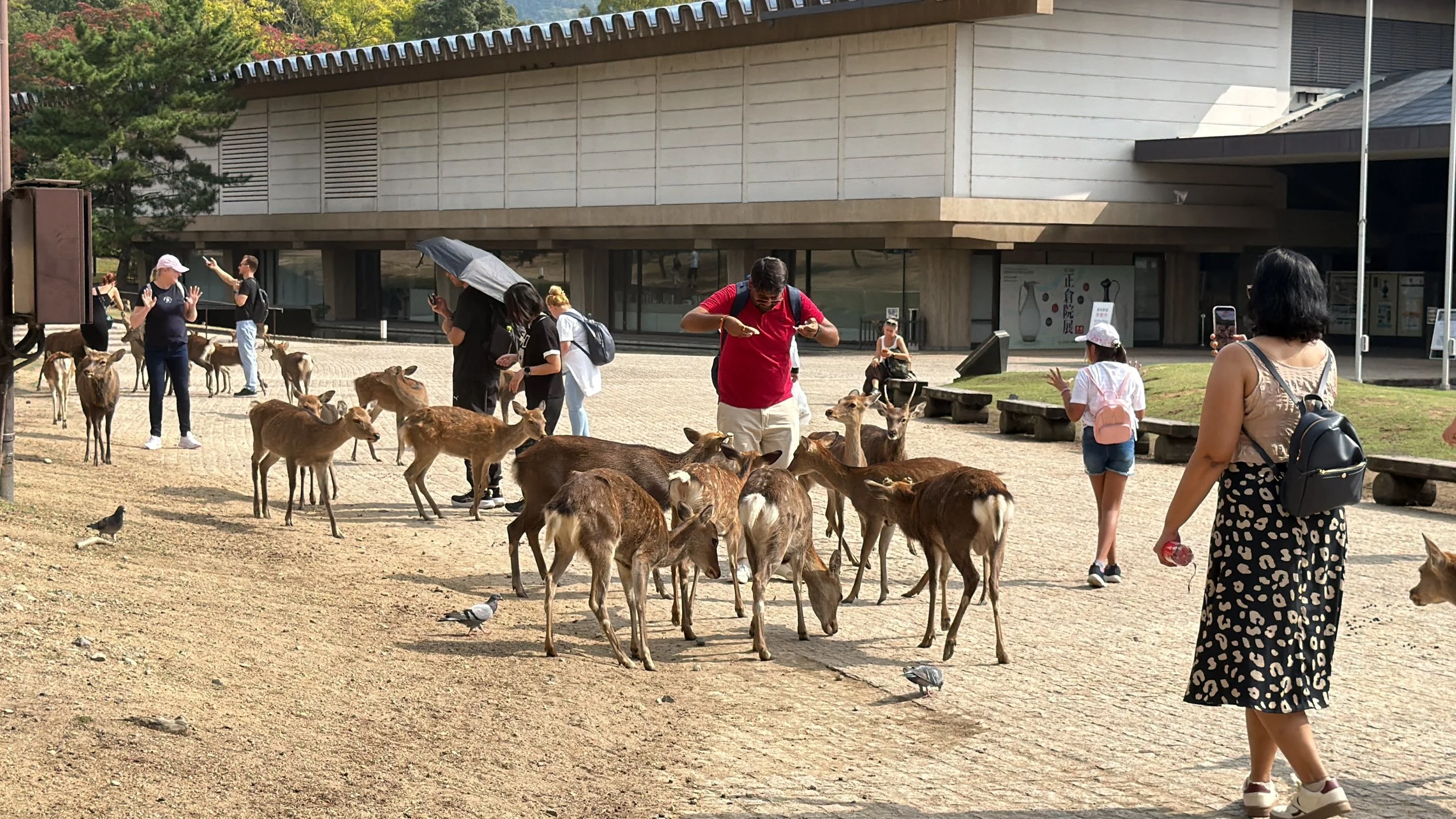
That was where the experience bothered me a bit. I try not to judge what locals do with their wildlife, because I feed sharks in the Bahamas, so I am not the right person to say what is right or wrong.
I just try to observe, and understand.
The towns people invite tourists to not just see the deer but also feed them. The big question is how well do they prepare them for what that interaction might involve?
They don’t.
I do not blame the deer.
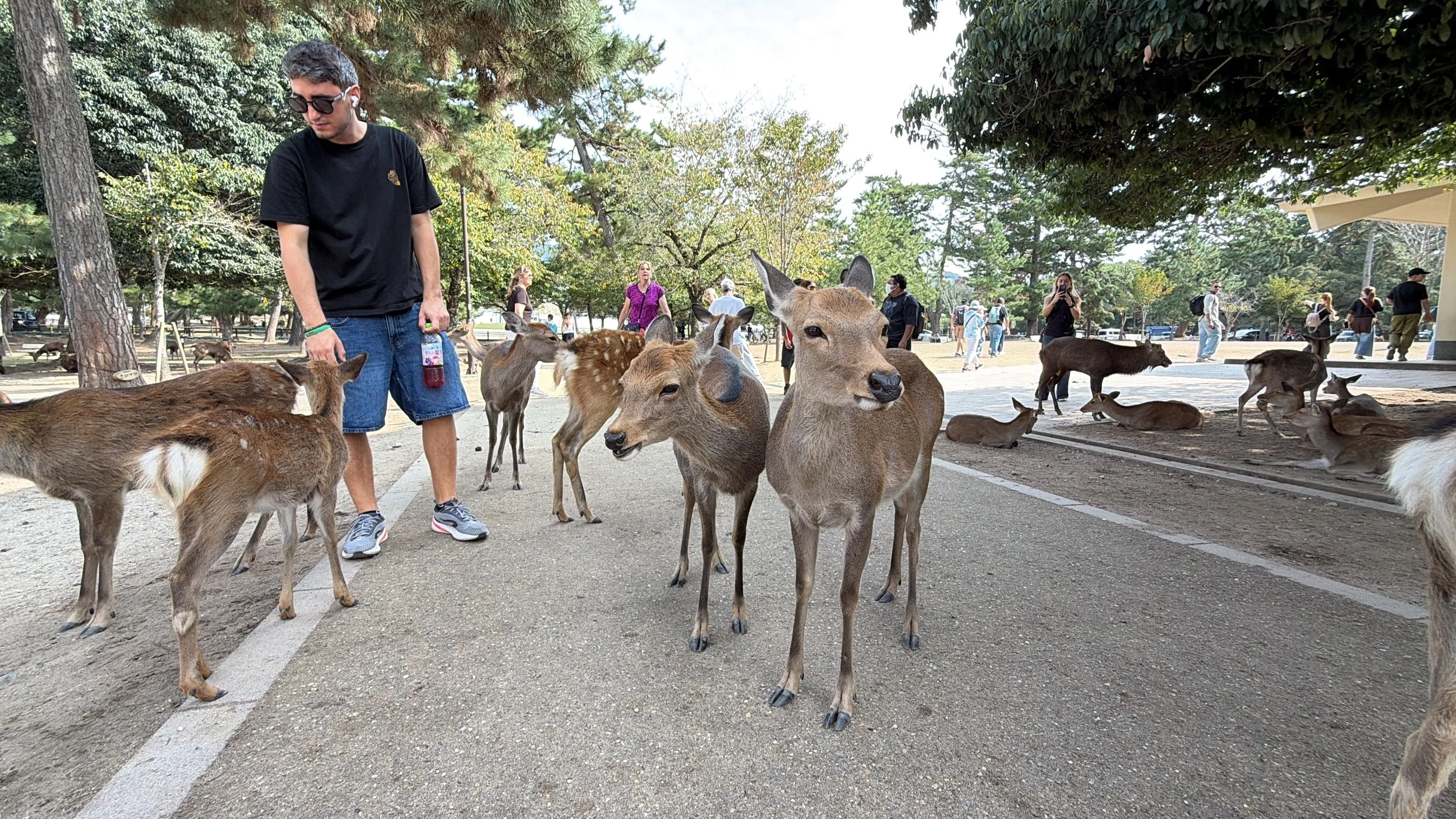
From the deer’s perspective, people arrive carrying food. Some hand it over immediately. Others hesitate, hold it up for a photograph, or try to make the encounter last longer.
I experienced some very demanding deer. I know first hand how pushing or biting works for them. If someone drops the food to escape an uncomfortable encounter, the deer gets what it was after.
What I can see is the guests are rewarding the very behavior that frightens them.
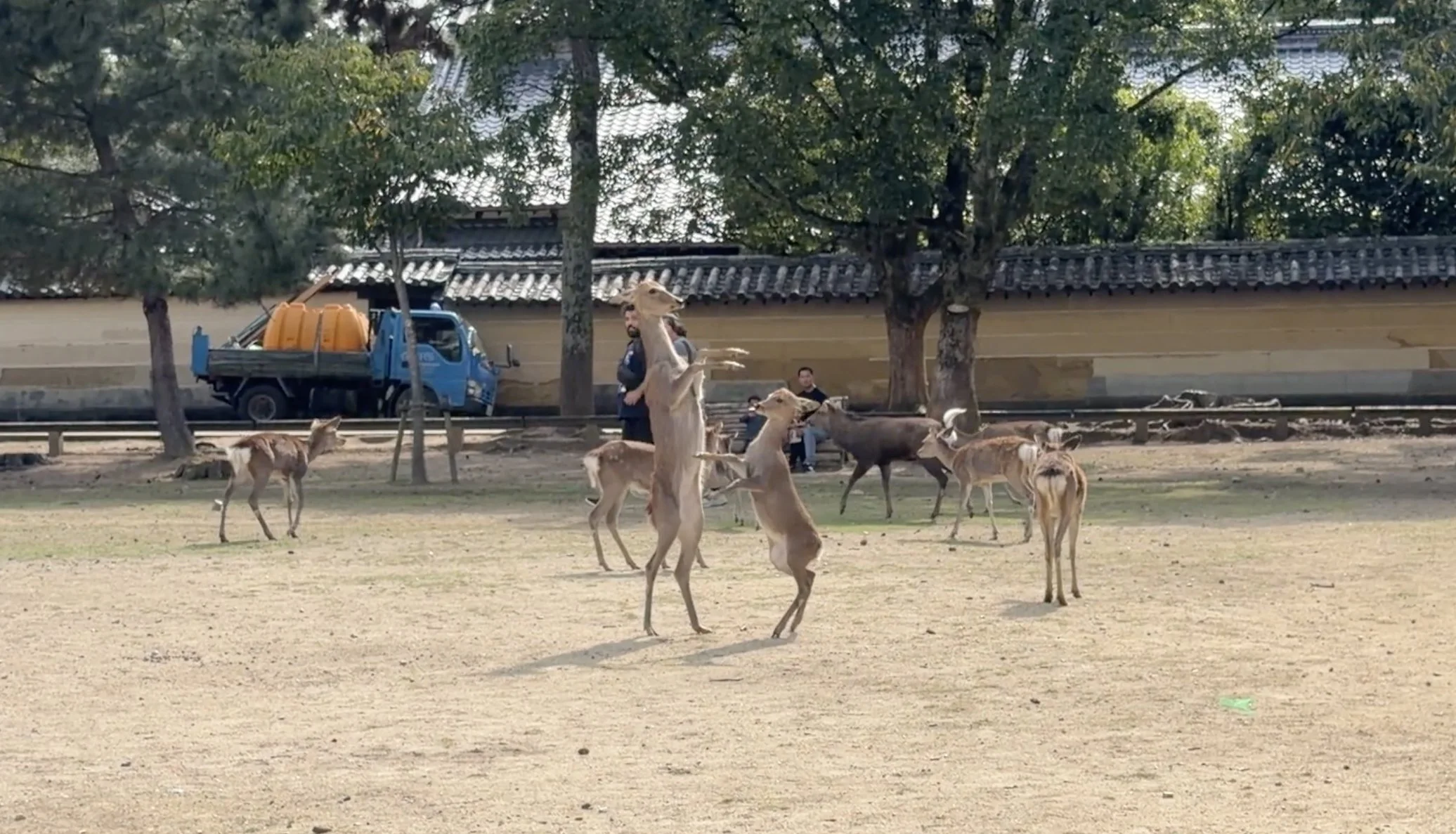
The local tourism association does warn tourists that deer can become excited and bite when crackers are visible but withheld.
Of course I participated too… I bought the food, I fed the deer. I wanted the encounter. These questions came from taking part and then thinking about what happens to others when they try and feed the deer.
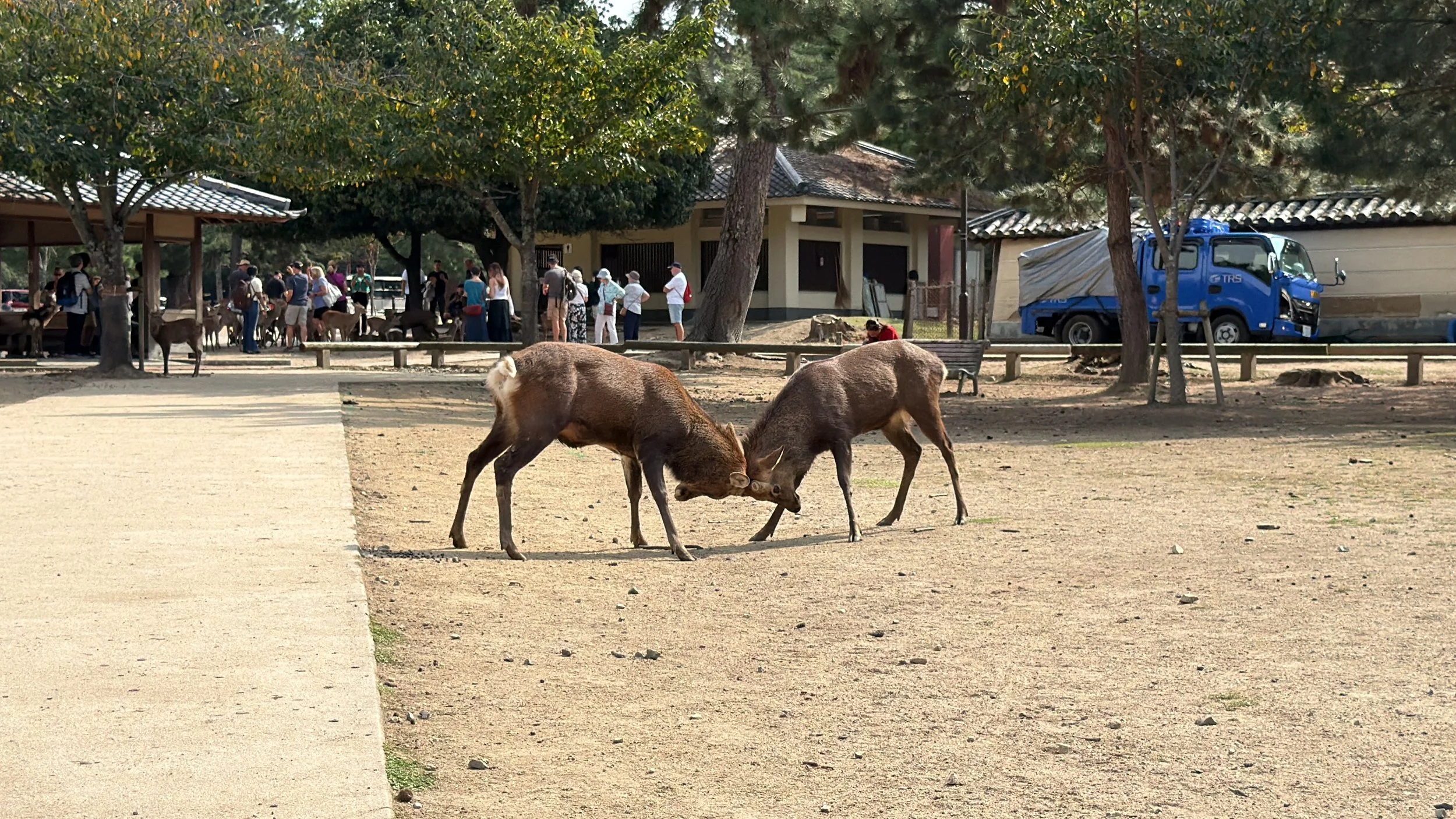
I also saw deer fighting with one another around tourists.
Many of the males we encountered lacked full antlers. Initially, I assumed they had shed them. I later learned that Nara has a longstanding autumn antler-cutting tradition intended to reduce injuries. The absence of antlers does not mean the animals are outside their breeding season or that their behavior has become harmless. Local guidance specifically warns that males can become aggressive in autumn.
Seeing those confrontations among people made me think about how easily visitors could get caught in the middle.
The deer may tolerate us at close range, but they still have their own relationships, competition, and instincts.
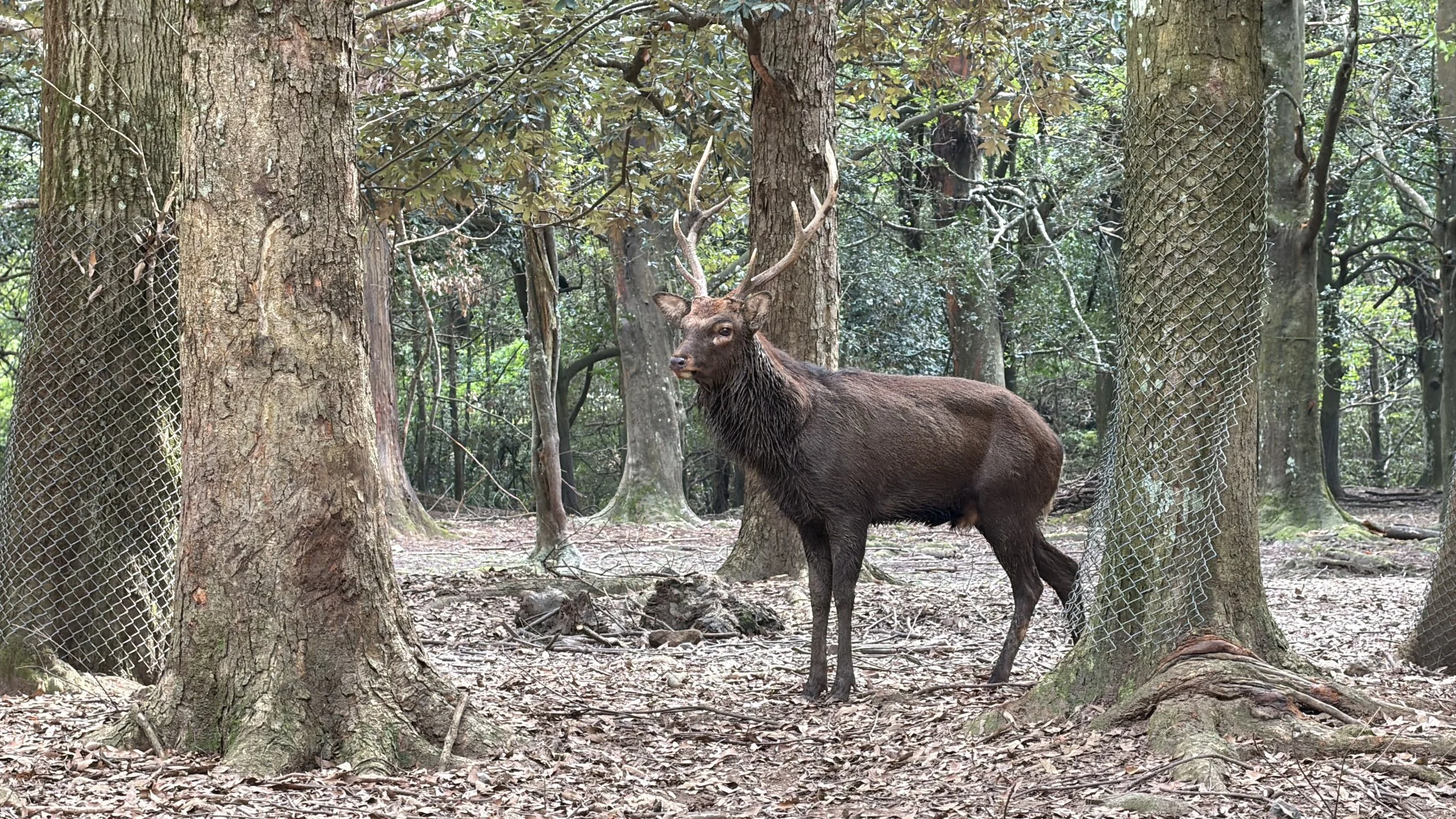
Their comfort around humans can make that easy to forget.
I understand why people come to Nara for the deer. I came away with memories I treasure, even have a few stinging reminders of their excitement for treats.
The positive is encounters like these can make wildlife matter to people.
They can spark curiosity, create affection, and give a community a powerful reason to protect the animals living alongside it. In Nara, that relationship also supports tourism and helps carry a remarkable cultural story forward.
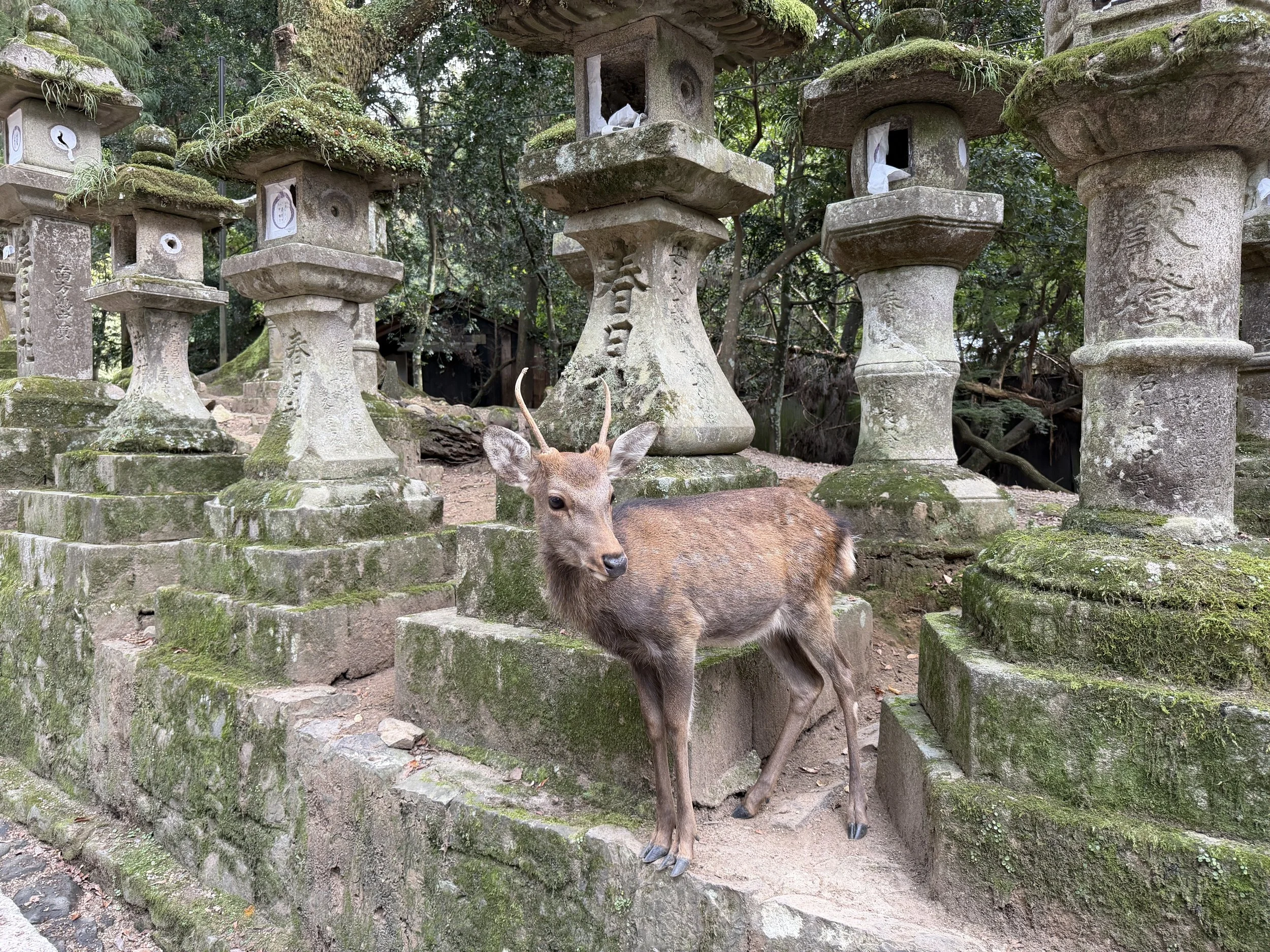
The feeding has a conservation connection too: a portion of official cracker sales supports deer protection. But the deer’s main diet consists of vegetation, including grasses, leaves, and acorns. The crackers are a visitor interaction, rather than their primary food source.
In a perfect world I would like to see understanding become as much a part of the experience as buying crackers. Visitors should know that crowding, biting, and competition are possible before they find themselves surrounded.
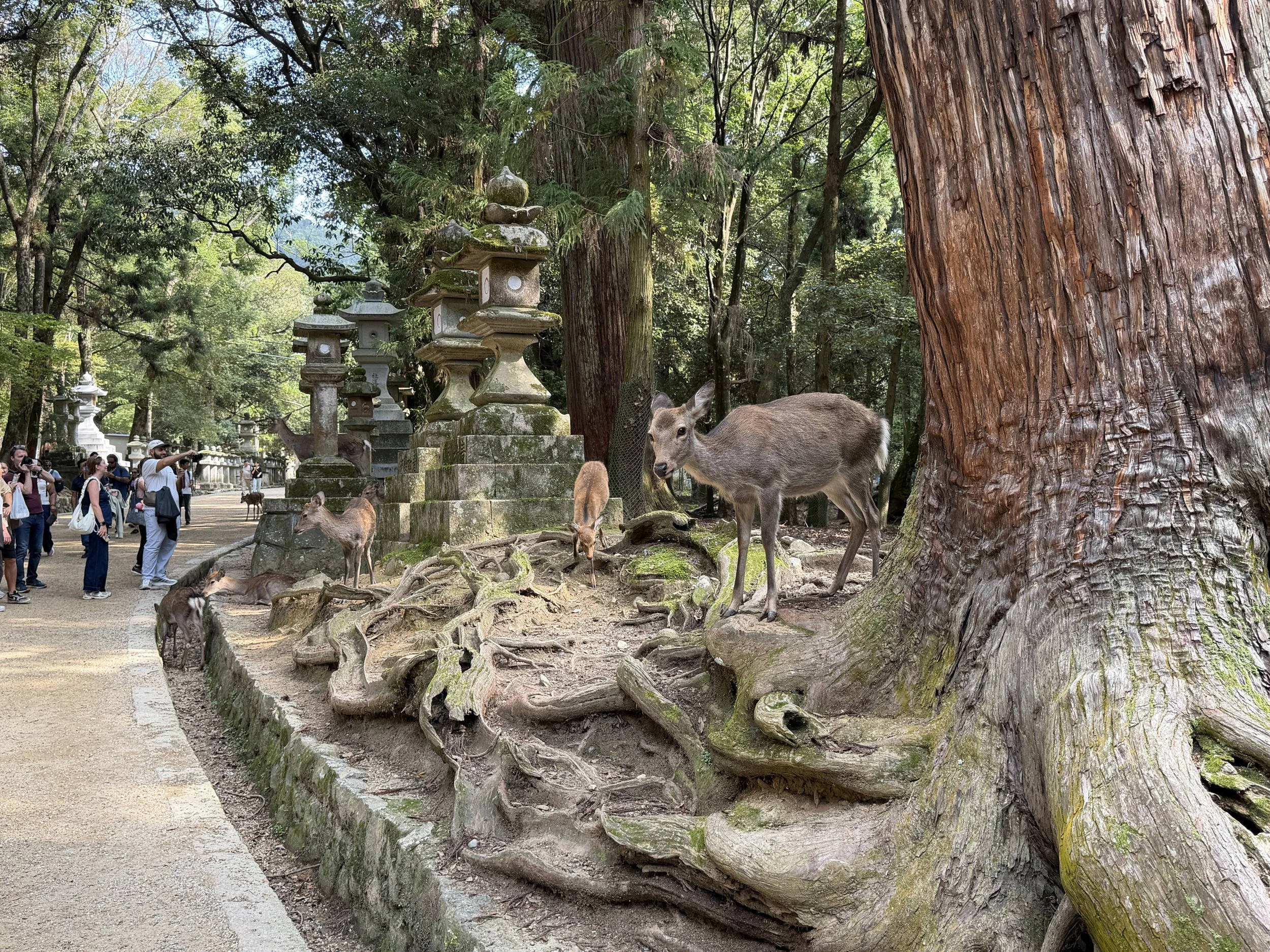
They should also feel that simply watching the deer is a complete and worthwhile experience.
I left Nara impressed by a city that has maintained such a long relationship with wild animals. There is something beautiful about seeing deer resting and moving among people who have made room for them.
Nara gave me a wonderful wildlife experience and a reason to examine my own participation in it. I enjoyed being close to the deer. I want the people who come after me to enjoy them too, and to arrive with enough understanding to treat these animals as the wild creatures they still are.