
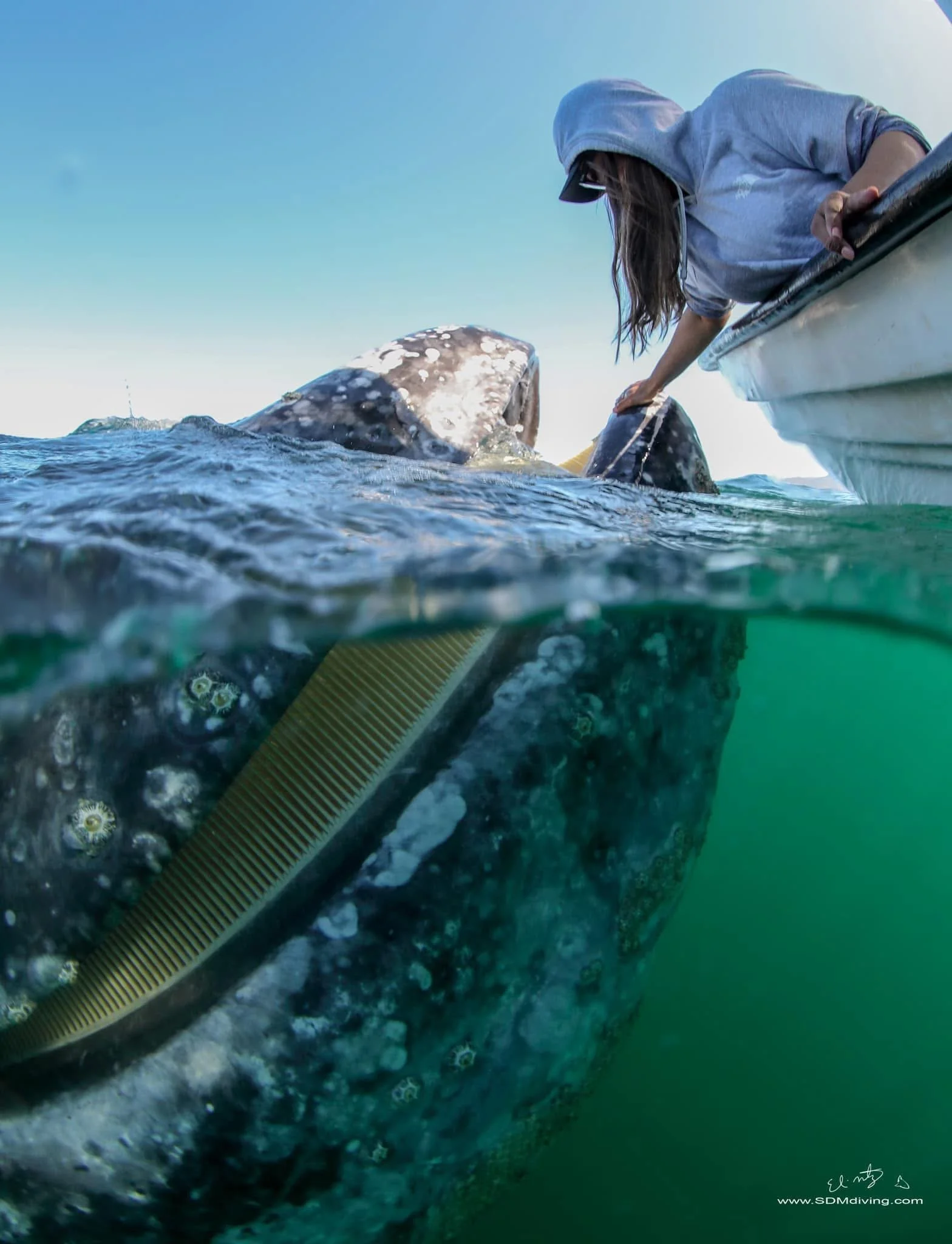
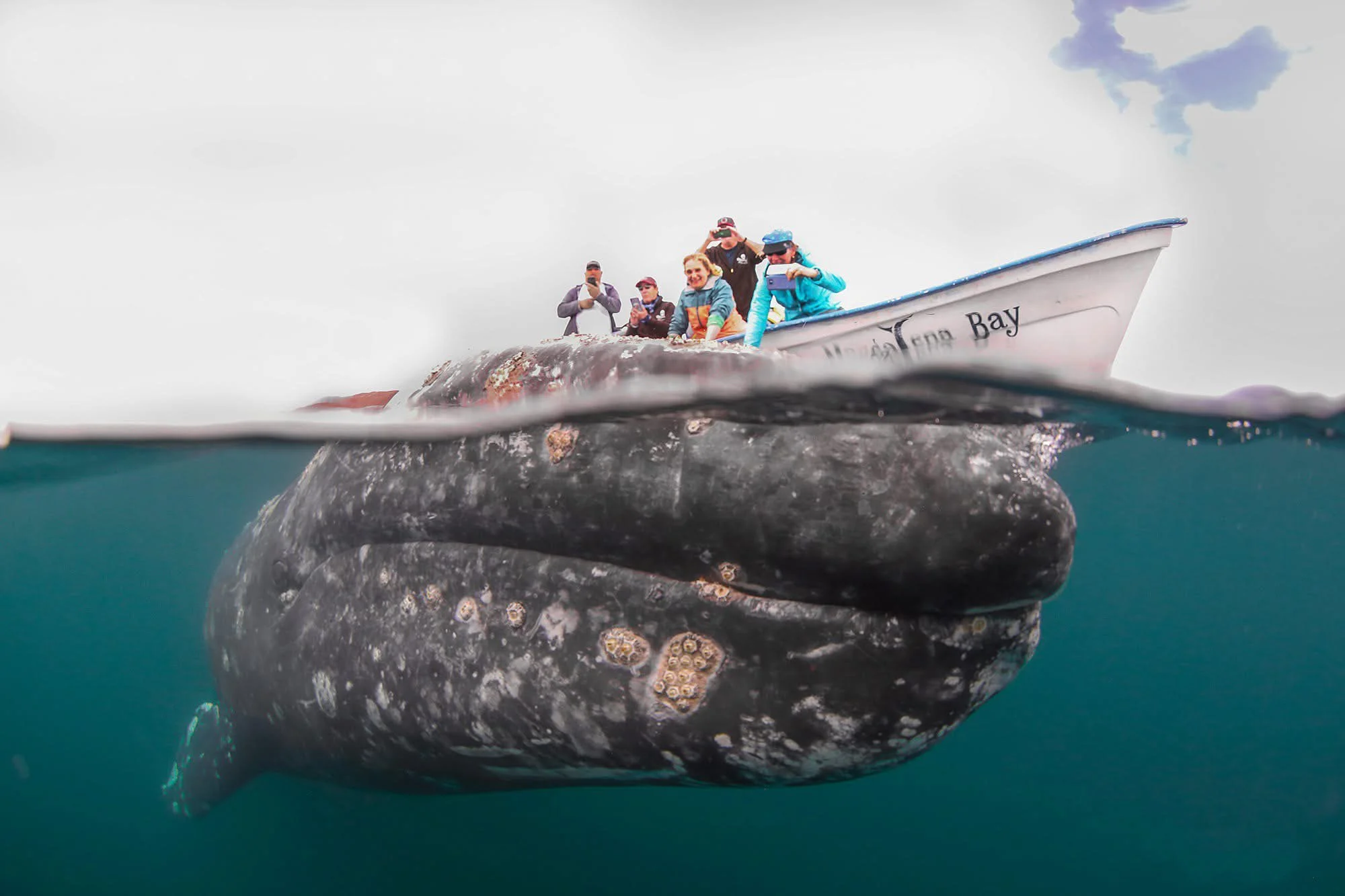
Grey whale off Baja, MX. Difficult split shot to get, but got lucky with this one image of the grey whale asking for a face rub off Mag Bay, MX.
Over / under photographs, also called split shots, are some of the most compelling images in ocean photography.
They show two worlds at once: the one below, and the one we know.
When they work, they feel magical.
But they are also one of the most frustrating images to pull off consistently.
I’m not the authority on over / under photography. There are photographers who have dedicated their entire careers to mastering this style.
What I do have, though, is enough time in the water, and enough failed attempts, to share what I’ve learned the hard way.
If you’re struggling with split shots, you’re not alone.
Let’s start with the biggest truth upfront:
Dome port size is everything.
The larger the dome, the easier it is to displace water away from the lens and create a clean, stable waterline across the frame.
This directly affects sharpness, composition, and how forgiving the shot is when conditions aren’t perfect.
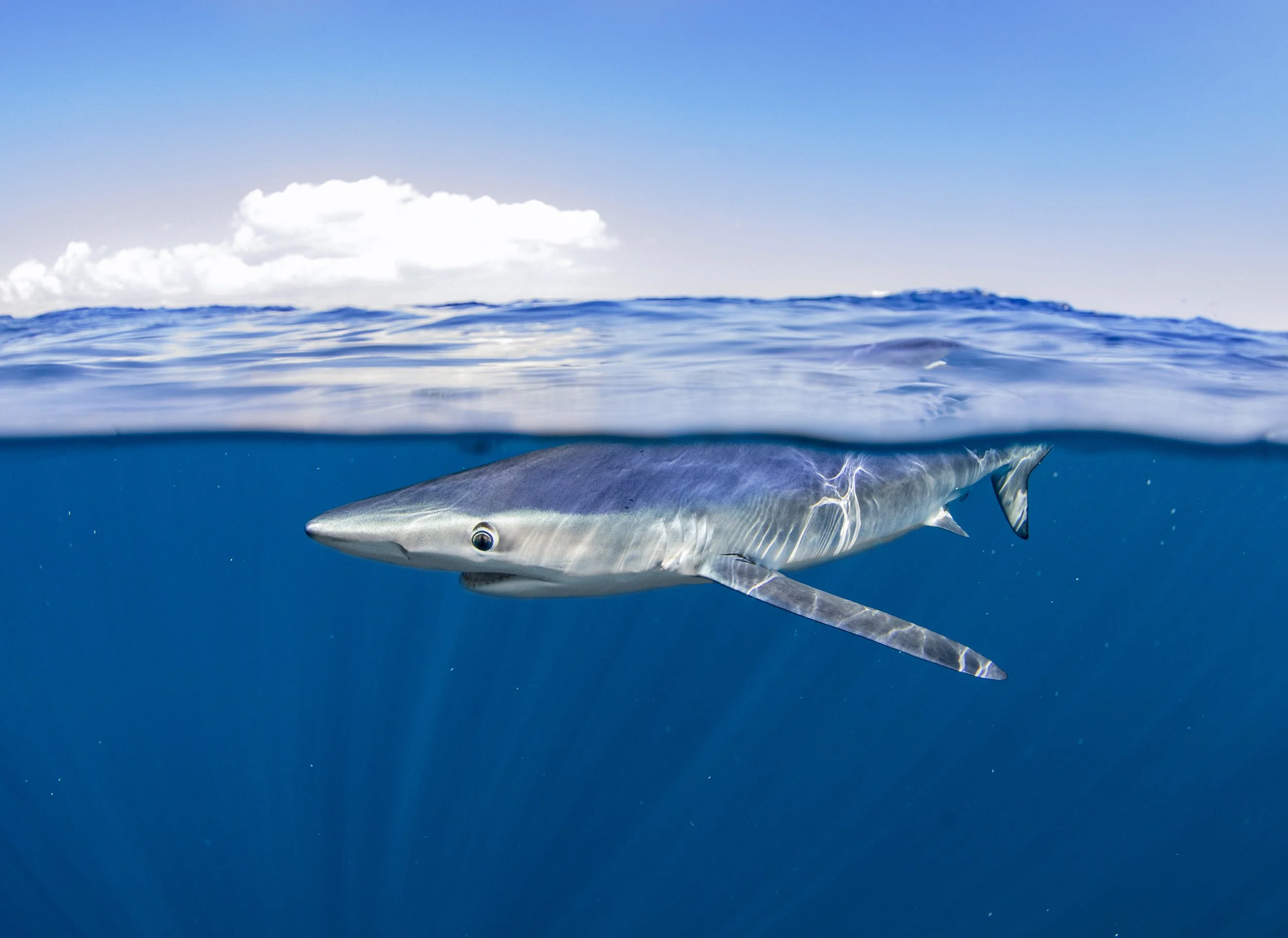
Flat calm seas allowed me to attempt this split shot of a blue shark off Cabo San Lucas, MX. the seas were perfect, and I got lucky with this one shot. I shot many many images to try and capture one that I was happy with.
The Reality:
10-inch (or larger) dome ports
Best option for consistent over / under shots
More forgiving with water movement
Easier to keep both halves sharp
6-8 inch dome ports
Technically possible
Extremely unforgiving
Requires near-perfect conditions and a lot of luck
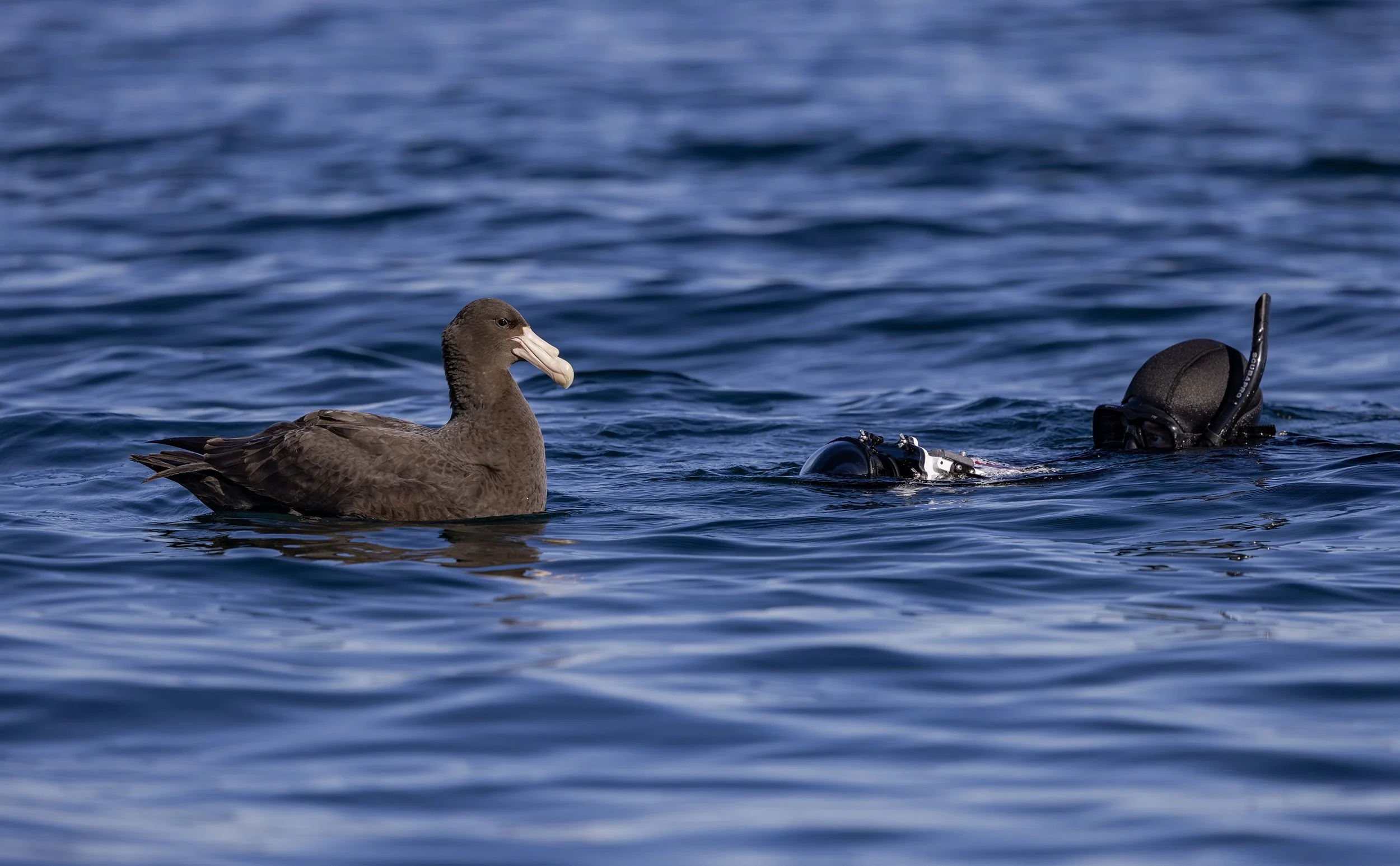
My friend Nathan Meadows attempting a split shot of a Southern Giant Petrel.
I’ve managed a very small number of successful split shots using a 6-inch dome port, but I am the first to admit, it’s the worst tool for this job.
The smaller dome simply doesn’t displace enough water, which means the waterline constantly creeps up into the lens.
If you want consistent results, a larger dome port isn’t optional, it’s necessary.
Can you shoot over / under photos with natural light?
Yes, but only under the right conditions.
Natural light split shots work best when:
The sun is high
The water is calm
The subject is close to the surface
You don’t need much underwater detail
An example of natural light split shot… dark water conditions, forcing me to up my ISO causing a blown out sky.
The challenge with natural light is exposure balance.
You’re trying to expose a bright sky above water, and a much darker subject below water.
That’s a massive dynamic range.
This is where strobes or video lights become incredibly important.
Underwater lighting allows you to properly expose the underwater subject, while keeping your ISO lower, and avoid blowing out the sky above water.
Without lights, photographers often raise ISO to brighten the underwater scene.
The result?
Grainy water
Blown highlights in the sky
Loss of detail above the waterline
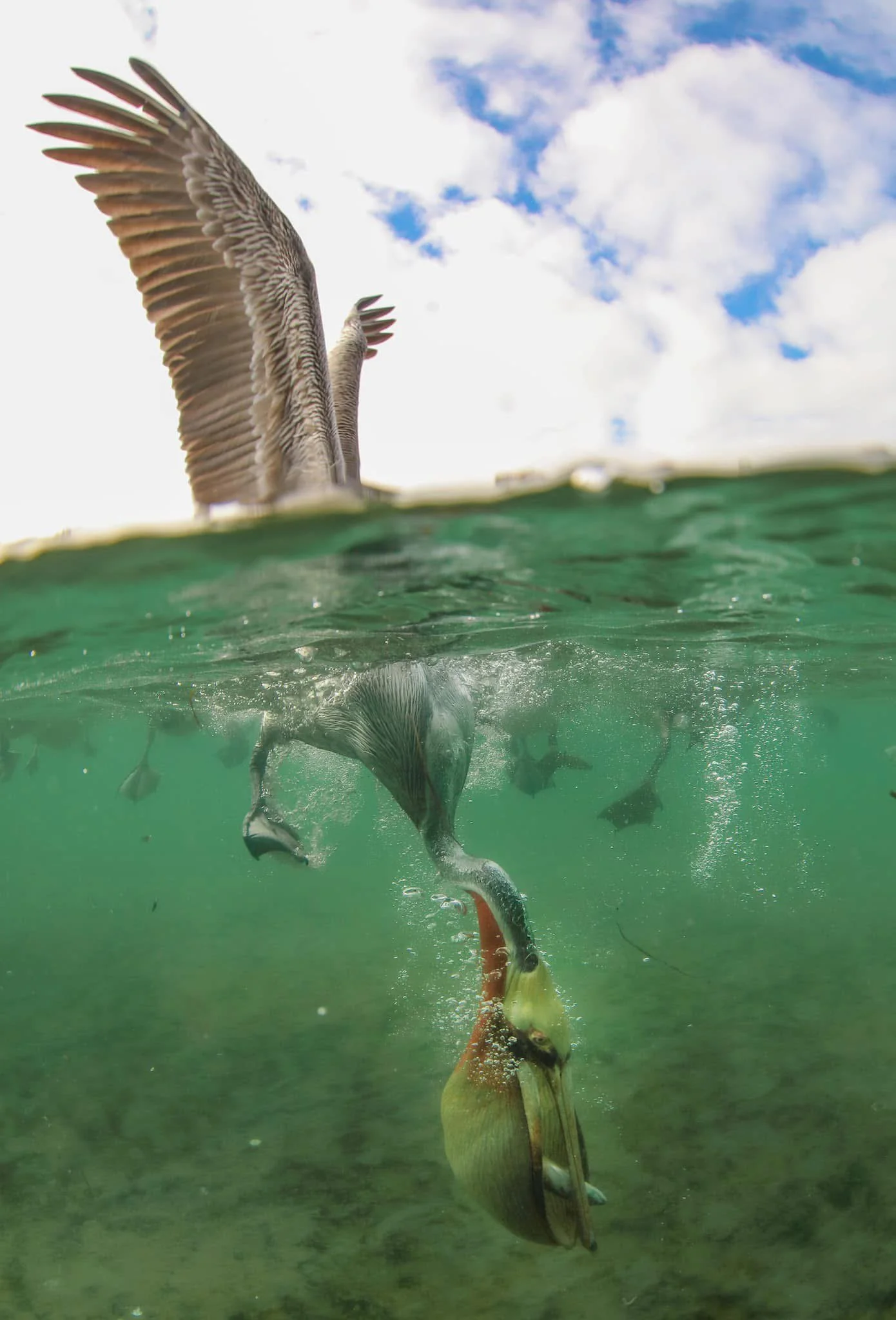
Over/under of a diving brown pelican.
By lighting the underwater subject instead, you can:
Keep ISO down
Preserve sky detail
Maintain cleaner images overall
This is especially important when shooting animals or people beneath the surface.
Over / under images demand depth of field.
You’re asking one frame to hold focus, inches from the dome port underwater, and potentially miles into the distance above water
For that reason, I typically shoot split shots between f/15 and f/22.
Yes, this means:
Less light reaching the sensor
More demand on strobes or video lights
Higher technical difficulty
But the payoff is worth it. Smaller apertures help keep both halves of the image decently sharp, which is important for this type of photography.
Even with perfect gear, split shots depend heavily on, calm seas, minimal chop, clean water and very patient subjects.
Some days, everything lines up. Most days, it doesn’t.
But that’s part of the process.
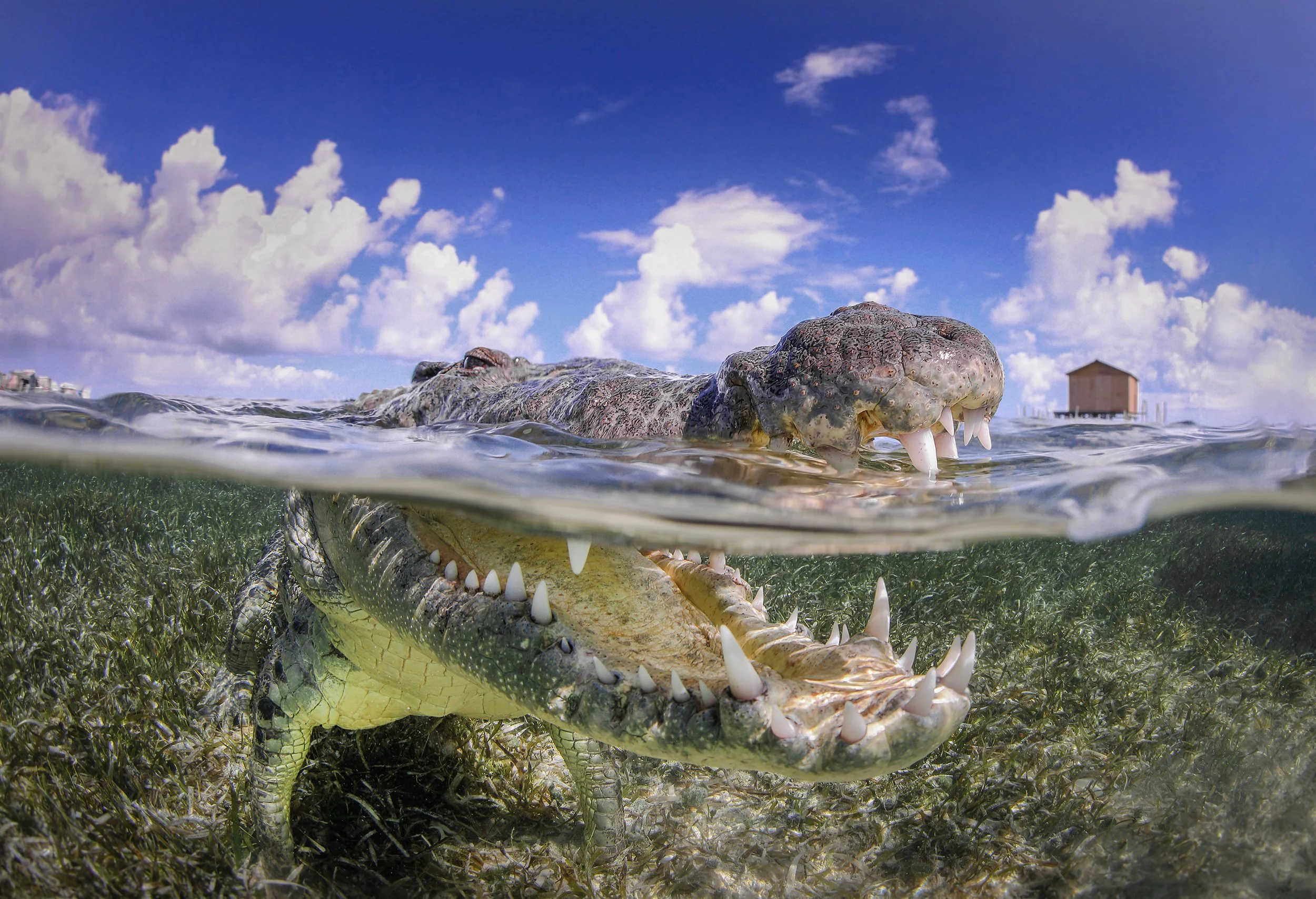
Shallow water and perfect conditions allowed for my best split shot using natural light of this crocodile off Banco Chinchorro, MX.
Over / under photography is not something you “figure out” once and then repeat easily. It’s a style that demands the right equipment, the right settings, the right conditions, and a lot of patience.
If you’re trying to do this with a small dome port, understand that success will be rare, not because you lack skill, but because physics is working against you.
But, when it does come together, there’s nothing quite like it.
Two worlds. One frame…
And a moment that reminds you why you keep trying.