Imperfect Words

I’ll be honest… I’m not a great writer. 

But I’m working on becoming a better one.

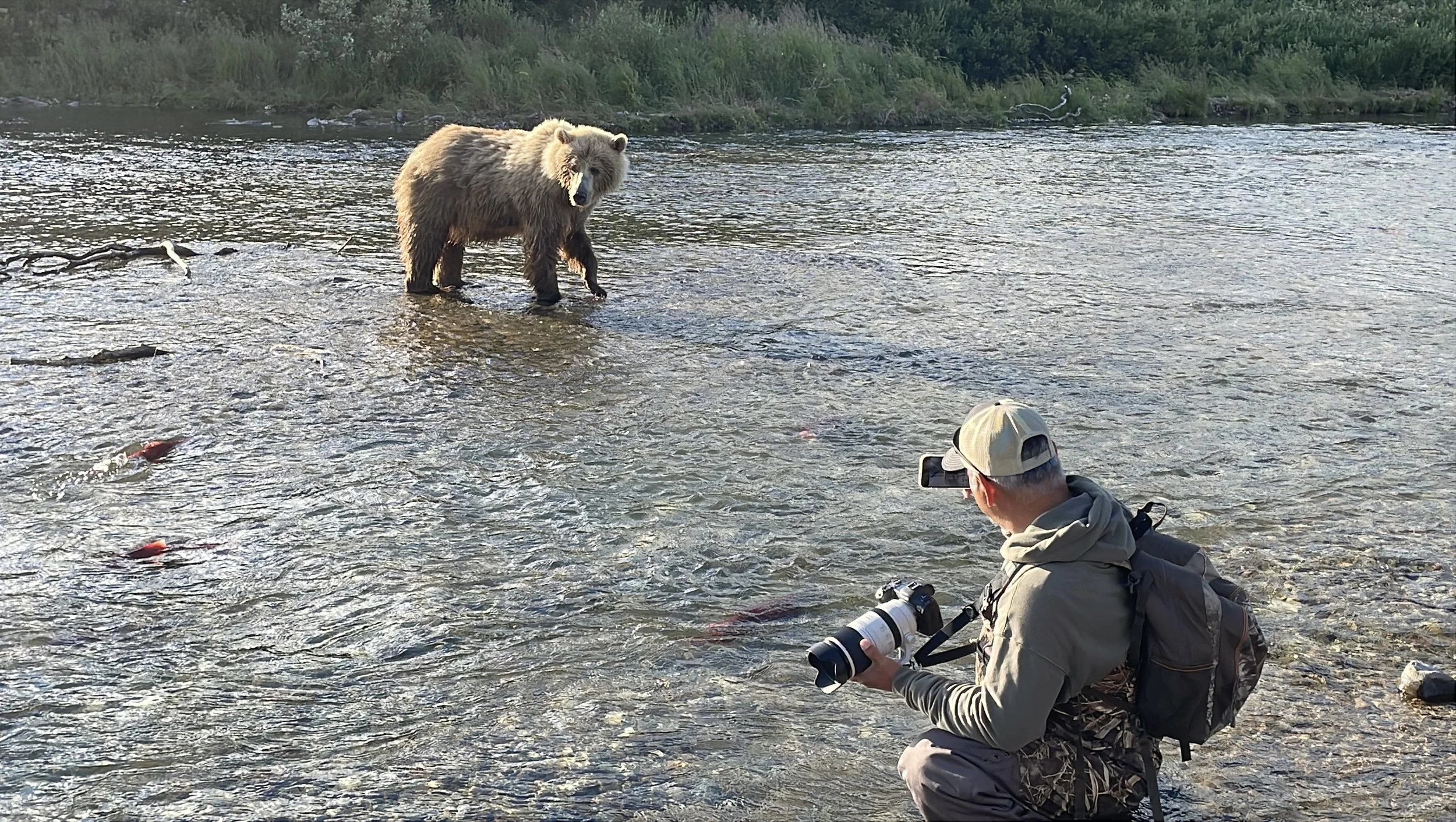
Because the animals I photograph deserve better stories than the ones I manage to tell.

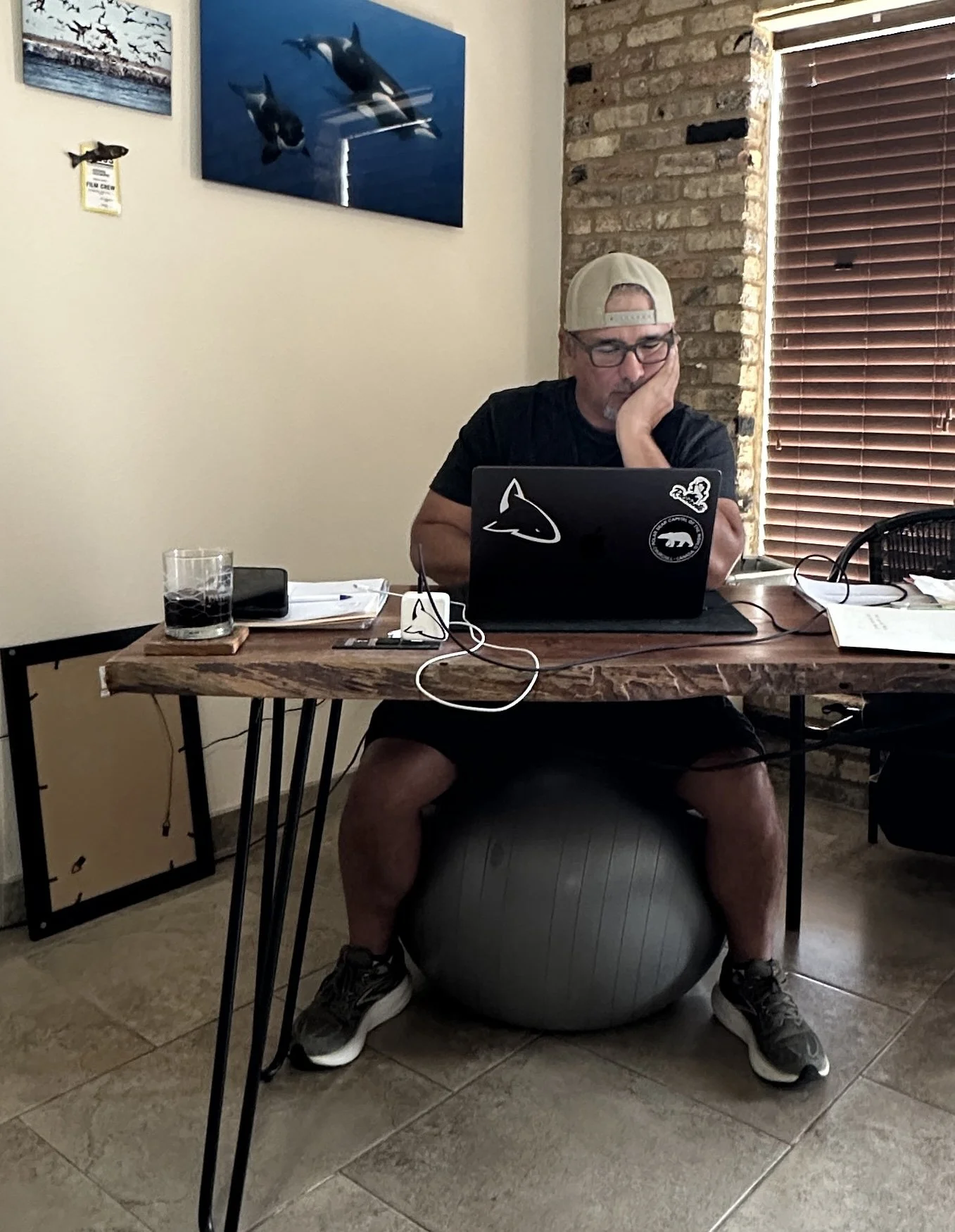
Sometimes I stare at the screen trying to find the right words, words that can move people, protect an animal, or make someone care about a place they’ll probably never see.

Most days, I fall short.

I’m not a poet or a scientist.

I’m not a polished writer with perfect grammar or flow. 

I’m just someone who’s trying.

Trying to build bridges between people and the wild through stories and photographs. 

The goal is simple… create empathy. 

Because if people can feel something, they might start to care. And if they care, maybe they’ll help protect what’s left.

But that’s the hard part, finding words that can make someone care about an animal most of the world ignores… A snake. A wolf. A shark. 

The animals that don’t fit easily into fairy tales or film scripts.

They are always the villains in the story.

Sometimes I reread what I’ve written and think, They deserve better.

Better words.

Better storytellers.

Better photographers… Ouch.
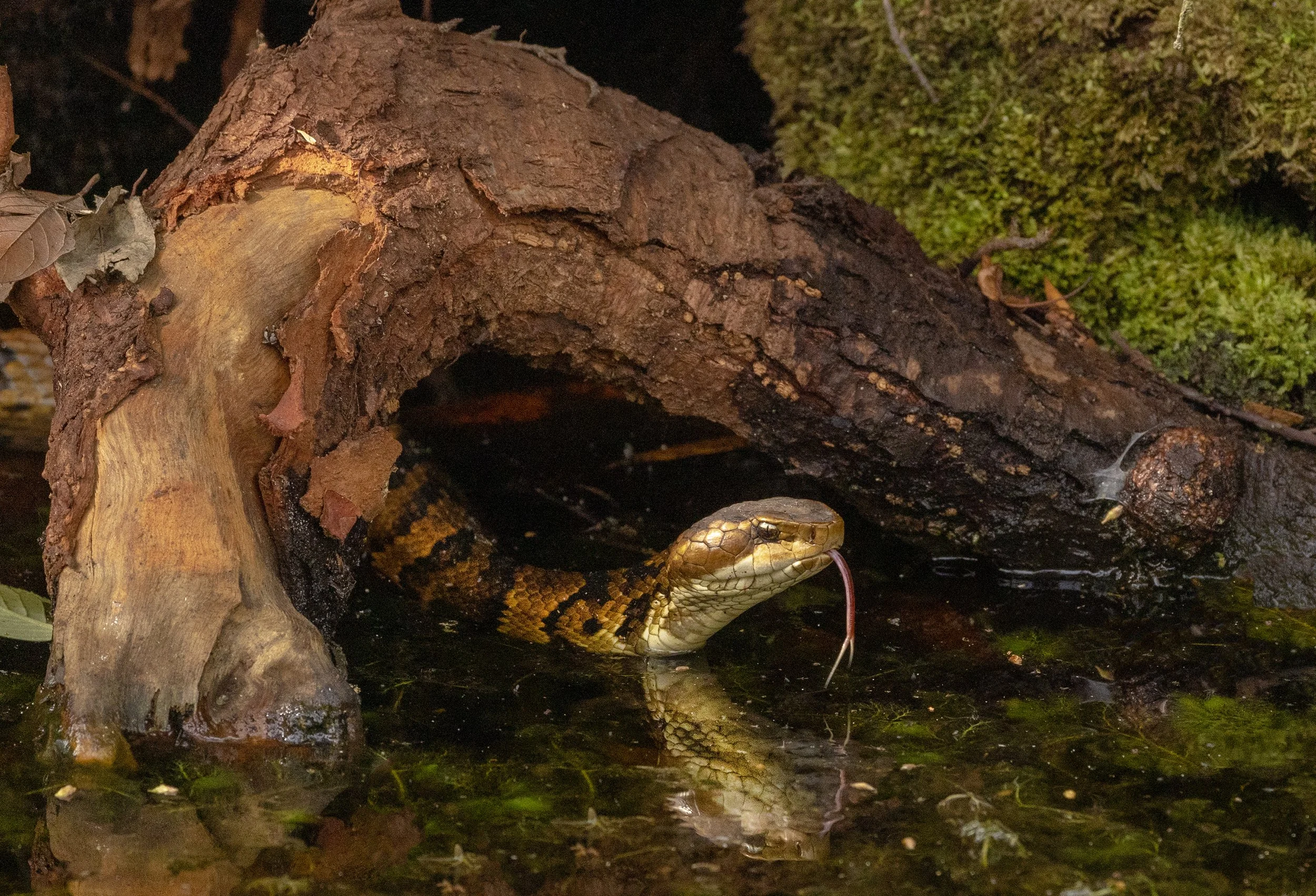
But then I remind myself: this is what I have. This is who I am.

And if I don’t try, who will?

So I write what I can. I share what I can.

And I’ll keep doing it, imperfectly, honestly, relentlessly, for as long as I’m here.

Because the wild doesn’t need perfect writers.

It just needs people who care enough to keep trying.
Are Orcas Dangerous? What I Learned in the Water

So many people fear orcas.

It’s understandable.

Most of what the public knows comes from two extremes: the tragedy of Blackfish, where captive orcas turned violent in unnatural tanks, and, more recently, headlines of wild pods sinking yachts. 

These are the stories that reach the masses, stories of danger.

But that’s not the story I know.

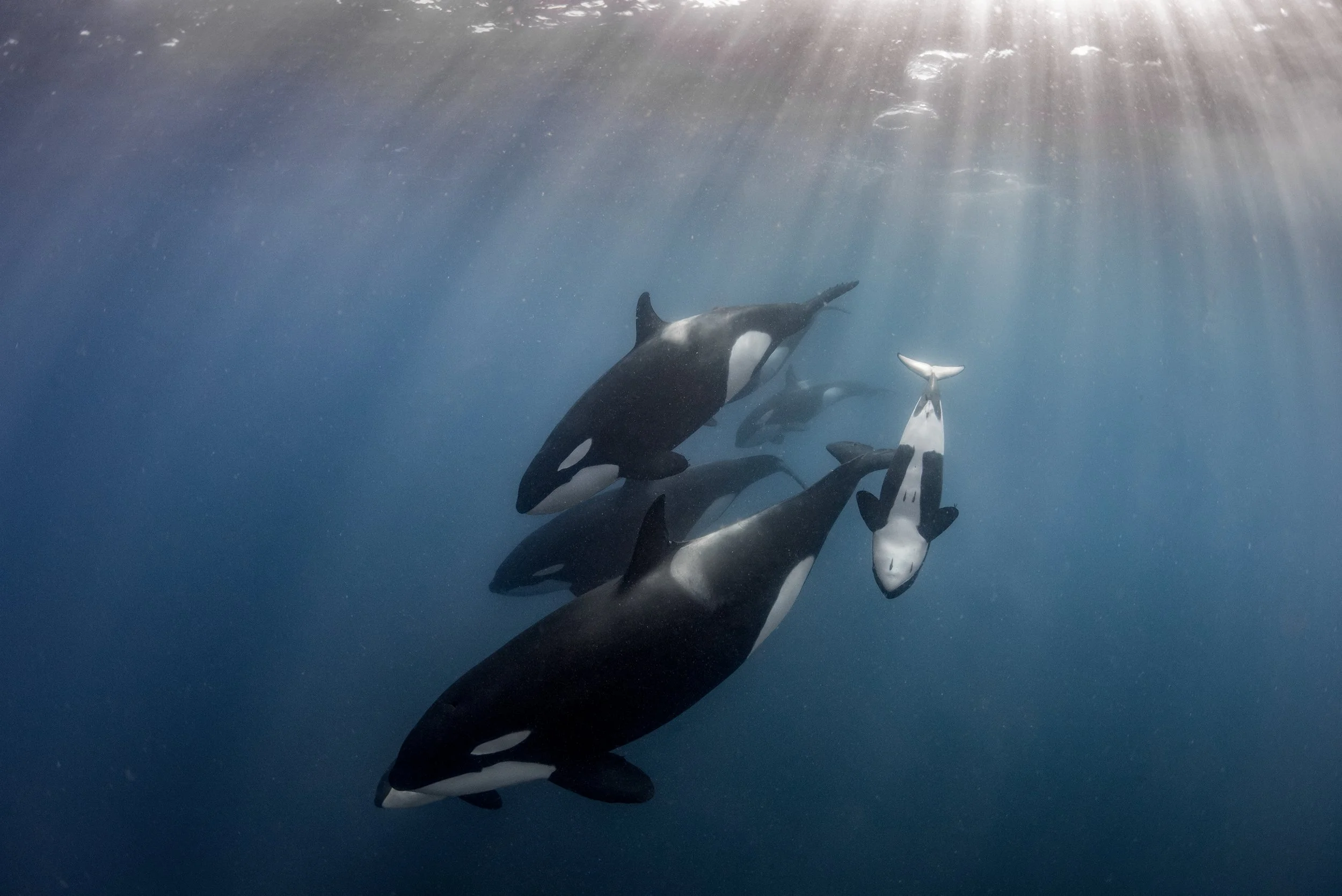
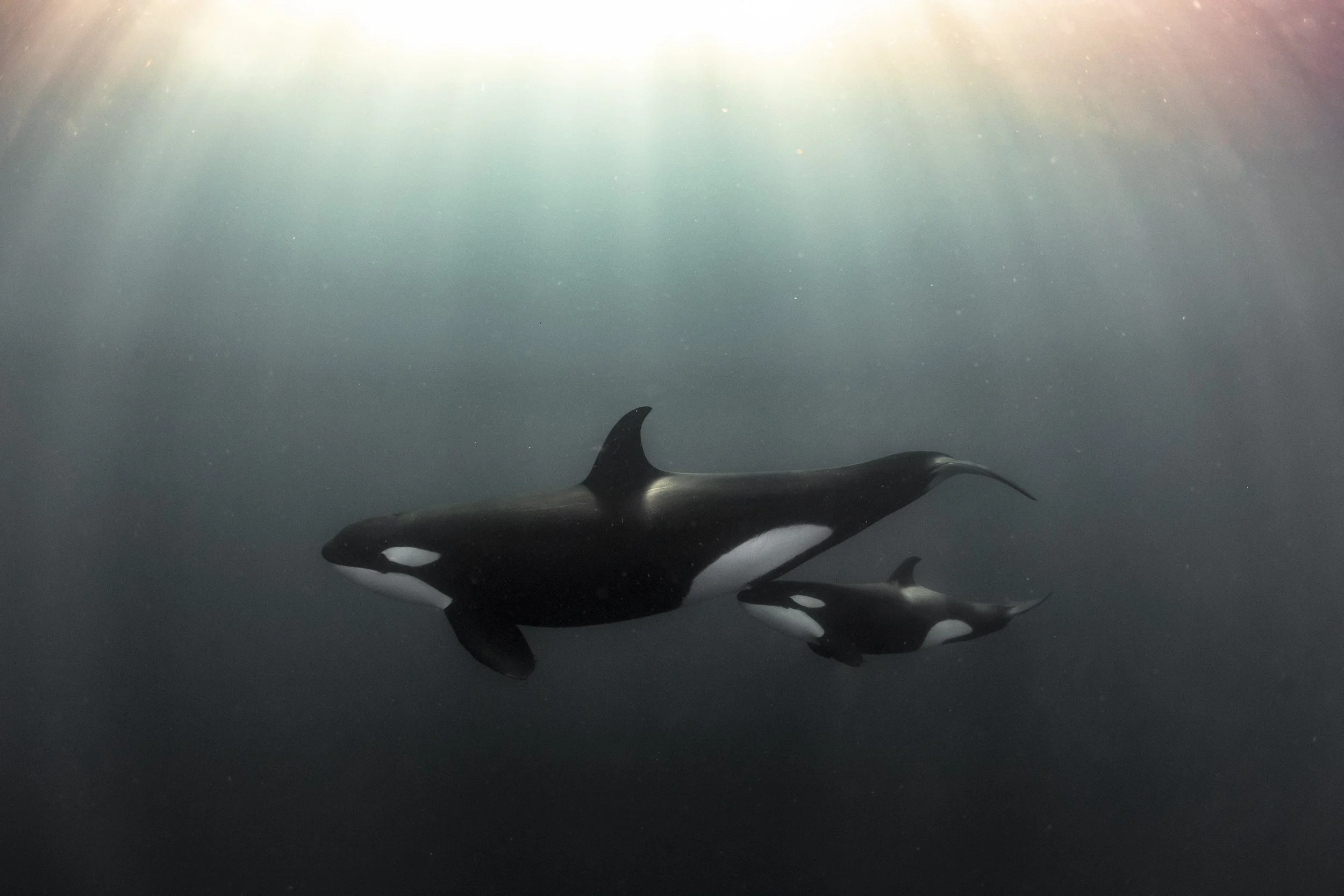
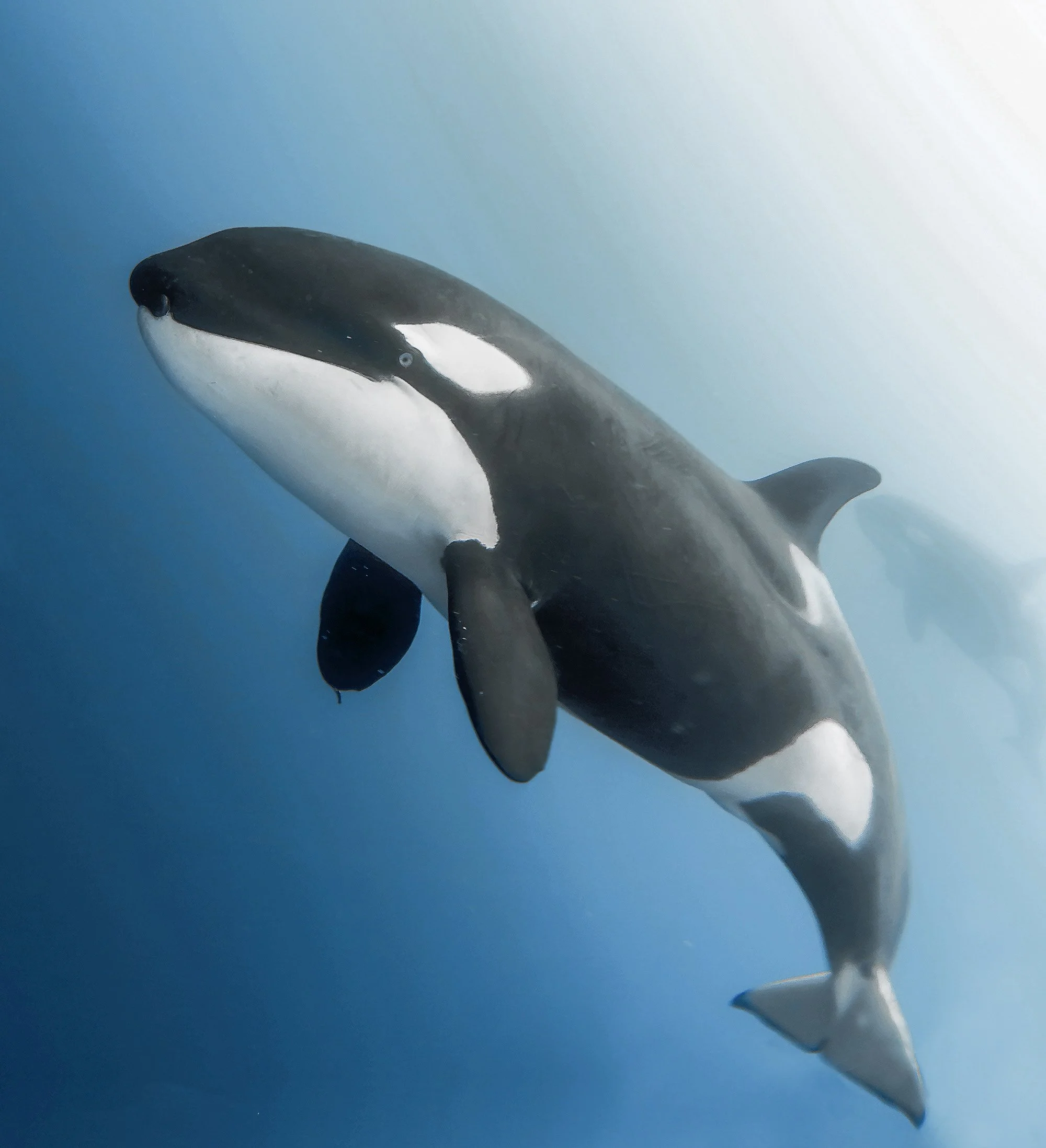
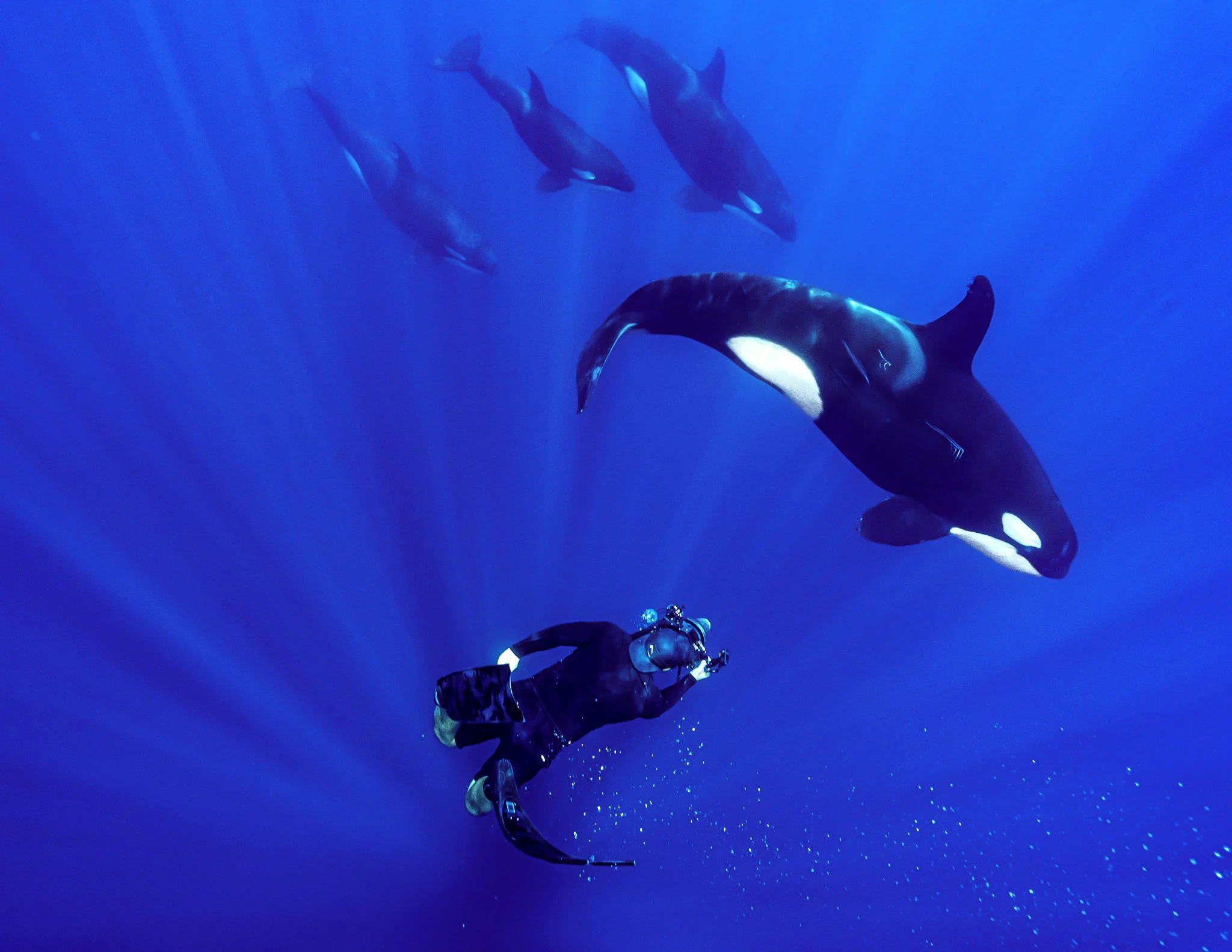
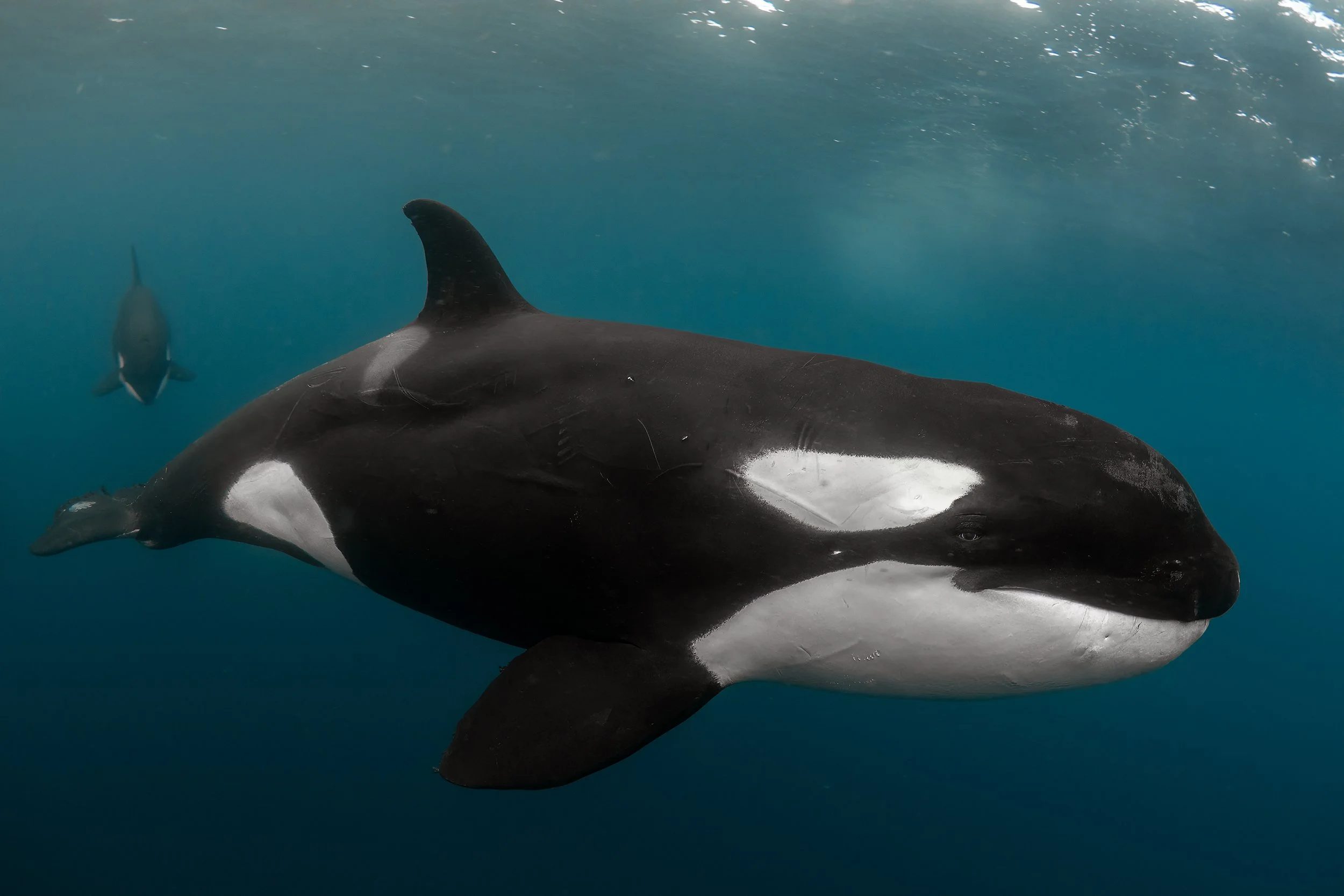
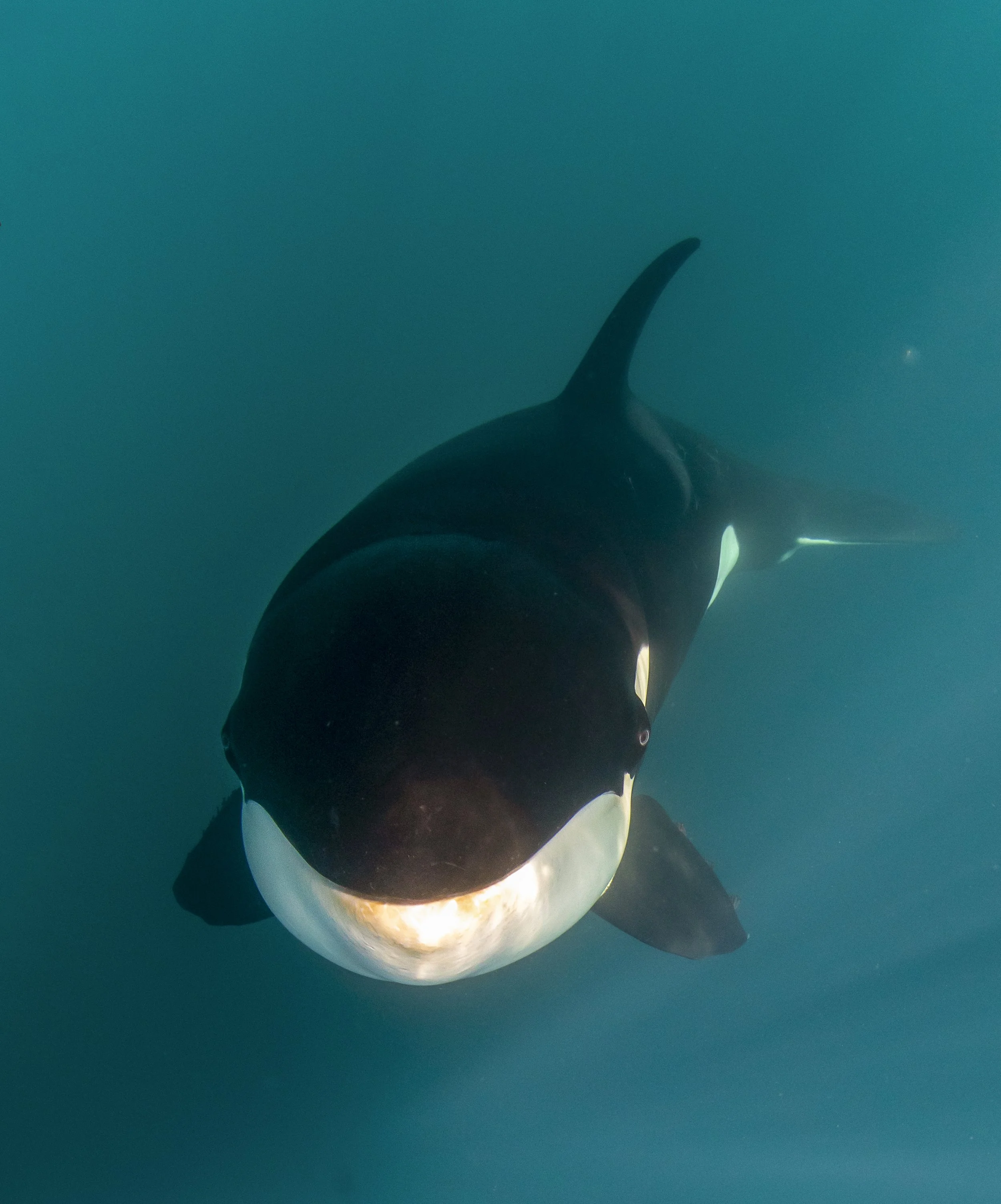
I’ve had the privilege of swimming with orcas in Baja, Norway, and New Zealand, spending hours in the water with them, watching, listening, and learning.

 I’ve seen them hunt with precision, communicate in ways we barely grasp, and yes, even play.

In New Zealand, I spun underwater like a dolphin, curious how they might react. 

The orcas swam around me, studying me, as much as I studied them.

In that moment, I was overwhelmed with emotions, but it wasn’t fear. 

It was awe, respect, and reverence for the intelligence of these beings.

Never once have I felt fear in their presence, only humility.

There is just something about orcas that pulls at people.

They embody mystery and majesty in equal measure. They’re emotional, intelligent, and connected to their families in ways that remind us of what we’ve lost as humans.

They are the ocean’s storytellers, and we’re only beginning to understand the language.

If there’s one truth we all seem to agree on, it’s this: Orcas do not belong in aquariums.

They do not belong in concrete tanks, performing tricks for crowds. 

They belong in the ocean, where their songs can travel for miles and their pods can live as they were meant to… FREE!

There are still around 70 orcas in captivity today, and every one of them deserves freedom.

Meanwhile, wild orca populations are slowly recovering, thanks to stronger protections and the decline of destructive fishing practices. 

With time and continued effort, their numbers will rise again.

And that gives me hope.

Because if there’s any species that deserves to continue its reign as the true master of the ocean, it’s the orca.

I was once asked, “If you could spend your life with only one animal, which would it be?”
Without hesitation, my answer was orcas. 

Well, maybe with a little hesitation.

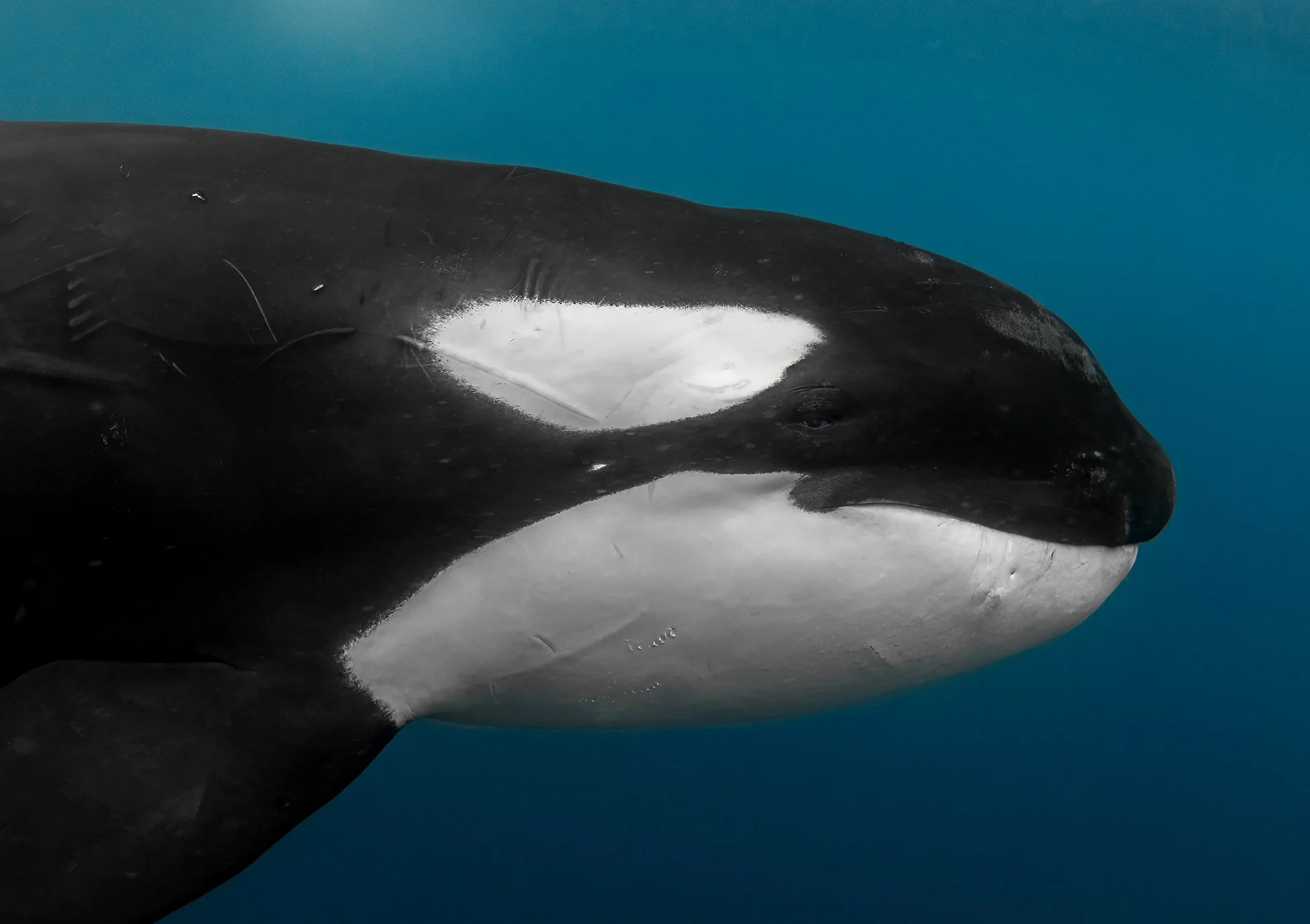
Orcas are addictive in the best way, the kind of presence that changes you. Once you’ve shared the water with them, once you’ve looked into their eyes, you’re never quite the same again.

The reality is, people fear what they don’t understand.

And for generations, we’ve misunderstood orcas, labeling them “killers” while locking them behind glass.

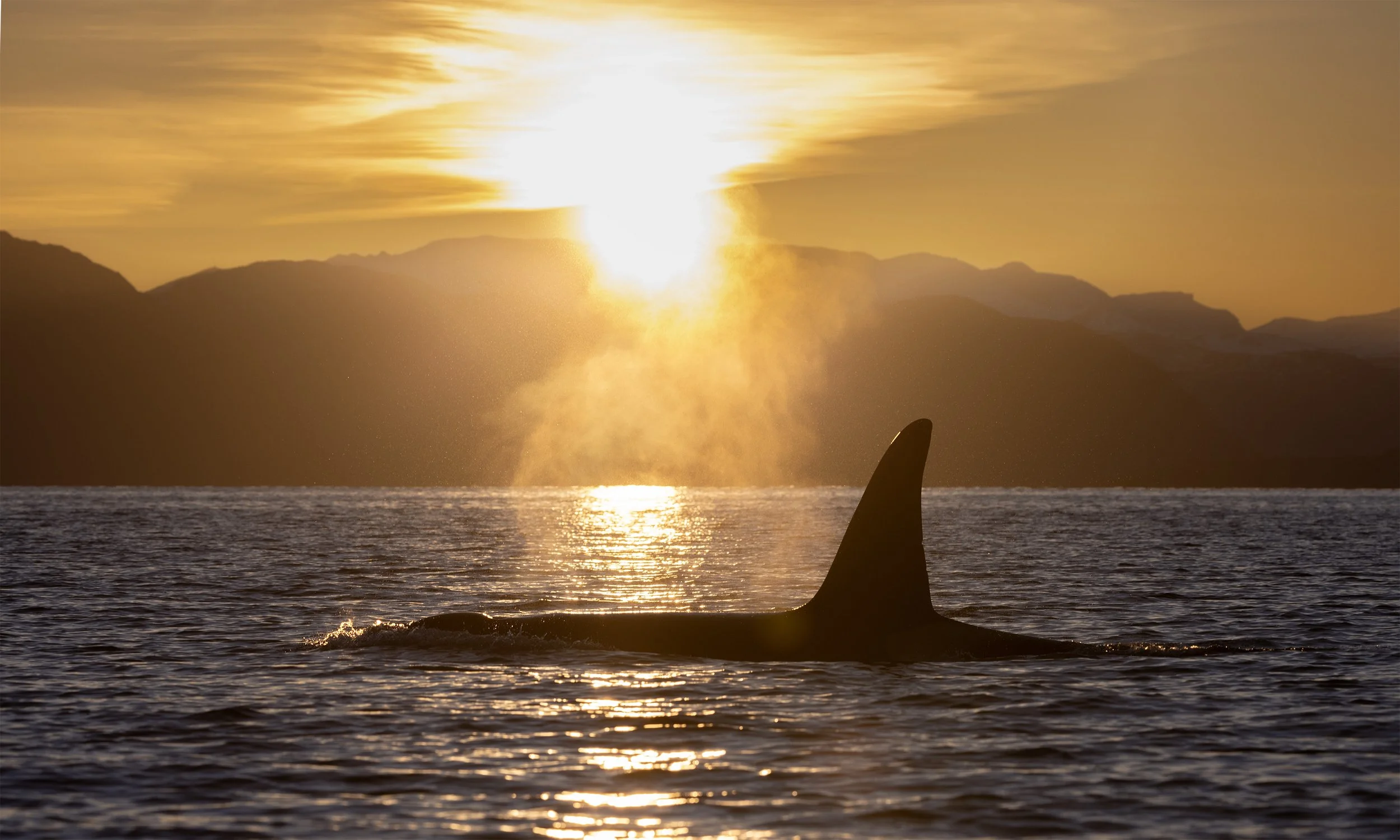
Image by Brad Roaman

That glass made them crazy… as it would any of us.

But when you meet them where they truly belong, in the open ocean, you realize just how wrong we’ve been about orcas.

We have nothing to fear from them. 

The only thing we should fear is living in a world without them.

The Sound of Letting Go... My Last Season with Gloria.

This one’s a tough one to write.

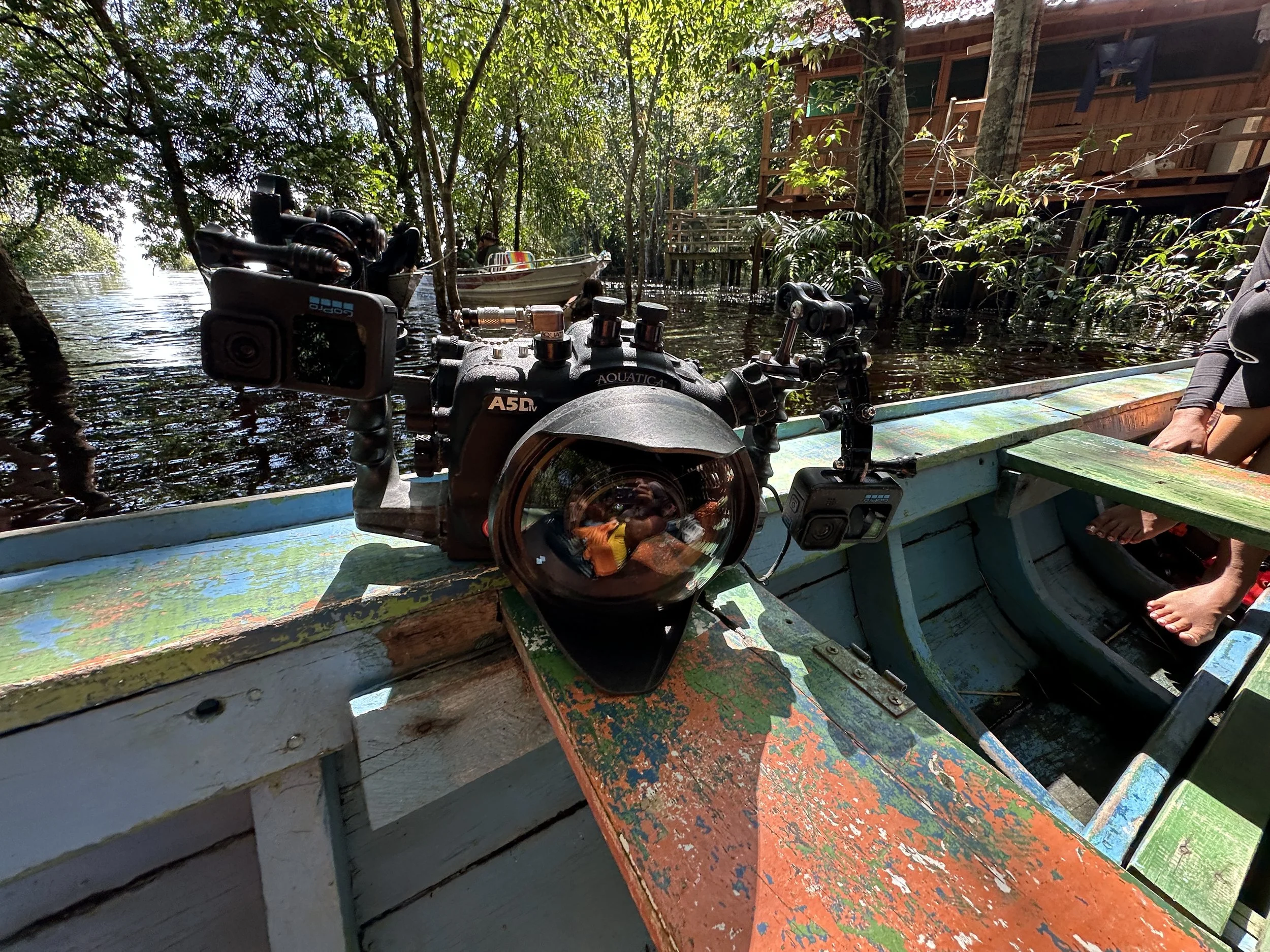
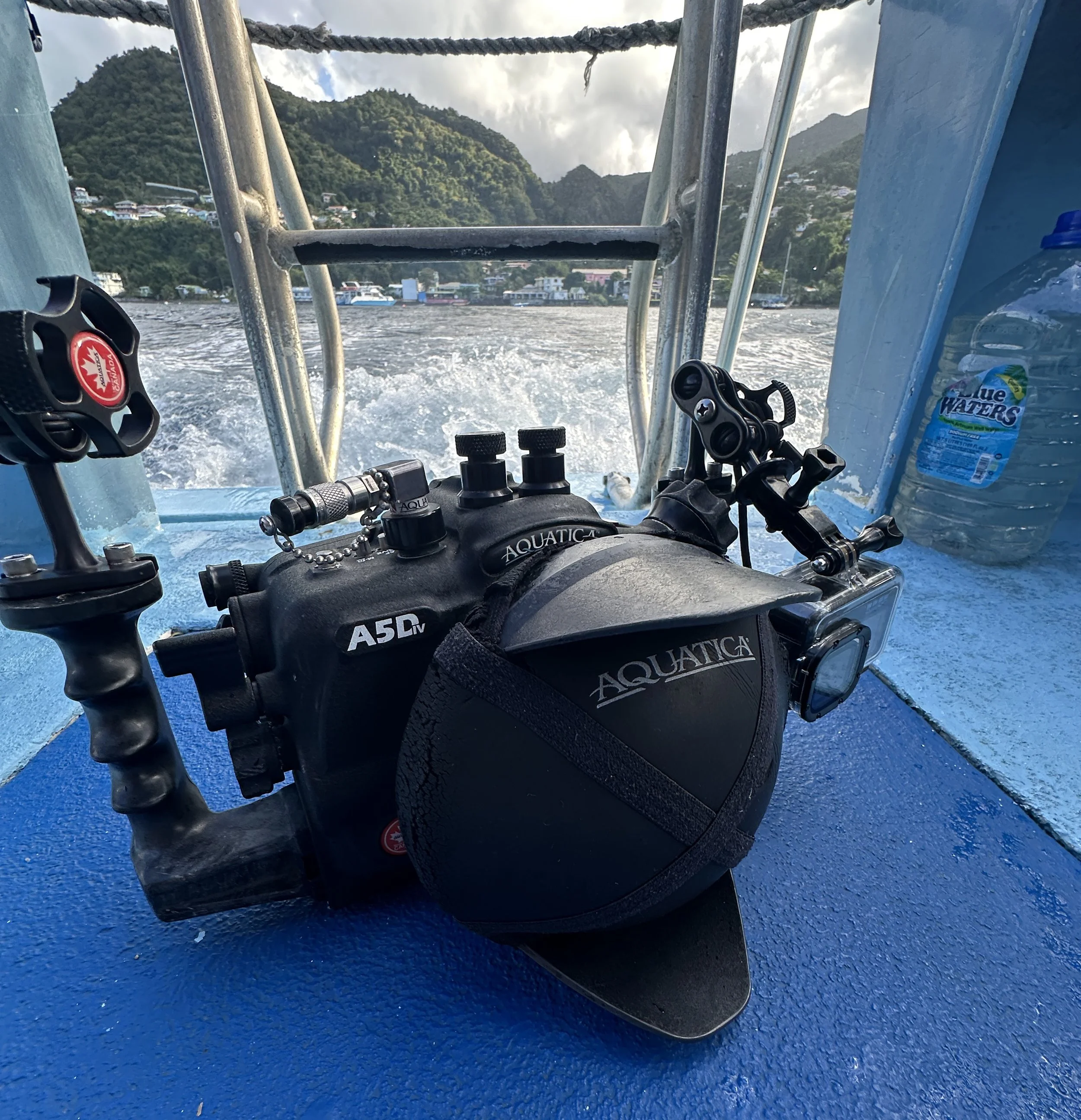
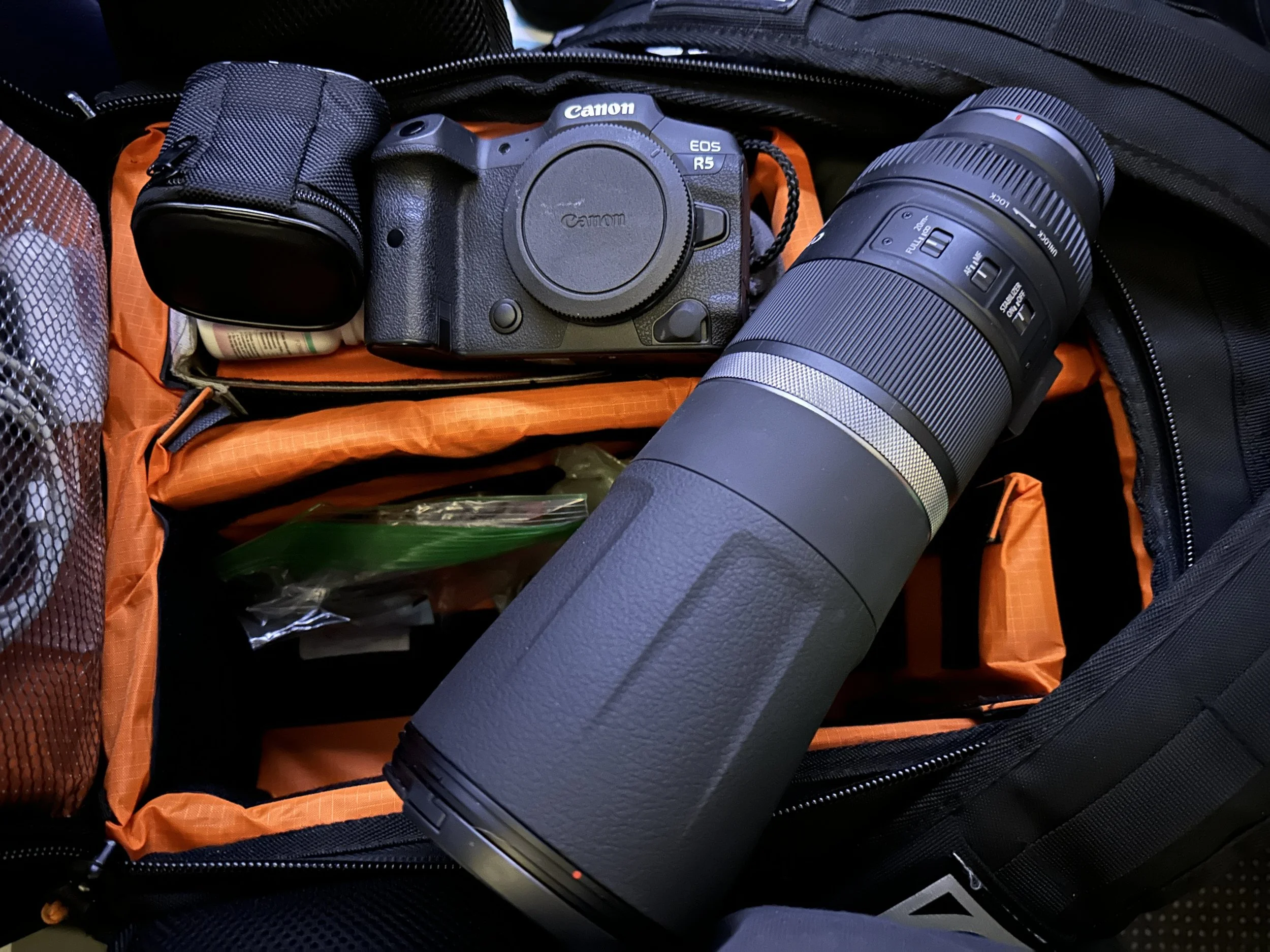
For ten years, my camera, Gloria, has been with me through everything.

Rain, salt, sand, freezing winds, murky waters, she’s been there for it all. 

Dependable. Solid. The kind of companion you trust when everything else around you is chaos.

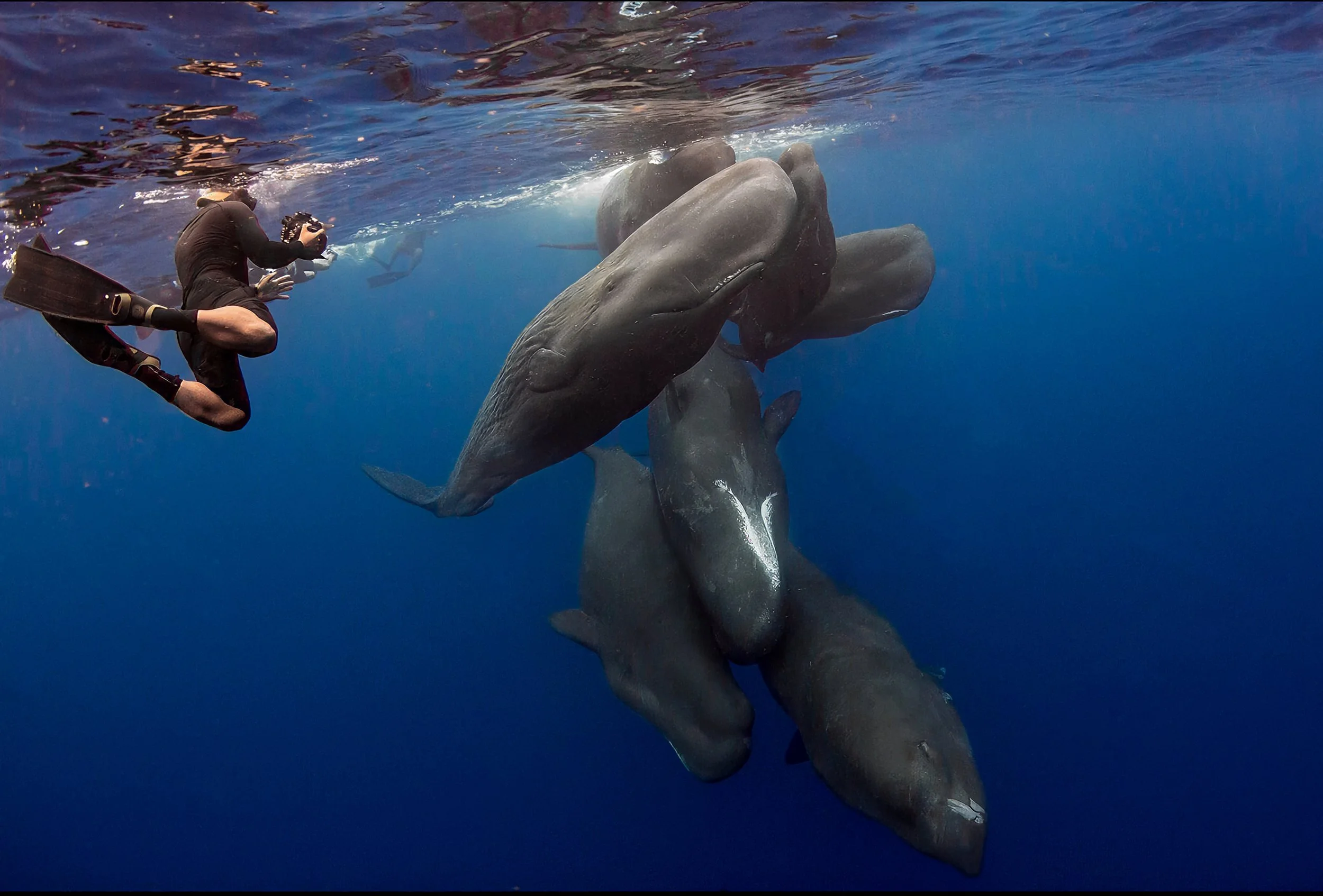
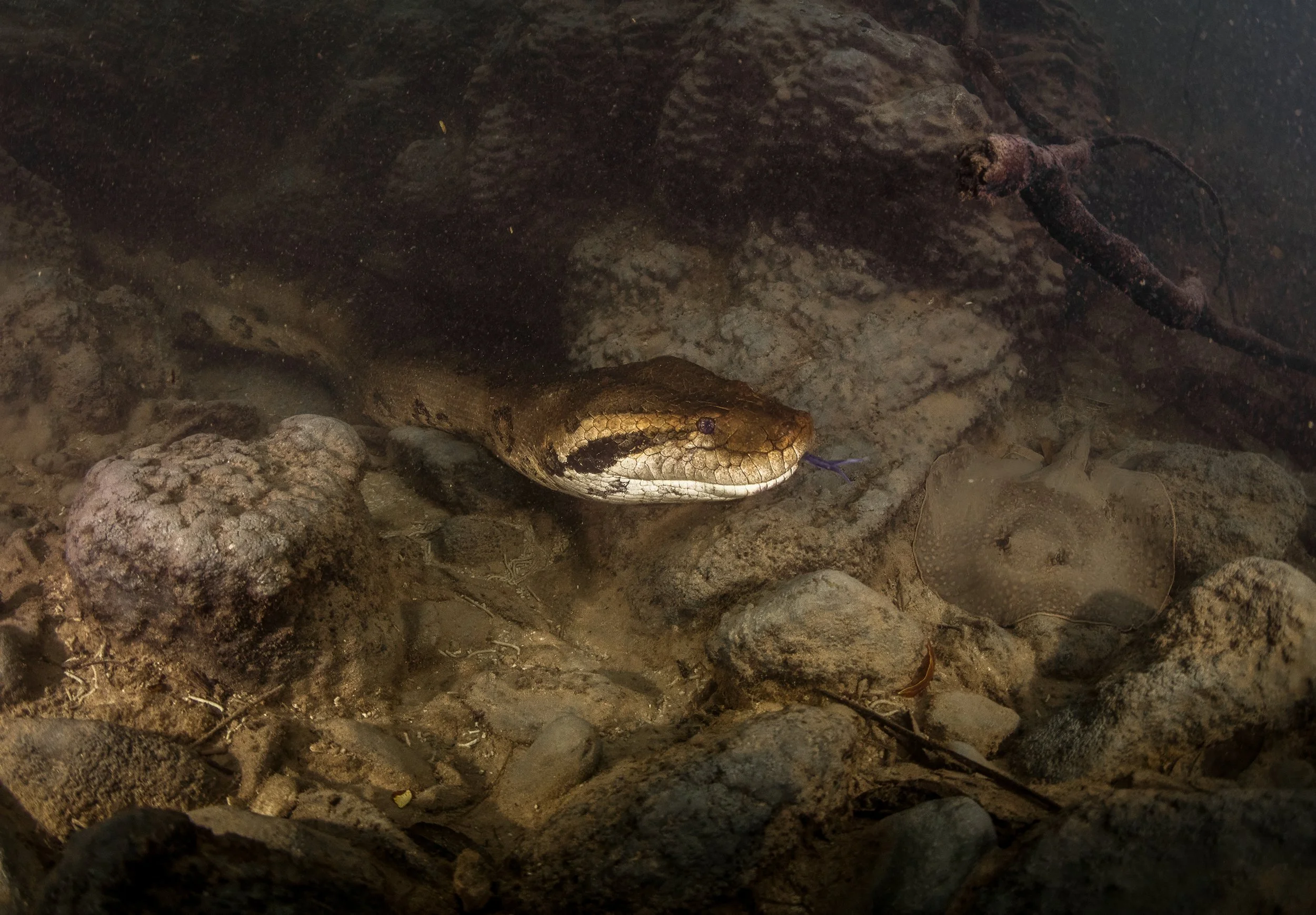
Every image I’ve shared over the past decade, every whale, shark, snake, and orca, came through her eyes. 

We’ve been everywhere together, and back again.

So even saying this out loud feels strange… but lately, I’ve been thinking about finally making the switch.

From my faithful DSLR to a mirrorless system.

And not for the reasons people might assume.

Sure, mirrorless cameras are sharper, faster, lighter. 

They handle low light beautifully and focus like magic. It’s a better system in almost every measurable way. 

But that’s not what’s drawing me in.

For me, it’s about silence.

When I step into the ocean, in rivers, in the Arctic, I’m stepping into another world. 

A world that existed long before me and doesn’t need my noise in it. 

My presence already changed behavior. Fish move differently. Dolphins will sometimes swim away.

I can’t control that.

But the one thing I can control… is the sound I bring.

Every click of Gloria’s shutter feels like a small echo through their world. 

A reminder that I’m still an intruder. 

I don’t belong.

Over time, I’ve started to feel that echo more deeply, like the wild is asking me to listen, not interrupt.

That’s where mirrorless calls to me.

Not because it’s the future of photography, but because it’s the future of how I want to photograph. 

Silently. 

It’s strange how your relationship with your craft evolves. 

When you’re young in it, you chase the moments, you want the perfect shot, the perfect composition, the proof that you were there.

But as time passes. You stop chasing, and start protecting.

You realize the most powerful images come when the wild forgets you’re even there.

Switching to mirrorless isn’t about upgrading my gear. 

It’s about lowering my impact.

It’s about aligning the technology with the respect I’ve learned to carry for the wildlife I photograph.

Still… this isn’t easy. 

Gloria has been more than just a tool. She’s been my voice when I had no words, my constant when everything else changed. 

She’s been the silent witness to so much beauty, heartbreak, and wonder.


But maybe this is how every great partnership ends, not with replacement, but with gratitude.

The wild deserves our silence.

And maybe this will be my way of giving it that.

For now, I’ll finish the 2025 season with Gloria by my side.

I have four more trips this year.

That is four more chances to tell our story together before the next chapter begins.

And when 2026 comes, maybe, just maybe, I’ll take that silent leap…If I can let her go.

When Not to Share: Protecting the Wild From Our Own Lenses

There’s a part of our job as photographers and guides that doesn’t get talked about enough… when not to share.

We live in an age where every image or video can go viral in seconds. 

A post, a tag, a location pin, they spread faster than we can imagine. And with that comes a strange consequence… the more we share, the less wild some places become.

I’ve seen it happen with my own eyes.

Places that once felt like magic, where we were the only boat for miles, now fill with crowds, cameras, and drones. 

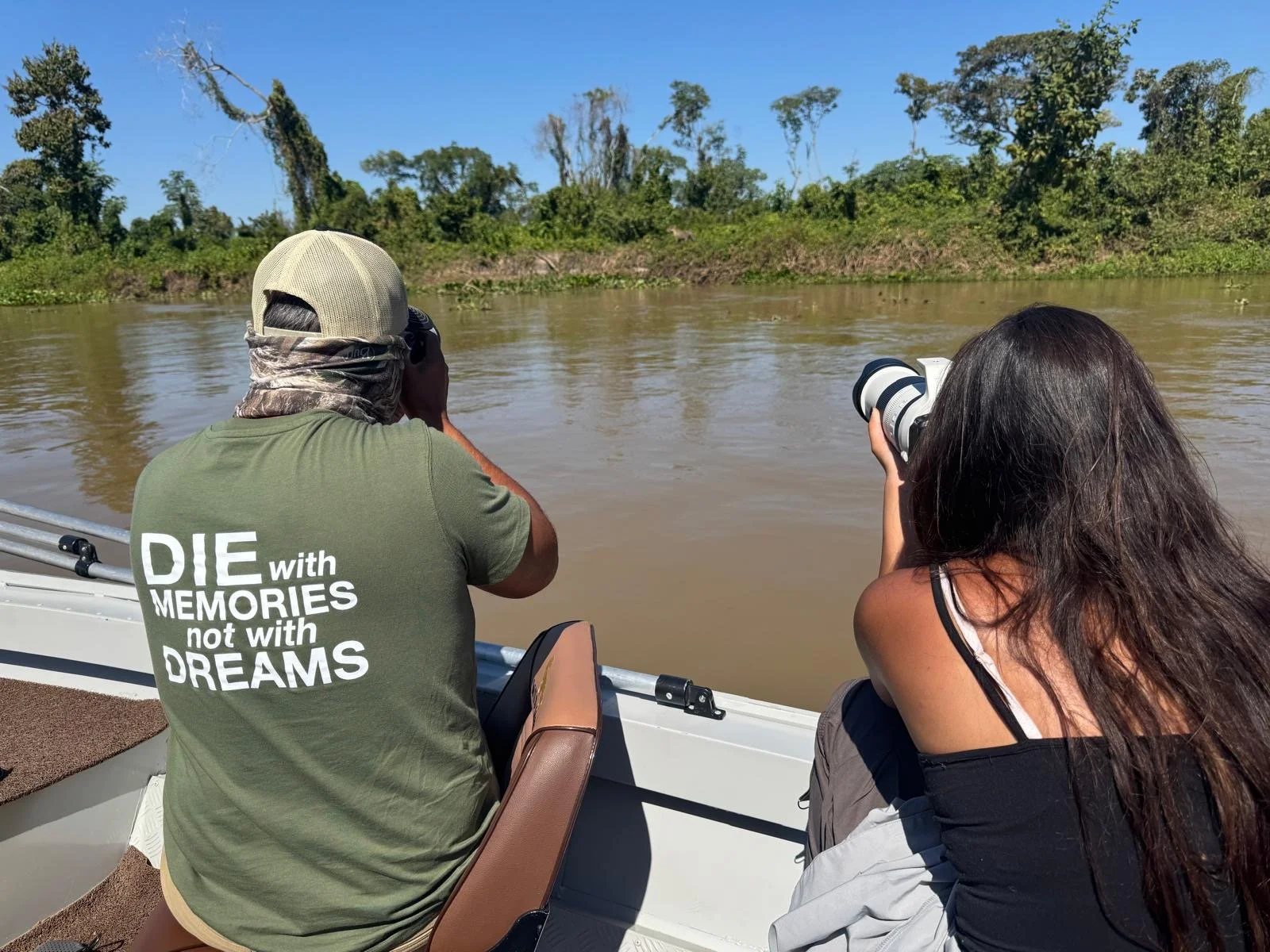
Pantanal, Brazil.

The quiet that once defined those places is replaced by engines, by pressure, by human presence.

Years ago, off Baja, I remember being completely alone. Just our boat, the ocean, and the animals. 

Now, the same waters are crowded with boats chasing the same story. 

And I get it, it’s part of what we do. It’s our job to tell the stories of these places, to show the world that they still exist, that they matter, that they deserve to stay wild for generations to come.

But I’ll be the first to admit, I am guilty of over sharing.

I’ve drawn too much attention to places that once felt sacred. 

My work has helped put them on the map, sometimes literally. And while I know my intention was good, that doesn’t erase the impact.

It’s a difficult truth to admit, but an important one.

Because when too many of us tell the same story, the story changes.

We mean well, but sometimes our love becomes pressure. Our storytelling becomes intrusion. 

Our presence, multiplied, can slowly erode the very thing that drew us there in the first place.

So I’ve learned:
Sometimes it’s okay to keep a secret.
You don’t have to tag the location.
You don’t have to explain how you found it.

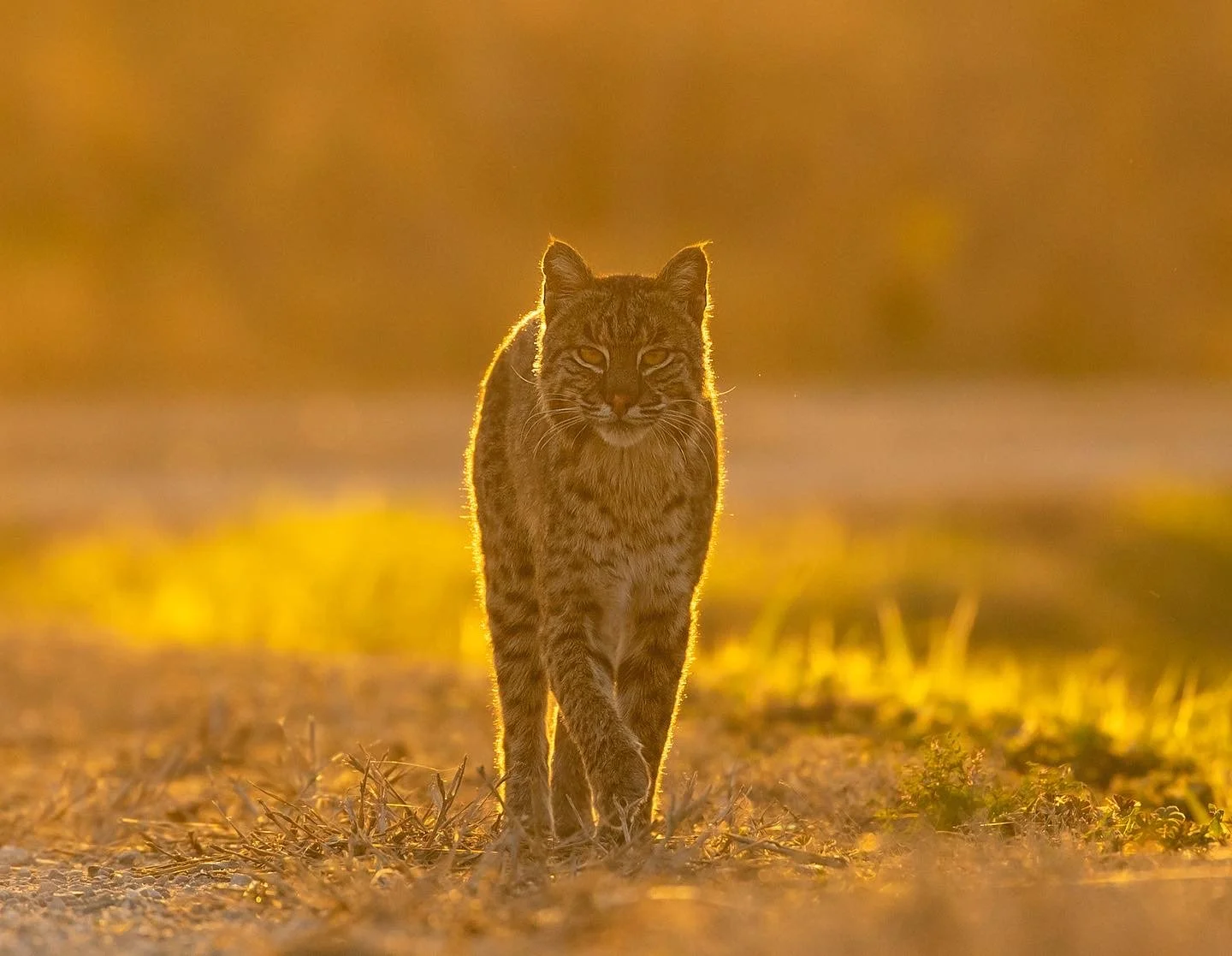
Florida bobcat… exact location undisclosed

You don’t have to post everything.

Some encounters should stay just between you, your friends, and the wild.

It’s not about hoarding or gatekeeping. It’s about protection. 

Because no matter how much we care, human attention changes things, especially fragile, sacred places that weren’t built to hold it.

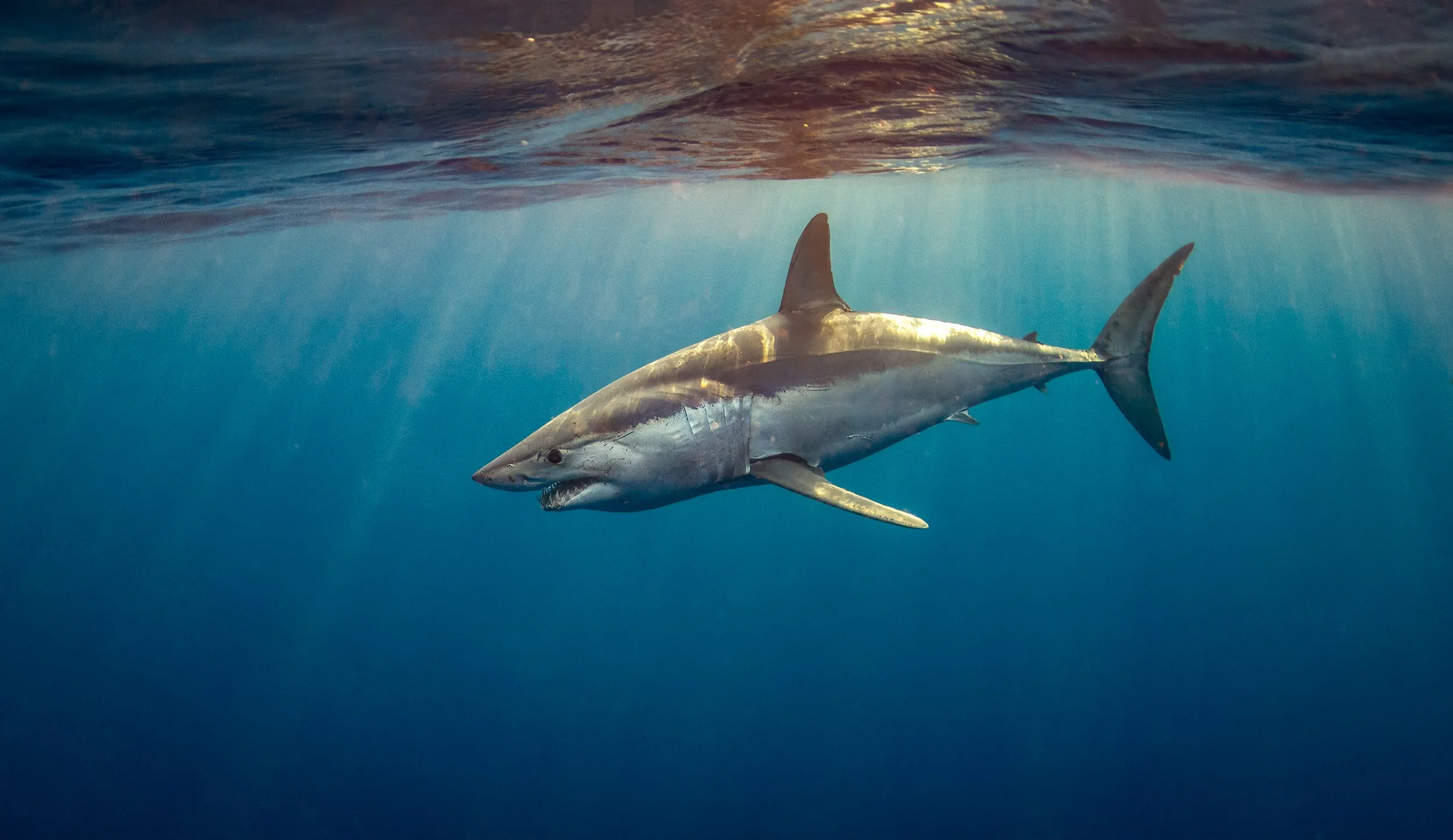
Giant Mako off California… exact location undisclosed.

I know no secret lasts forever. 

But for the few that do, do your part to keep them quiet, keep them safe, for as long as you can.

The world doesn’t need every detail… Sometimes it just needs your silence.


Thank you for reading our Blog.

*New Blogs posted 3–4 times a week.
(sometimes more.)
Follow along for more stories, trip updates, and raw moments from the wild.

Chasing Sunrises and Sunsets... A Goal Worth Living For

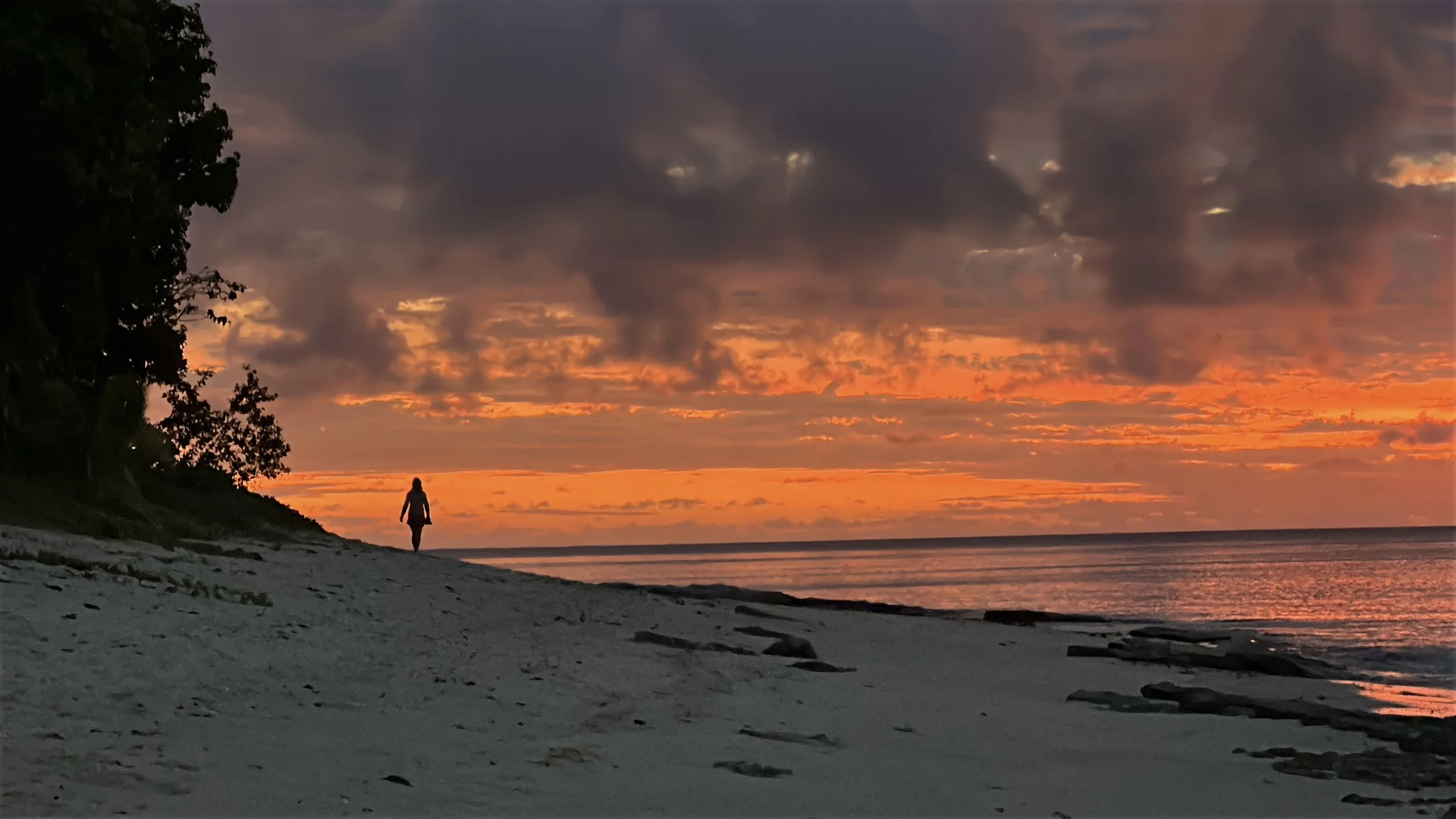
There are some things in life you can never have too much of… and at the top of that list are sunrises and sunsets.

Every dawn feels like a beginning.  Every dusk feels like a closing chapter. 

And no matter how many I’ve seen, from the Arctic to the jungles of Brazil, each one leaves me quiet, grateful, and searching for words to describe it.

The truth is, you can never watch too many. 

Each one is its own story, the way the colors scatter differently across oceans, the way a mountain range swallows the last light, the way silence seems to hold its breath just before the sun tips away.

And it isn’t only when I’m traveling. 

Even when I’m at home, in the middle of the city, if I see the sky, rich with golden light, I’ll find myself racing around, trying to find a clear view where I can stop and watch it unfold. 

For me, that moment is too important to miss.

Maybe that’s something worth setting as a life goal… to seek out unique corners of the world, not just for the wildlife, but for the skies that bookend each day. 

Imagine collecting sunsets the way some people collect stamps. 

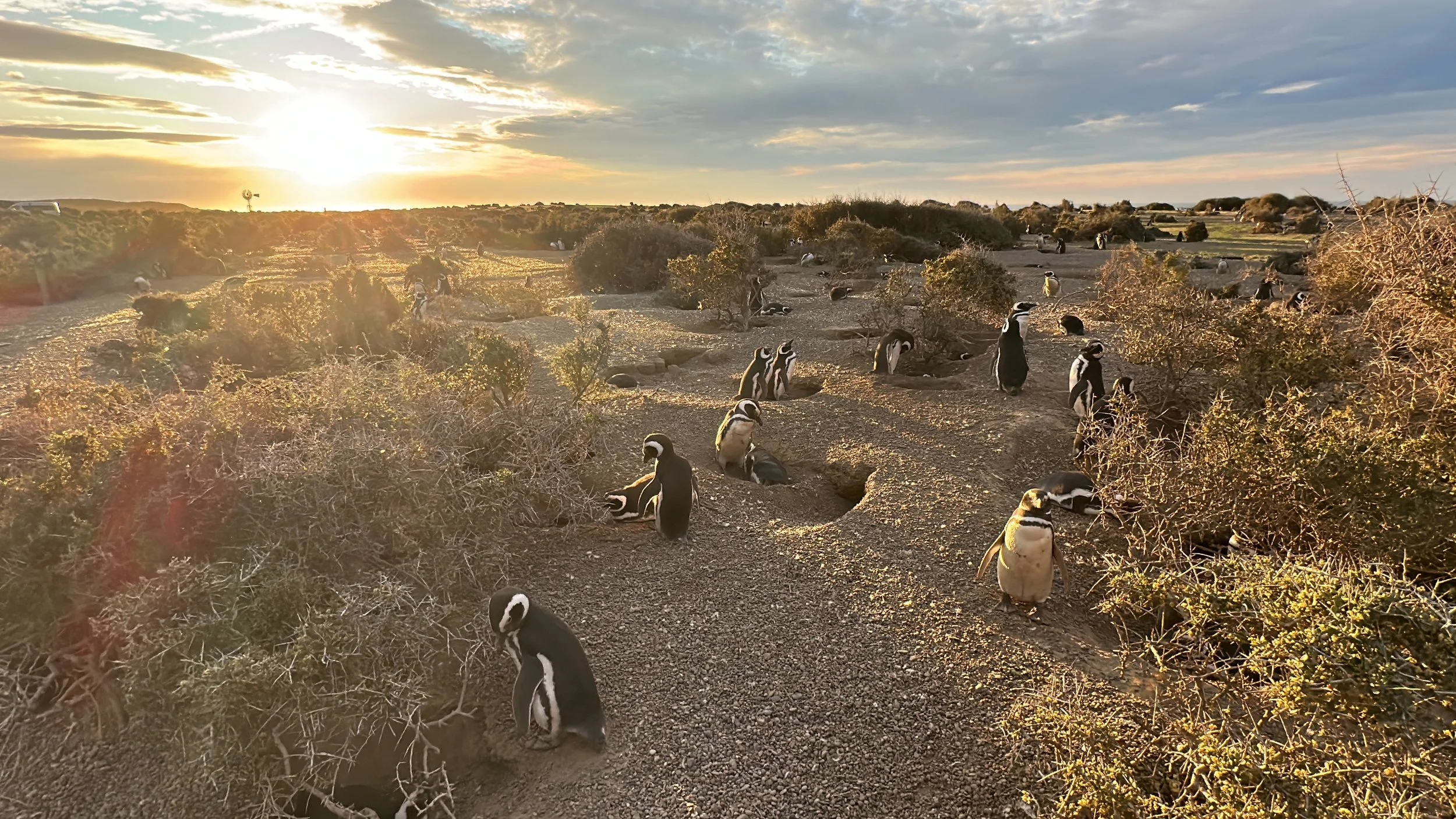
Patagonia, Tonga, Alaska, Baja, the Pantanal. A library of skies burned into memory.

What makes them powerful isn’t just the view, but the reminder they carry, no matter where we stand, no matter how much is going on in our lives, the world still turns, still paints the horizon, still offers us a moment to pause and give thanks.

So yes, chase the whales, the jaguars, the bears.

But also chase the skies. 

Because one day, long after the adventures blur together, it’s that momentary light you’ll remember, the way it painted the world… and the way it painted your soul.

The Double-Edged Sword of Wildlife Photography

Wildlife photography has given me some of the greatest moments of my life. 

But it also comes with a truth I can’t ignore… most animals want nothing to do with us.

When I lift my camera, I know I’m stepping into their world uninvited. 

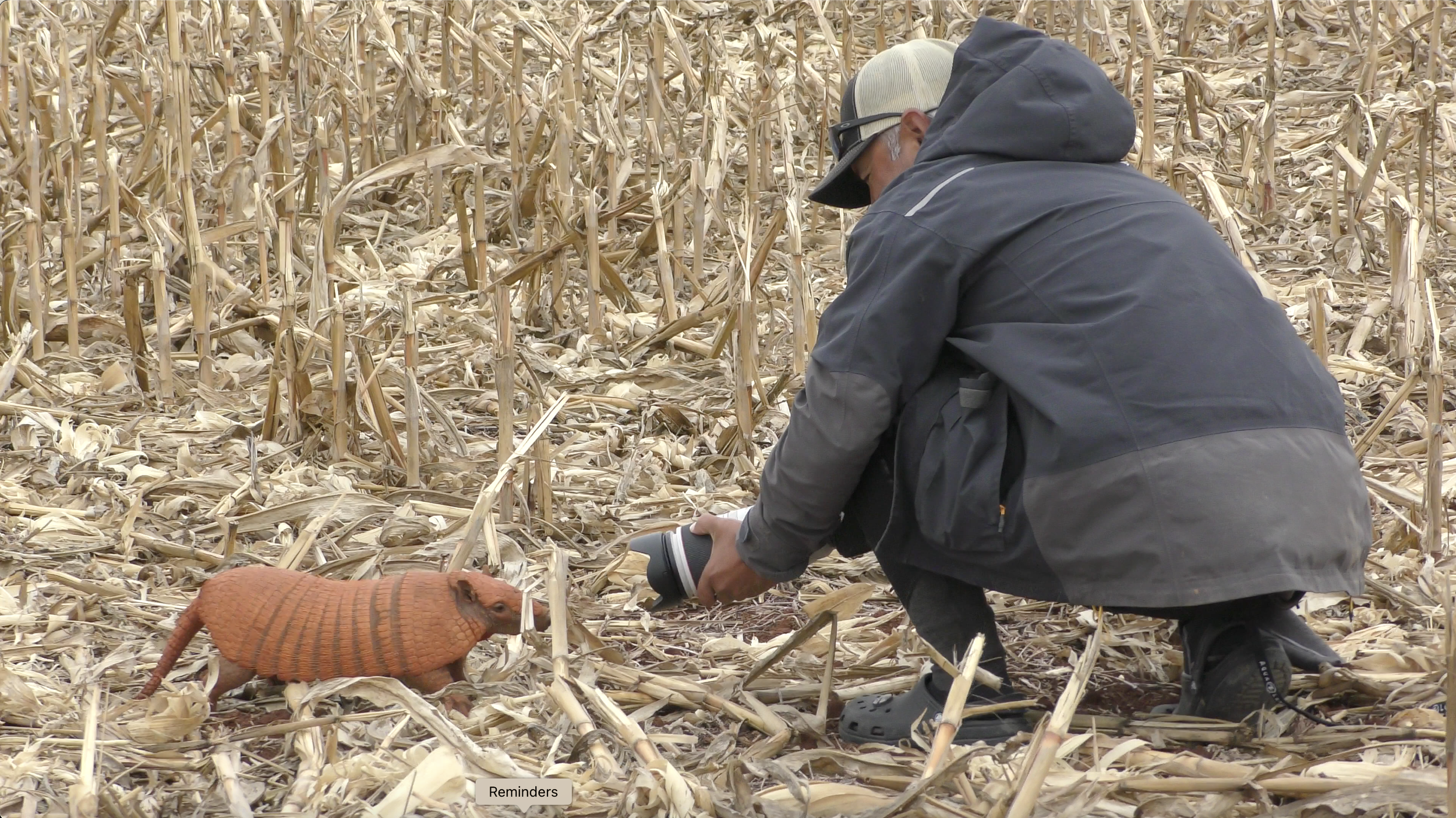
Sometimes, I can feel it, the tension in a shark’s muscles, the way an anteater pauses mid-step, the coyote’s nervous yawn. 

These are signs that my presence isn’t welcome. 

And when I capture an image in that moment, it feels selfish. It feels like I’ve taken something without permission.

There are times it even feels dirty, like I’ve frightened an animal just for the sake of a photograph.

That doesn’t feel like conservation. That doesn’t feel like helping.

And yet… I keep pressing the shutter.

Because I also know that these images tell stories. They travel beyond the forest, the river, the ocean. 

They remind people that these animals exist, here and now, in a world where so much wildness is disappearing. 

An image can plant a seed of wonder, of empathy, of protection.

And when I see the animals reacting, when I sense their stress, I take just a couple of minutes to capture a few images, then I leave them alone. 

Even if I know we could stay longer, even if no one else notices their unease, I feel it. 

I choose to walk away. 

My hope is that those few images will reach the right people, and maybe inspire the kind of change that protects both the animals and the wild places they call home.

I’ve also seen the other side… the encounters where the animal doesn’t mind.

Where they tolerate me, even seem indifferent to my presence. Those moments feel clean, honest, balanced. 

They are a gift, not theft.

So I live in the tension, between selfishness and service, between intrusion and storytelling. 

It’s the double-edged sword of wildlife photography.

And the truth is this… the wild doesn’t owe me anything. 

But I owe it everything!

So if I can turn my imperfect encounters into stories that help protect them, then maybe, just maybe, the scale tips back toward giving more than I take.

Travel Grace... Keeping Your Cool in Airports

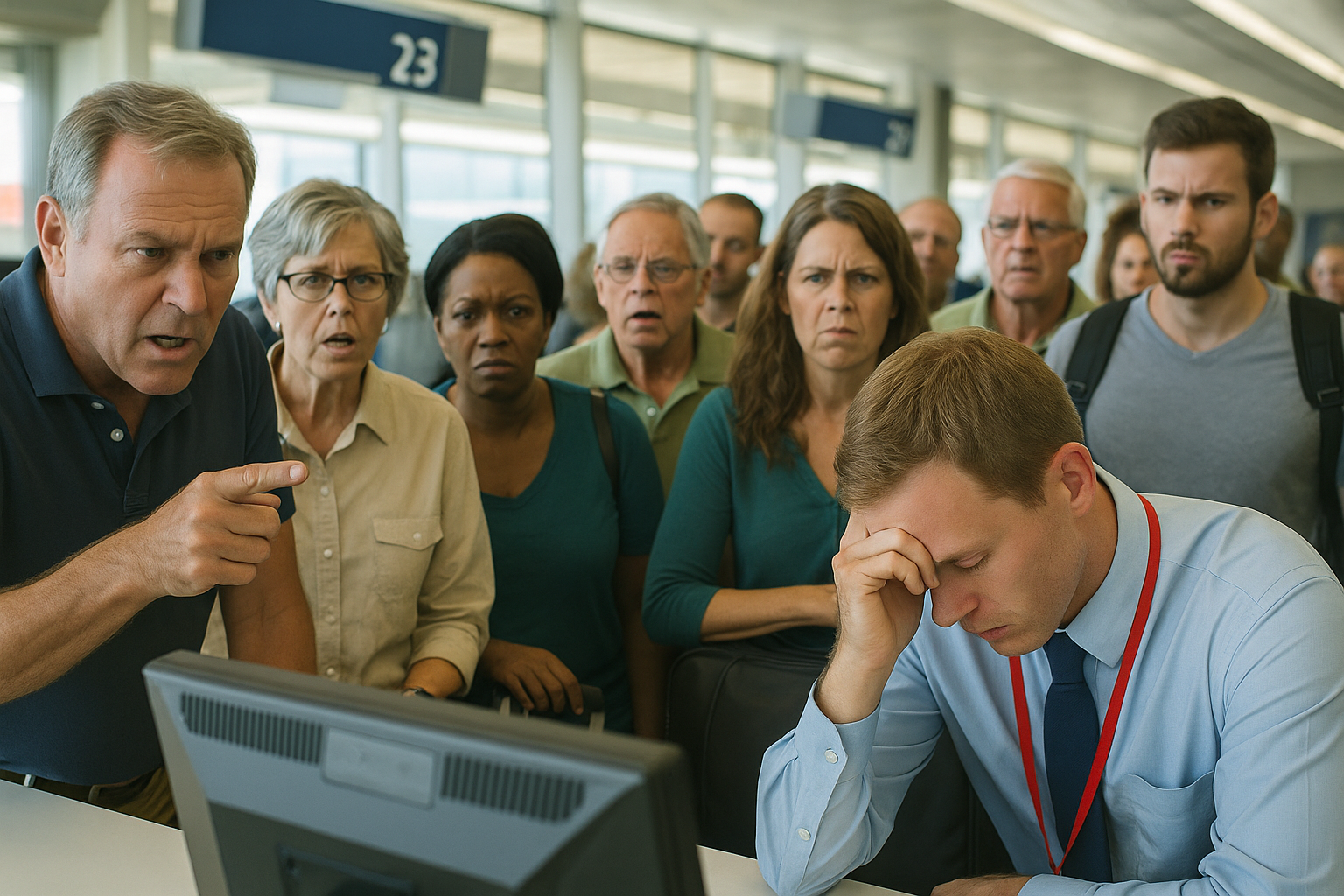
Airports test people. Lost luggage, delayed flights, lines that never seem to move, it’s easy to lose patience. 

But the truth is, the way we respond in those moments can shape not only our own experience, but also the energy we bring to everyone around us.

When things go wrong, it’s tempting to see airline staff as the enemy. 

But here’s the reality… they aren’t canceling flights on purpose, and they aren’t misplacing bags just to make your life harder. They’re doing a job, often under pressure, and with very little thanks. 

For many, it isn’t glamorous work. It’s stressful, repetitive, and sometimes thankless.

If you keep that perspective in mind, it becomes easier to respond with empathy rather than anger. 

A simple “thank you, I appreciate your help” can mean more than you realize.

We are lucky… Traveling for wildlife, or for any adventure, is a privilege, not a requirement. 

Even if our souls feel like they require it.

To see jaguars in the Pantanal, polar bears on the ice, or sharks in clear blue water means packing your bags and traveling to places that are often far, far, away.

Sometimes that means… a missed connection, or a lost bag, or the worst… a broke down plane.

And really, if something in the plane is going to break, we would all rather it be while it is still on the ground, where it can be repaired.

So instead of focusing on what went wrong, shift to what’s waiting at the end of the journey.

 The landscapes, the animals, the chance to be somewhere wild and alive. 

A delay or a missing bag is frustrating, yes, but it’s also temporary.

The magic that pulled you to travel in the first place is still waiting for you.

Here’s the truth… you’ll get far more out of your adventure if you carry gratitude instead of frustration. 

Remember that the person behind the counter is human. 

They might be having a bad day too. They might be dealing with things beyond work.

Travel, especially for wildlife, isn’t meant to be perfect. It’s meant to be an experience. 

The missed flights, the lost luggage, the delays, they’re part of the journey.

It’s the price we all might have to pay for stepping outside of an ordinary life.

And when you finally arrive, you won’t be thinking about the airline counter.

You’ll be thinking about how lucky you are to be here, in this exact moment, connected to something wild and real.

So next time you’re in that situation… Pause. Take a breath. Offer kindness. 

Because, every delay is just another step in the dance that carries you toward the magic you are looking for.

Safe Travels Everyone!


*New Blogs posted 3–4 times a week.
(sometimes more, unless we are on an expedition, then we write trip reports, instead of blogs.)

Bugs Are Part of the Deal... The Reality of Traveling Wild

Let’s talk about something not-so-glamorous… but 100% real.

Bugs.

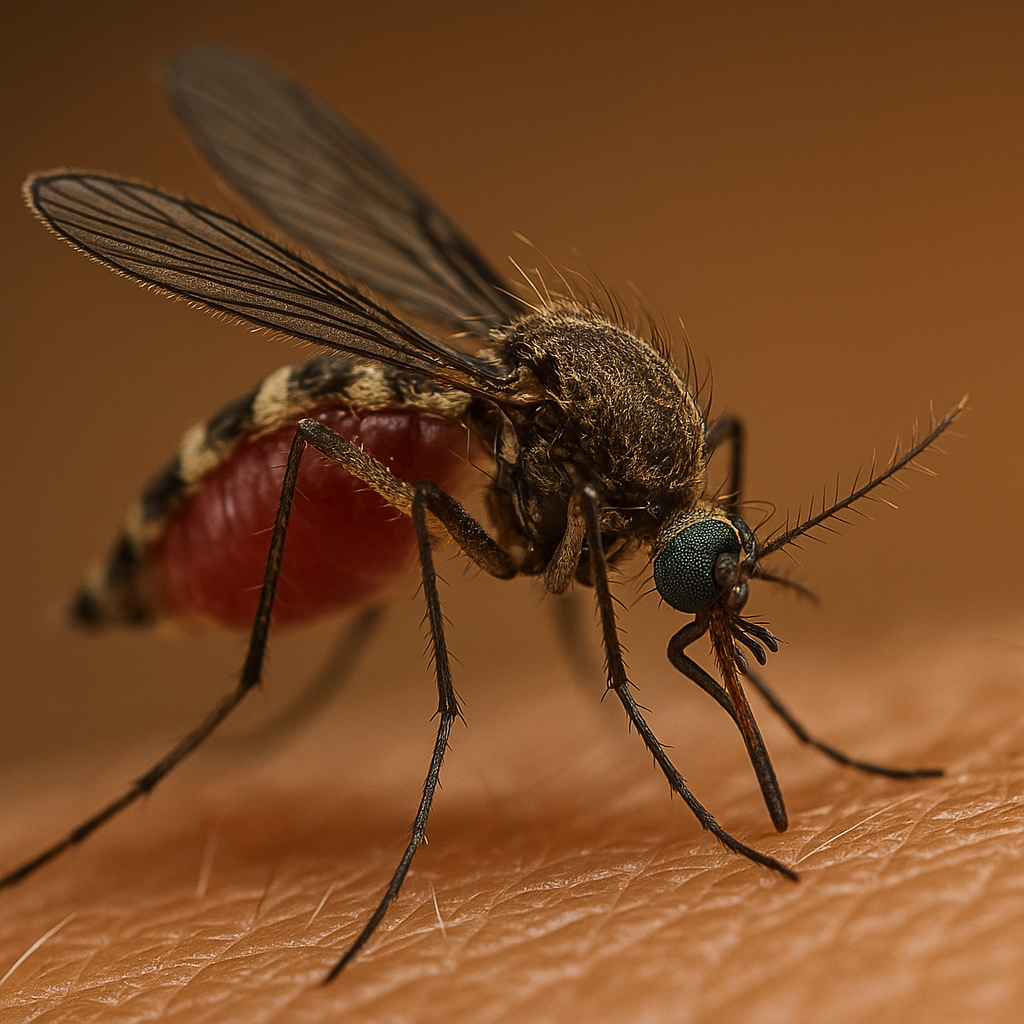
If you’re going to travel to wild places, jungles, forests, rivers, coastlines, bug bites are part of the package.

Whether you’re photographing gorillas in Uganda, hiking through South America, snorkeling in Mexico, or camping out anywhere near the equator, you’re going to encounter some kind of insect along the way.

And they’re not just an annoyance, some of them bite, some of them itch like crazy, and some can carry things that can ruin your trip, or worse.

The Usual Suspects

Depending on where you’re going, you could run into:

  • Mosquitoes (some carry malaria, dengue, or Zika in certain regions)

  • Sand flies (they’re small, sneaky, and can cause major itching)

  • Chiggers (the itch hits later, and hits hard)

  • Bed bugs (yes, they still exist)

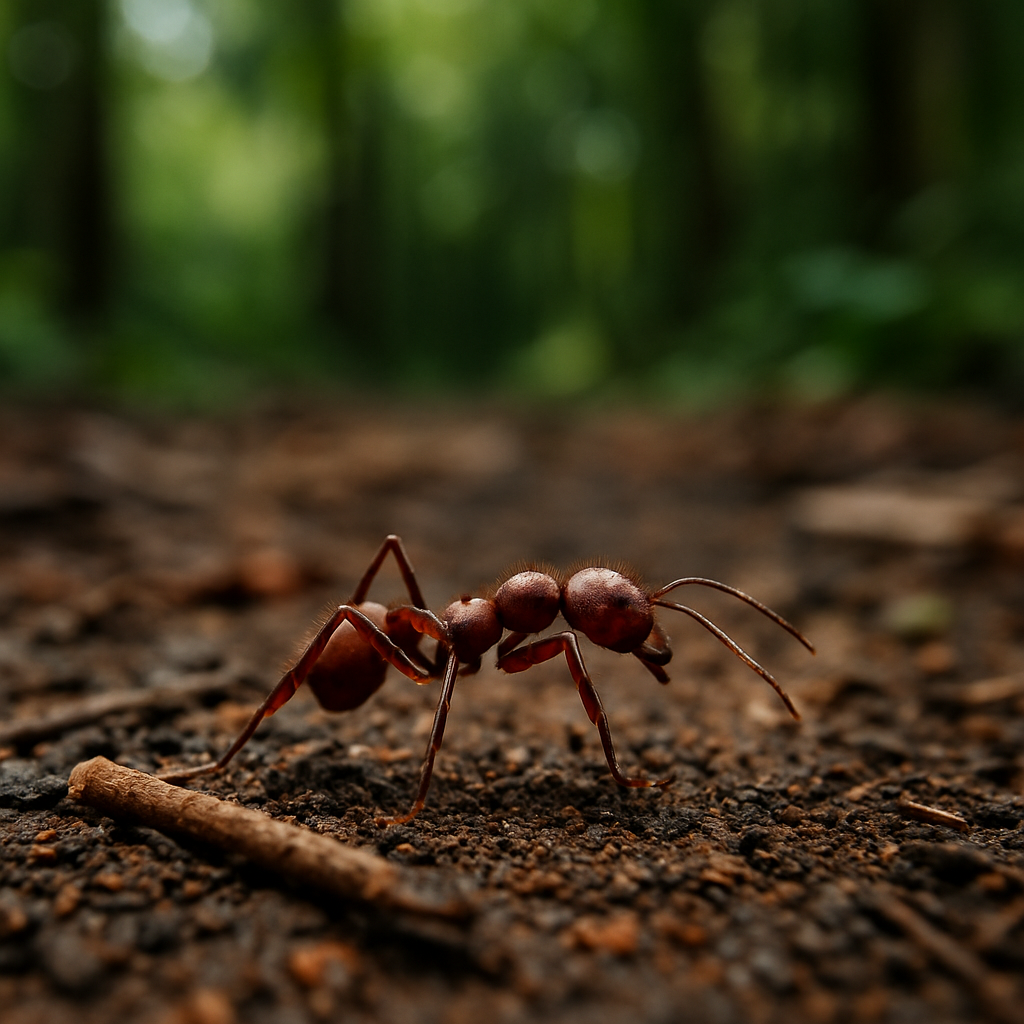
  • Ants (fire ants in some parts of the world will make you remember them)

  • And then there are just your everyday mystery bites that show up uninvited.

What You Should Always Pack

I recommend this to all my guests, and I live by it myself.

There are a few essentials that should have a permanent home in your travel bag:

  • Bug repellent (DEET, Picaridin, or natural alternatives like lemon eucalyptus)

  • After-bite creams (calamine, hydrocortisone, or ammonia-based sticks)

  • Antihistamines (Benadryl, Allegra, or your go-to allergy relief)

  • Fungal cream (for the inevitable foot funk that comes with tropical humidity)

  • Antibiotic cream (just in case a bite gets infected)

  • Itch wipes or spray (for quick on-the-go relief)

Don’t wait to buy this stuff after you land. 

You’ll thank yourself later.

This isn’t about fear.
It’s about respecting the places we step into.

If you're traveling to wild regions, where nature still rules, the insects are part of that world. 

They're not trying to ruin your trip. 

They're just living their life… and we happen to show up.


Let’s not leave out one of the most annoying, and potentially dangerous, members of the bug world… ticks.

These little hitchhikers are quiet, sneaky, and often go unnoticed until they’re already latched on.

You’ll find them in grassy areas, forests, along hiking trails, and even in places you wouldn’t expect, especially in temperate and subtropical zones around the world.

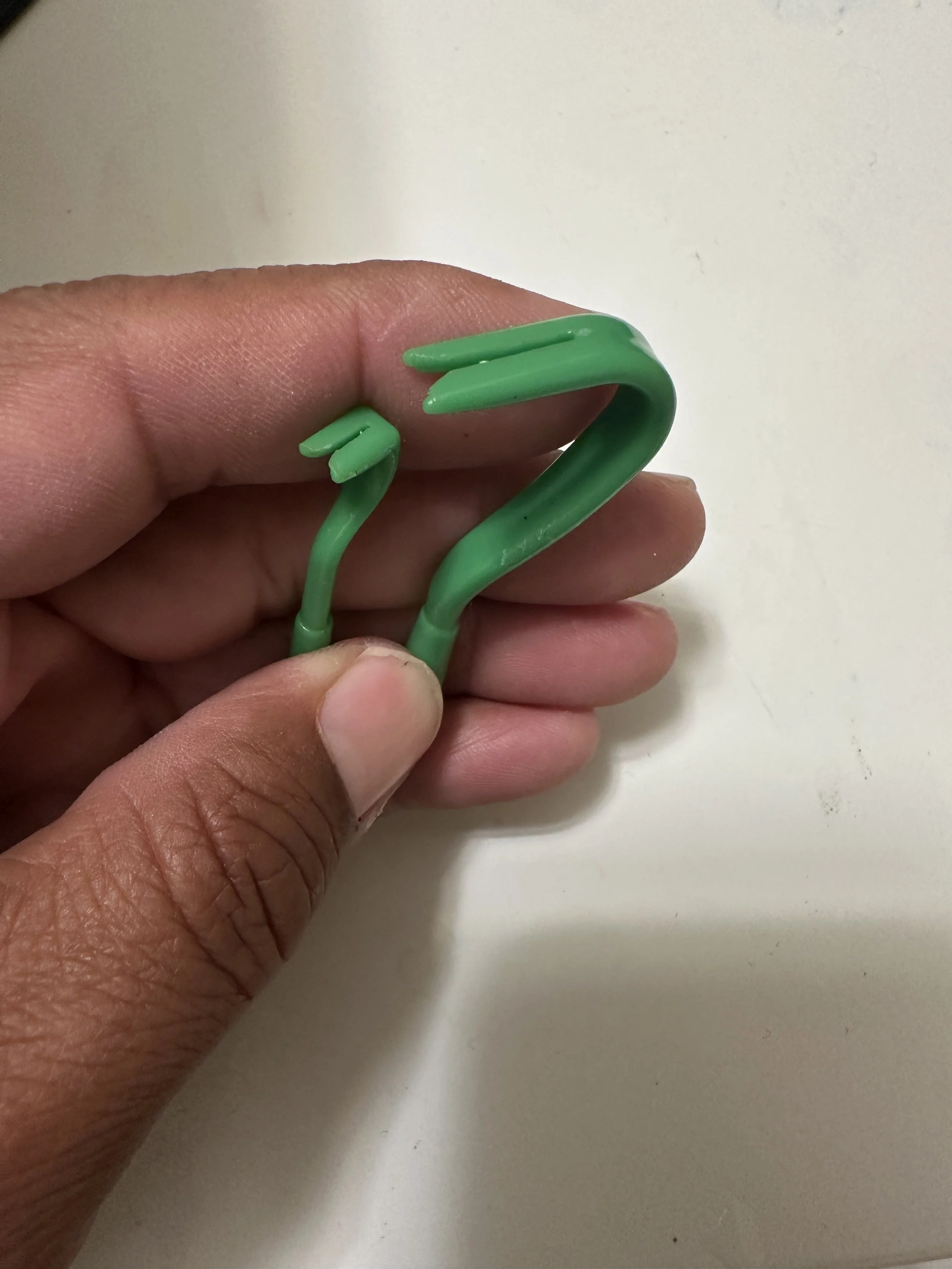
Tick removal tools I keep in my toiletry bag.

Some ticks are just annoying.
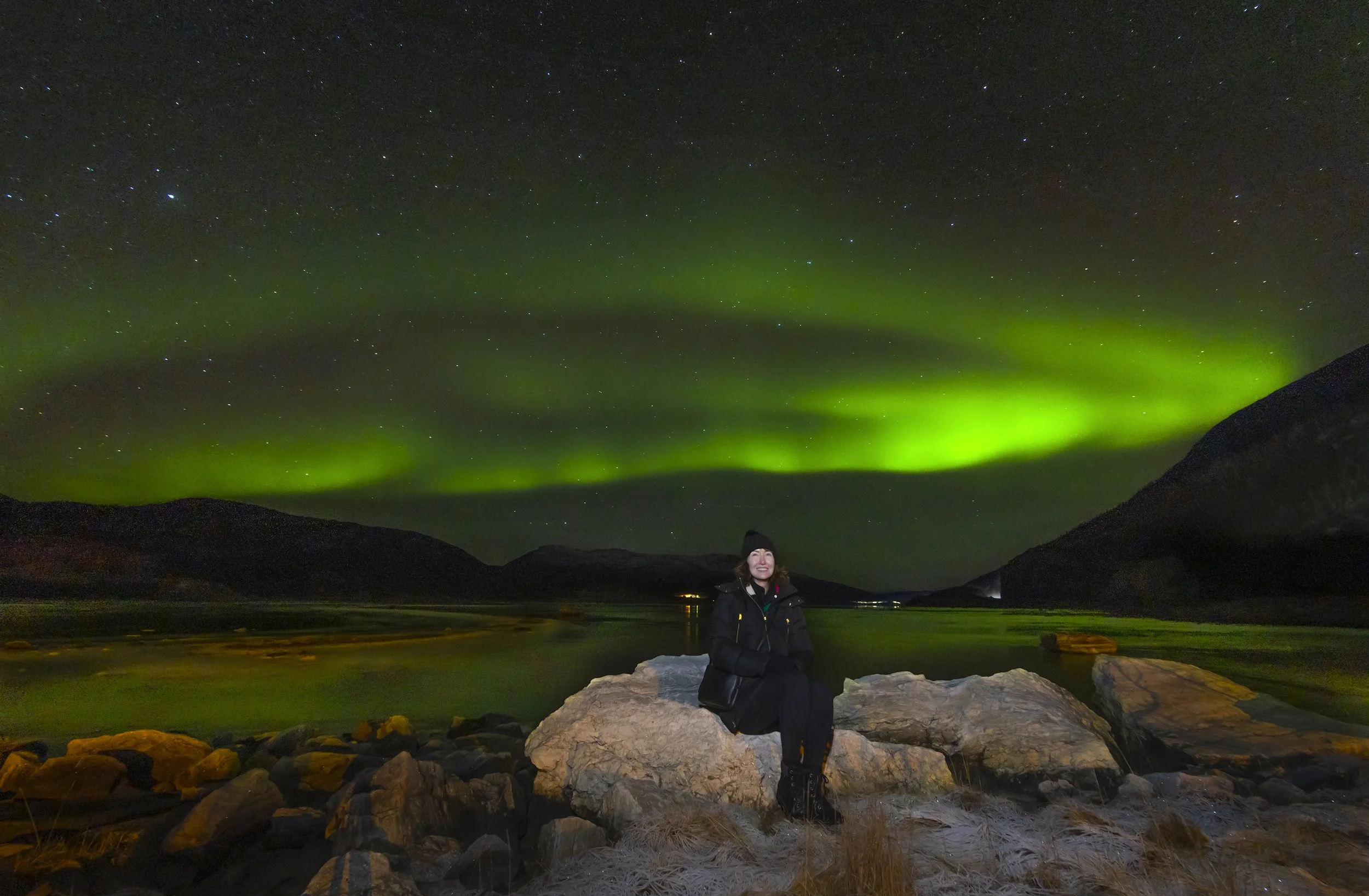
Others carry serious illnesses like Lyme disease, Rocky Mountain spotted fever, or tick-borne encephalitis (depending on the region).

Pro tip:

  • Wear light-colored clothing so you can see them easier.

  • Tuck your pants into your socks (not stylish, but it works).

  • Always do a tick check at the end of the day, especially if you’ve been hiking, sitting in grass, or brushing through thick vegetation.

And yes, add tick removal tools to your bag. Just in case.

Bug bites are just part of the deal.

The trade off for adventure, for seeing animals in their world, and for going where few others do.

A few itches are worth the experience.

But being prepared is what keeps the trip focused on wildlife and wonder, not scratching and scrambling for a pharmacy.

But with the right tools, they don’t have to be more than a minor annoyance.

So the next time you're packing, make space for your bug gear kit.

Right alongside your camera gear, binoculars, and passport.

Trust me… Your skin, and your sanity, will thank you.


Thank you for reading our Blog.

*New Blogs posted 3–4 times a week.
(sometimes more.)
Follow along for fresh stories, trip updates, and raw moments from the wild.

The Journey So Far...Summer 2025 in the Wild

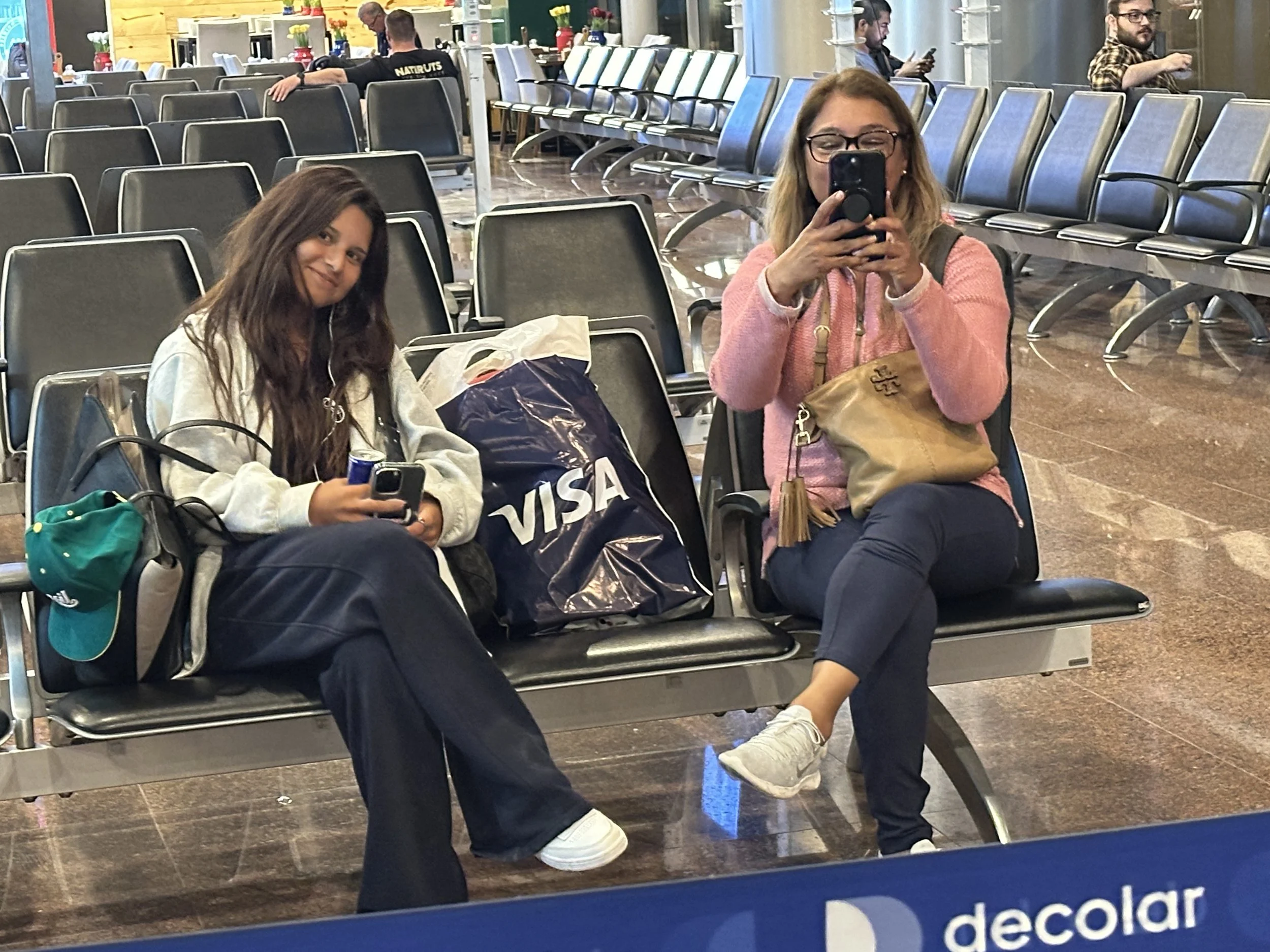
Mari and Sophia my travel buddies during the first leg of this trip.

It’s been a nonstop run across some of the wildest, most magical places on Earth, and I wouldn’t trade a second of it.

This summer began in the warm, blue waters of Playa del Carmen with a few days of scuba diving in search of sea turtles.

From there, We moved straight into our whale shark season off Isla Mujeres.

We shared time with our guests, swimming alongside the gentle giants as they fed in calm Caribbean waters.

Well sort of calm, the first two days the weather was a bit rough.

Right after that, Mari, Sophia and I flew straight to Brazil.

First to the Amazon, where we met up with our guests and spent time with the exotic pink river dolphins.

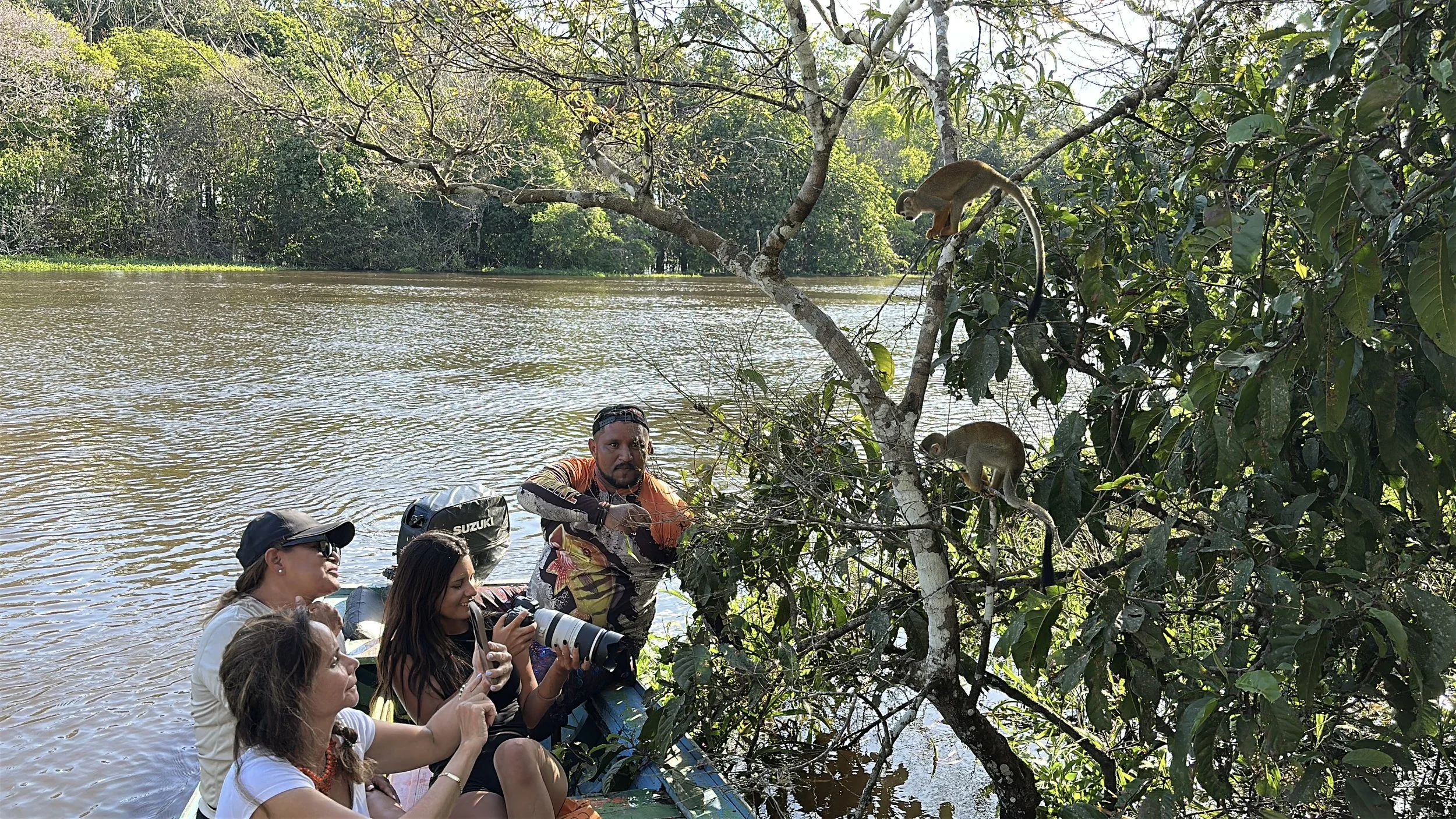
Our afternoons were spent seeking out three toed sloths and monkeys.

Then down to the Pantanal for an exploratory trip to look at the jaguars during the wet season.

It was fast. It was a lot of fun. And it reminded me why I do this.

After Brazil, I had to say goodbye to Mari and Sophia, who headed home while I continued north alone.

Those goodbyes never get easier.

Traveling with my family, even for a short while, adds depth and grounding to the journey.

But the next leg was calling.
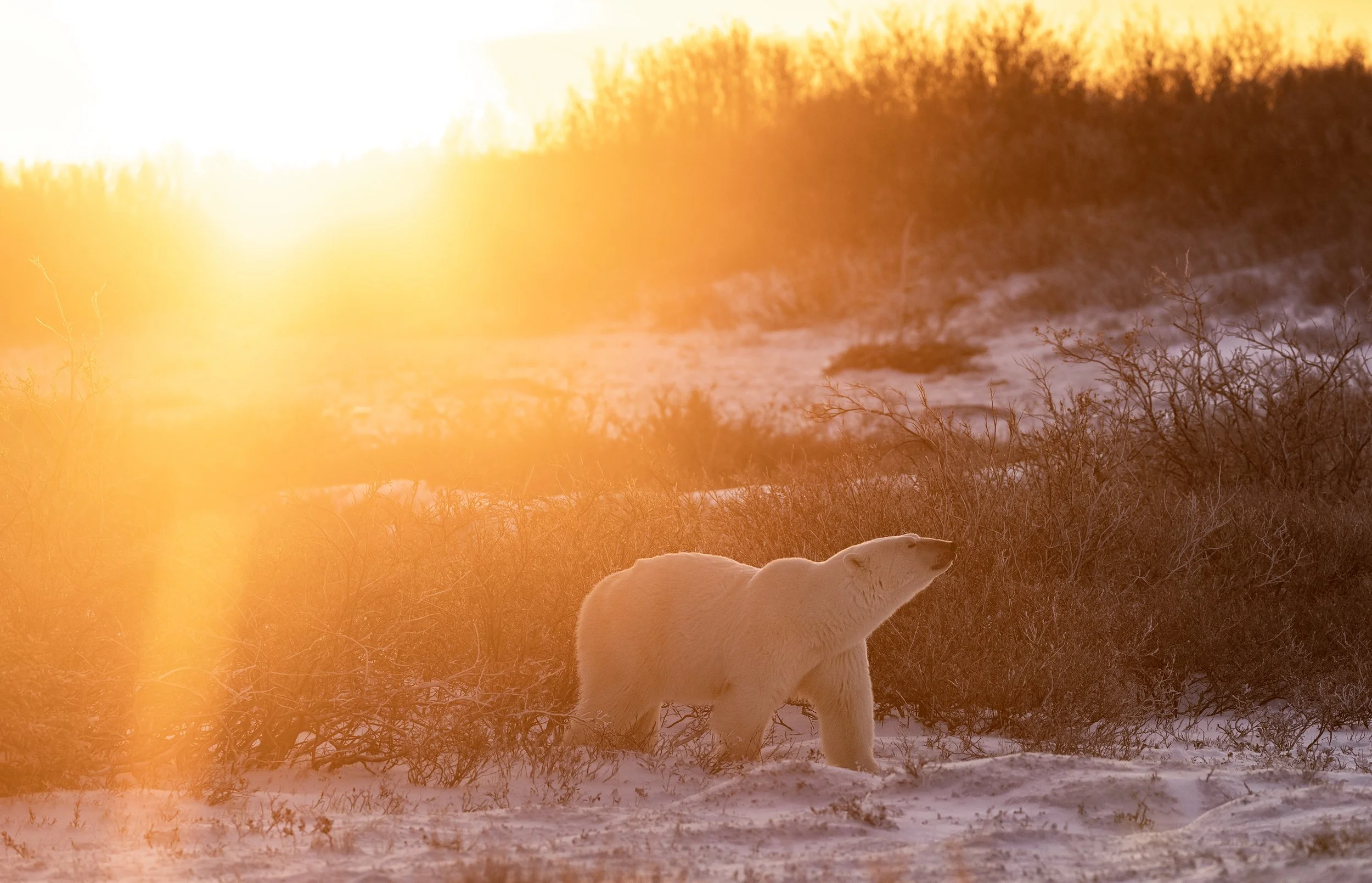
Now, I’m writing this from Canada, with a morning flight to Churchill, where the next chapter begins… belugas and polar bears.

It’s exhausting, yes.

But this work, this life, this connection to the wild, I take none of it for granted.

The magic has been nonstop, and every day out here deepens my gratitude.

We do this not just to experience these wild places, but to share them, through stories, images, and the chance for others to come along and feel it for themselves.


Thank you for reading our Blog.

*New Blogs posted 3–4 times a week.
(unless we are on a trip, then we write trip reports daily.)
Follow along for fresh stories, trip updates, and raw moments from the wild.

Carry-On Chaos... Traveling with Camera Gear in 2025

Traveling with camera systems used to be a challenge.

Now? It's a strategic battle.

In recent years, airlines have gotten stricter; smaller overhead bins, tighter weight limits, and far less leniency at the gate. 

And, If you travel with an underwater housing, dome ports, strobes, or even just a serious DSLR setup, you’ve probably felt the pressure.

For those of us who live and work on the road, who rely on our gear to capture those once-in-a-lifetime wildlife moments, the stress begins before we ever board.

Here’s what many of us are running into:

  • Carry-on weight limits are being strictly enforced. Especially on international airlines. 7kg (15 lbs) is a common cap, and it’s not enough for most housings, lenses, or strobes.

  • Bags are being measured and sometimes weighed at the gate. Not just at check-in. If it looks bulky or heavy, expect a pull-aside.

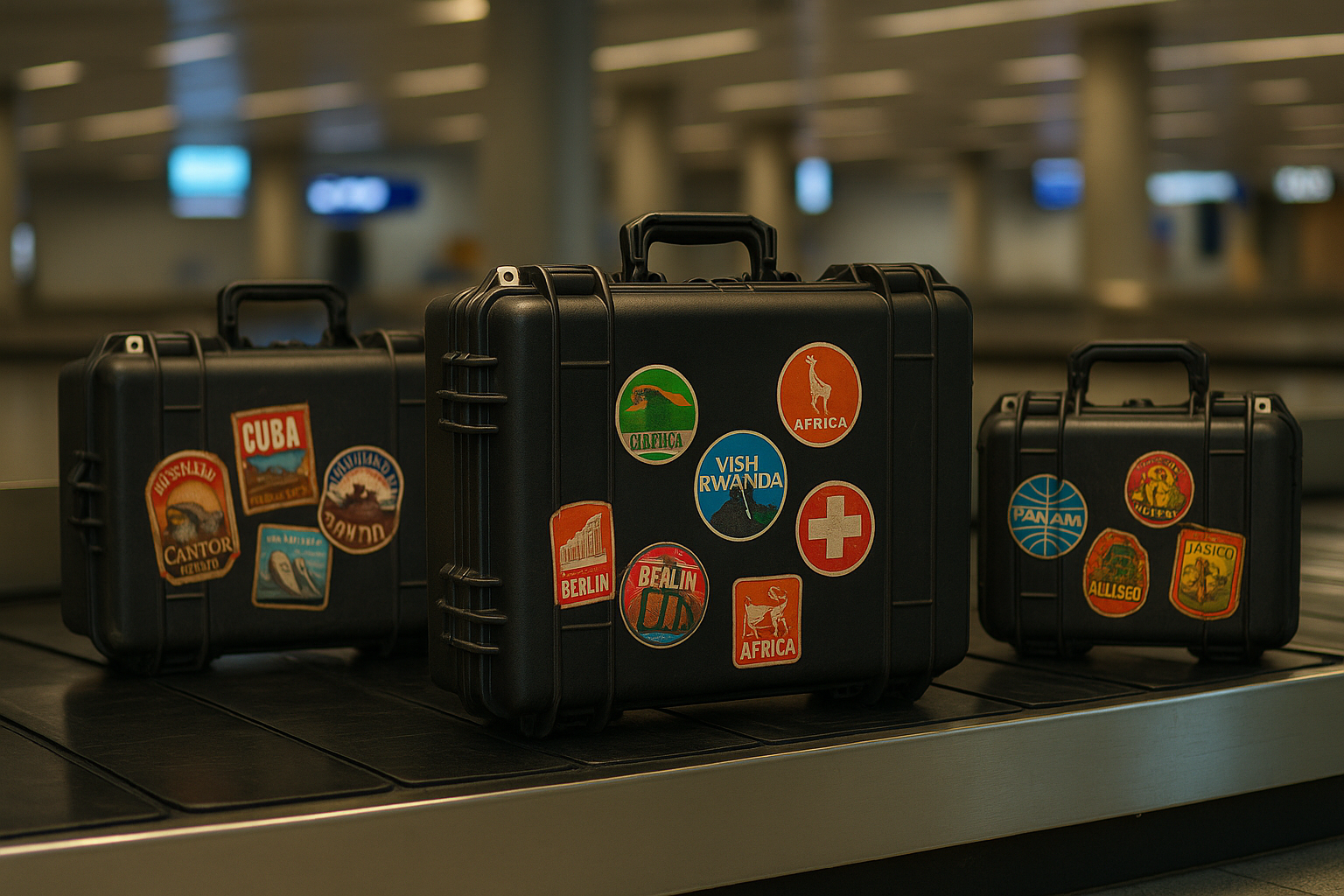
  • Hard Cases equal instant attention. That small Pelican case might protect your gear, but it screams "open me and charge this person."

  • Overhead bin space is shrinking. Especially on budget or regional flights. If you're not early to board, you might be out of luck.
  • Gate staff have less flexibility. Even if you’re polite and early, they often can’t make exceptions anymore.

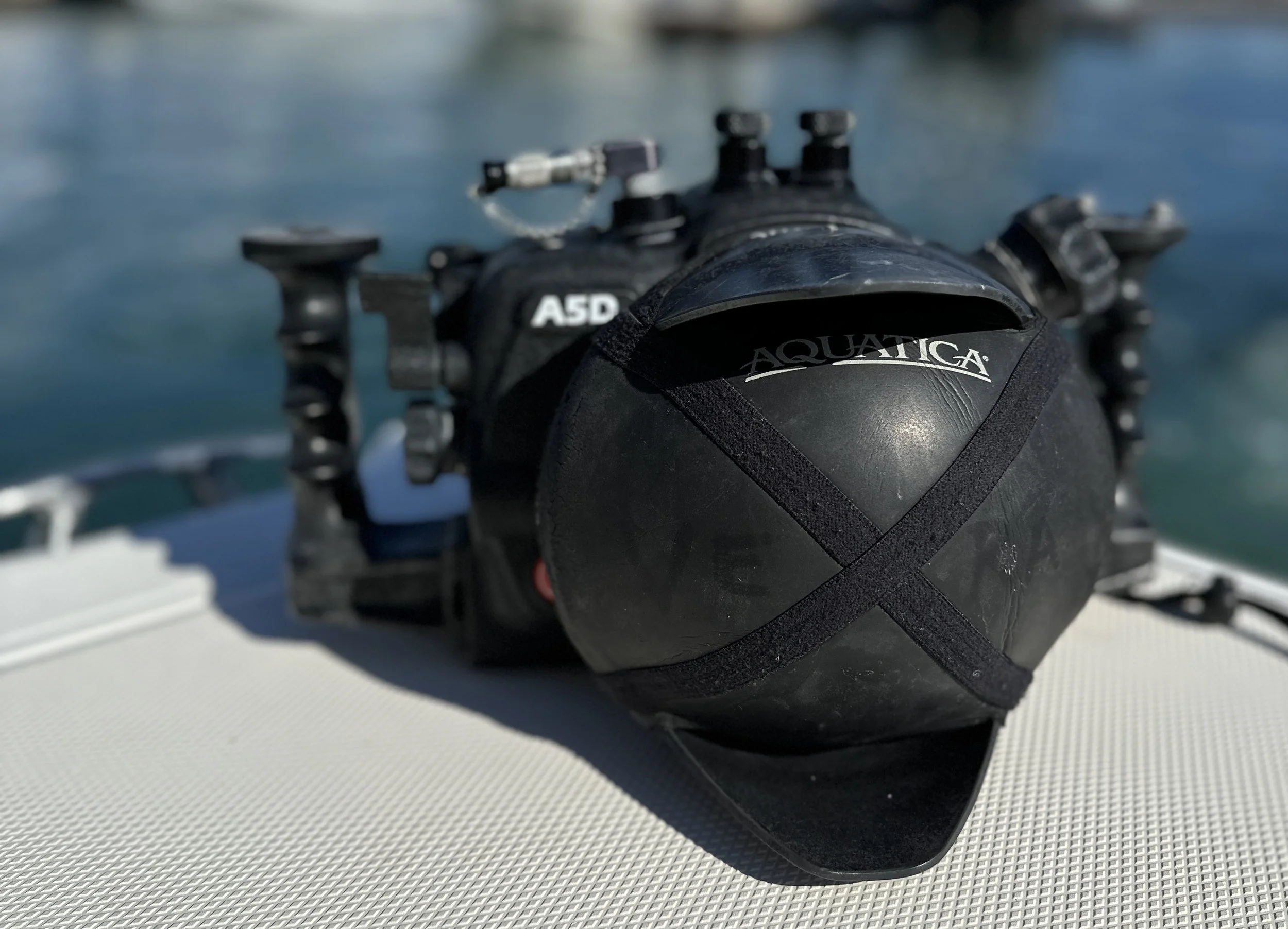
Underwater rigs add even more complexity.

Domeports, trays, arms, strobes, and batteries aren’t just heavy, they’re delicate and expensive. Most of this gear cannot be checked safely.

Your only option? Carry it. All of it. 

And that’s where it gets dicey.

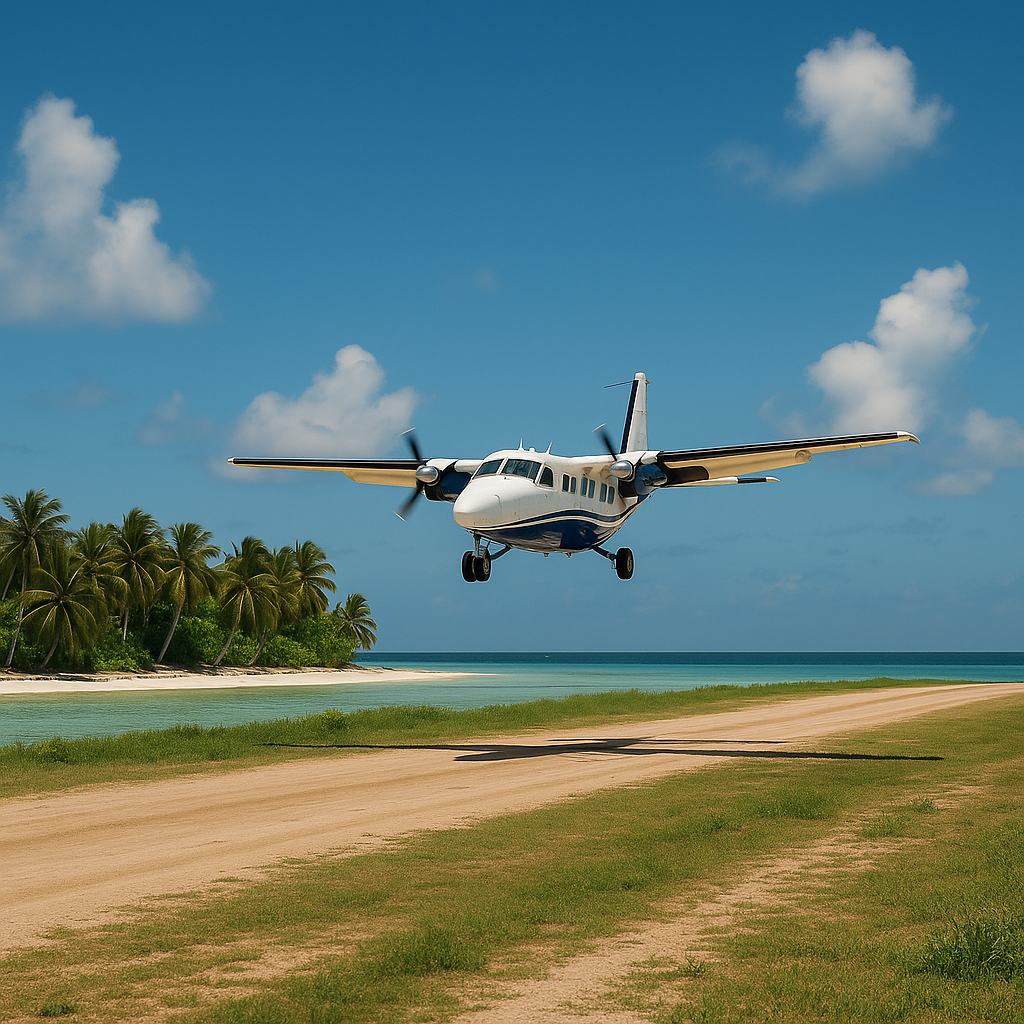
Even destinations that exist because of wildlife photography, like Churchill, Canada, have super strict carry-on rules.

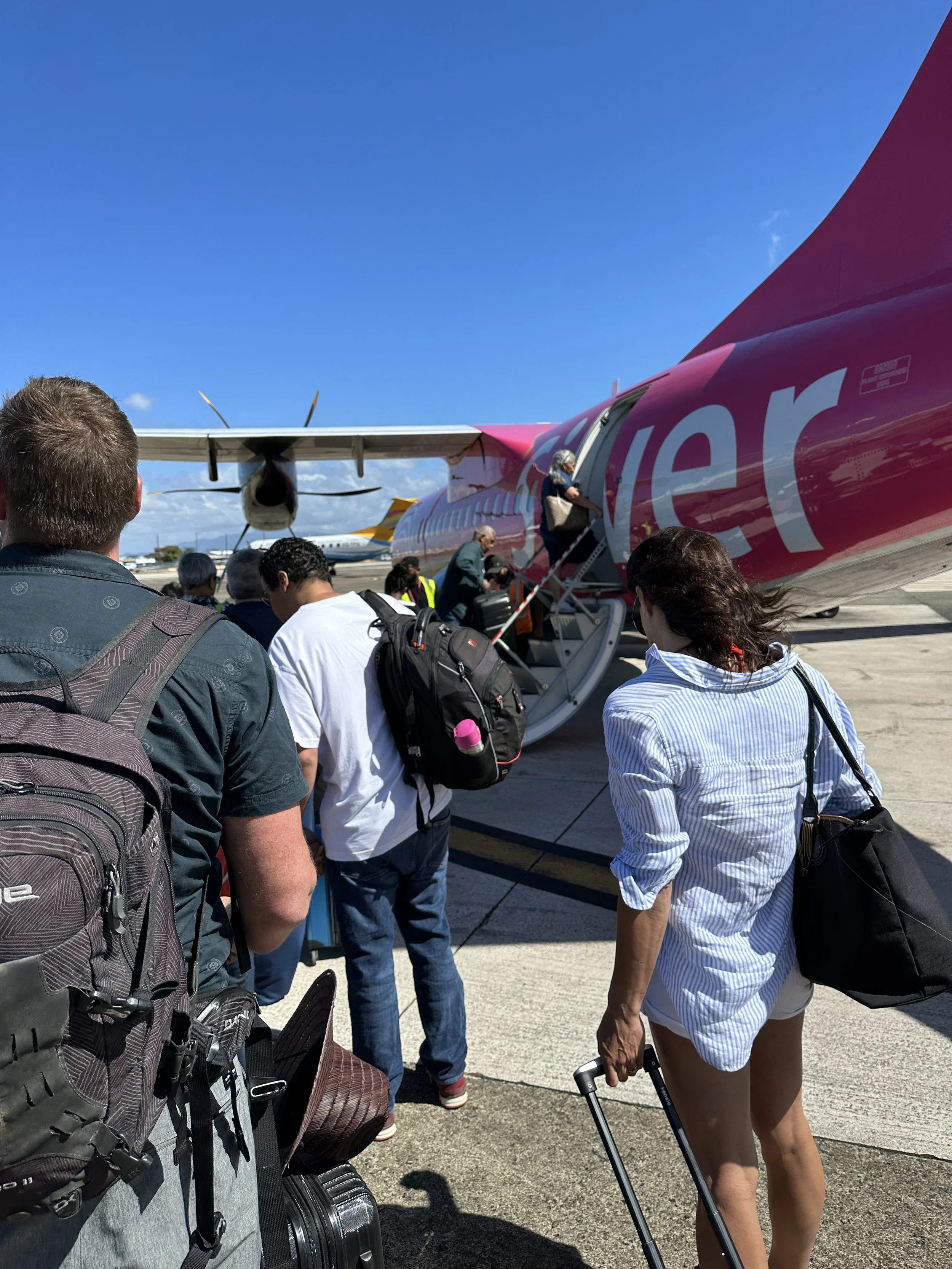
Small regional aircraft mean limited bin space and strict enforcement of size and weight, regardless of how many 500mm lenses are onboard. I’ve seen photographers forced to check fragile gear just for being slightly over sized.

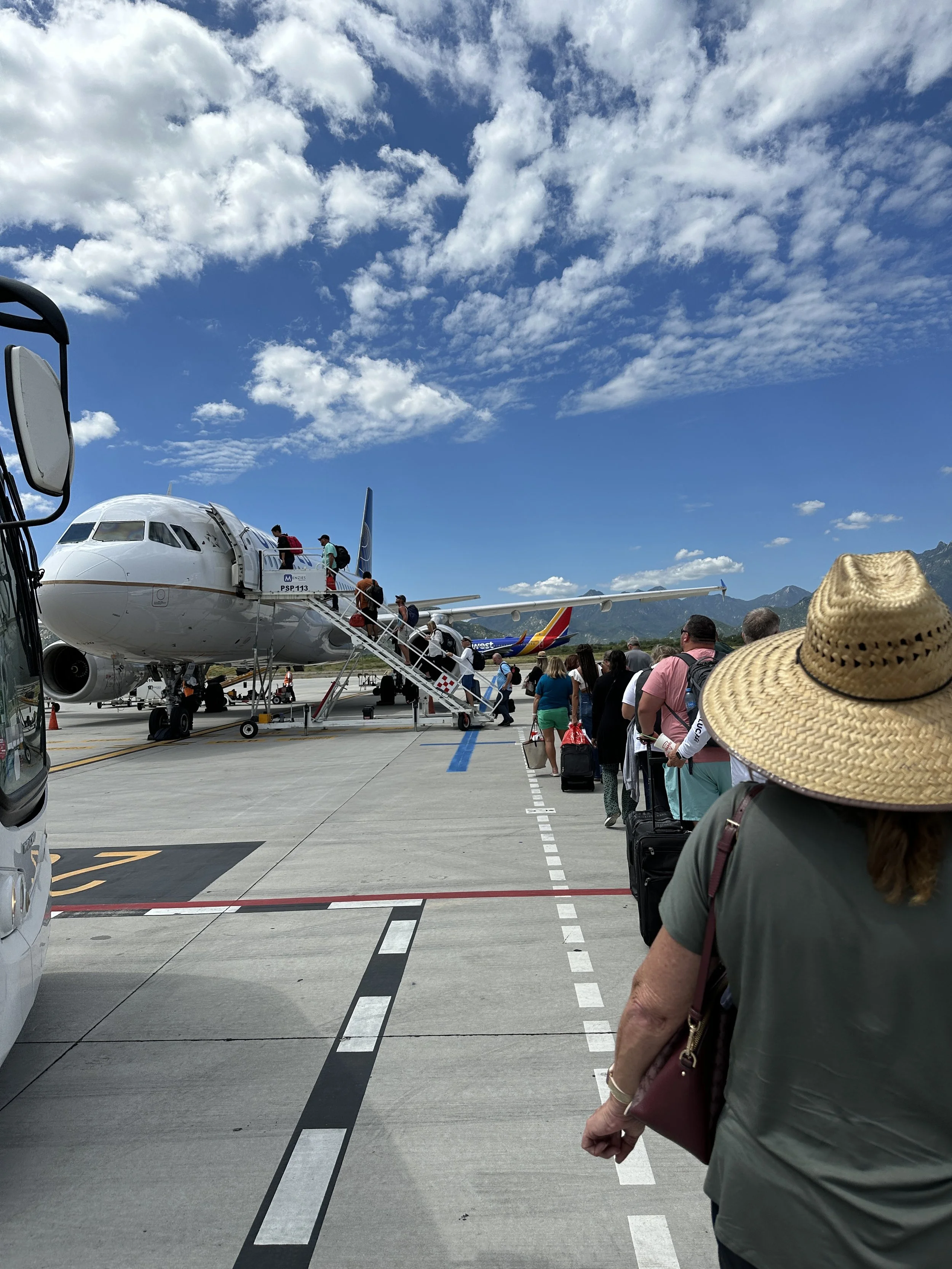
And it’s not just bush planes. Even large international airlines like Fiji Airways, with their massive 10-row wide-body jets, will weigh your carry-on at the gate and flag you if you're over their limit. It makes no sense when the aircraft could carry elephants, but your 18 pound backpack triggers alarm bells.

Here’s how I survive the gauntlet:

1. Weigh everything ahead of time.
Know the weight of each bag, including your personal items.

2. Use your personal item bags wisely.
A backpack or laptop sleeve can carry camera bodies, chargers, batteries, and memory cards.

3. Dress smart, and use hidden storage.
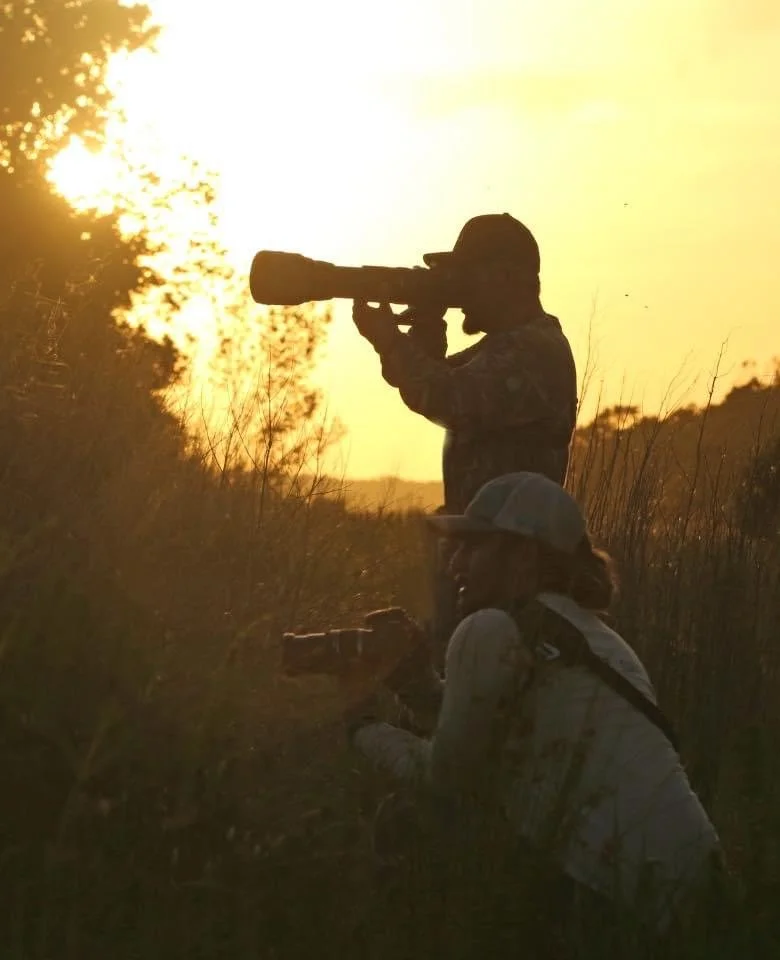
I’ve started wearing a lightweight, foldable photographer’s vest under a jacket. It’s low-profile but packed with utility. When I’m close to a weight limit at check-in, I’ll shift gear, like lenses, hard drives, camera bodies, even a laptop,  into the vest. It’s saved me more than once.

4. Never check housings or strobes.
Yes, technically you can check a Pelican case. But the moment it disappears down that belt, there’s always that pit in your stomach, the fear that it might not come back… or that something inside it won’t.

I’ve heard too many stories of gear showing up damaged, missing, or not at all. Apple AirTags offer some peace of mind, they let you track your bag, but it’s not the same as having your gear by your side. When you’re carrying thousands of dollars in fragile tools, peace of mind is everything.
5. Bonus Tip… Know your battery rights.
If a gate agent insists you check your camera bag, calmly explain that it contains lithium-ion batteries, which by international aviation law are not allowed in checked luggage due to fire risk. This isn’t just a tactic, it’s true, and it usually stops them in their tracks. 

Airlines are required to comply with IATA regulations, which mandate that all loose lithium batteries and most high-capacity packs must be carried on. I've used this more than once to avoid getting my bag checked.

6. Pay for Priority.
Board the plane early… You want that overhead space.

7. Pack with TSA in mind.
Use padded inserts. Make it easy for them to inspect without tearing everything apart.


It’s not just the airlines.
 

In places like Baja, Mexico, customs agents may inspect your bags and charge a tax if you appear to be carrying professional camera gear. 

The more expensive it looks, the more they want to charge.

I've gone through great effort to look like a non-diver when flying through certain airports. 

I avoid hard cases, dress casually, and try not to draw attention. 

But Pelican cases are a guaranteed stop-and-search. If you're seen rolling one through customs, you're almost guaranteed to be flagged.

It’s frustrating. 

You’re traveling to document and celebrate the beauty of these places, yet you end up feeling like a target for doing your job well.

Flying with gear used to be annoying. 

Now, it feels like a gamble. 

But for those of us chasing big wildlife stories in wild places, there’s no alternative.

Your camera isn’t just equipment. 

It’s your voice, your livelihood, and the tool that lets you share moments no one else gets to see.

Just be ready to fight for your gear at every gate, every airport, and every connection along the way. 

It’s stressful… But it’s worth it.

More Camera-Friendly Airport Tips:

1. Know your airline's carry-on and personal item policies. Some airlines don’t list camera gear exceptions online, but if you ask (especially in advance or via their support channels), they’ll sometimes allow one extra personal item for “fragile or valuable equipment.” Screenshot and save any confirmations.

2. Use the term “fragile professional equipment” If staff try to take your gear, calmly state:

“This bag contains fragile, professional camera equipment. It cannot be checked due to risk of damage and is exempt under standard airline policy.”

You don’t have to say “I’m a photographer.” Say it’s tools for work and they’re fragile and expensive. This matters more than job titles.

3. Mention insurance liability. If they still push back, say:

“This gear is insured and must be kept in my possession for liability reasons.”

That simple phrase often changes the tone. No airline wants responsibility for a $10,000 loss.

4. Be ready to show what's inside, briefly and professionally. If challenged at security or the gate, open your bag confidently and quickly. Showing you’re organized, respectful, and know your gear helps reduce suspicion and builds trust.

5. Print the IATA battery policy. Keep a printout or screenshot of the IATA guidelines for lithium batteries: https://www.iata.org/en/programs/cargo/dgr/lithium-batteries/

This is especially useful when flying through countries with inconsistent enforcement (like parts of Latin America or Africa). Show the regulation if they try to check a bag containing batteries.


Thank you for reading our Blog.

*New Blogs posted 3–4 times a week.
(sometimes more.)
Follow along for fresh stories, trip updates, and raw moments from the wild.