The One That Got Away: The Mako Shark That Changed Everything

We were in Southern California, filming for the Outdoor Channel—a series called Blue Water Savages (2015). I have never been a fan of sensational names for shark shows. Sadly, every TV show needs a name like that to grab an audience. I do hope that changes.

The goal of the episode? To test a long-standing myth about mako sharks—the belief that once a mako reaches a certain size, it becomes undiveable.

We already knew that young makos—the smaller, faster ones in the 3- to 6-foot range—are lightning-quick, bold, can be highly aggressive, but are very safe to dive with, if you follow the rules.

Juvenile mako. 1/200, f/10, ISO 800

What makes makos so interesting is, when most sharks try to bump divers or objects, they do it with their mouths closed—testing their surroundings.

Makos? They bump with mouths open.

They come in quick, sometimes biting cameras and ruining dome ports, (I’ve had my share ruined), as if everything in their world is meant to be tested teeth first.

So what happens when that same shark grows to 10, 11, 12 feet?

If a small mako is already unpredictable and high-energy, does a full-grown adult become impossible to dive with?

Our Mako. 1/250, f/5, ISO 800

That’s what we were there to find out.

To make this happen, we needed the best—someone who could take us straight to the land of the giants. So we hired the best captain on the planet for the job. Keith Poe.

And he delivered us an 11-foot mako shark.

I was the first one in the water, followed by our producer Robin Berg and my son David, who was both filming and acting as our safety diver.

I admit, my stomach was in knots when the shark approached me for the first time. I had no idea what it was going to do. She swam up to me, bumped my camera. I turned the camera slightly so she wouldn’t scratch my dome port. She bumped it, and then swam off.

She did test us a few more times, feeling us out, seeing how we’d react. She bumped our cameras a few more times, we redirected her, and she swam off slowly. No crazy speed racer swims.

She was so cool.

David with our mako. 1/250, f/5, ISO 800

There was no recklessness, no erratic lunges, no overly aggressive behavior. She was relaxed, confident, in total control of the interaction.

The caudal keel on this beauty… just massive! 1/250, f/5, ISO 800

A total dream shark.

This wasn’t the unhinged mad predator we had been warned about. She was elegant, calm and curious about us. She swam around the boat, not once trying to eat our tuna hang baits we had offered her.

Everything I thought I knew about big makos— their unpredictability, their reputation for being undiveable—was being rewritten in real time.

This was easily one of the greatest shark dives of my life!

I was in heaven.

We got some incredible video footage. Clips that showcased this shark in all her glory—her power, her beauty, her intelligence.

Sadly I have some major regrets… I wasn’t the photographer in 2015 that I am today.

I had the opportunity of a lifetime right in front of me, and I didn’t have the skills to do it justice. I took photos, but they weren’t great.

They weren’t what they could have been.

I was also pressured to only focus on capturing video by my producer, since we were filming a TV show. So the window I did have for shooting any stills was also very small.

I think about this day often. How I would of shot it differently now. How I would frame each pass, how I would adjust my settings, how I would maximize every second with her.

A shark that size is extremely rare due to overfishing, so the chances of encountering one again is hard to say.

I won’t say never, but a shark like this is extremely rare…

But that’s how it goes in wildlife photography. You don’t always get a second chance.

1/250, f/5, ISO 800

That mako did change something in me.

It wasn’t just about the dive—it was about the chase, the unknown, the willingness to put myself in the water with an animal that few had ever dived with at that size.

It was proof that so much of what we assume about wildlife is based on stories rather than experience. That the only way to truly know an animal is to be in its presence, to study its behavior firsthand, to learn directly from the source.

That mako also taught me the importance of always improving, and always be prepared for the next encounter. Because you never know when that next “dream animal” will appear—and when it does, you better be ready.

The Shot That Lives in Your Head

American crocodile. 1/250, f/11, ISO 200

Every photographer has the shot that haunts them, the one they can see so clearly in their mind’s eye but have yet to capture.

It’s more than just an image. It’s a moment, a feeling, a vision so vivid that it pulls you back, again and again, no matter how many times you miss it.

I have had several of these shots in my head. The perfect orca shot. The perfect anaconda shot. The whale. The crocodile.

I’ve visualized them over and over, played them out in my mind like a scene from a film. I know the light, the angle, the way the water will move around them. I know exactly what I want.

Sperm whale mating aggregation. 1/320, f/9, ISO 800

But I haven’t captured them yet.

And that’s why I keep going back.

There’s a strange relationship between wildlife photographers and the images we haven’t taken yet. They exist in a space between obsession and determination, a mental archive of moments that feel just within reach but never quite materialize.

I’ve been in the water with orcas in Norway, camera in hand, waiting for that perfect baitball shot, the one where the orca is perfectly positioned next to the baitball, with enough light pouring through the water to light up the herring around the orcas.

An image that is raw and powerful and fully wild. I’ve been to Norway many times, but I have not once come close to the shot I am dreaming of. Some of my friends have, and their images fire me up and fill me with inspiration.

I’ve searched for the anaconda shot that exists in my head, the massive serpent laying in the water coiled up in the sand next to a diver, perfectly framed, every colorful scale catching the light just right. I’ve been on seven different expeditions trying to get it just right.

Green anaconda. 1/320, f/9, ISO 800

Each time, I leave knowing I’ll have to come back.

Whales, sharks, crocodiles… they all live in my mind as images I am still chasing.

Some might say it’s frustrating to keep missing the shot you want. But for me that’s exactly what makes it all worth it.

Wildlife photography is about patience, yes, but more than that… it’s about persistence.

Male Orca. 1/400, f/9, ISO 1000

I have learned you just don’t get the shot because you want it bad. The ocean doesn’t care about your dreams. The animals don’t pose for you. It’s all on their terms, not yours.

So you keep coming back.

Because one day, when you least expect it, the stars will align. The animal will move into the perfect position. The water will be clear, the light just right. And you’ll be ready.

Right Whale. 1/320, f9, ISO 320

That’s the moment every photographer lives for.

That’s the moment that makes every failed attempt worth it.

And until that moment comes, I’ll keep returning.

Because the shot I’m chasing is still out there, waiting for me to capture it.

And when I finally do... It will not be because I got lucky.

It will be because I missed my shot a hundred times before.

The Freedom of Natural Light Photography: A Connection to the Wild

Lemon Shark off Tiger Beach. 1/320, f/10, ISO 400

This is Part 10 of a 10 part Natural Light Photography Series.

After exploring the technical aspects of natural light underwater photography, it’s time to reflect on the heart of this approach—the freedom it offers and the deeper connection it fosters with wildlife. For me, shooting with natural light isn’t just a technique; it’s how I experience and capture the underwater world.

Why Natural Light Photography Stands Out

Unlike shooting with strobes, natural light photography offers unparalleled freedom. Without bulky equipment weighing you down, you can move effortlessly through the water, focusing on the experience rather than the gear.

This streamlined approach is especially valuable when freediving, where every ounce of agility and breath hold counts.

But the benefits extend beyond convenience. By using ambient light, you become less intrusive to marine life. Animals aren’t startled by the sudden flash of strobes, allowing you to observe their natural behaviors up close. This creates opportunities to capture moments that feel raw, authentic, and deeply personal.

Brown Pelican and Cormorant off Magdalena Bay, Mexico. 1/400, f/8, ISO 1250

Moments That Matter

Some of my favorite images are those where I’m mere inches away from a shark or dolphin, witnessing their grace and power in a way that feels almost intimate. Natural light photography allows me to stay longer and connect more deeply with these incredible creatures. It’s not just about getting the shot—it’s about sharing a space with wildlife and respecting their world.

Pelagic Thresher Shark off Malapascua Island, Philippines. 1/200, f/5.6, ISO 1600

Of course, there are challenges. Cloudy days, shifting water conditions, and the inherent unpredictability of wildlife can make natural light photography frustrating at times. But those fleeting moments when everything aligns make it all worthwhile.

Keeping It Real

One of the joys of natural light photography is its honesty. It pushes you to embrace the imperfections of the wild—whether it’s less-than-ideal lighting, murky water, or an animal that decides it’s not in the mood to cooperate. These challenges remind me that the underwater world isn’t a curated gallery but a dynamic, living ecosystem.

I also strive to share the full spectrum of my experiences, not just the highlights. Alongside stunning encounters, I document the travel headaches, the days when the animals don’t show up, and the less glamorous aspects of life underwater. These real-world moments add depth to the story and remind us that nature, like photography, is about more than perfection.

Great Hammerhead off Bimini Bahamas. 1/320, f/10, ISO 400.

A Call to Connection and Conservation

Natural light photography isn’t just a way to capture images—it’s a way to inspire. By sharing my work, I hope to remind people that these animals exist, that their homes are worth protecting, and that they deserve to thrive in a world without barriers. Every photo is a chance to spark curiosity, ignite passion, and motivate action for conservation.

Final Thoughts

Natural light photography is about more than technique—it’s about freedom, connection, and storytelling. It’s about embracing the wild, unpredictable beauty of the underwater world and sharing it with others in a way that feels authentic and meaningful. For me, it’s a journey of constant learning and discovery, one that I’m honored to share with you.

Thank you for joining me on this exploration of natural light photography. I hope these blogs have inspired you to experiment with this approach, connect more deeply with wildlife, and find your unique voice as a photographer.

The underwater world is waiting… go capture it.


Post-Processing: Bringing Your Underwater Images to Life

This is Part 9 of a 10 part Natural Light Photography Series.

Manta Ray off Isla Mujeres, MX. 1/400, f/9, ISO 1000

Underwater photography is an art, but even the best raw images often need a little help to truly shine.

This is where post-processing comes in. By enhancing colors, adjusting exposure, and fine-tuning details, you can transform your photos into stunning representations of the underwater world.

In this blog, I’ll share my approach to post-processing and explain why it’s an essential part of creating impactful underwater images.

A side-by-side comparison showcasing the power of post-processing in bringing an image to life. The before image captures the raw moment, while the after reveals the full potential through editing. Great White Shark off Guadalupe Island, MX. 1/320, f/8, ISO 800

This image was captured using the Auto White Balance feature on my camera.

Why Post-Processing is Essential

When you shoot in RAW format, your camera captures as much data as possible but doesn’t automatically apply enhancements like it does for JPEGs.

As a result, RAW images often look flat and lack vibrancy straight out of the camera.

Post-processing allows you to:

  • Restore colors lost at depth.

  • Adjust highlights and shadows for better tonal balance.

  • Sharpen details to emphasize textures and patterns.

In underwater photography, where light and color are absorbed by water, post-processing is critical to bring your images back to life.

Sperm Whale off Dominica Island, Caribbean. 1/320, f/9, ISO 640

My Approach to Editing

  1. Start with the Basics:

    • Adjust exposure, contrast, and white balance to create a balanced, natural look.

    • Use the histogram to ensure tonal accuracy.

  2. Enhance Colors:

    • Use tools in Lightroom or Photoshop to boost vibrancy and saturation, especially for reds and yellows that fade quickly underwater.

    • Be cautious not to overdo it, keep the colors natural and true to what you experienced.

  3. Fine-Tune Details:

    • Sharpen key areas like the subject’s eyes or textures on the skin.

    • Reduce noise if you used a high ISO setting.

  4. Crop and Compose:

    • Straighten the horizon if needed and adjust the crop to emphasize your subject and remove distractions.

Green Anaconda off Bonito, Brazil. 1/320, f9, ISO 800

It’s Okay to Edit

There’s often debate about how much editing is acceptable in photography.

Personally, I have no problem enhancing an image to make it look its best. Sometimes, the connection to the moment or the animal makes it worth salvaging a less-than-perfect shot.

Editing isn’t about “faking” an image, it’s about honoring the experience and showcasing the beauty of the underwater world.

Every adjustment I make is guided by a desire to tell the story of that moment as authentically and vibrantly as possible.

Leopard Shark off La Jolla Shores, CA. 1/320, f/5.6, ISO 250

Balancing In Camera and Post Processing

While post processing is powerful, I aim to get as close to the final image as possible in camera. Proper exposure, composition, and custom white balance all make the editing process easier and faster, leaving more time to focus on creative enhancements.

Recommended Tools

If you’re just starting out with post-processing, here are some tools I recommend:

  • Adobe Lightroom: Excellent for managing exposure, color, and tonal adjustments.

  • Adobe Photoshop: Perfect for more advanced edits, like removing distractions or enhancing specific details.

  • Topaz AI: Great for reducing noise and adding sharpening without losing detail.

  • RC-Astro Backscatter Eliminator: A Game-Changer for Underwater Photographers

    This revolutionary new tool is a must-have for underwater photographers using Photoshop.

    The RC-Astro Backscatter Eliminator efficiently removes sand, debris, and backscatter from your images, revealing cleaner, sharper photographs.

    It enhances clarity without compromising detail, making it an essential addition to your post-processing workflow.

Oceanic Whitetip off Cat Island, Bahamas. 1/125, f/11, ISO 400

Practical Tips for Post Processing

  1. Shoot in RAW: Always shoot in RAW to retain maximum detail and flexibility during editing.

  2. Take Breaks: Step away from your edits to avoid overdoing adjustments. Fresh eyes can help you spot areas that need tweaking.

  3. Develop Your Style: Experiment with different techniques to find a post-processing style that reflects your vision and complements your images.

Final Thoughts

Post processing is a vital part of underwater photography, allowing you to elevate your images and tell compelling stories.

It’s not about creating something artificial but enhancing what’s already there to reflect the beauty and magic of the underwater world.

With practice and the right tools, you can transform your photos into powerful, vibrant works of art.

Whitetip Reef Sharks off Socorro, MX. 1/250, f/8, ISO 1250

The Histogram: Your Underwater Photography Lifeline

This is Part 8 of a 10 part Natural Light Photography Series.

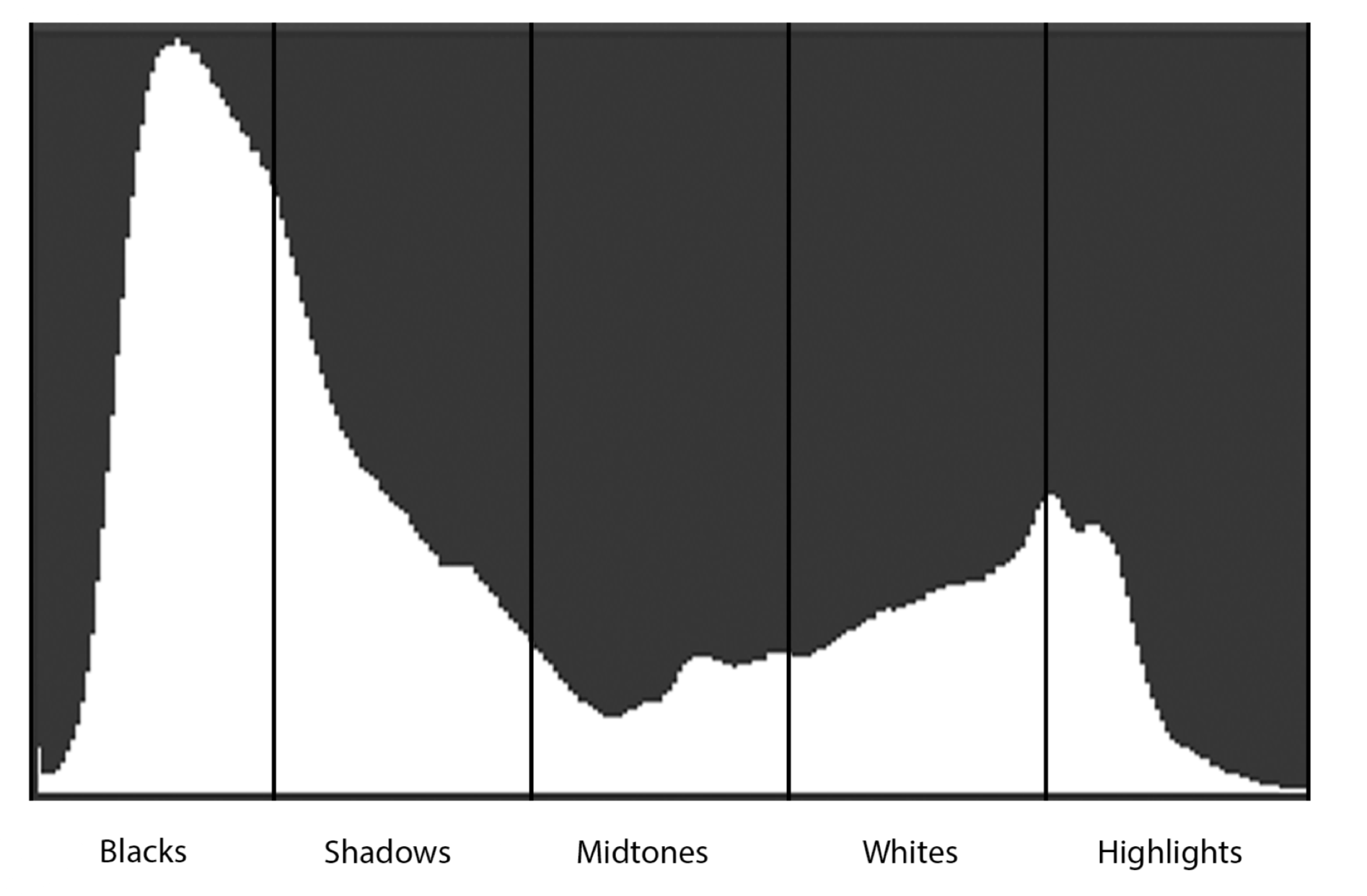
The histogram is a graph on your camera that visually represents the tones in your image.

When you’re underwater, exposure can be tricky. Light behaves unpredictably, and the colors you see in the moment might not translate well into your photos. Enter the histogram, a tool that provides instant feedback on your image’s exposure and tonal balance. Mastering the histogram will not only improve your underwater photography but also save you from the heartbreak of discovering poorly exposed images after the dive.

What is a Histogram?

Photographing alligators in Florida presented a unique challenge due to the dark, shadowy areas of their habitat. The limited light resulted in many underexposed images, as reflected in my histogram here. 1/250, f/7.1, ISO 3200

A histogram is a graph on your camera that visually represents the tones in your image:

  • Left Side: Represents shadows and dark tones.

  • Right Side: Represents highlights and bright tones.

  • Middle: Represents midtones and everything in between.

By analyzing your histogram, you can assess whether your image is underexposed (too dark), overexposed (too bright), or perfectly balanced.

Why You Need the Histogram

While your camera’s LCD screen can give you a quick preview of your image, it’s not always accurate. Bright sunlight or underwater glare can make the screen misleading. The histogram, however, provides an objective view of your exposure, allowing you to adjust settings on the spot and avoid guesswork.

How to Use the Histogram Underwater

  1. Check for Clipping:

    • If the graph is pushed all the way to the left, you’re losing detail in the shadows.

    • If it’s pushed all the way to the right, your highlights are blown out and lack detail.

  2. Aim for Balance:

    • A well exposed image will have tones distributed across the histogram, with no harsh spikes at either end. Keep in mind that the ideal histogram varies depending on your subject and lighting conditions.

We had heavy cloud coverage that caused the light to scatter unpredictably. I photographed this sperm whale under these conditions, slightly underexposed but still well balanced. The image had some highlights in the water from the sun breaking through the clouds. 1/320, f/9, ISO 320

4. Adjust in Real-Time:

  • If your histogram shows overexposure, increase your shutter speed, narrow your aperture, or lower your ISO.

  • For underexposure, do the opposite: decrease shutter speed, open your aperture, or raise your ISO.

Why the Histogram is Critical Underwater

Underwater conditions are dynamic, light can change in an instant due to depth, water clarity, or cloud cover. By checking your histogram regularly during a dive, you can adapt to these changes and ensure your images are consistently well-exposed.

Tips for Mastering the Histogram

At 30 feet deep with the great hammerheads off Bimini, the lighting was ideal, and my settings were dialed in perfectly. As a result, we captured a well-exposed image, which is reflected in my histogram. 1/320, f/10, ISO 400.

  1. Practice on Land: Familiarize yourself with the histogram before heading underwater. Practice reading it in different lighting conditions to understand how your adjustments affect the graph.

  2. Check Exposure Frequently: Make a habit of checking your histogram after each major adjustment to your camera settings.

  3. Use RAW Format: Even with the best histogram practices, minor tweaks may be needed in post processing. Shooting in RAW gives you more flexibility to adjust exposure and recover details.

Beyond Exposure: Evaluating Tonal Range

The histogram isn’t just about avoiding over, or underexposure, it’s also a tool for evaluating tonal range. A balanced histogram often results in an image with more depth and detail, capturing the full spectrum of light and shadow that makes your underwater subjects come alive.

Coming Next

In the next blog, we’ll discuss post-processing, a vital step in bringing your underwater images to life. Learn how to enhance colors, recover details, and make your photos truly pop. Stay tuned!

THIS IS PART 8 OF A 10 PART SERIES.

PART ONE - Is Natural Light Photography Photography For You?
PART TWO - The Euphotic Zone! Your best friend.
PART THREE - Custom White Balance, Natural Lights Secret Weapon.
PART FOUR - Shutter Speed: Freezing Moments Underwater.
PART FIVE - Aperture: Achieving Sharpness and Depth Underwater
PART SIX - ISO: Balancing Light Sensitivity Underwater
PART SEVEN - Focus Points: Keeping Your Subject Sharp Underwater
PART EIGHT - The Histogram: Your Underwater Photography Lifeline
PART NINE - Post-Processing: Bringing Your Underwater Images to Life.
PART TEN - The Freedom of Natural Light Photography: A Connection to the Wild

Focus Points: Keeping Your Subject Sharp Underwater

This is Part 7 of a 10 part Natural Light Photography Series.

Mako Shark off Cabo San Lucas, MX. 1/400, f/9, ISO 800

In underwater photography, especially with fast-moving or large animals, getting sharp images can be a challenge.

This is where understanding and effectively using your camera’s focus points becomes critical. The right focus settings can make all the difference in ensuring your subject, not the distractions around it, is captured clearly.

Why Wide Dynamic Autofocus Works Best

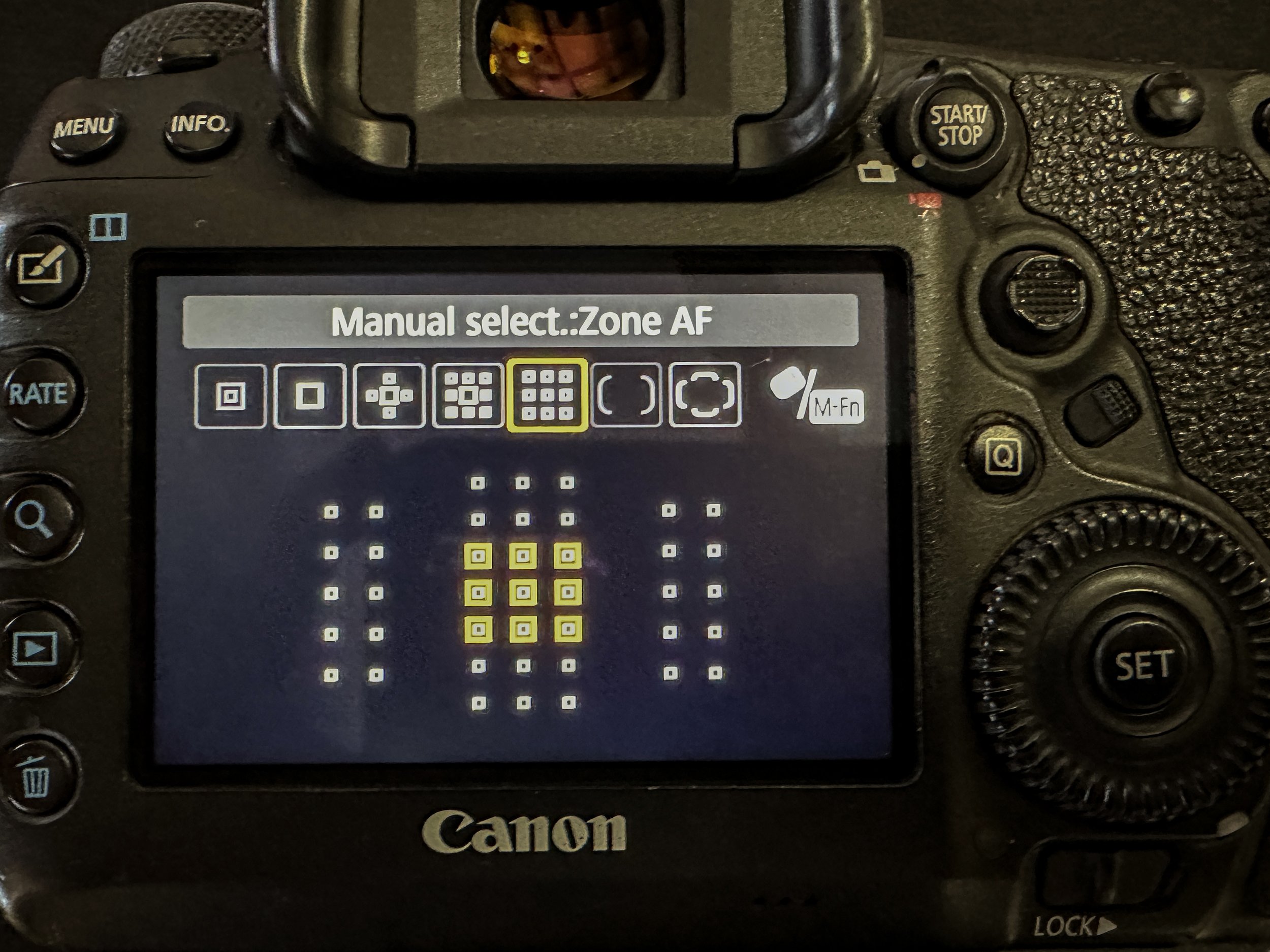
For big animals like sharks, whales, or dolphins, I always use a wide dynamic autofocus area. Shooting underwater often means you’re working without the luxury of looking through the viewfinder. Instead, you’re shooting “blind,” with your arms extended to get closer to the subject.

Using a single-point autofocus in these situations significantly increases the risk of missing your shot, as it’s nearly impossible to keep that one focus point on a moving target. A wide focus area ensures the camera tracks your subject even when you’re not perfectly aligned.

Limit the Autofocus Area

While wide autofocus is essential, I don’t recommend activating all your focus points across the frame. Instead, I narrow the focus area to the center region, activating 9 to 15 focus points. This approach minimizes the chance of your camera locking onto distractions, such as:

  • Fish swimming around your subject

  • Particles in the water

  • Other divers or objects in the background

Sailfish hunting sardine baitball off Baja, MX. 1/640, f/8, ISO 1600

Silky shark with pilot fish off Cabo San Lucas, MX. 1/320, f/10, ISO 800

By concentrating your focus area, you increase the chances of keeping your primary subject, the big animal, sharp and detailed.

Common Challenges with Focus Points

Big animals often have smaller companions, like fish swimming alongside sharks, that can steal your camera’s focus. This is similar to photographing a bird in a tree and accidentally focusing on the branch instead. By narrowing the focus area, you ensure your subject remains the priority.

Another challenge is rapid movement. Wide dynamic autofocus helps here by tracking your subject across multiple points, even as they shift position or change direction.

Practical Tips for Using Focus Points

  1. Customize Your Focus Area: Experiment with limiting your autofocus points to the center region to see what works best for your shooting style.

  2. Communicate with Dive Buddies: If you plan to use their gear (like tanks or fins) as a focus reference during custom white balance or framing, let them know beforehand to avoid confusion. So it doesn’t get weird.

  3. Practice Shooting Blind: Familiarize yourself with positioning and angles so you can effectively capture sharp images even without looking through the viewfinder.

Great White off Guadalupe Island, MX. 1/320, f8, ISO 400.

The Debate: Single Point vs. Wide Dynamic

Some photographers advocate for single-point autofocus, but this approach works best when you’re shooting through the viewfinder and can track your subject.

For underwater photography, where conditions are more dynamic and you’re often shooting from less stable positions, wide dynamic autofocus provides greater flexibility and reliability.

Final Thoughts

Mastering focus points is an essential skill for underwater photographers, especially when working with large, fast-moving animals.

By using a wide dynamic autofocus area with a limited central region, you can strike the perfect balance between precision and adaptability, ensuring your subjects are always sharp.

Striped marlin hunting sardines off Baja Mexico. 1/640, f/8, ISO 1600

ISO: Balancing Light Sensitivity Underwater

This is Part 6 of a 10 part Natural Light Photography Series.

1/320, f/9, ISO 1000

ISO is one of the most critical settings in underwater photography, especially when shooting with natural light.

It determines your camera’s sensitivity to light and plays a key role in achieving proper exposure.

While increasing ISO can brighten your image, it also introduces noise, which can reduce image quality.

In this blog, I’ll share my approach to setting ISO for natural light photography and explain why manual control is the way to go.

Why I Avoid Auto ISO

Some photographers rely on auto ISO to adjust their settings dynamically, but I’ve never been satisfied with the results underwater.

Auto ISO often overcompensates, leading to images that are too bright or too noisy.

Instead, I prefer to set my ISO manually and use my histogram to fine-tune my exposure. This gives me complete control and ensures my images are consistently well-balanced.

Starting Points for ISO

The amount of sunlight, water clarity, and depth all influence how I set my ISO. Here are my go-to starting points:

  1. Bright Sunlight with a Sandy Bottom:

    • ISO Setting: 400

    • Why: The sand reflects sunlight, providing plenty of natural light to work with.

  2. Deep Water with No Bottom in Sight:

    • ISO Setting: 800

    • Why: Without a reflective surface, less light reaches your subject, so a higher ISO compensates for the loss.

1/320, f/9, ISO 1000

Using the Histogram to Adjust ISO

Before finalizing my ISO, I rely on my histogram to check exposure. Here’s how I approach it:

  1. Perform a 360-Degree Spin:

    • I do a full turn in the water to observe how light changes depending on my angle to the sun. This helps me find a middle ground that works, even if I’m facing slightly toward the sun.

  2. Fine-Tune with the Histogram:

    • The histogram provides an objective way to evaluate whether my exposure is balanced, allowing me to adjust ISO as needed.

How to read your Histogram.

When to Adjust ISO

Increase ISO:

  • In low-light conditions, such as cloudy days, deep dives, or early morning/late afternoon shoots.

  • To freeze fast-moving subjects when a faster shutter speed is needed.

    Decrease ISO:

  • In bright, shallow water with excellent visibility.

  • When you’re close to your subject and don’t need the extra light sensitivity.

1/320, f/9, ISO 1000

Practical Tips for ISO Underwater

  1. Start Low, Adjust Gradually: Begin with a lower ISO setting (e.g., 400) and increase as necessary based on light conditions.

  2. Minimize Noise: Keep ISO as low as possible while maintaining proper exposure to reduce graininess in your images.

  3. Test in Different Environments: Practice adjusting ISO in various conditions to better understand how your camera handles light sensitivity and noise underwater.

1/320, f/8, ISO 1000

The Power of Manual ISO

Controlling ISO manually gives you the flexibility to adapt to the ever-changing underwater environment.

Whether you’re shooting in shallow tropical waters or deep, murky conditions, understanding how to adjust ISO effectively will ensure your images are sharp, vibrant, and properly exposed.

Coming Next

In the next blog, we’ll discuss Focus Points and how to use them to keep your subjects sharp, even when shooting blind with big animals. Stay tuned for tips on mastering focus in the dynamic underwater world!

THIS IS PART 6 OF A 10 PART SERIES.

PART ONE - Is Natural Light Photography Photography For You?
PART TWO - The Euphotic Zone! Your best friend.
PART THREE - Custom White Balance, Natural Lights Secret Weapon.
PART FOUR - Shutter Speed: Freezing Moments Underwater.
PART FIVE - Aperture: Achieving Sharpness and Depth Underwater
PART SIX - ISO: Balancing Light Sensitivity Underwater
PART SEVEN - Focus Points: Keeping Your Subject Sharp Underwater
PART EIGHT - The Histogram: Your Underwater Photography Lifeline
PART NINE - Post-Processing: Bringing Your Underwater Images to Life.
PART TEN - The Freedom of Natural Light Photography: A Connection to the Wild

Aperture: Achieving Sharpness and Depth Underwater

This is Part 5 of a 10 part Natural Light Photography Series.

Orcas off Baja. 1/320, f9, ISO 800.

Aperture, or f-stop, is one of the most important settings in underwater photography.

It controls the amount of light entering your camera and determines your depth of field, the range of focus in your image.

For natural light photography, where light is limited and animals are constantly moving, understanding how to set your aperture is essential for creating sharp, well-composed shots.

My Go-To Aperture Settings

For most of my underwater photography, I stick to an aperture range of f/8 to f/11.

These settings provide enough depth of field to keep the entire subject, whether it’s a shark, whale, or dolphin, in focus, even when shooting wide-angle.

Why f/9 is My Preferred Setting:

  • It ensures critical features, like the eyes, remain sharp.

  • It gives enough depth of field to account for slight errors in focus, especially when shooting “blind” (holding the camera away from your body to get closer to the subject).

When to Adjust Aperture

  1. Over/Under Shots:

    • Setting: f/11 to f/14 (or higher)

    • Why: For split shots capturing both underwater and above-water scenes, a smaller aperture ensures both planes are in focus.

  2. Low-Light Conditions:

    • Setting: Open the aperture as wide as your lens allows (e.g., f/4 or f/2.8).

    • Why: In dim conditions, opening the aperture maximizes the light reaching your sensor, though this reduces depth of field.

Tiger Shark off Tiger Beach Bahamas, 1/320, f8, ISO 800

The Challenges of Big Animal Photography

When photographing large, fast-moving animals like sharks and whales, you sometimes can’t look through the viewfinder.

Instead, you’re shooting with your arms outstretched to get closer to your subject, a technique often referred to as “shooting blind.”

Every inch matters when using a wide-angle lens like an 8-15mm fisheye, as the best underwater images have minimal blue water between you and the animal.

By using a mid-range aperture like f/9, you can compensate for the challenges of shooting blind, ensuring that key features remain in focus even if your framing isn’t perfect.

A Safety Reminder

While getting close to your subject often leads to the best photos, always prioritize:

  • Your safety.

  • The well-being of the animal.

  • No image is ever worth compromising the trust and safety of wildlife.

Bonito off Baja feeding on a sardine baitball. 1/500, f9, ISO 800

Practical Tips for Using Aperture Underwater

  1. Experiment with Depth of Field: Start with f/9 and adjust based on your subject and lighting conditions. For larger animals, a smaller aperture, f/11 can help ensure the entire subject is sharp.

  2. Pair Aperture with Shutter Speed: Remember, changing your aperture affects the amount of light entering your camera, so adjust your shutter speed and ISO to maintain proper exposure.

  3. Test Your Lens Limits: Practice with your lens to understand how it performs at different apertures. Wide-angle lenses are forgiving but still require attention to detail.

Whale Shark off Baja, Mexico. 1/320, f9, ISO 500

The Magic of Aperture in Natural Light

Aperture settings can make or break your underwater images.

With the right adjustments, you can achieve sharp, vibrant photos that showcase the beauty of the underwater world.

Whether you’re aiming for a detailed close-up of a shark’s eye or a dramatic over/under shot, understanding aperture is key to capturing the moment.

Coming Next

In the next blog, I’ll tackle ISO, a setting that can make or break your images in varying underwater conditions.

Learn how to balance light sensitivity and noise to achieve the perfect exposure. Stay tuned!

THIS IS PART 5 OF A 10 PART SERIES.

PART ONE - Is Natural Light Photography Photography For You?
PART TWO - The Euphotic Zone! Your best friend.
PART THREE - Custom White Balance, Natural Lights Secret Weapon.
PART FOUR - Shutter Speed: Freezing Moments Underwater.
PART FIVE - Aperture: Achieving Sharpness and Depth Underwater
PART SIX - ISO: Balancing Light Sensitivity Underwater
PART SEVEN - Focus Points: Keeping Your Subject Sharp Underwater
PART EIGHT - The Histogram: Your Underwater Photography Lifeline
PART NINE - Post-Processing: Bringing Your Underwater Images to Life.
PART TEN - The Freedom of Natural Light Photography: A Connection to the Wild

Shutter Speed: Freezing Moments Underwater

This is Part 4 of a 10 part Natural Light Photography Series.

In underwater photography, your shutter speed plays a crucial role in capturing sharp, dynamic images. Whether you’re photographing the graceful glide of a shark or the lightning-fast movements of a dolphin, choosing the right shutter speed is essential. In this blog, I’ll share my approach to setting shutter speed for natural light photography and explain why it’s one of the most critical tools in your underwater arsenal.

The Basics of Shutter Speed Underwater

Shutter speed determines how long your camera’s sensor is exposed to light. A faster shutter speed freezes motion, while a slower shutter speed lets in more light but risks motion blur. In underwater photography, where both you and your subject are often moving, this balance becomes even more delicate.

Understanding Shutter Speed: From freezing fast motion to creating smooth, dreamy effects – master the art of light and movement.

When shooting with strobes, a common shutter speed is 1/125, but for natural light photography, it’s a whole different story. Your settings will depend on:

  • The subject’s speed and movement

  • The available light

  • Your ability to stay steady while shooting

My Go-To Shutter Speeds

  1. Slow-Moving Subjects (e.g., Tiger Sharks, whales):

    • Shutter Speed: 1/320

    • Why: Tiger sharks and whales move at a slow, deliberate pace, but both the animals and I are in motion. At 1/320, I can confidently capture their details without motion blur.

  2. Fast-Moving Subjects (e.g., Dolphins, Sea lions):

    • Shutter Speed: 1/500

    • Why: Dolphins and sea lions are incredibly fast and often unpredictable. A faster shutter speed ensures I can freeze their motion, even while swimming hard to keep up. For fast-moving animals, 1/500 is my absolute minimum. While I would prefer to go higher for an even crisper image, doing so often requires increasing the ISO, which can introduce too much noise into my photos. Finding the right balance is key when shooting in natural light underwater.

  3. Low-Light Conditions (e.g., Orcas in Norway):

    • Shutter Speed: 1/125 or lower (if necessary)

    • Why: In places like Norway, where sunlight is limited or non-existent during winter, slower shutter speeds are unavoidable. While this can lead to some blur or grain (due to higher ISO), it’s often the only way to get a usable image.

Why I Stick to 1/320 for Most Shots

For the wildlife I typically photograph—big, toothy animals like sharks—1/320 has become my magic number. It’s fast enough to freeze motion while still allowing enough light for a well-exposed image. Some might say it’s on the higher side, but for me, it strikes the perfect balance for sharp, detailed results.

When to Adjust Shutter Speed

  • Increase Shutter Speed: For faster animals or when shooting in bright conditions.

  • Decrease Shutter Speed: In low-light environments or when photographing slower-moving subjects.

Practical Tips for Underwater Shutter Speed

  1. Keep Your Camera Steady: Even the slightest movement can cause blur when shooting underwater. Practice controlling your breathing and staying as still as possible.

  2. Test and Adapt: Start with a base shutter speed (like 1/320) and adjust based on the animal and lighting conditions.

  3. Use Your Histogram: Check your histogram regularly to ensure your exposure is balanced, especially when adjusting shutter speed.

The Importance of Experimentation

Shutter speed isn’t a one-size-fits-all setting. It depends on your subject, the conditions, and your creative goals. The more you experiment, the better you’ll understand what works for your style of photography and the animals you love to capture.

Coming Next

In the next blog, I’ll dive into aperture—another critical setting for natural light photography. Learn how to achieve the perfect depth of field and ensure your subjects are always in focus, even when shooting blind. Stay tuned!

THIS IS PART 4 OF A 10 PART SERIES.

PART ONE - Is Natural Light Photography Photography For You?
PART TWO - The Euphotic Zone! Your best friend.
PART THREE - Custom White Balance, Natural Lights Secret Weapon.
PART FOUR - Shutter Speed: Freezing Moments Underwater.
PART FIVE - Aperture: Achieving Sharpness and Depth Underwater
PART SIX - ISO: Balancing Light Sensitivity Underwater
PART SEVEN - Focus Points: Keeping Your Subject Sharp Underwater
PART EIGHT - The Histogram: Your Underwater Photography Lifeline
PART NINE - Post-Processing: Bringing Your Underwater Images to Life.
PART TEN - The Freedom of Natural Light Photography: A Connection to the Wild

Custom White Balance: The Key to Vibrant Underwater Images

This is Part 3 of a 10 part Natural Light Photography Series.

Thresher Shark off Malapascua Island, Phillipeans. Depth 70’ 1/250, f8, ISO 1250

When it comes to natural light photography underwater, no tool is more important than custom white balance. This technique allows you to compensate for the loss of color as you descend and is essential for capturing vibrant, true-to-life images. If you don’t master this skill, you’ll struggle to retain the natural beauty of the underwater world in your photos.

Why Custom White Balance Matters

Underwater, colors disappear quickly:

  • Reds vanish at around 15 feet.

  • Oranges at 30 feet.

  • Yellows at 60 feet.
    By the time you’re at 100 feet, you’re left with muted greens and blues.

Reef off Malapascua Island, Philippines. Depth 50 feet. 1/160, f4.5, ISO 800

Custom white balance tells your camera what “white” should look like in your current conditions, helping it correctly interpret other colors. Without it, even the most perfectly composed shots will appear dull and washed out. While post-processing can help to some extent, getting it right in-camera is the best way to ensure your images look stunning.

How to Set Custom White Balance

  1. Ignore Camera Presets:
    Built-in white balance presets (e.g., “daylight” or “cloudy”) aren’t designed for underwater use and won’t give you accurate results. Go straight to custom white balance mode.

  2. Find a Reference Object:
    Snap a photo of something white or gray that’s lit by the same light you’ll be shooting in. This tells your camera what white should look like in those conditions. Common references include:

    • White balance cards (designed for underwater use)

    • The sand on the ocean floor (a favorite of mine)

    • White fins, wetsuit trim, or dive slates

  3. Recalibrate Often:
    Light changes as you descend or ascend, so you’ll need to adjust your custom white balance every 10 to 20 feet to maintain accurate color representation.

Great Hammerhead off Tiger Beach, Bahamas. Depth 40 feet. 1/320, f8, ISO 250

What If You Don’t Have a White Balance Card?

Improvisation is key! Some options I’ve used include:

  • The bottom of a boat (if it’s white)

  • A diver’s tank (as a gray reference)

  • Propeller blades when swimming near the surface

Just be sure to communicate with your dive buddies beforehand if you plan to use their gear for calibration. No one wants to feel awkward when they catch you taking close-ups of their fins or tank!

Schooling Jacks at Cabo Pulmo, MX. Depth 50 feet. 1/320, f9, ISO 640

Tips for Success

  • Experiment Until You’re Happy: Don’t be afraid to adjust multiple times during a dive. Each dive site and condition is different, and the more you practice, the better you’ll become.

  • Pre-Set Your Camera Settings: Before setting white balance, make sure your shutter speed, aperture, and ISO are already dialed in for the conditions. This ensures a balanced exposure and gives you a better foundation to work with.

  • Use the Histogram: Check your histogram regularly to confirm proper exposure and avoid relying solely on the camera’s LCD screen, which can be misleading underwater.

The Freedom to Create

Once you’ve mastered custom white balance, you’ll unlock a new level of creative freedom in your photography. You’ll be able to produce vibrant images that capture the underwater world as you see it—full of life and color.

Coming Next

In the next blog, we’ll explore shutter speed and how to use it effectively to capture movement underwater. From slow-moving sharks to speedy dolphins, mastering your shutter speed is critical to creating sharp, dynamic images. Stay tuned!

THIS IS PART 3 OF A 10 PART SERIES.

PART ONE - Is Natural Light Photography Photography For You?
PART TWO - The Euphotic Zone! Your best friend.
PART THREE - Custom White Balance, Natural Lights Secret Weapon.
PART FOUR - Shutter Speed: Freezing Moments Underwater.
PART FIVE - Aperture: Achieving Sharpness and Depth Underwater
PART SIX - ISO: Balancing Light Sensitivity Underwater
PART SEVEN - Focus Points: Keeping Your Subject Sharp Underwater
PART EIGHT - The Histogram: Your Underwater Photography Lifeline
PART NINE - Post-Processing: Bringing Your Underwater Images to Life.
PART TEN - The Freedom of Natural Light Photography: A Connection to the Wild